
In 2018 I joined an eCommerce company as the CTO. The company had fired its founder and replaced him with a new CEO.
The company has about 250 people, but just before the founder was fired, they had about 400. So they lost over 35% of their staff.
Over the next three years revenue went up and stabilized after a tumultuous period of ups and downs. The company went from 250 to about 90 people during that period.
Revenue was up after 3 years. Website was better performing, conversions were up and staff morale was better. But, the number of employees was down 75% from the peak.
That is when I realized that although well meaning and intended, most companies overhire during their “growth phase”.
The problem is “filler jobs”. Instead of automating processes or eliminating features, executives add more people to attempt to “move faster”.
These jobs should have never been there in the first place. Instead, taking a little time to remove under-utilized features that don’t deliver for customers is one approach. Or automating a task using a temporary developer or contractor.
I don’t know the exact number of people companies have in excess, doing “filler jobs”. My estimate is 33%.
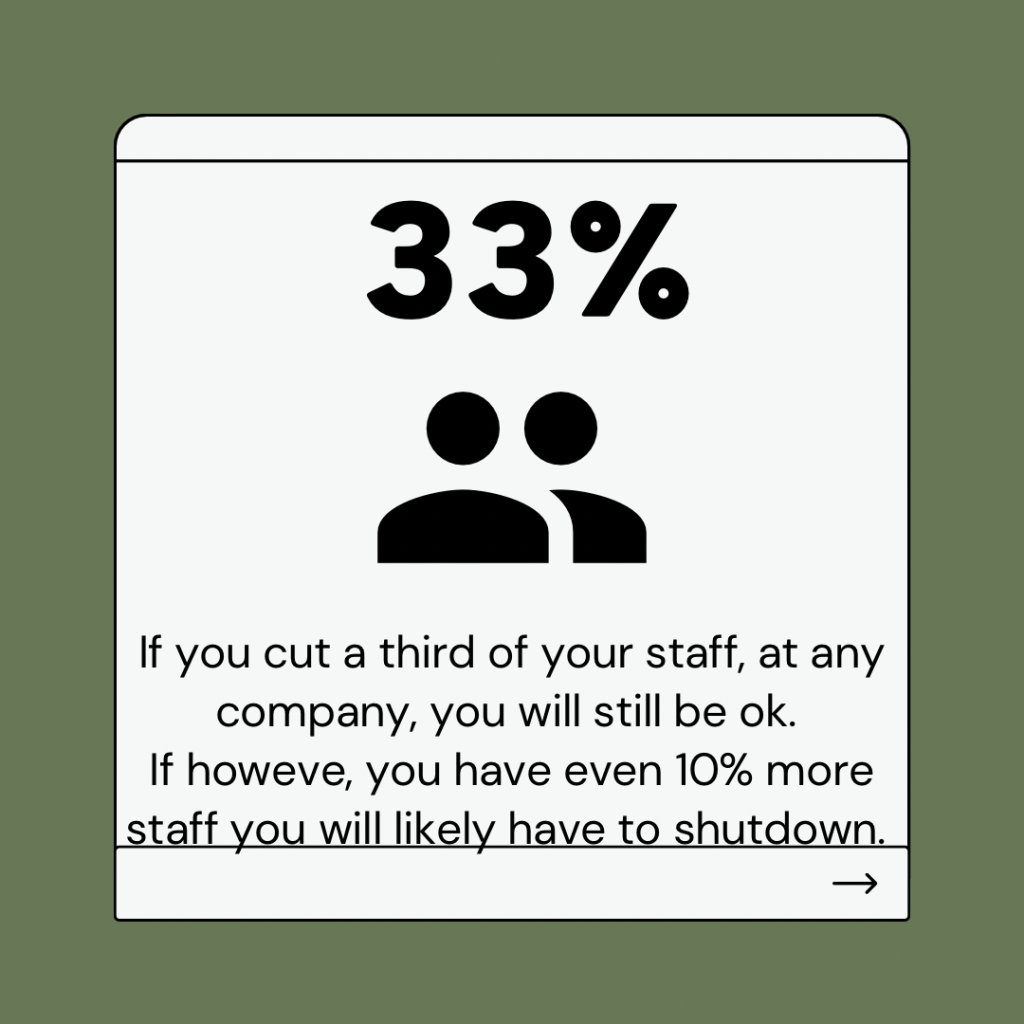
I say 33% since you can safely cut a third of your staff if you are over 50 or so people and the business will still run. You may grow the same or more than you did before. You might have a slight dip in morale but that recovers.
As AI starts to proliferate in the workplace I see companies starting to have rolling layoffs. That will become the norm.
The reason is now CEOs realize many jobs are filler jobs. Second, Elon Musk with Twitter has shown that it’s okay to reduce staff and still have a functioning site. Third, AI will force people to leverage technology to do more in their job or be eliminated.
Discover more from Mukund Mohan
Subscribe to get the latest posts sent to your email.
