All posts by Mukund Mohan

My discipline will beat your intellect

Does raising institutional money at the seed stage help or hurt?

In 2009-2010, during the peak of the eCommerce bubble in India, there were very few seed stage options for raising funds for startups. You could either get money from angel investor or look to raise money from large VC’s, hoping they would put money at the seed stage so they can be part of the later round.

During that period, larger firms in India, such as Sequoia Capital and few others did many (over 15-20) deals in a year. The typical check sizes were about $500K in India (about 2 CR that that time).

The main reason why entrepreneurs were looking to raise money from institutional investors,  besides needing the cash and finding not many other options was the belief that “if they were in early, they would be an automatic in the next round”.

Of the over 40 deals  that were done by institutional investors in 2008-2010 in the early stage (largely in eCommerce), only 4 are still around. Of the companies that took money from institutional investments in their seed round, only 5 secured investment from the VC in their post seed round.

This weekend I had a chance to read the ET survey on Why startups are raising seed stage capital from VC firms.

The average % of the company that entrepreneurs gave up is about 15% and the amount they raised from VC investors at the seed stage is about $500K.

There are many good reasons to raise money from traditional Venture investors, but assuming they will definitely invest in the later round, is quite possibly wrong based on previous history.

If you are looking to raise money and you have an interested later-stage VC investor willing to put money in your company, by all means you should take it.

Assuming they will invest later is a big leap of faith.

There are, like most things in the startup world pros and cons to this approach.

The pros include the “name brand” value of the VC firm on your cap table early on, the ability to tap into the expertise of the VC investors and also access to their network and connections.

The downsides are the signalling effect if they refuse to invest in the follow on round, the likelihood of them investing in other competing startups in the same space in later round (since they understand the market) and finally the smaller pool of investors available for you (since many VC’s wont invest if a lead VC investor passes on the follow on) in the next round.

While I dont think there are many options in India for entrepreneurs, the best bet I would still recommend is to get the right investors at the right stage of your company. At the early stage, angel and seed stage firms make sense, and later on using their help to get VC’s is a good approach.

Credit: Paul Martino, Bullpen Capital

Paul Martino of Bullpen capital puts this week in the chart above.

Given that seed is now a perpetual and continuous process until your series A, I would recommend you raise constantly and raise often.


The SalesHacker Meetup at Seattle

Yesterday, I had the chance to meet 12 entrepreneurs at the Impact Hub in Seattle, who attended the Sales Hacker Workshop.

Sales Hacker Conference

Max Altschuler of Sales Hacker reached out to me last month to be a part of the panel to a set of developer and technical folks who were at the early stages of getting their sales efforts started at their startup.

Richard Harris, who runs Harris consulting was the instructor and I had a 30 minute session on 3 topics – a) What the new “sales funnel” looks like and why is it different b) Should you outsource your sales efforts at a startup and c) What should I do after I hire my first salesperson at our startup?

I have mentioned before that more sales people at startups are becoming marketers, consultants and enablers than closer’s.

I get a lot of questions from entrepreneurs on how to develop their sales team. Many of the entrepreneurs I work with are engineers and think about sales as they would another engineering process. The framework to think about building a team requires 5 important questions to answer before you come up with your sales.

I am personally happy that folks like Max, Richard and Balaji in India, are raising the level of sales discussion with the entrepreneur community, mostly so that we can help B2B entrepreneurs find, grow and enhance their teams.

I was surprised that there were only 10-12 folks in the audience, since the list of people who can benefit from this is a lot more in Seattle.

I am wondering what it would take to get more folks who are entrepreneurs to attend sales training and enablement sessions instead of only spending time on technical briefings. Thoughts?

//platform.twitter.com/widgets.js

The #OpenStack Seattle community and progress of Cloud technology

I had the opportunity to be a part of the #OpenStack Seattle conference yesterday in the morning. I was invited by Sriram who runs the local chapter. If you dont know much about OpenStack, it is an open source initiative to help companies run their own private and public clouds. There is an awesome getting started reference card that Sriram has put together for you to read as well.

OpenStack has been around since 2010, but only now has started to pick up steam. Over $1.5 Billion worth of market value has been created around the software. It helps you manage compute, networking and storage resources, provision them, optimize and also help you scale the cloud solution you decided to manage.

There were about 150 folks at the meetup, a third of them having implemented OpenStack in production, another third considering it and the remaining who were too bored to raise their hands.

Open Stack
Open Stack

The thing that I found interesting is still the resistance in larger companies to open source software. This was named as the #1 barrier to adoption among most of the folks I spoke with. This is a real problem that exists after so many years of open source in the enterprise. Many people whose jobs depend on applications and services being available and performing well still want to be able to have a company or another organization support them through the process.

The perception among many of the folks who are in traditional technology organizations (who run internal systems) is that open source is largely unpredictable, mostly renegade and insufficiently production ready.

There are 2 observations I had from the various presentations yesterday morning.

First, developers are becoming more powerful in the IT organization compared to the Operations teams, which were pretty powerful 10 years ago.

Previously you had to ensure that the application that you built was on an environment that the Operations team (DBA’s system administrators and network administrators) supported. Most operations teams had standard policies around the database used, the languages and environments supported, so most applications were fairly similar.

If you were building an app that had intense media or voice / video usage, you had to build so much into the app to work around the limitations of the environment used.

Not any more.

The #1 issue that I heard from many of the operations folks is that developers are starting up instances on the public cloud, using a set of “right technologies” for the app – based on their familiarity, hosting and supporting the app themselves until the innovation phase of the app is done and then “throwing it over the wall” for the operations teams to support them.

Second, the “stack choice” – which database to use, which language, framework, caching system, platforms (IoS, Android, etc.) to support is also a lot more complicated for developers.

This is a serious problem for developers. If you are developing a data science, or big data application, you are likely to use R or Python.

If you are however building a simple internal CRM app, then you might choose to build it with Javascript and a Node.JS or Backbone.JS framework.

Add the concepts of containers, virtual machines (which are phasing out), microservices, API based systems, and many more choices, you are suddenly spending a lot of time figuring out which “stack” to use.

Most developers are just talking to their friends at companies which have done similar apps and “copying and pasting” their stacks.

This will be a very interesting space to watch in the next few years.

What we learned from 10 episodes and 3 months of podcasting #startups

Nearly 30% of Americans actively listen to podcasts weekly, and over 17% globally, according to Pew Research. There are over 200K podcasts available and over 20K publish weekly. In the area of business and technology alone there are over 20K podcasts.

Ravi, Lakshmi and I started a podcast, India Startup Chat 3 months ago to explore the world of voice media.

India Startup Chat
India Startup Chat

The main reason we got started was to understand this new medium and try to engage with the startup community in India and outside.

I have been asked by a few listeners if podcasting is a good marketing tactic to adopt to generate awareness and engage with B2B customers.

After having done 10 episodes, I am not sure I know the answer yet, but I can tell you it is likely not going to generate a lot of leads as much as it will keep your brand front and center of your already existing users.

The way I think about podcasting is to use it as yet another means of creating engagement with users but with a medium that is used at a different time than traditional blog reading or catching up on news or social networks. It tends to be heard mostly in the afternoon after lunch for us.

Given than fewer than 10% of Indian Internet users ever listen to podcasts, while over 60% of them read blog posts and over 80% of them check Facebook daily, you want to allocate time appropriately towards various techniques for generating awareness for your company.

For B2B companies, I would say the priority would be much lower. Business and technology podcasts have 29% fewer listeners and 50% fewer plays than general interest podcasts.

From my anecdotal data gathering from 20+ listeners of our podcast, I can tell you most of our American users listen to our podcast on the soundcloud app, while over 70% of Indian audience listens to it streaming on Facebook, because that’s where we show up first – on their news feed.

Our audience is between 300-800 per episode, so, I am not sure we have reached any form of critical mass, but we have some data to work with.

Most of our listeners (over 80%) found out about our podcast since they were friends of Ravi, Lakshmi or I on Facebook or if a friend “Liked” an episode and it showed up on their news feed.

Most people (over 60%) listen to our podcast on their desktop (not surprising, given it is in India, at work) and I suspect that will start to change and move to more mobile in a few months / next year.

Since the number if iPhone users is relatively small in India (compared to Android phones), I think even if we optimize our ITunes podcast search optimization, we wont get too many (few, but negligible) new users.

What I did learn is that if we had the name podcast on the name of our show, it might likely get more listeners from searching on Google.

If you are considering podcasting for your startup, as a marketing mechanism, I will outline over the next few days what you need to consider, how you should set it up and go about marketing the podcast first to get your customers to listen.

Let me know if there are specific areas that interest you more than others.

The toughest fork in the road – from high growth startup to lifestyle business

One of the toughest pieces of advice I usually give to the founders I have invested in is to understand when and how they have to make the transition from a high-growth-chasing startup to a lifestyle business.

Entrepreneurs feel like they “gave up”. Many actually prefer to shutdown their companies and decide to either get another job or start something fresh, instead of spending more time learning which of their assumptions were incorrect.

In this blog post I am going to try and make the case for why you should transition to a lifestyle startup instead of giving up and going to another “idea” or solve “another problem”.

If you decide to join a big company or to get another job, if you startup does not pan out, I understand that. I dont think you will enjoy the transition, but a less stressful, more defined and predictable life is something people crave for after the roller-coaster ride that’s in a startup.

If, on the other hand you choose to start a new company in a new space, with a new idea, I think that will be a bigger waste of time than pursuing the “customer development” efforts in a given space.

Excellence as a Habit

From my experience I can tell you that it takes between 2 to 3 years on average to learn the contours of any given industry, its players, the mechanics of how it works and the entire value chain. I call this the “happy learning phase“.

Usually at this phase the growth on what you learn is typically 10% day-on-day.

During this period, while you are trying to build an early version of the product, get a few customers and iterate on the “actual problem” that you have to solve. Even when you believe that you have a problem and some form of product-market fit, you will need time to find the early adopters, or to weed out the naysayers and to find your early wins.

Most entrepreneurs set up early goals for their startup which have certain milestones, one of which is fund raising. Associated with the fundraising metric are business metrics as well – # of customers, revenue, # of employees hired etc.

Contemporary wisdom puts a number around your growth: measured month-on-month – typically at 10% or 20% (as opposed to Conventional wisdom, which used to be focused on growth with unit economic profitability). Most entrepreneurs feel if they dont hit those growth metrics, then their startup is doomed for failure, even though most realize that not all startups can be unicorns.

If, however after a few months of less than your stated growth, you are inclined to throw in the towel and pivot away, the clock on the “happy learning phase” resets.

Which means you have to start on a new set of learning and the phase begins again. This usually means that you have to understand the market again, figure out the new landscape and finally make new connections.

When you are at the fork in the road when you have to decide between continuing at the startup, versus pivoting to a new idea, I’d highly recommend you turn the company into a life-style (consulting, teaching, training, etc.) business and spend time in the making-money-phase based on the happy-learning you did before.

3 techniques to support “Word of Mouth” marketing by customers for SaaS companies

I mentioned that many enterprise customers are loathe to talk about the products and solutions they use unless they have approval from their corporate PR team. In many cases they consider early stage startup products as a “competitive differentiation”.

Still, there are many companies (such as #Slack, Cloudera) that have done a great job in getting many customers to share their screen shots online and also blog / tweet about their usage of the product.

What makes enterprise customers want to share why they are working with a product or using it?

Customer Word of Mouth

The 3 main reasons seem to be

a) Perception that the solution is associated with being leading edge, innovative or cool

b) Acceptance by peers and industry experts that the use of that product is a “safe choice” and

c) Incentives provided by the startup to talk about the usage of the product which leads to others in the peer group acknowledging the company as a thought leader.


If those are the 3 most important reasons why customers do share their usage of your SaaS product with others, how do you go about helping create a perception that being associated with your product or company is cool, safe or innovative?

I have seen many good SaaS company entrepreneurs starting to form an influencer advisory list, which is a private group of very interested, engaged and empowered influential community members – potential investors, industry analysts and a few potential customers.

This list of influencers is formed even before the product is ready and their inputs are sought before your product is ready or your messaging is clear. When these folks have the opportunity to shape your message and positioning in the market, they have more “vested” in your company and are likely to share your news and information.

Typically the influencer advisory list has between 7-10 folks and getting them to know each other (if they already dont) is a great idea. They can network and learn from each other and also help understand the other people’s perspectives.

In return for their time, some folks have given some of their folks the opportunity to invest early, still others have offered advisory shares and others have just paid for the regular meetups.

What to do when customer wont speak about the benefits your product provides to others

Most every entrepreneur knows that the easiest way to grow the company is when an existing customer or contact tells another person about your product and why the use it or like it. Most messaging apps and social networks grow primarily because of the “invitations” that the early adopters send to others in their trusted network.

B2B companies tend to face a different challenge for most parts. Their best customers rarely want to speak to others about the benefits they obtain from using a product or its bottom-line impact.

The reasons are many – first, they might believe that they lose leverage over the provider for future negotiations, second, they do not want competitors to get access to the same solution and lose a differentiation or third, their company prevents them from sharing information about their tools, techniques, methods and processes.

The biggest challenge is for those startups that deal with large companies and sell to enterprises versus selling to small and medium businesses. They tend to rarely provide testimonials, be very closed about their actual usage of the product and tend never to let employees use work email to identify them when signing up for SaaS products so startups cant identify them.

Which is the primary reason why many SaaS products start by gaining customers among the smaller companies and other startups, even if their product is most valuable for larger organizations.

What should you do if you are faced with this situation? I had a chance to talk to 3 entrepreneurs who are all selling to larger companies and there are 3 techniques that seem to work. None of the entrepreneurs said they worked all the time or worked for all companies, and they all mentioned the techniques were hit or miss, but they were worth trying.

Customer Testimonials

First, aligning to the company’s corporate message or correcting a perception helps a lot. In this case the PR team or person is your best friend at the large company. Many large companies are looking to either a) enter new markets, b) change their perception or c) get new products or services out to the market. The more messaging and press that reinforces their goal to get a new message, the more favorably they take to press and testimonials. Be warned though, that corporate PR departments are immensely risk-averse and rarely if ever will want to be the first to be seen as someone that endorses a product.

Second, getting it written in your contract (that they will provide testimonials and speak to the press about product usage) always helps. Most companies negotiate a discount or customer service and support requests in exchange for their participation and it tends to be worth it for most startups. Sometimes large companies wont allow the usage of their logo, so be aware of their policies and put the right words in your contract so both logo usage and testimonials are covered.

Finally developing a champion internally who you support by going above and beyond to be successful does help. Typically if this person gets promoted or does better at their job because of your product, they are more willing to be supportive. How can you help them? Provide them tools, presentations, worksheets and other collateral to be able to sell the work they did internally (when there are best practice sharing events) at their company.

All these are useful for testimonials, but how do you get customers who are reluctant to share what they do with your product with others in the industry or their potential competitors? I’ll try and cover that tomorrow.

The Amazon culture and its effect on Seattle area startups

There is a lengthy piece on the New York times on Amazon’s employee culture. It is largely negative on their push-to-the-max, dog-eat-dog world and stack rank nature of the company.

Having worked with, know of and learned from over a dozen employees at Amazon, I can tell that it attracts a certain kind of employee. It certainly is not as bad as the article indicates, but many over achievers love to work there.

While many ex-employees have talked about the “challenging” work environment, I have personally talked to ex Amazon employees who wish more companies were like Amazon after they left.

What are the parts that they like the best. Relentless push to do better when you believe you have hit the peak. There seems to be no real “peak”. It is a state of mind. Doing better is what we all strive for and Amazon’s culture pushes you beyond that.

The intense focus on numbers and customer metrics over going by the highest ranking person’s opinion. This happens in many companies, including the best run large technology firms. When the highest-ranking person enters the room, the conversations is about “their experiences”, “their interactions with customers” and their prioritization. Amazon’s not like that, is what people tell me. Data and analysis trumps opinions.

Disciplined experimentation is another area that most folks believe Amazon excels at. The willingness for people to be given the latitude to try multiple experiments over time prevents boredom.

Amazon’s culture may not be good for 80 or 90% of the folks who are seeking employment, and that’s okay since they dont need all the employees of the world to work for them. Just the ones that value work over everything else.

Now that I have explained the other perspective, I have an observation about the impact of Amazon’s inwards looking focus on the company and its customers on the local Seattle ecosystem for startups.

Amazon buildings
Amazon buildings

The impact is pretty significant. The number of ex-Amazon employees looking to start companies is far and few between.

There are a few, for sure, but most employees at Amazon work at a startup themselves (Amazon) and are either a) happy working there, b) are burnt out at the end and want an easier job at a larger company or c) dont ever have any time to engage with startups or have time for side projects.

What this means is that many ex Amazon employees make good employees at companies who are trying to reboot their culture, but not a good fit for starting companies.

Becoming Ubiquitous – How Uber “apps” are making it a platform – #UaaS

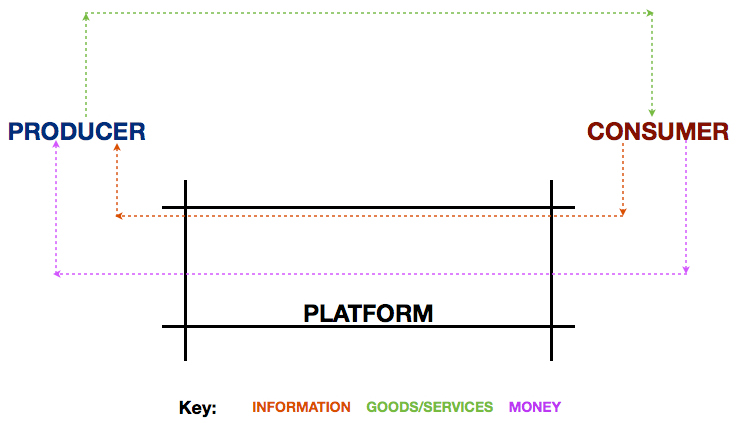
Most startups would believe that have “made it” when they become a platform. That’s usually when other startups depend on their underlying technology as an infrastructure and include it in their product. Given that most startups are now developing API’s so other startups can leverage this, it is not unusual to see many new startups developing on another startups’ technology.

In the last few months that’s the pattern I am seeing with Uber. Emirates already offers its business and first class fliers the pickup and drop off service from their home or office to the airport and now there’s a company that is partnering with other airlines to provide an app that users Uber as the car service for the airline’s top customers.

I read yesterday about an Uber based escort service as well.

There are many other apps that have been in the works to create a service using Uber. Since they have opened their API, many use cases have emerged.

Open Table has been considering integrating its app with Uber so before and after your table reservation you can book an Uber to pick you and drop you back.

Same for Museum apps – they are looking to offer a full service to provide an ability to use Uber to give the patron a seamless experience.

There are many bar apps that also have integrated with Uber. After a drink or two, or if you checkin to a bar at a given time (using Swarm or Four Square for example), you will be automatically prompted to use an Uber to head back.

In a few cases, I have heard of Ticketmaster and other ticketing apps integrating with Uber for event based taxi rides.

There are many other use cases as well, but all this means more data for Uber.

Where are people taking rides to and from, when are they going, and why (which can be inferred in many, but not all cases).

To become a platform though, you first need a reliable service. Then the ability to evangelize the platform to developers, which means someone that can be at hackathons, build initial prototypes, troubleshoot for other developers and also help them find a way to monetize.

That’s the path Uber is going towards.

Uber as a Platform
Uber as a Platform

I had a chance to meet a team of developers who are building a bachelorette party app last week. The 3 cofounders (all women) were building an experience platform for the entire party. From inviting the friends of the bride to selecting the venue and onwards, they can help plan the entire party.

A key part of their platform is to bring all the “friends of the bride” together to the same venue. That’s where they are hoping to use the Uber API to integrate into their app.

The incentives offered by Uber are pretty good. They claimed they had met with the Uber team and they were told they could get 10% to 12% of the fare as a commission. Which I thought was pretty high, but it makes sense to Uber only if it believes the folks coming to the party wont already take an Uber to the party.

Welcome to Uber as a platform.

Understanding the mechanics of partnering with “big companies” with a large channel

As exciting as it sounds, when a business development or partner sales representative from a large company in your domain calls you, it tends to, in most cases, generate more work than get customers in the short term for a startup.

The first part of partnering with a large company is to understand when you are ready to “sell with” or “sell through” the larger company.

In theory, partnering sounds awesome. The large company has a huge installed based, they may not have a product competitive to the one you posses and your solution fills a gap they may have in their portfolio.

In practice the mechanics of the partnership, the logistics, elapsed time and commercial terms are the things that wear you down.

First realize that they are multiple “players” within the large company – if it is a large technology company, they are very much engineering driven – so the internal engineering teams have a preference to build not buy or partner. While the product management teams might have a more outside-in view, it is also likely they will prefer to build internally (“I dont think the product will take too long to build” OR “We can build what that startup built in 3 months with 3 resources”).

Then you have the marketing teams, which tend to be consumed (in larger companies) with the current quarter’s lead generation or to focus on helping their sales team’s quarterly goals. While they would like to partner, it is with the intent to have their message be more “cool”, “relevant” or “credible” with potential customers or analysts / press etc.

The sales teams would like to partner if it helps them get the deal done. If they do not get credit for the deal, (or quota relief), no amount of convincing will get them to partner with your startup.

I am going to skip over the other incidental teams such as Finance, Legal and Services team, since they tend to get involved in the back end of most partnership opportunities and rarely lead.

That leaves you with the Business Development team – who reached out to you in the first place. In most large technology companies, they are chartered with “inorganic” growth – or the ability to generate revenue either by having other companies sell their products or helping revenues grow by selling other products the company does not build itself.

In larger technology companies, most BD organizations report either to the Sales team or the Marketing team. In less than 10% of the companies they might report directly to the CEO (via the Corporate Development organization or Finance in even rarer cases).

Most business development professionals are well meaning, have an outside in market perspective and are keen to make deals happen, but, in most companies, they tend to execute deals and influence the strategy, not come up with it.

Meaning, they can make the deal happen if the product or sales teams desire, or they can say no to a deal, but they rarely initiate the deal. There are exceptions.

So, what should you do when a Business development person reaches out to you to partner?

First, ask them to help you understand the dynamics of their organization and their process.

Typically, they will have a 3 or 5 step process.

Startup Partnership Business Development Process

Step 1: Layout the market scenario, including product fit, competitive roadmap, etc. and get buy in from Engineering and the product teams. Obtain an executive champion

Step 2: Layout the Go to market plans, with help from the marketing and sales teams. Secure the executive champion for post integration.

Step 3: Detail the financial impact – the investment to be made, the potential revenue impact, the opportunity. Secure the budget needed for the various teams for the deal.

Step 4: Get buy-in to start negotiations with your startup. This includes discussion with their legal team on the framework of the agreement, discussions with your startup on the roles, responsibilities and work each team needs to do to be successful. This includes defining success with milestones at each stage.

Step 5: Final contract completion and roadmap for the partnership with the outline of the announcements, etc.

This entire 5 step process usually takes months if not 2 quarters on average.