All posts by Mukund Mohan

My discipline will beat your intellect

Goodbye Microsoft Ventures, 3 years of fun comes to an end

3 years ago to the month, I was at the crossroads. Having moved back to India and grown, then sold BuzzGain, I had founded my next startup and found a way to grow a new business.

I was spending more time helping entrepreneurs and was interested in starting a new company, but I realized that having a bigger impact is what I was seeking.

I met with Amaresh, at an event called Think Next in May and he was a very nice, humble and wicked smart guy was my impression. When he started talking to me about the Microsoft Accelerator program, I was keen to help. He then offered to get me on board full time and I was (as was everyone else) very surprised. I agreed because I thought the money and resources that Microsoft had, directed at the right places to help the startup ecosystem would go a long way to help India.

At about the same time, Rahul, Neda and David started the Bing Fund, with similar interests – to help entrepreneurs by investing in startups. Similar initiatives were started by others in other locations. A small, but passionate crew at Microsoft were keen to engage the startup community and help entrepreneurs.

Microsoft Ventures was formed in March 2015, when we brought all the startup resources into one single organization. We announced it in June 2013. It was going to comprise of an ecosystem program – BizSpark, accelerators to help startups grow and a fund to help startups scale.

From 2012 to 2014, I was in India, and built some great relationships there with investors and entrepreneurs. Microsoft Ventures was name the #1 accelerator in India by Economic times.

Microsoft Ventures and American Family Insurance presented 10 inMicrosoft Ventures and American Family Insurance presented 10 in
Microsoft Ventures and our demo day

Late last year, I decided to move to Seattle to take on a bigger responsibility, but also to bring the startup culture to the large corporate Microsoft entity. After Satya became the CEO, it was more acceptable than before to be entrepreneurial at Microsoft.

Microsoft is big, large and great at many things, and is learning to be nimble and move quick, is my sense, after being here for a year in Seattle.There are many folks who have been here for over 15-20 years who are resistant to change and many folks who are very open to change as well.

Nonetheless, I had a lot fun, I think we had some impact and we certainly made a lot of friends. We helped many entrepreneurs and not a day goes by when I dont get an email from someone who wants to work for Ventures or be funded by the organization.

I think I will miss the entrepreneurs I interact with daily, the most, as part of Ventures, but I suspect I will continue to work with startups. Mostly I will miss working with an entrepreneurial team of folks who care deeply about startups.

The modern app developer

Two interesting things came to my attention yesterday. The rise of coding schools (NYTimes piece) and the most popular languages used at hackathons.

As I had written before, coding schools are graduating close to 20K students in the US – almost 1/3rd of the # of graduates from all computer science programs. Most of these students are from fields outside of programming, computer science or engineering. Many studied political science, history or literature and were pizza delivery folks, baristas and even Uber drivers.

While many of their starting salaries are about $60K, even 6 figures are not unheard of salaries for “data scientists”.

Over the last 6 months, I have noticed that these students make up nearly 10% of startup development teams. Many are hoping to get 1-2 years of experience to either a) go independent or b) get a much better paying job (read $150K) at a hot startup with stock options.

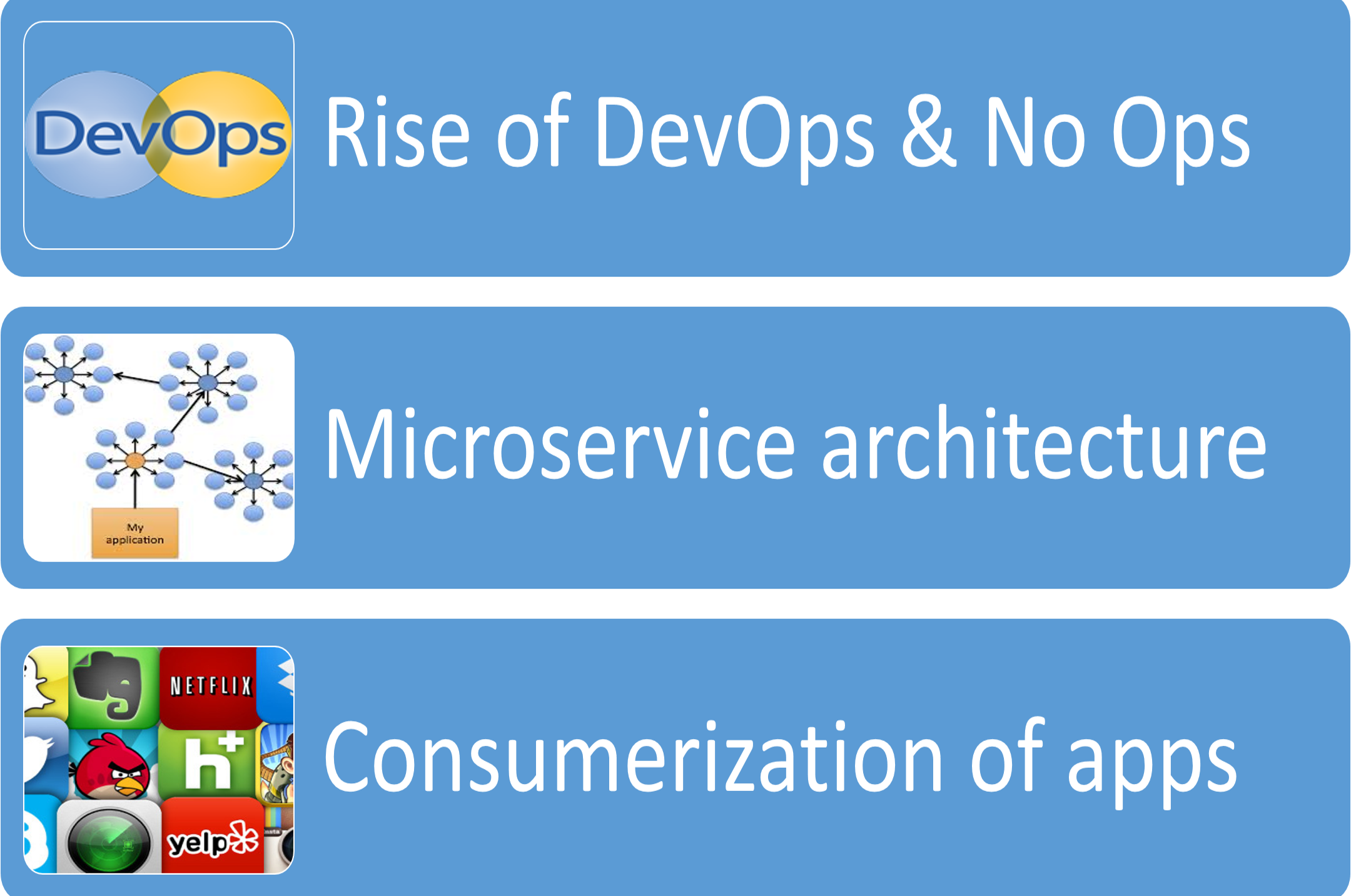
The modern apps have 3 characteristics that is changing the way apps are developed.

1. First, since there is a rise of Dev Ops and No Ops, many more developers are developing apps purely on Javascript and some Swift, with Python, Java and C++ taking the back seat. With the simultaneous rise of Javascript libraries and frameworks, it wont be too long before we see more Javascript only developers who focus on building interfaces quickly with little backend code.

2. The rise of composers instead of coders. Many app developers focus a lot of effort on coding skills and writing monolithic applications that are self contained. The future of apps and hence app developers is microservices which use many 3rd party API’s. This will result in coders and developers becoming more composers who snag code snippets from other places and spend more time building an experience end-to-end and less time on systems programming.

3. Finally given the rise of consumer apps and their influence on enterprise apps, many app developers will start to incorporate images, video, and other media elements (voice) into their apps and have “voice enabled” assistants in their apps to replace the standard productivity and ERP / CRM apps that are developed for the enterprise. Many enterprise apps are expected to have a “longer” life cycle than games and consumer apps, which are constantly in fashion and out, but the shelf-life of enterprise apps will reduce thanks to consumerization of work-apps.

The Modern App
The Modern App

Increasingly the skill that is needed more than architecture and coding is identification of key API’s, rapid prototyping and experimentation and very few people who are going to help “scale and grow” the apps.

I wonder if you are seeing the same?

Global Startup Ecosystem Ranking, 2015 #Seattle and #Bangalore

The global startup ecosystem rankings at out. Since we had a chance to partner with the team putting together this research I had a chance to learn the methodology a lot more this time. There are three observations I have regarding he overall report and a follow up to an early comparison of the 2 startup ecosystems I have the most experience with – Seattle and Bangalore.

First, the two ecosystems are not that different in many aspects – the criteria used by compass were:

1. Performance (exits, valuations, etc).

2. Funding access

3. Market reach

4. Talent

5. Startup experience

and finally Growth index.

1. Growth: Bangalore is growing dramatically, at 2.5 times Tel Aviv’s growth and more than 3 times Seattle. It will be a matter of time before the total number of startups from Bangalore will be more than that of Tel Aviv or Seattle combined. Likely in 2018.

2. Spread: Seattle’s ecosystem of startups is more broad based – a few eCommerce (Zulilly, Expedia and Amazon), some cloud and a few SaaS companies. Bangalore’s ecosystem of startups is fairly shallow – eCommerce rules, followed by a few in Ad tech and B2B.

3. China: I am shocked that Beijing and China were out of the top 10, much less not even on this report. My first hand knowledge of Seattle and Bangalore and secondary knowledge of China, indicates that they will be #2 even higher than where LA is.

I would agree that market access / reach and startup experience,  expertise will put Bangalore slightly behind Seattle, but that’s more than made up for with Bangalore’s better funding availability and overall acquisition track record.

Here is my unofficial top ecosystems ranking, which I believe will reflect a more accurate ranking of the top ecosystems for startups.

1. Silicon Valley (Separate the valley and SF and you will have the #1 and #2 positions)

2. Beijing

3. New York

4. Los Angeles

5. Boston

6. Tel Aviv

7. Seoul

8. Chicago

9. Seattle

10. Bangalore

11. London

12. Austin

13 Sydney

14. Moscow

15. Toronto

The rest of the ecosystems dont matter. Either market access, funding or performance in terms of acquisitions.

The other parts of the ecosystem that should be measured include news and media involvement, hackathons, events, training and education – early indicators of where the ecosystem is headed and I think those will show a few other cities – Tokyo and a few middle eastern countries as well.

Startup Ecosystem Ranking 2015

How your investor “Story” differs from your customer “story?

I dont subscribe to the meme that says you have only one “story” as a startup. I think you need different stories based on your audience. I want to talk about one particular case based on a real world example and share how the stories might differ, the messages might change, and the positioning might be different as well.

I had a friend who is building a hardware company. Or, so he thought. The hardware unit would sit in a car and monitor driving behavior. Since it was focused on a niche (but large) use case, he was able to confidently show a large market (over $1 B) in a bottoms up market research study.

He had also done some initial customer development and spoken to over 50 of his target customers who were all willing to buy and pay for the solution, talked to 5 potential distributors who were willing to stock and sell the product and also had talked to manufacturers who could build at scale. Armed with this information, he felt he could raise a $500K round, since he had a strong team of 3 folks with him.

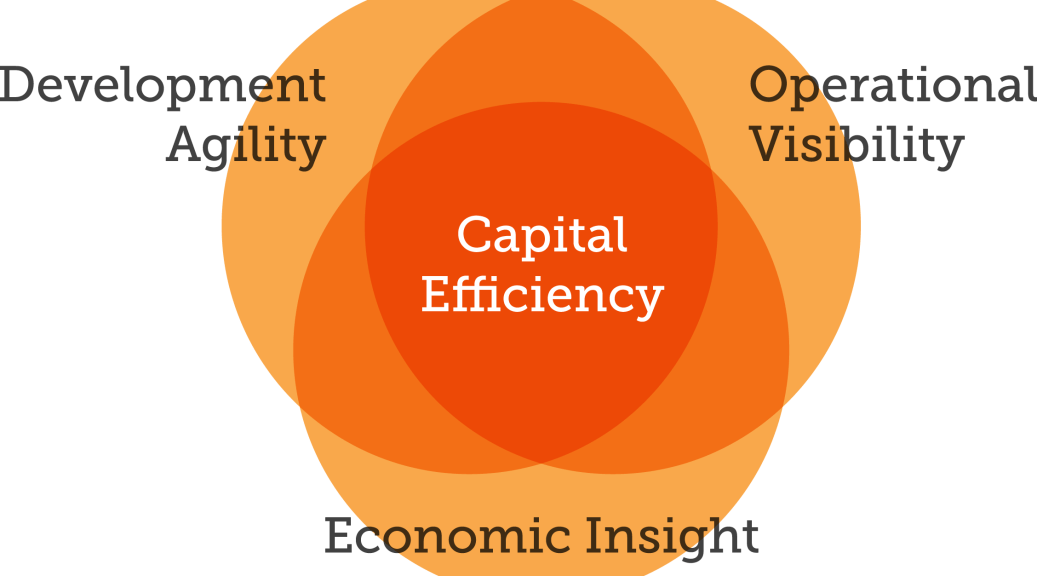
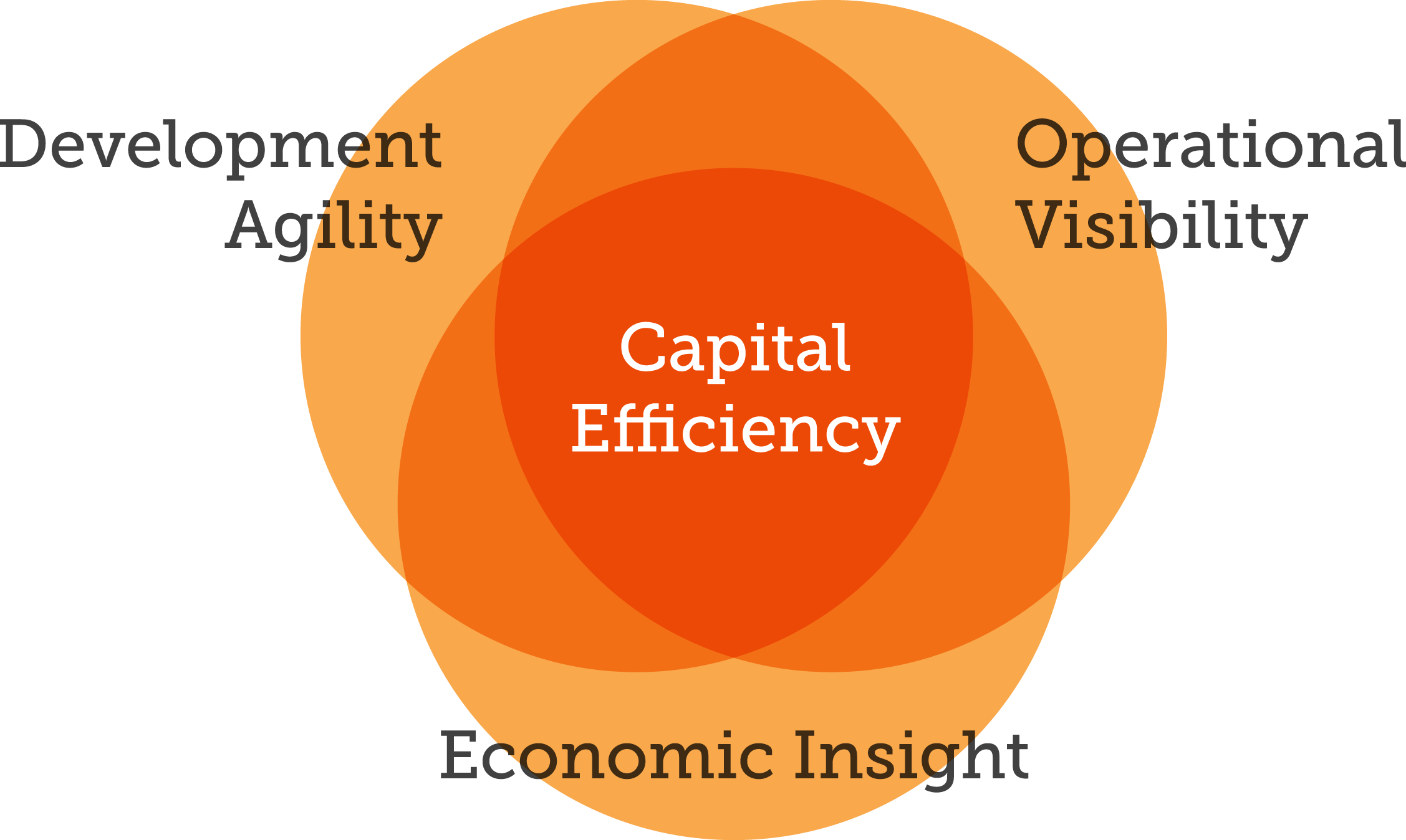
Being Capital Efficient

To build the hardware he estimated 3 resources for 6 months, so he felt $500K would give him enough cushion to tide a few mistakes.

After 3 months of trying to raise money and talking to over 12 potential targeted investors in his list, he found out that the appetite for  hardware was just not there.

Well, there was appetite for a hardware company, but only at “scale”. Not in the initial phases, meaning the target investors,  who were “early, seed and angel investors” wanted to see upwards of 500 to in one case, over 5000 units, before they were willing to to give the angel terms – $500K at $2M valuation. My friend felt he was being low-balled, but he had no other options.

Most investors he approached were unwilling to fund his hardware company.

This is not about hardware though, the same “investors unwilling to fund” anything outside known or proven models exist in other areas as well. Markets get in and out of favor. The flavors of the month are big data, anything marketplace (consumer) and most all things SaaS, etc. and cloud (B2B).

So, when he reached out to me, my initial reaction was the same as other investors. Having burned my hand in hardware companies, I was unwilling to fund anything close to hardware. Over the last 9 months we have funded 10 hardware companies and 30+ software. Except for one hardware company, the rest still have not shipped product (nearly 3-12 months after they promised to do so) and most have been unable to raise a follow on round of funding.

On the other hand, 50% the software companies have been able to secure follow on funding. I understand funding is no measure of success, but it is a key milestone.

Instead I asked him to position his product as a “Insurance and driver data as a service” – DIDDaaS (forgive me) platform and get the version 1 out with software alone, instead of hardware. Turns out that worked. After 3 weeks of meeting the same investors he did before, with a software only, asset light play he was able to get $250K committed to start.

Trends point to the fact that even software companies are forgoing being capital efficient, but if your story depends on raising a lot of capital to be competitive, I’d say change the story to appeal to the capital efficient investor, EVEN if you end up raising a lot of capital.

Double opt-in email introductions are painful, but more useful than blind intros

A typical week for me is about 15-20 introductions to entrepreneurs and VC’s. I love that part of the job, in fact. If I could do more, with less time, I would any day, but I am getting more judicious lately.

There are 3 primary reasons why I am slowing down my “warm” introductions.

First, even though I know both the parties well enough to make the introduction, turns out many things change in 3-5 months that I am not on top of. One of my friends at a VC firm, decided to focus on B2C later stage instead of B2B. After 2 introductions, which I made to entrepreneurs, I found that out and also found out that he was “forwarding” my emails to his colleague. What I thought was “helping” was actually creating more work (useless and unnecessary) for him.

Similarly, an angel investor wanted an introduction to an entrepreneur who was looking to raise money a few months ago. Turns out by the time I made the intro, the entrepreneur had changed roles to be  the product guy, got a new CEO and also had finished raising money. Again, creating more work for him was not my goal but I ended up doing just that.

Second, in many cases the entrepreneur or the investor is not a good fit at all. Take a case this week. A very smart investor is a hugely sought after lady in my network. Not a week goes by, when I am asked to make an intro to her. I was asked this week by a good friend and entrepreneur to make an introduction to her. I like the team, so I was willing to help. Turns out, the investor had already looked at the company and decided to not engage because she has a competitive deal in the space.

Now, I had obligated her to find a way to “help” my entrepreneur friend in some way. That’s negative brownie points for me, even though I wanted to actually help them both.

Finally, there is a power dynamic in play with most situations. The “requester” of the introduction and the “recipient” are not sure in most cases who will actually benefit. Neither am I am very clear about who needs who more. In most cases, when entrepreneurs ask for an intro to an investor it is clear, but in many cases when I have a “hot” entrepreneur in my network, it is not unusual to have 3-4 investors seek my help for a warm introduction.

While making introductions is a critical part of the role that I play, it is becoming clear that the work that it generates for me is becoming onerous.

The best approach is to email the person who is the recipient of the introduction if they’d like the introduction, then wait for their response and then respond back to the requester of their response.

Double opt in Email Introduction

So one email introduction now becomes at least 3 if not more in some cases. Multiply that by 15 a week and I am spending close to an hour making introductions. There has to be a better way.

What do you suggest? I like the connecting and the introductions, but the work involved in doing this is getting to be too much.

Lemonade or Water with Lemon? Angel investor dilution

Compared to 2008, the average startup is going through 3-4 rounds of funding before the Venture round series A. In fact, the most important skill startup entrepreneurs need to master right now is navigating the funding landscape.

It is not unusual to see startups bootstrap for 6-9 months, then get into an accelerator, and go through another accelerator (elapsed time after 2nd accelerator from start is usually 12-18 months and then go through an angel round of $250-500K and a seed round of $500K to $2 Million.

So, instead of having lemonade at the end the founders have water with a lemon.

Lemonade and Water with Lemon


In some cases I have seen startups go through a post-seed round after the seed round. Don’t call it a bridge round, it is apparently bad luck :).

The biggest challenge with all these rounds before the series A is dilution.

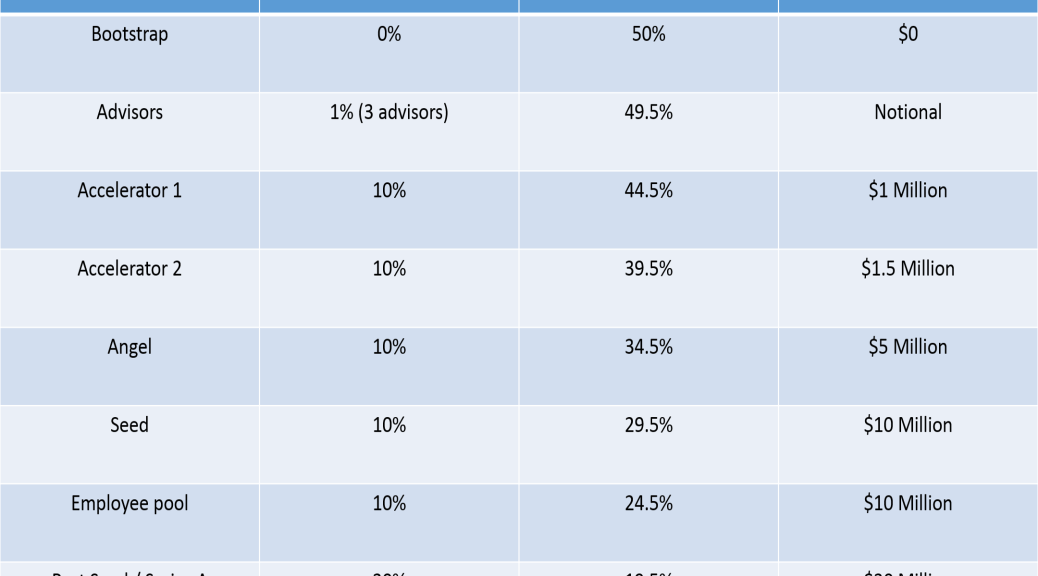
If I assume you and a co founder started a company, then you each own 100% of the company during bootstrapping. I am going to simplify and make it 50% each.

The average accelerator takes 6-10% in return for $50-$100K. I am going to assume 10% for $100K.

So, now after two accelerator rounds (very typical), you and your co founder own 40% each of the company (minus 10% for each accelerator, or 20% in total).

The average angel investor round, is now convertible in the Silicon Valley, but priced everywhere else. Typical dilutions are 10-25%. I am going to assume you get 10% dilution for $500K.

After the first angel round, you and your co founder each own 35% of the company.

Seed round valuations are rising, but so are dilution percentages. You will likely go through a seed round of $1 Million, diluting another 10%, which values your company at $10 Million post.

You and your co founder now own 30% of the company.

The next round will be the post seed round or the Venture round (Series A).

Both these investors will expect you to set aside 10-15% of your company towards employees, for the stock option pool. For the sake of simplicity I am going to assume 10%, but it is usually 15%.

Even before your series A, you and your co founder now own 25% each of the company.

Most entrepreneurs also bring on advisors early on. It is not atypical to have 3 advisors for the company and hence, you might end up giving them 0.3 to 1% of the company each. I am going to assume 0.3% each, so you will dilute another 1%.

Assuming you get a series A, with typical Venture terms, you will raise a $10 Million round and give up 30% to 40% of your company. I am going to assume 30% for $10 Million.

After the series A, you and your co founder each own 10% of the company.

I made the math very simple and it is usually not this simple, but here is a table to show the progress.

This is an illustrative example alone, not accurate, but in the ball park.

Founder Dilution
Founder Dilution

On one hand you have both diluted a lot, but on the other hand you are both “worth” close to $6 Million on paper.

What criteria should you use to create a target list of angel investors?

As a follow up to what percentage of active angel investors are on #angelList, I thought I’d address the orthogonal question. The follow up is to help entrepreneurs figure out how to come up with the list of criteria to create their target list of 20-50 angel investors for their #NapkinStage startup.

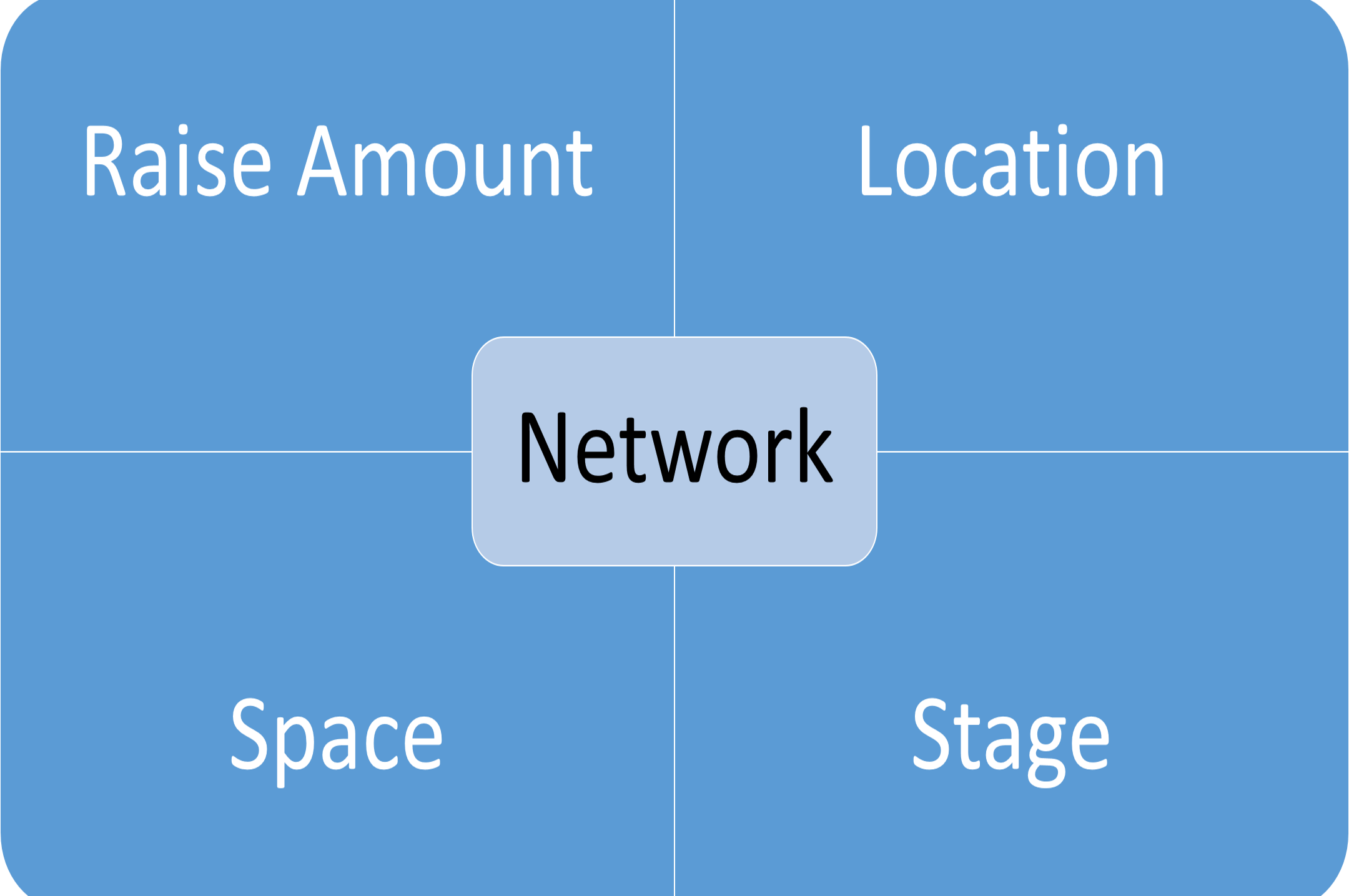
There are 5 primary criteria I use to help entrepreneurs find the right target investors.

1. Location. 2. Company Stage. 3. Space (Market). and 4. Raise Amount. 5. Network.

Target Angel Investor List Criteria

1. Location. All angel investing is largely bound by “what do we have in common”. Many angel investors prefer to invest in areas they have expertise in, in entrepreneurs they know and in their “own backyard”. There are a few exceptions (many Indian angel investors in the US, like to invest in companies in India), but angel investing is largely a “city specific” opportunity. If you can find the top entrepreneurs and high net worth individuals in your city or expats who are from your city but have left to go abroad, who you know, that would be a good place to start.

2. Company Stage: The further along you are from the #NapkinStage (yes, I know the irony in this criteria) but not so far along to be expensive, is when angel investor like to invest. I am going to put some simple stages – Idea (#NapkinStage) (or concept stage) – when you are formulating the problem with your cofounder, then the #PrototypeStage, then #CustomerPilot stage, followed by #MVP, and then the #TractionStage and finally #RevenueStage.

Most entrepreneurs need investors at the #NapkinStage through the #TractionStage, but most angel investors prefer to only invest at the #RevenueStage. The number of purely Idea stage investors is fairly small – limited to your network, since this used to be a Friends and family round.

Most entrepreneurs also like to join an accelerator at the #NapkinStage as well, but most accelerators prefer to take companies at the #Prototype or the #CustomerPilot stage.

3. Space. (Market): This would be the most obvious, but I am surprised by the number of entrepreneurs who reach out to folks who have been in B2B all their lives with a consumer internet opportunity. While, there are exceptions when folks who like to invest in areas outside their expertise, most angel investors I know tend to “stick to their knitting”, since they like to add value beyond the money.

4. Raise Amount: Depending on the amount of money you are trying to raise, you might want to create a target list of 20 to 50 investors. The average angel investor puts between $5000 to $50K per company. There are exceptions, of course, with some angel investors putting as little as $1000 and a few also putting up to $250K. If, you are looking to raise between $250K to $1 Million you want to target between 20 to 50 angel investors, which is the right number of early targets to get about 5-10 investors signed up.

5. Network: This is probably the most important and sometimes the only criteria needed. If you can dig your well before you are thirsty, it makes it easy to raise money faster. The first place I’d start to build my target investor list is the people in your network, who you have worked with before and those that know you well.

What percent of active angel investors are on #AngelList?

Every week, I get about 2-3 emails from entrepreneurs asking me to introduce them to angel investors who might be interested in a startup.

Besides this, I get about 3-5 introduction requests to specific investors.

Looking at my reports from Conspire, I end up helping more than 70% of the specific requests and only introduce 25% of the folks from the generic requests to “connect” to investors.

I’d love to help a lot more, but I unfortunately dont have the time. For the entrepreneurs who want connections, I end up saying – Can you please check on #angelList. Which is what I would do if I were in their position.

I usually get a note from the entrepreneur who say most of the investors on Angel List are “fake”. I think they are confusing getting “lead investors”, who are on Angel List versus, getting the entire round done, with investors who are not on Angel List.

Somehow, many of them come back telling me that there are a host of “other investors” who are actively investing, but are not on angel List.

That lead me to the topic of this blog post.

“What percent of active angel investors are on #AngelList?”

Angel List Database of Investors

Most entrepreneurs believe that like the iceberg featured above there are a lot more actual investors than the # on any database. Or that there is opacity in the identification of angel investors.

I am not sure of the data, but I wanted to do some quick and dirty data checking.

Here are the assumptions I am making about the startup.

1. I assumed that I was looking to raise money in Bangalore, India or Mountain View, California.

2. I am starting a company in the SaaS (Software as a Service) space.

3. I am looking to raise $500K from angel investors

4. I have early product and some customers (none of them are paying, or a few are paying too little).

5. I dont have a large network of investors and I am not from Facebook, Google, LinkedIn or a “hot company” on my resume.

I then looked at Angel List with these assumptions and got about 35 “individual investors” in India and 512 investors in Silicon Valley. There are actually a lot more, but I weeded out the ones who have done only 1 investment over 2 years ago and those that are not SaaS specialists.

I also then looked at the recent 9 SaaS investments (last 2 years) in India, and 14 SaaS investments in SaaS in the Bay area. I got this list from Owler and Crunchbase and also looked at data from 5 accelerators – YC, 500, Alchemist, Angel Pad and StartX. I wanted to check who are the investors in these startups.

The data on some of the investors is available but most of the startups that recently got funded have 3-5 investors who are public and rest (similar number) who are “behind the scenes”.

The quick and dirty research suggests that close to 40%-50% of angel investors are not on Angel List.

The reason I was able to determine that only 20%-50% of the investors were publicly identifiable was by speaking to 7 of the Indian startups and 9 of the US ones.

The most common 3 reasons why not all investors were listed on the company’s Angel List page were:

1. The angel investor was not on Angel List.

2. The other angel investors did not want to be identified or preferred to keep a low profile.

3. The angel investors were part of the syndicate, which was led by one of the well identified investors already on Angel List.

I spoke to 5 of the “lead investors” and 3 of the “not on Angel List” as well.

There are 3 takeaways for entrepreneurs from my research.

1. To get an angel round done, you need a lead angel investor who is very likely on Angel List and is pretty active (you need a lead for other rounds as well, BTW, so no surprises here).

2. If an “angel investor” is not on Angel List, it is highly unlikely they will lead the round or help you close the round.

3. Most of the “other investors”, not on Angel List purely work on recommendations from their trusted “Angel investors” NOT from other entrepreneurs. This is different from professional investors (such as Micro VC’s or VC’s) who get most of their recommendations from other entrepreneurs.

So, my recommendation is start on Angel List, get your lead investor and then use other sources (LinkedIn is the better source than Angel List for this) to find investors who are connected to your lead on that platform, but are not on Angel List. Also use recommendations from your lead investor to help you get to other investors who invest with your lead.

How the cloud is the huge opportunity for Indian IT Services companies

I got an email from a friend yesterday who is at Infosys. He pointed out that they had stellar quarter and were “back on track again”. He challenged my blog post from a couple of weeks ago on the disruption that SaaS, cloud and Coding / Hacking schools are having on IT Services organizations.

I have a theory that most everything insiders know about a market clouds their judgement from a big picture and that makes them more vulnerable to short-sighted proclamations. A simple way of saying that is I was probably wrong and not viewing the big picture.

For services companies that are still driving revenues by hiring a lot of people and ensuring they are billing clients, the business is not very complicated. Anything that gets more of their people billing makes them money.

In fact, Accenture and many other services companies make billions of dollars from under 500 customers worldwide.

Imagine that.

Accenture made $32 Billion and had fewer than 500 clients.

They have not added more than 10 clients in the last 5 years.

They have 141 “Diamond clients” who each spend more than $100 Million a year with them.

So you can make lots of money from a small number of customers.

One big opportunity yesterday I was pointed to for the IT services firms is that many larger customers are moving from in-house data centers to public and hybrid clouds.

Hybrid Cloud
Hybrid Cloud

The move is largely due to the fact that many data centers are fairly old and using power, cooling, etc. inefficiently. So, their cost of delivering IT services is rather high, which makes them less competitive. For example, the average mid-sized to large insurance companies spends about 8-10% of their revenues on technology and IT. Of that 14 – 17% is spent on cloud and data center. The older their data center and cloud, the less agile and nimble they are for sure, but also the cost of their IT services is now nearly 30 to 50% more than others (per service invocation).

Which is why many of the larger clients of the IT services companies are considering a move to the cloud. That move, though, comes with its own set of challenges. Privacy, data security, application profiling etc. are all problems that they did not worry about so much before, but now they have to.

The biggest opportunity for IT services companies seems to be the move to the cloud from private data centers.

There other two opportunities are in analytics/business intelligence and migrating applications from “web” to mobile.

How to pick and choose early users / customer for your #napkinStage startup?

The first few customers (or users) usually set the tone for your startup. They are the ones with either acute pain or the burning problem, and the earliest of early adopters. Usually, I have found that most entrepreneurs get their early customers because of the relationship they have with them OR they solve a really pressing problem for their customers.

When I talk to most entrepreneurs, one of the first things I recommend to them is to segment their potential customers.

The discipline of finding the factors that differentiate one set of your potential customers from another based on a set of characteristics is customer segmentation.

There are 3 important questions you will need to answer about your customer segmentation strategy before you recruit potential customers.

Most entrepreneurs, at the napkinStage end up getting customers who they know, but sometimes may not have the pain point as much. Else they end up getting customers who have the pain or are unwilling to try anything “not proven”.

When you have been out trying to get early paying customers, you will realize quickly that customers have one of several reasons for not buying or wanting to try your solution.

1. They are risk averse, and not early adopters, so while they have the pain, they use their existing  manual or alternative techniques to solve the problem.

2. They are able to deal with the pain, since they get a sense of job security knowing that they know how to solve the problem, and no product, machine or algorithm can replace them.

3. They believe the ROI from solving the pain will be negligible and their time and money is better spent elsewhere.

4. They want more mature solutions so they can handle their “special situation”, which is unique enough that no early product can customize it and be less expensive at the same time.

5. They believe the solution will weaken their position since it will solve the problem that exposes their “value-add” to the company.

6. They are not emotionally vested in either you or your startup, so they are not willing to take the leap of faith to try an early version of the product.

7. They actually dont believe your solution will solve the problem and are willing to wait and see some more proof until a point that it does.

These and many other excuses / reasons are the ones I have heard of consistently when I have been trying to get early customers for most of my startups.

If your potential customers sees a big benefit to:

a) their personal agenda (promotion, makes them look good, etc)

b) their position in the company and finally

c) their company’s standing in the market.

Picking your early customers though, is almost always a combination of personal relationships, built over time and solving a problem they have that is so intense that they are willing to try anything to get rid of it.