I did screw up. Cant’ say no. I hurt people who trusted me, believed in me, and now are besides themselves. Unfortunately I cannot talk about the details given the legal circumstances, but I truly apologize.
I am sure most people cannot forgive me. Unfortunately throughout my career, I hurt many people either because I was blunt or because I was mean spirited.
I own my mistake, and now I have to course correct. Seeking help is what I am doing. I think the road ahead, though, will be very long.
If you have been trying to reach me, I apologize for not returning your email or WhatsApp note, text or LinkedIn message. I just don’t know yet how I can face or talk to anyone. Most days are filled with tears, reflection and a series of questions about “Why” or “What prompted this”?
Until I can answer those questions, I will have to keep to myself.
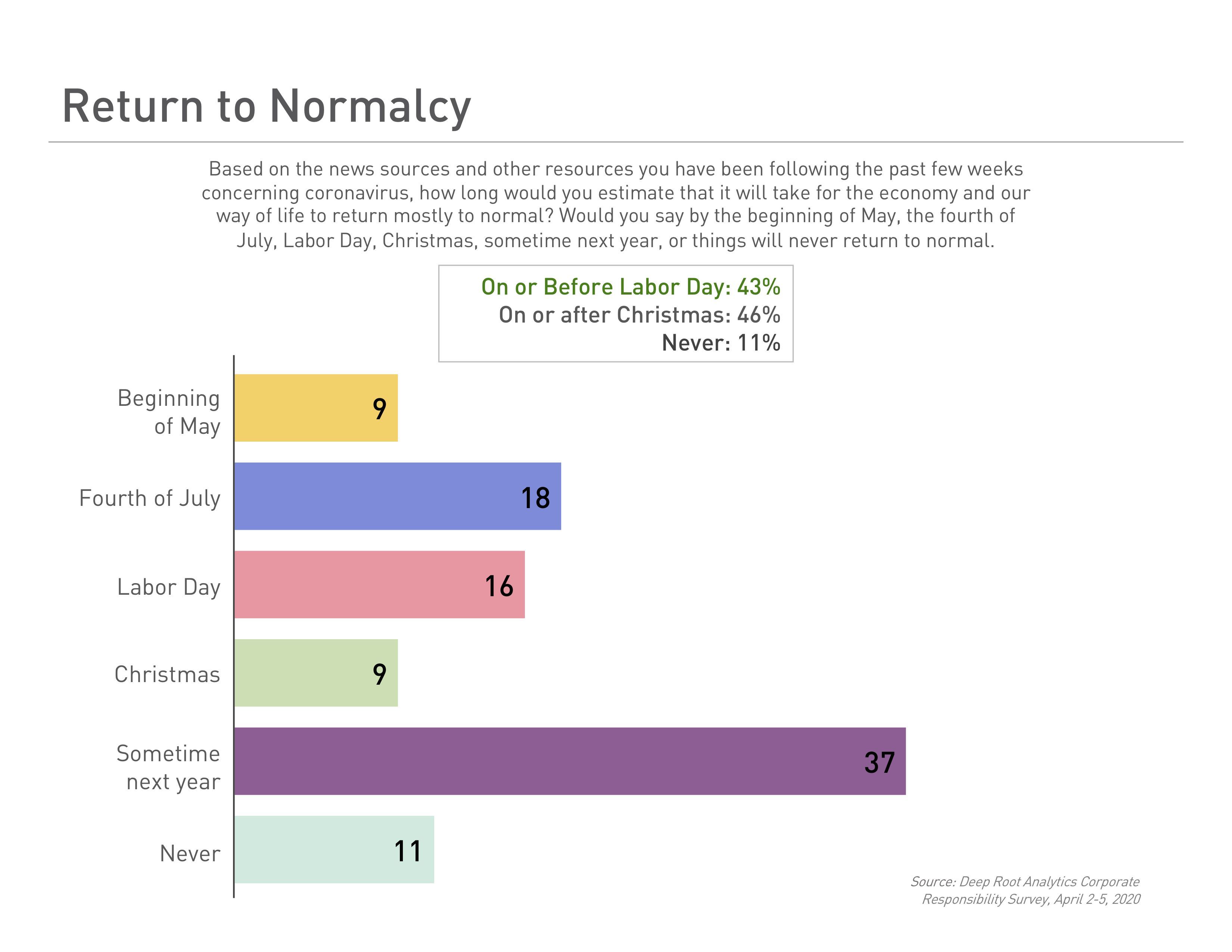
I am truly sorry. I don’t ever expect things will be back to “normal” again for most / all of you. I don’t blame you for it at all. I am not taking the high road. I know it is very hard to recover from breaking trust.
I have to now over correct to the other side and fix myself for the sake of others who I have to help.
In 2013, I read a paper by Credit Suisse – Alpha and the paradox of Skill. In the podcast “How I built this” – the host Guy Raz interviews successful entrepreneurs and ends with the question “Do you believe your success was luck or skill and hard work”? If you look at summary of answers to that question, successful people attribute 60% to luck and 40% to skill – on average.
Back to the paper on paradox of Skill. The summary of the paper in one quote:
In investing, as in many other activities, the skill of investors is improving on an absolute basis but shrinking on a relative basis. As a consequence, the variance of excess returns has declined over time and luck has become more important than ever.
Credit Suisse, 2013
To be clear there are opportunities for skill to shine. Those are opportunities where “game” is played by people with lesser skill.
The main lessons are that sometimes it’s more important to worry about the game you’re in than the skill you bring.
The WSJ has a piece today about the worldwide remittances market. It is roughly $554 Billion worldwide with the top recipient countries (no particular order)
India $46B (from US, Dubai and Saudi Arabia), 3% of GDP
Mexico $38B (from US primarily), making up 3% of GDP
China $24B (<1% of GDP)
Pakistan $11B (8% of GDP)
Philippines $20B (10% of GDP)
Guatemala $10B
Vietnam $12B
Bangladesh $15B
Ukraine $11B
Egypt $9B
Nigeria $8B
The market was largely owned by Western Union, but now a host of startups are in the space including:
The impact of Covid19 on several businesses is catastrophic. Many businesses entered into contracts with vendors, suppliers and partners for their business.
In legal terms, “Force Majeure” means a clause that has an “out”, caused by an event or effect that can be neither anticipated nor controlled. You may no longer meet the obligations of the contract since the events (e.g. Covid were beyond any parties control.
A force majeure clause in a contract would typically include an exhaustive list of events such as acts of God. War, terrorism, earthquakes, hurricanes, acts of government, explosions, fire, plagues or epidemics or a non- exhaustive list of events wherein the parties narrate what constitutes these events and thereafter add “and such other acts or events that are beyond the control of parties”.
Can Covid19 be a reason for Force Majeure?
You most certainly should consult your lawyer, but there are multiple startups I know that are reducing their ongoing costs of systems and technologies, by invoking this clause.
The biggest bottleneck with Covid19 right now is rapid testing and centralized reporting. If we can fix that then we can start to reopen “parts of the quarantine”.
Most data points to the fact that people who are suffering or dying from Covid19 are those who have preexisting medical conditions or poor immunity (old, infirm, etc.).
That is likely between 5% to about 15% of the population. (source)
The rest of the people would likely suffer mild to no symptoms from CoVid.
Instead of allowing them to go about their lives, everyone’s life is being disrupted to ensure the 5-10% dont die.
In no way am I implying that the 5-10% be dammed. In fact we should take more precautions to ensure they are safe. Quarantine them, provide extra medical attention, support and safety.
If we had a quick (say < 15 minutes) way to test Covid and an easy way to aggregate the data and report it to local, regional or central authorities, then those who dont test positive could be allowed to go on with their lives.
So how does this play out?
Imagine 5-10 startups that are all innovating on “rapid test” with reagents from your home. They send you a kit (pack of 12 test kits), you take the test and test results are uploaded to a service via your phone. If the test is positive, you have to quarantine. If the test is negative, you can go to “work” or elsewhere. Assume the tests will be valid for some short period – maybe a day if you are in a high exposure role (e.g. nurse) or once a week if less so (e.g. software developer). This sounds simpler than it is, but bear with me for the sake of argument.
Each kit comes with its own app to upload results, and they are all reporting their aggregate and specific data to local government.
Now public health and other officials know who is and who is not infected and can provide “discerning guidance”, instead of a diktat for the entire population.
Now to the next question: How do we ensure that those that don’t test positive infect those who are old / infirm / or with poor immunity?
More than ever we need the strong and able bodied to help those who are unable.
So the precautions that are recommended by physicians and medical professionals apply more to those that are infirm that those for who this is “like a flu”.
Wash your hands, use masks are all good recommendations regardless of whether you test positive or not. Everyone should take those recommendations.
Having everyone have their lives upended is hard for 85% – 90% of the population.
Over the last few weeks as many in the world have been in lockdown, there has been a temporary “mobile app migration” happening. There are new apps downloaded and they replaced existing apps on the “home screen”.
While some of these apps are likely temporary use, for e.g. I have 6 “conferencing apps” – Zoom, Uber Conference, Webex, Google Hangouts, Blue Jeans and Goto Meeting. That is because of the many people I have conference calls with – each company seems to have chosen a different web conference solution.
Other apps seem like they will have staying power – Houseparty, for e.g. which has games, networking and video conferencing all built into one app to keep in touch with friends and relatives.
The apps that have moved away from my “home” screen, which I expect will come back once the crisis will be behind us include – Uber, Lyft and all the airline apps from Delta, Alaska and United.
Over the last 2 weeks multiple companies in many regions have started to re-purpose their manufacturing to support new requests due to COVID19.
Flexfacturing is “flexible manufacturing” – the ability to use a production facility and assembly to “easily” move to manufacture another product based on demand.
Here are some examples:
A textile manufacturer has started making masks in Gastonia, NC.
Anheuser-Busch, a maker of beer will start to make and distribute hand sanitizer – the same for LVMH & Zara
Distilleries in New York are making hand wash soap and anti-bacterial detergent
This is the transformers meets manufacturing. Companies finding out (for altruistic reasons or otherwise) that what they are building has low demand, and something else has high demand.
I believe this trend will continue to happen after Covid19. More manufacturing facilities will be spawned in multiple locations that are built from the ground up to be flexible.
This morning Plaid, a fintech (finance + technology) company that had raised about $350M so far and was valued at about $2.7 B in its previous round, 1 year ago in Dec 2018, was acquired by Visa for $5.3B.
The company itself is about 6+ years old and provides APIs to help companies such as Venmo, Robinhood get API level data access to their users Bank accounts, credit cards etc.
If you have been around for a bit think about companies such as Yodlee and others.
I remembered when Mint was acquired by Intuit. Yodlee powered Mint, but Yodlee was B2B and Mint was the consumer facing app. They got the huge value.
In this case, there is no doubt that the fintech companies (59 unicorns) that depend on Plaid are valued richly, but the infrastructure provider – Plaid, also deserved the huge valuation.
In looking at why Plaid was acquired, there are 5 reasons given by Visa. (pdf file)
Over 75% of internet consumers use at least 1 fintech app and Plaid provides the underlying plumbing to all / most of them – meaning, there are more customers to get.
Plaid provides data and network access, which is fairly similar to Visa’s business model – making it an easy to justify acquisition
Developers are driving new fintech app adoption and Plaid provides solutions to developers – a new audience for Visa to target
As opposed to old banks (yesterday’s fintech companies), the new fintech companies depend on Plaid
Plaid can help Visa with international API driven access to other fintech organizations beyond the US where this is just beginning.
Overall, a super impressive story. I am not sure this is worth $5.3 Billion, but who am I to question or value it. It is worth that and more to Visa and they are paying.
I am reading a book Originals – How non conformists move the world. It is about folks that challenge the norm. In it, the author quotes from Malcolm Gladwell
“Many entrepreneurs take plenty of risks—but those are generally the failed entrepreneurs, not the success stories.”
This is not new and very controversial at the same time. He mentions multiple examples of highly successful entrepreneurs from the founders of Warby Parker to Bill Gates, as folks who had a side-gig in their venture before they plunged into something.
On the other hand, my experience has always been that when you commit to anything full-time you get a lot more success, as I have seen in my own case.
I am curious, how many of you are doing a side-gig or a project that you hope someday turns into a full-time opportunity or startup?
I’d love to also hear if you think that committing full-time versus doing it on the side will get you to your goal.
As an investor I never invest in any entrepreneur that’s seeking investment for an opportunity they are doing part-time. Should I be changing that perspective?
Outside of Silicon Valley it is extremely hard to raise any financing for a startup. It is not unusual to hear about a $250K – $500K round taking more than 2 or 3 months to close. If the entrepreneur is a first-time founder, without any pedigree (top tier school, well known previous employer) expect it to take longer. In fact according to the data shared by Mar Hershenson (slides below) angels now are not investing until you have some traction.
There are many reasons why angels take so long to invest and insist on multiple meetings, due diligence and more data before they invest relatively small sum of money such as $25K – $50K. Besides the usual reasons such as “hard-earned money”, “better investment options elsewhere”, etc. there is one issue that rarely gets discussed outside closed rooms or in private messages.
The lack of information sharing by entrepreneurs once a round is closed.
I dont think it has anything to do with if the company is doing well or not. Some entrepreneurs just don’t keep their investors in the loop – writing that off as “busy work”, “don’t have time – building the business, gaining customers”, etc.
Looking at my investments alone, 3 of the companies have founders who were referred to me by friends have founders in this bucket. Before my investment, I would get an email or WhatsApp message every 2-3 days with a request for follow-up meetings. One of them was very persistent, following up with me for 5 months before my investment.
After the investment however, radio silence. Now, I have to reach out to them every 6 months or a year to find out how they are doing. While previously I would get a response to an email in a day, now 50% of emails are not being responded to.
To be honest, I understand that entrepreneurs are busy. Unlike VCs who have information rights and have an ongoing cadence with the CEO as part of the board, angels rarely do. Angel investments are mostly passive, with a promise to help with “network” and “connections”. In many cases these are marginally relevant to the entrepreneur.
I have however now developed a new set of checks to ensure I don’t go down the path of an incommunicado entrepreneur.
I ask to be sent their weekly / monthly update to investors or the team for 2 months. The quality, timeliness and consistency of the emails gives me a clear indication about if the entrepreneur is even going to keep others in the know or in the dark.
This is only one of several checks but, if you are an entrepreneur, having a frequent (monthly) update on highlights, low-lights and insights about your business, key milestones and next steps helps you and the investors find ways to help you.