Category Archives: Entrepreneurship

How to evaluate an ETF to trade

Choosing an ETF
Choosing an ETF

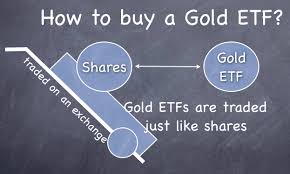
ETFs, like stocks, are accessed on exchanges, through a brokerage account— that is, via financial advisers or institutional sales teams of registered broker/dealers or through on-line transaction services. Trading is one of the largest differences between ETFs and open-end mutual funds, which are purchased and sold once a day at the closing net asset value of the fund holdings.

An ETF has the advantage that it can be purchased whenever  exchanges are open—as well as at closing NAV when a transaction is large enough to qualify for a creation or redemption.

As with all exchange-traded products, ETF investors usually need to pay a commission, however, and incur a trading cost related to the liquidity factors associated with the ETF.

Since 2007 in the United States, ETFs have consistently represented between 15% and 25% of the total dollar value traded when aggregated with equity trading activity.

The 10 largest ETF in volume and AUM are:

  1. SPY – SPDR S&P 500 (US stocks)
  2. IVV Ishares Core S&P 500 (US stocks)
  3. EFA iShares MSCI EAFE (Europe Australasia and Far East)
  4. QQQ Powershares QQQ (Nasdaq 100 trading index)
  5. VWO Vanguard FTSE emerging markets (Emerging markets)
  6. VTI Vanguard Total Stock Market (US Total stock market)
  7. GLD SPDR Gold (Gold bullion)
  8. EEM IShares MCSI Emerging markets (Emerging Markets)
  9. IWM iShares Russell 2000 (Small cap & Mid Cap US Stocks)
  10. IWF iShares Russell 1000 Growth (US Stocks, mid/small cap)
 

How are ETF’s created and sold / marketed?

ETFs are traded on stock exchanges like stocks. Unlike stocks, however, they do not get onto the exchange via an initial public offering.

The only investors who can create or redeem new shares of an ETF are a special group of institutional investors called “authorized participants” (APs).

APs are large broker/dealers, often market makers, that are authorized by the issuer to participate in the creation/redemption process.

The AP creates new shares of an ETF by transacting with the ETF manager.

Each day, an ETF manager publishes a list of securities that it wants to own in the fund.

The list of securities specific to each ETF and disclosed publicly each day is called the “creation basket.”

To create new shares, an AP goes out into the market and buys up all the stocks in the creation basket at the right percentages.

These transactions between the AP and the ETF manager occur in large blocks called “creation units,”.

Most investors, large and small, buy ETFs through their brokers, just as they do a stock. The price those investors pay is based entirely on supply and demand—as with a stock.

Buying ETF
Buying ETF

ETF issuers are required by their exemptive relief from the SEC to contract with third parties to calculate and publish an intraday estimate of the value of an ETF share based on that day’s holdings as disclosed in its creation basket.7 This value is published every 15 seconds and is referred to as the “intraday indicative value,” “intraday NAV” (INAV).

How to invest in Currency though ETF?

Currency ETF
Currency ETF

Currency ETFs have done an excellent job of providing access to a market that was difficult for retail investors to access as recently as a decade ago. In the past, an investor needed a separate account to trade currencies and high minimums were involved. Today, an individual investor can gain exposure to, say, the Swiss franc with less than $100 and a brokerage account.

Since the first currency ETF was launched in 2005, the sector has grown to include 24 currency funds.

Australian dollar
Brazilian real
Canadian dollar
Euro
Chinese renminbi
Indian rupee
Japanese yen
Swedish krona
Pound sterling
Swiss franc

Largest ETF sponsored institutions

ETF’s are managed and offered by companies that have a focus on providing products that help investors get diversification at a much lower cost than a mutual fund. Here is the list of the top companies with the most Assets under management and offerings of ETF.

Company AUM In $ Billion # of ETF
BlackRock 673.2 296
SSgA 379.6 130
Vanguard 351.2 67
Invesco PowerShares 99.9 161
WisdomTree 33.8 62
ProShares 27.4 145
Guggenheim 24.4 68
First Trust 23.9 85
Van Eck 23.4 62
Charles Schwab 19 21
PIMCO 14.6 21
ALPS 9.3 15
Barclays 8.1 80
Northern Trust 7.6 15
Direxion 7.3 55
JPMorgan 5.9 1
UBS 4.4 31
Global X 3.4 40
ETF Securities 3 7
US Funds 2 12


Which are the top 20 ETF by Assets Under Management (AUM)?

The largest ETF by amount of money invested in them have a lot more focus on United States Stock market exposure than any other asset class.

ETF visual
ETF visual

If you want to diversify your holdings in the market with exposure to commodities, stocks and bonds, the most diversified portfolio would suffice with investing < 20% each in 5 ETF’s.

SPY SPDR S&P 500 89.9 US equity

GLD SPDR Gold 58.0 Commodities

EEM iShares MSCI Emerging Markets 47.5 International equity

VWO Vanguard Emerging Markets 44.4 International equity

EFA iShares MSCI EAFE 36.8 International equity

IVV iShares S&P 500 25.8 US equity

QQQ PowerShares QQQ 22.1 US equity

TIP iShares Barclays TIPS Bond 19.4 US fixed income

VTI Vanguard Total Stock Market 18.2 US equity

IWM iShares Russell 2000 17.5 US equity

LQD iBoxx $ Investment Grade Corporate Bond 13.1 US fixed income

IWF iShares Russell 1000 Growth 12.6 US equity

MDY SPDR S&P MidCap 400 12.2 US equity

EWZ iShares MSCI Brazil 11.7 International equity

AGG iShares Core U.S. Aggregate Bond 11.2 US fixed income

SLV iShares Silver 10.8 Commodities

IWD iShares Russell 1000 Value 10.7 US equity

IJH iShares S&P 400 MidCap 9.3 US equity

BND Vanguard Total Bond Market 9.0 US fixed income

DIA SPDR Dow Jones Industrial Average Trust 8.7 US equity

What is an ETF and what are the differences between them and mutual funds

Exchange Traded Fund

ETF is an Exchange Traded Fund. There are over 2000 ETF in the US alone, covering multiple sectors, asset classes and investment options.

Just like a mutual fund, the ETF is a diversified holding entity with a basket of assets based on their goal.

Like a mutual fund, an investor buys shares in an ETF to own a proportional interest in the pooled assets.

Unlike mutual funds, ETF shares are traded in continuous markets on global stock exchanges, can be bought and sold through brokerage accounts, and have continuous pricing and liquidity throughout the trading day.

Thus, they can be margined, lent, shorted, or subjected to any other strategy used by sophisticated equity investors.

Most ETFs are, in their investment processes and organization, simply an extension of index-based mutual funds. They are a new delivery vehicle that happens to be more tax efficient, have lower cost than index funds, and be available on an exchange.

The best solution to monitor and manage your kids Internet usage at home

We have 4 kids and there’s not a day that goes by without a debate on the pros and cons of “monitoring” and “managing” their Internet usage.

We have not had a television for years, but the older two have phones and every one of us has our own notebook. The notebooks were for essays, homework and the like, but I know everyone of us watches some videos and my son is hooked on Minecraft and my daughter on Youtube.

Meet Circle at home
Meet Circle at home

So, when my friend Sachin, recommended Meet Circle I went over to see a demo video and ordered one in a minute.

It is a small device, that connects to your WiFi device and monitors and enforces policies for Internet usage for all devices.

I ordered it on Monday, it costs $106 with taxes and I received it today.

It took me 4 minutes to setup. I had to connect the device to the Power Outlet, then download the app.

After dual authentication using my phone, the app “identified” devices connected to the WiFi router and I was able to set policies on YouTube, Facebook, SnapChat, Instagram, Twitter, MineCraft, etc.

Absolutely wonderful, simple to use and I’d highly recommend it.

In fact the best part is I have setup policies for myself as well. I wont be on the Internet between 10 pm and 430 am.

It is pretty secure, in fact and I tried to hack my way around it multiple times and failed.

Buy one now if you have kids.

What makes you unique to customers wont be sufficiently distinct to recruits

Although the funding market is getting tighter, there are enough companies getting early stage and follow on funding, to create a strong demand for good talent.

In most of the privately held companies I know of, there is a strong need to hire 3-5 developers for each “other” role they hire. Marketing and Design roles are next, followed by Sales.

Most hiring managers at smaller firms I talk to are finding it very hard to hire good folks in this market. The experienced talent (even if they are willing to pay top $) is pretty happy at their current roles, is what I hear constantly.

Many cite good pay, good benefits and great work environment as the key things they offer, but that’s largely insufficient to attract the best people.

On the other hand, the top companies have enough inbound interest from developers and other talent, not because they made it to be a “great place to work”, but because they are attracting a self selecting group of people based on their culture.

What culture is and is not at a startup is fairly hard to understand and express.

I know this: The more unique your culture (good or bad) the more self selecting the kind of people you attract will be.

What makes a company unique for potential employees is not the same as what makes it unique for customers or investors.

A customer wants uniqueness in capabilities, features, etc.

An investor wants uniqueness in technology, distribution etc.

A potential employee wants uniqueness in mission, vision and purpose.

Pay, benefits, compensation, work flexibility are all assumed to be good and table stakes now.

Your culture and how the stories are told around your culture are the things that will attract the self selecting group to apply and want to work for your company.

As an example take HubSpot’s response to the piece by an ex employee.

Their culture attracts a certain type of employee, who would not like to work at another software company for example.

Similarly Jeff Bezos’s response to the New York Times piece was also a defense of their unique culture.

As a founder, I’d spend more time working on creating a unique and different culture which attracts potential employees via word-of-mouth.

Remember, though that what makes your product, technology and company unique wont likely attract potential employees. What makes your culture distinct will.

How do people get jobs at “hot startups”?

This is a question I get asked every week. There’s not a week without an email or a LinkedIn message from a person who’d like some career advice and an introduction to a “hot” startup that’s hiring.

Most of the folks I know, understand that their “large” company is not growing as fast and providing them opportunities as quickly as they’d hoped to grow.

Hot startup looking to hire

I get one of 3 questions:

  1. Can you please introduce me to some “hot” startups? The people who work in bigger companies don’t want to take a lot of risk, so they mean “well funded” and “growing well” when they say “hot”.
  2. Can you suggest a few “fast growing” companies that I can join? Friends who work at smaller, lesser know and slower growing companies would like names of some good companies and hopefully an introduction there.
  3. Do you know anyone at a good startup that’s hiring?

These 3 questions are the hardest to answer.

The best suggestions I have had so far are for my friends to:

a) Look at AngelList jobs

b) Network with their previous colleagues and managers who know them well, so they can vouch for them

or

c) Work on their LinkedIn profile so their profiles shows up for the keywords that recruiters are searching for.

The real answer is that most “hot” startups get a lot more people interested in them than the people they can accept.

So, the bar is fairly high.

To join a hot startup, you need to

a) be referred, by someone in that company who can vouch for your quality

b) be recruited by a head hunter with a mandate to hire for that position quickly

c) get introduced by someone the hiring manager trusts and believes has a high bar for talent.

Most startups post about 70-80% of the jobs (anecdotal information) they are looking to fill.

Finding out the unlisted positions and the executive positions, you have to be an insider – either know the hiring manager or the someone in the senior leadership team.

So, the best advice I have is

  1. Make a list of companies by categories, such as SaaS, Cloud Infrastructure, etc. which you think will do well.
  2. Go to Angel List to find out if they are hiring. Apply there
  3. Then go to LinkedIn to find out who can connect you to the hiring manager
  4. Make sure your LinkedIn profile is up to date and your title, and keywords that a recruiter might enter while looking for candidates. The keywords need to be Buzzword compliant unfortunately, so make sure you say Growth Hacker, not Marketing Manager, etc. I know this is lame, but in talking with 4-5 of my recently hired colleagues, this matters a lot

What does a PC do and how is it being replaced?

Global PC shipments fell almost 10% in Q1 to less than 65 Million for the first time since 2007.

The total installed base of PCs and desktop computers (consumer and business) is over a billion, whereas mobile phones are at 6+ Billion and smartphones at over 2 Billion.

Most people who wanted to buy a Personal computer have probably purchased it already.

Businesses are replacing PC’s now every 5 years instead of 3 and consumers are replacing their mobile phones every 2 years, skipping the PC altogether.

Most new home owners are buying an Alexa or a Smart Television instead of a PC.

The replacement cycle for televisions is now 5 years worldwide and 4 years in the US. Which means that the average television will get replaced faster than the average PC.

The PC was both, a consuming and a producing device.

Since the consuming has largely shifted to the phone, the PC tends to be used more for producing (writing, developing, etc).

That means both for the home and the business, the % of time the PC gets used has reduced on average by 20-30%.

Which means your PC should last you 20%-25% more than before.

This does not look too good for PC manufacturers overall. In the mobile-first, cloud-first world, the PC is becoming a device similar to the bread maker- most homes dont need one and can make do with an oven instead of a specialized appliance.