Category Archives: Entrepreneurship

How investors test for “listening” skills in entrepreneurs

One of 21 skills I try to look for in entrepreneurs is listening – more specifically active listening. The reason for testing this skill is obvious. More than wanting to be listened to, I look for whether the entrepreneur is listening to respond or listening to understand.

Most entrepreneurs find it hard to listen, in fact most type A people are in roles that requires them to be constantly “pitching” and “selling” their vision, company and product. So, they are always in “objection handling” mode.

While I understand that most of the questions that are going to be asked by the investor or customer are likely ones that the entrepreneur has heard before, nonetheless, I am seeking to understand if the entrepreneur can still parse, ask relevant questions to clarify and be thoughtful about their responses.

There are 3 dead-giveaways when I know someone is not listening.

First, the entrepreneur says “Yes, Yeah or Uh Huh” a lot even before sentences are complete – usually this means they are pretty distracted and looking for an opening to get their word in.

Second, they never probe to ask questions themselves, instead are always providing answers. A key part of listening is to understand, pause, reflect and let silence take over at times – which may be awkward at times, but it works.

Third, they are distracted easily and end up answering the wrong question, keep using filler phrases such as “I understand” or “Sure, but…” often.

What we look for is listening first. That does not mean we are looking for someone to change their mind based on our questions. We are seeking to understand if they have the cognitive ability to keep their “mind” open not just their “ears”.

You can hear well, but not listen at all.

The next question is how can someone listen well?

The first is to listen with more than your ears – listening with your mouth – asking more clarifying open-ended and closed questions. This is the best way to force yourself to actually ask more questions.

The second is to use silence strategically – pause and reflect on the question. Use the ability to tell the other person “Let me think about that” before you start to answer their statement, question or comment.

Finally use non-verbal communication to listen if it is a one-one, face-to-face meeting, including using your eyes – focus on the person or taking notes, and use time to summarize or paraphrase their comments.


 

I commit

  • To respond to (most) messages  from entrepreneurs seeking my help or advice within 2 days
  • To politely but quickly decline my interest in an investment without wasting time
  • To be empathetic to an entrepreneurs needs and listen more than dispense “advice”
  • To help if I can in any way by connecting them to folk if appropriate
  • To not waste an entrepreneurs time or energy by asking them for data they may not have

This is a post for myself, so you wont find much value here.

Once a while, I forget what makes me happy, excited and moderately successful. So, I have to remind myself. Not with a new year’s resolution, or a birthday resolve or a 5 year plan.

To those who I did not respond who took the time to write me a long email, I apologize.

To those others who do not know me and felt my one line reply of “not a good fit for me” was insufficient, I am sorry.

To most others who encourage my writing by liking on Facebook or commenting, and ReTweeting, sharing, etc. – much thanks. It is you that makes me keep writing. I cannot say how much happiness I derive from getting feedback from your comments – good, bad or indifferent.

I like the “Meh”, as well, so I can keep going higher.

Reverse “brain drain” – the osmosis of startup ideas into the enterprise

Throughout most of the 80’s, 90’s and 2000’s successful big company ideas, concepts and models – such as Rank and Yank (GE, Microsoft), Be number one or two in a market or get out (GE as well), Just in Time Manufacturing (Japan), etc. were pretty popular.

Now, of course, most bigger companies are adopting the theories, practices and models that startups have pioneered – Lean startup methodology, DevOps, Customer development, Business model canvas, Move fast and break things, Open office space, etc.

This “reverse brain osmosis” is critical since startups have captured the imagination of most people.

It is easy to just put these cultural and thematic phenomena as “adopting what’s successful”, but there’s more to it than just larger companies adopting successful startup ideas.

Over the last 3 years as I talk to more larger companies and startup entrepreneurs, I have not been asked by a single entrepreneur “What are large companies doing that we should adopt”?

I have though been asked by almost every large company executive “What are startups doing that we can learn from”?

The biggest reason is changing market demographics and technology. Both of these are critical. Without mobile, these would not have been possible to a large extent. Mobile changes everything.

The first, demographics and attitudes of the younger folks is driving companies and businesses to adapt as well. Millennial’s especially (most dont like that term, BTW) have much different expectation from their work, life and the balance of it.

The most important change is that they want everything now and the flexibility to work when they want to.

Which is why I think “the gig economy” or “the on-demand economy” is a much bigger concept than any other for this generation and likely be the most dramatic change for the next 20 years.

“Work” is really a man-made concept. As a friend put it yesterday, it is exchange / creation of value for goods and services desired. If we can abstract why we need to work from why we want to work, then it becomes a question of bringing value to another human’s life.

That’s the reason why startups, especially in the Silicon Valley measure the “change the world” factor that their company brings about.


How much does office space and your work environment matter to foster innovation?

I was never one to care about a “great office space and environment”. I used to think that if you did great work, and have a great open culture, that’s all it took to build a great startup or foster innovation at a large company.

Turns out office spaces give out vibes.  In a recent survey of office spaces by (yes I know it is biased), by a co-working magazine they found that startups whose employees considered their office space to be “great” raised 30% more funding and grew 25% faster annually.

Great Office Spaces for Startups

Why did I read this report, or was referred to this report?

I was at the Virtusa event speaking to 60 of their top customers, partners and consultants about innovation. I had a side conversation with 2 folks from a large company who were in the mid-west. They are a fairly traditional company and to jump start their innovation efforts, they moved out of their “office” and rented a fairly trendy retail office in the downtown area, and retrofitted it complete with a kegerator, hipster office digs and bright colored furniture.

They got 50% more resumes and more resumes from interested employees from “top tier schools” than they did when they were in their old digs.

Who knew?

Well, Microsoft did apparently, spending millions in moving from older, office environments to cooler, hipper, open offices.

Google already does, this, spending a lot of money on great office space, so their employees have a “inviting and enriching” work environment.

Color me skeptical, but I am obviously wrong on this one. I used to think this was what the “entitled kids” straight out of school wanted. Turns out everyone benefits from a open, colorful and not drab office environment.

Some observations on the PM Narendra Modi’s visit to Silicon Valley

I had a chance to be in San Jose and be a part of the Prime Minister’s event in San Jose. Friends from India, at NASSCOM including Sangeeta Gupta, R Chandrashekar and Ravi Gururaj, who I worked with for the product conclave for many years, gave me an opportunity to be the Master of Ceremonies for the Startup Konnect program.

It was only on Friday, this week when I flew into San Jose, that I even know that I was the MC for the PM’s event. The magnitude of the occasion did not sink in until much later, when I had a chance to get briefed by the Secret Service, the PM’s Special Protection Group (SPG), the PMO (Prime Minister’s office), the Counsel General’s office from Washington DC and the overseas Security team at DC.

Most of my MC stuff has been impromptu, relaxed and not scripted. This was the biggest change for me more than anything else.

The event was a 2 day affair with lunch on the first day with donors, on day one and a bunch of photo opportunities, followed by a “Digital India” Dinner with top technology CEO’s and finally the Startup Konnect event on day 2.

Mumo Meets Namo. Asks about t Shirts

The part that stressed me the most was the scripting. I had to rehearse 7-12 times (which apparently was less than what the PMO’s office usually demands of the speakers) which was nerve wracking for the rest of the folks, more than for me.

I have been used to my off-the-cuff remarks, some funny comments or engaging the audience with questions and polls. Not so this time.

Every word was scripted, reviewed and conceived, by a minimum of 5 people.

Every step was rehearsed. Stand-ins (people who played the part of the PM, or security) were asked to rehearse with me as well. There was triple-checking, checking five times and more, just to ensure that nothing was left to “chance”.

There were 3 observations I had of the overall event, which I wanted to share for those who were not there.

  1. First, there were about 30 billionaires I met during the 2 day event, who were A-listers in their own right. Turns out they were on the B-list for these 2 days. The PM draws top billing from a wide array. I would consider myself pretty snooty, and someone that would look down on those who would get starry eyed at Bollywood celebrities. I fell into that same trap on day 1. I took close to 50 selfies with folks such as Reid Hoffman of LinkedIn, Travis Kalanick of Uber, Vinod Khosla, Sunder Pichai, and Satya Nadella. The B-listers were the billionaires.
  2. The security was intense at the same time and felt porous as well. People who “played by the rules” and went through the security were treated like cattle being branded before being put in a pen. There were those who did not play by the rules and seemed to be able to drop the “I am XYZ from the PM’s office, so I need to sit here”. Surprisingly many of them were able to get away with it. Average wait times in the queue were 20-30 minutes, but the security on day 2 was intense (it was a much smaller setting, so there was more security). Tempers were frail and it interesting to see how people dealt with it in their own ways. There were 5 “sets” of security teams who swept through the room, and each time we thought the Prime Minister was arriving.
  3. The PM himself is very articulate, charming and personable. Which is probably the reason why so many people like him, and believe he is the right leader for India. His speeches were very well written and I met his speech writers, who offered me some tips on my own “speech”. The PM was always turned on, aware of the on-goings and was very well briefed on Uber vs. Lyft, the startup culture of the Silicon Valley (we exchanged a joke about my and my t-shirts and his attire as well).

I was so humbled by the opportunity though. There are way more qualified people both in India and in the valley than I am, but the NASSCOM team just offered me the opportunity, which was amazing and enlightening at the same time.

This will be the last I talk about this though since many of my friends are already tired of the 2 day photo stream with constant selfies that I took and shared on Facebook.

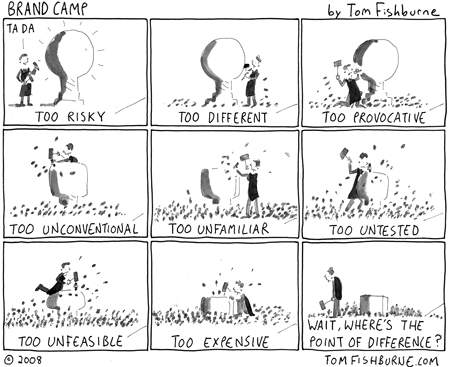
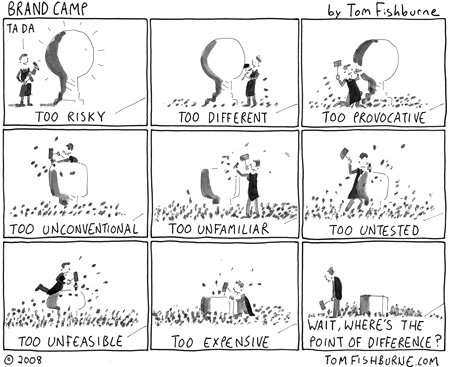
Being different just to be different is not valuable for startups

I had a chance to talk to an entrepreneur yesterday who was building a new SaaS application which I felt was the same as many existing ones in the Retail Loyalty space. The application allowed a small and medium business to create a on-the-fly phone app that gave the store owner an ability to have their “own” loyalty app. I was curious as to why a user (I wont for sure, but I was open to thinking others would) might download multiple small business apps just to keep their loyalty preferences.

I imagined if he could provide a single app that stored all the users loyalty information in a single place might be easier for the user. It would mean that the store owner might not get too happy about promoting another app that wont give them any more value, but nonetheless I was eager to learn.

Being Different
Being Different: Credit

Turns out that many of the capabilities he provided in his app were “different” that what store owners were used to, which he felt were unique to his app, which he was pushing hard.

The only problem was, he mentioned, most store owners were being asked to learn a new behavior, which he was sure was better, but they were unwilling to change, was what he learned.

I think being different is absolutely important. That’s the first rule of new, innovative startups. There are many ways to differentiate – for example – Dominos’ Pizza differentiated just on delivery – they would be able to get your pizza to you in < 30 minutes. In 2008 Twitter’s big differentiation over other short form messaging networks was their 140 character limit.

In technology, though, many founders dont spent enough time understanding what the customer problem is first, so you can be different in solving that customer problem.

Instead they come up with something different and find ways to communicate that difference.

Which leads to a lot of users being confused about why the difference is valuable in the first place.

Especially if you are in an existing market, where customers are used to doing things a “certain” way, being different is sometimes going to take you much longer to get the desired adoption.

Just “being different” is insufficient, you will need to be better as well.

Should you build something inconsequential first to make meaning later?

I was at a newspaper and media conference with 20 of the top editors and business people in March this year, when one of the SVP’s of a large publisher expressed dismay at BuzzFeed. “They are trash” she said. “It is not even publishing or journalism, just plain nonsense with a bunch of silly animated gifs”.

She went on to share that the traffic on their own property had dropped 17% year on year, compared to the published metrics from ComScore that stated that BuzzFeed had grown 200% during the same period.

Yesterday, I read an article about one of the presidential candidates complaining that Donald Trump was “muddying” the presidential campaign for other Republicans by saying things that were divisive and catering to the racist crowd.

Regardless of whether BuzzFeed or Donald Trump are right or wrong, the key point that’s important is that they give people what they want. People might “need” serious journalism or a candidate that talks about economic, political, social and cultural “issues”, but the immigration problem is the one that touches the nerve.

That’s not to say that BuzzFeed cant do serious long form journalism or Donald Trump cant talk about any other issue at length.

In fact, going back to the things that are “serious”, most always they apparently start out being fairly silly.

The reason big new things sneak by incumbents is that the next big thing always starts out being dismissed as a “toy.”  Chris Dixon, 2010

One way to be dismissed and not be taken seriously by big large incumbents is for startups to do something fairly inconsequential (what people want) and build enough strength to then take on serious challenges (what people need).

How long should your customer development interviews be? #napkinStage

Since many accelerators have been asking startup entrepreneurs to “get on the phone” with customers and talk to real users, I have been getting a lot of emails from folks asking me how long their customer interviews should be.

While there is no right answer, there are a few guidelines that you can use, which come from th best User experience designers.

First, it is best to schedule your customer interviews and in step function of availability. Ideally you want 10 time as many surveys, to the number of calls and 3 times as many calls to the number of face to face meetings.

If you want to get feedback from 10 customers / user in a face-to-face setting, then 30 people on a call is ideal and 100 people filling out an online or email survey is the best.

Where did I get these numbers from? Most sample size calculators will give you numbers based on your population (total customers who you expect for your first version of product (segmented), confidence an margin of error.

Second, if it is possible, get users to commit to giving you 30 min of their time, for which you will have to give them something meaningful in return, else they will be unwilling to give you the benefit of doubt.

The best way that I have seen great customer interviews being conducted is to have user empathy sessions.

  1. The first step before your interviews is to prepare and brainstorm questions.
  2. The second step is to identify the focus of what you’d like to learn from your users.
  3. The final step of your preparation is to ensure you have the right questions.

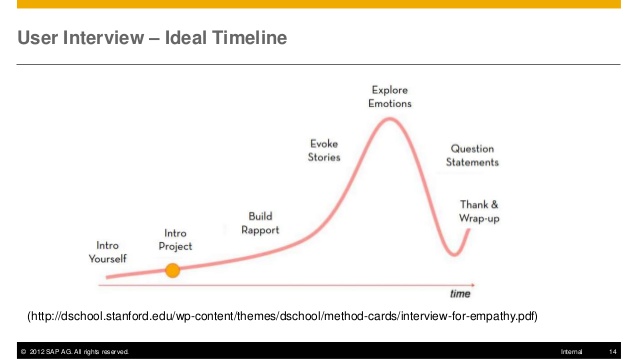
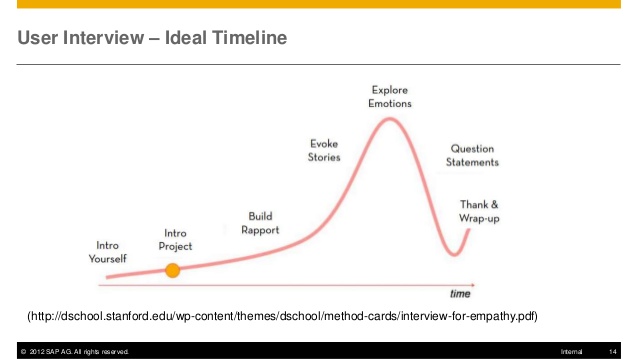
During your interview, I’d recommend you “break up” the allocated time into 7 sections. These are scientifically proven, so you don’t have to take my word for it.

User empathy design thinking

1. Introduce your self – typically this should take less than 10% of the time of the interview. So, if you have 30 min, less than 3 min to introduce the participants.

2. Introduce your problem statement (or project). This should also take less than 10% of the overall time of the interview.

3. Build common ground or rapport – Usually empathy is shown by framing the user problem in their daily scenarios. Typical items to cover include – “Some of our other users have told us …”. Or “the problems our users have encountered so far include…”. Most of this part should take you another 15% of the time.

4. Get them to talk about their problems in the context of the discussion. The best interviews are those when your users are doing most of the talking. The bulk of your interview time should be spent here. Close to 30%.

5. Explore the current solutions and how those solutions are deficient or how they dont empower your user. This part usually takes about another 15%.

6. Ask more questions that help you clarify the statements and positions users take. Most people end up spending 10-15 % of the time here.

7. Thank the user for their time. Typically 5 to 10% of the time is spent on this.

These numbers are purely indicative and will change based on your relationship with the user and their constraints on the ability to express their usage and user behavior.

The pros and cons of accelerated vesting for employees on change of control

Accelerated vesting of stock options is a fairly unusual clause for founders to worry about. It is however, a very important term that I would highly encourage you spend enough time thinking about. Most founders end up doing accelerated vesting for themselves and maybe for the advisors but rarely for the employees.

What is accelerated vesting?

If you are giving 100 stock options to be vested over 4 years for employees, and there is an acquisition event in the 2nd year, then single trigger acceleration means all the remaining shares vest immediately. Your employees now have 100% of the shares they were going to get in 4 years at the close of the acquisition. A double trigger acceleration means if for any reason the acquirer fires your team or your team decides to quit because the acquirer is in Santa Monica and your team is in the Bangalore, they would still vest 100%.

Accelerated vesting is a good clause for employees to have by and large.

The acquirer, however, in many cases, but not all, wont like this, since most acquirers are buying your company, which is worth the software, technology and the services of the people who are in it.

With acceleration, the acquirer has to now budget new stock options to keep the employees for the period of time they think they need to get value from the acquisition.

Accelerated Vesting of Stock Option

The pros of accelerated vesting:

  1. Takes care of employees and gives them confidence that if there is a “change of control” – meaning if you raise money and the VC’s decide to fire the founders, get a new CEO, etc. then they will vest 100% immediately. Or if you get acquired, the employees will hit pay dirt immediately.
  2. Gives you a negotiating chip when potential acquirers want the team to ensure they keep you and the team around.

Cons of accelerated vesting:

  1. Potential acquirers dont like this, since they are not sure how many of the new members will accept new jobs in the acquiring company and they are buying the team and company, not just the software and technology
  2. It might artificially lower the acquisition price since the acquirer might negotiate the new employment contracts with your employees directly and try to pass the costs of the new contracts to your purchase price.

What’ my experience:

Accelerated vesting upon change of control is absolutely important for founders and critical for employees.

I wish I had done it at BuzzGain and lost close to $250K because of it. I would highly recommend you do it for founders, advisors and employees.

Optimizing Mindshare vs. Marketshare vs. Wallet Share

Mind share relates generally to the development of consumer awareness or popularity, and is one of the main objectives of advertising.”

Market share is the percentage of a market (defined in terms of either units or revenue) accounted for by a specific entity.”

“Wallet share is a survey method used in performance management that helps managers understand the amount of business a company gets from specific customers.”

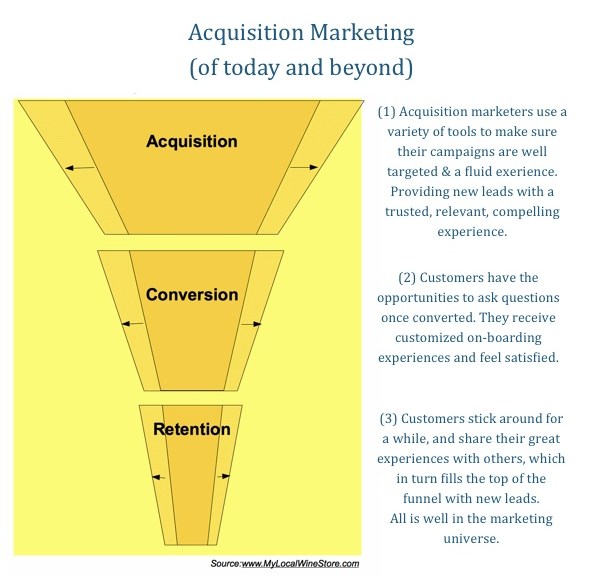
The answer to when do you need to take which approach is via the funnel framework of customer acquisition.

Marketing funnel - mindshare, marketshare and wallet share
Marketing funnel – mindshare, marketshare and wallet share

Most entrepreneurs start to acquire customers via the network they know – either B2B or B2C. Friends and family are the logical first early adopters if it is a consumer product and if they are not the target audience, then sharing via social networks is a logical choice.

Getting “mindshare” is important at the initial stages of customer acquisition. Potential customers need to be aware of your product and know that you exist.

There are 2 parts to this acquisition – the trusted customer acquisition and the unknown.

The trusted is the customers / targets / prospects who know you – they have prior experience or knowledge about you and are willing to make a bet based on their experiences with you.

The unknown is the new fresh leads or prospects who you have to build a relationship with. That’s usually harder for most entrepreneurs. Which is why you want a product that customers really like, which means they will tell other customers about it, reducing the barrier to “building trust”.

When you get “enough” of a pipeline, you tend to focus on marketshare – getting these customers to convert.

Marketshare is a focus if you have enough leads. If you are getting enough leads or “trials” or “free tier” users to convert them. Obviously you cant convert 100% of your free users to paid, but if you get enough data from them to make it worth the while, then the free tier is worth it. In many cases the free tier is also a marketing technique, when you cant afford marketing.

Finally wallet share is when you already have customers and want to get more revenue from existing customers.

So, the easiest way to determine where you need to spend your time and energy is to look at your funnel and determine where the gaps are.

The other way is to look at relative metrics. If the ratio of what’s in your marketshare vs. value of what’s in your mindshare is less than 10%, you need to spend more time on converting existing customers.

If the ratio of wallet share pipeline $ to marketshare pipeline $ is less than 30%, then you need to spend more time converting existing customers to buy more from you.