Category Archives: Entrepreneurship

Its a “marketing problem”, the product is actually good – the engineer’s myth

I have been clear in my preference for hacker / developer / engineer founded companies. I prefer developers since they can actually solve the problem using tools at their disposal without having to “hire” people they dont understand anything about.

The biggest challenge of backing hacker founders, though is that once every so often (more frequently than I’d like), I get an entrepreneur who falsely believes they have achieved “product market fit” and the problem they have is one of marketing.

This is especially true of consumer Internet companies and more so in mobile.

For some reason, hacker entrepreneurs believe the “problem” is solved when the product has been shipped to the App Store.

That’s usually when they start thinking about user acquisition.

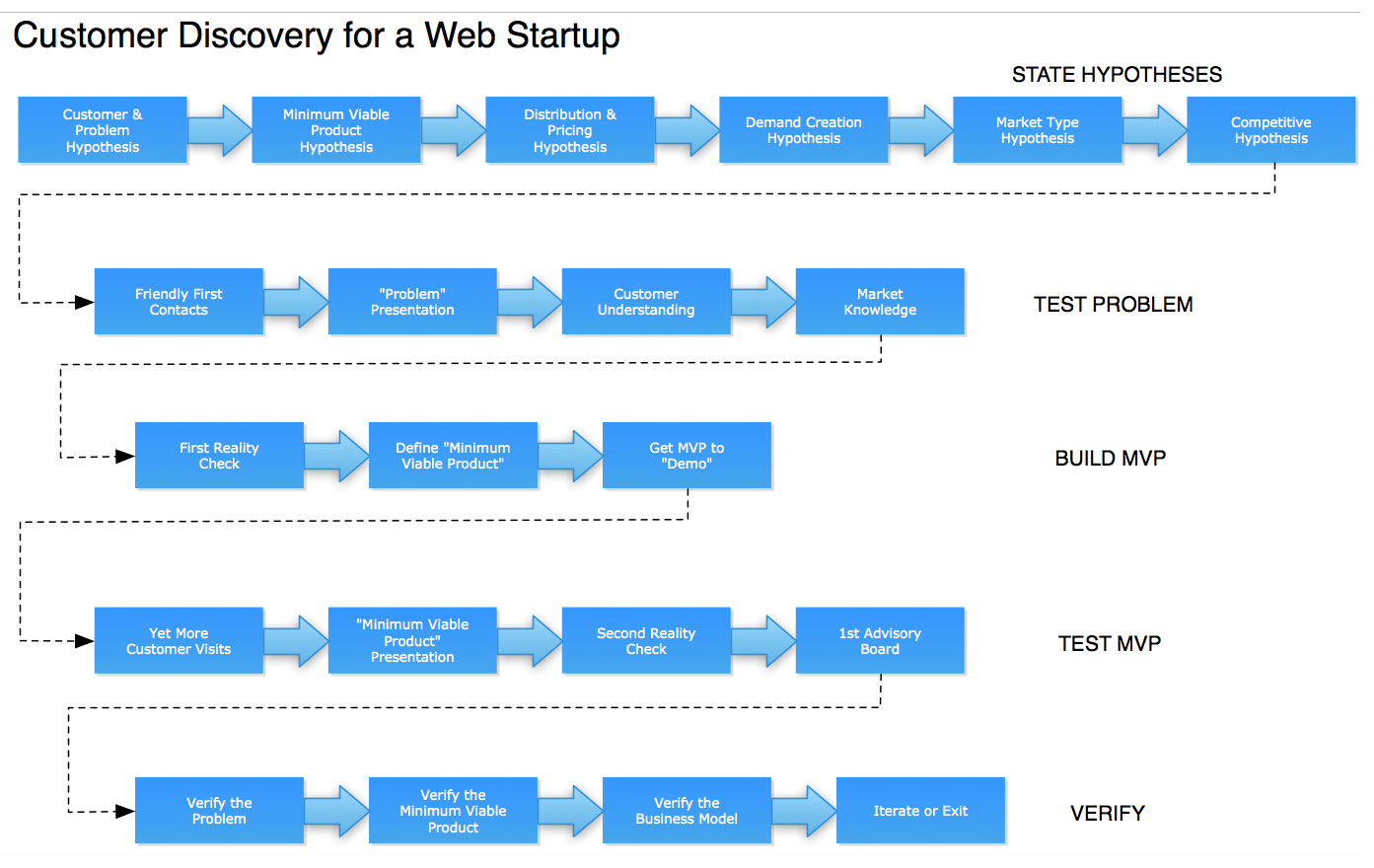
There is a big difference between customer discovery, customer validation and customer acquisition.
Customer Discovery
Customer Discovery

When you are talking to customers to understand their needs, and tweak the product to their needs or discover the real problem they have versus the problem you think they have, the stage you are at is customer discovery, development and validation.

When your product has completed its customer validation there’s one thing that you should know:

“What makes customers have a WOW experience with your product”?

If you do not know why a customer likes your product or when it triggers them to tell others, you have not yet achieved product market fit.

I do get a lot of engineer founders who will come to me after launching their product in the App Store. They are unable to get good traction for their product and they are stuck at 100-500 downloads per day and a total of 3K – 10K downloads. They then diagnose the problem to be a “marketing” problem and give me these possible reasons as to why they got limited traction:

  1. They are not marketers and were unable to market the product.
  2. They tried to hire 2-3 (pick a number) marketing people but they all were unable to get traction for the product, even though the product is “great”.
  3. They have tried 5-7 different marketing tactics – SEO, Facebook ads, Social Media engagement, etc. and none of them is working.

It is usually at this point that I have the hard conversation with them about user / customer acquisition. Most times they are defensive and tell me they have been talking to customers “daily” and have been getting feedback and tweaking the product based on the customer’s needs.

They do however fail to understand that talking to customers during product development is “customer development” and not “customer acquisition”.

The easiest way to acquire customers is to have existing customers tell other customers.

So, then the only question you have answer is when and why will my existing customers tell other potential customers?

If you can answer that question, then the user acquisition is organic.

Else you have to use “marketing techniques” to acquire your initial users.

Marketing only adds fuel to an existing fire. It is not good at starting fires. Great product start fires. The fire spreads when a customer tells another person they trust about the product.

It is not a “marketing problem” you have. You have a customer acquisition problem, which you may classify as marketing, but really it is a product problem.

Building your personal brand: How I would do it 30 min a day

Personal branding is becoming more important for individuals in the Gig economy. It is important since it ensures “inbound” leads for freelancers, opportunities for individuals at larger companies and also makes it easy for entrepreneurs to raise money or hire people.

Let me outline what personal branding is:

To me personal branding is creating enough value for the set of people who you are trying to influence or persuade. Those “influencers” know about your work in a certain area, domain and would consider you to be the preeminent expert in that area. The “recall” for your name associated in that area, should hence, should be significant.

Let me also outline what personal branding is not:

I believe personal branding is not about blowing your own horn, bombarding people with messages and content that’s not unique or differentiated.

The best way to create a personal brand is to create compelling content. Or so I thought.

That’s not sufficient any more is what I have learned over the last 6 months.

The “community” or influencers who you are trying to influence are equally if not more important.

Personal Branding Map

The 2X2 Matrix above shows the 4 types of personal brands according to me. If you have good content and build a great community you are perceived as a leader. That’s where you should aim to be.

Initially you wont have either, and so the question becomes where do you start?

The nuanced question is – where do I start if I have limited time – say 30 minutes a day?

My experience states you are better off building a community and not spending time initially creating content.

You can curate great content from others – in the form of an email newsletter, or frequent (2-3 posts and links on the topic) daily.

Spend time reading about the space you want to build your personal brand before you have an opinion or a point of view.

Learn about the different people, their points of view and the pros and cons before you start to write and speak about the topic. Engage with people on twitter, by asking questions, connecting with them and learning about their point of view first. Then spend time building relationships.

I wanted to also put my money where my advice goes. So, for the next 3 months I am mentoring 2 of my friends Marc and Nancy to build their personal brand using my suggestions and strategies. They are not known as experts in their space. They are trying to build their niche  – Nancy as an angel investor – her niche is to be determined and Marc in the SaaS space – his niche within SaaS is also TBD.

Over the next 3 months I will report once a couple of weeks on their progress, the tactics they are using and the methods they have followed.

The measure of their success will be determined by 3 specific goals they have set out for themselves.

  1. Both want to be invited to speak at a major event (which is yet to be determined) as an expert on the space they chose.
  2. They want to be interviewed by either a podcaster or a blogger on their thoughts on the space.
  3. They want to be associated with a unique piece of content (examples Dave McClure and AARRR or Sean Ellis and Growth Hacking.

They both have specific metrics on # of engagements (key influencers who know them, etc.), # of Twitter followers (which I think is a useless metric, but nonetheless) and email open rates, etc.

Three things to do before you launch your SaaS startup to get inbound leads

There are 3 items you should do quickly, if you are going to launch your SaaS startup or a new product that caters to a new audience.

First, get listed on SaaS marketplaces, Cloud Brokerage Services and Cloud listing providers.

There are over 120 SaaS marketplaces from telcos – AT&T,  T-Mobile and others, to large Cloud Service Providers (AWS, Google, Microsoft, etc.) and other large technology companies (Samsung, DELL, etc.) I would spend at least a few days making sure your SaaS solution gets listed in all these marketplaces under the right categories.

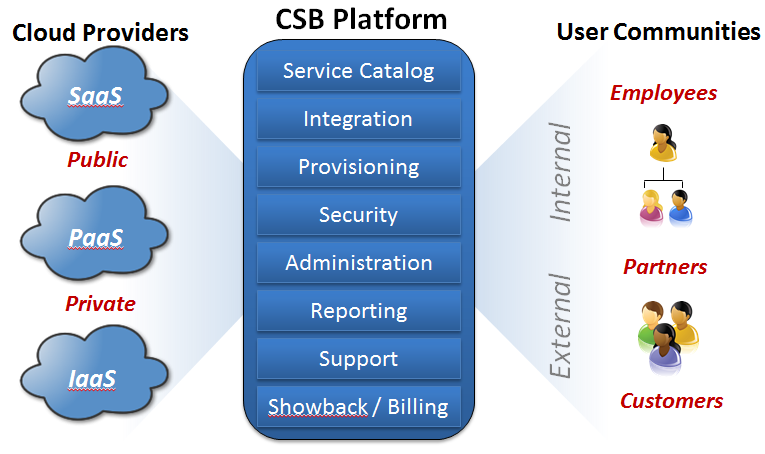
There are between 30 to 40 Cloud Brokerage Services, including Appia, App Carousel, AppDirect, Jamcracker, Appirio, Cloud Nation. Here is a more comprehensive list.

Cloud Services Brokerage

Then ensure that you list on Cloud listing providers such as Capterra, G2Crowd, GetApp, etc. Here is a comprehensive list of Cloud Listing Providers.

Second, focus on Marketplace Listing Optimization (MLO). Like SEO (Search Engine Optimization) and App Store Optimization (ASO), MLO will help you rank higher, which drives leads.

How do you Optimize for marketplace listing: Get real customers to review your products, ensure that you are listed in the right categories, Use the right keywords in your description, show screen shots of your application and showcase a good video for demos. I will detail this more in tomorrow’s post.

Third, optimize your customer on-boarding process for these providers. Find out their rake, the incentive cut-off structure and renewal discount rate. Ensure that a customer coming from these solutions is able to be measured, can setup their account quickly and can easily get the first few “tasks”done on your platform.

New market analysis: The “database” market #napkinStage

The database market is about $45 Billion with Oracle, Microsoft and IBM dominating the paid enterprise market in revenue, MySQL, PostGres and NOSQL databases such as Mongo and Cassandra leading on the opensource side, and distributed databases such as Hadoop doing well in pockets for specialized applications.

Global Database Market 2015

The large companies that need high end features still rely on very expensive databases such as Oracle, Terradata, IBM’s DB/2 and SAP’s in memory HANA. Microsoft SQL Server is more prevalent as a departmental solution.

As the type of applications has changed dramatically, the biggest driving factor among new app developers has been the reduced friction to get started, costs and ease of use (easy to learn, easy to maintain and scale).

Which is why databases such as PostGres are starting to do very well as is Amazon’s (Relational Database, RDS). Most applications that are simple to start with tend to use basic features that databases offer, so many developers start to choose PostGres or another OpenSource database. With Oracle’s purchase of MySQL, there has been a big shift away from that software to PostGres.

Database ranking over time

As applications start to mature, gain more traction and grow, developers are starting to explore column stores, NO SQL databases and other options as well.

The selection of a database used to be driven by high end security, performance and how extensible they were, it is increasingly being driven by convenience, ease of use and price.

So, where’s the opportunity.

From the 1980’s to the 2005 time frame, you could make money being a DBA or database administrator and earn upwards of $150K to $250K, managing the complex systems on top of which internal applications such as ERP, HR and CRM systems were built.

There was a large market for database tools as well, to help these DBA’s.

With the advent of the cloud, and move to developers managing, deploying and maintaining apps, the choice of database has been relegated to “what works, what’s cheap and what is easy to use”.

Most developers are starting to make the choice of technology stack – Node.JS, Angular.JS, Meteor.JS, Ruby on Rails, etc. and use the default database that is supported by the stack they choose.

Database ranking
Database ranking

So the market for database tools and DBA’s is going away to a large extent. Except for maintaining those legacy applications.

The opportunities are in providing optimization, tuning and application level services instead of the database management capabilities in the short term.

If you are a developer, I’d love to talk to you about your choice of database and stack to understand this market better. Tweet to me and we can setup a time.

The size of your ambition determines the value of your outcome

When you are building a technology startup, one of the first choices you make even before you get started is the size of your ambition. Most entrepreneurs dont think about it, so it tends to be an unstated but large impact choice.

If you get inspired by another entrepreneur, such as Sachin Bansal of Flipkart or Drew Houston of Dropbox, then you are likely to think in terms of a large market-changing company. If you find inspiration instead, in a wrong that needs to be righted then you are more likely to build a purpose-driven company. Finally if you think in terms of targeting a large market and are interested in being a meaningful player, then you going to end up doing that but only smaller.

What I have found from my experience is that entrepreneurs that start with the intent of solving a small problem, but in a large market have a much higher chance of creating a large company. Which is very counter intuitive.

This is dramatically different than what most investors have been looking for and what most entrepreneurs to be true as well.

“Focus on becoming big”, we are told. “Go big or go home”, is another term bandied around.

What I have noticed is also that having a large ambition but wearing that on your sleeve up front tends to distract most entrepreneurs.

The single biggest indicator of increasing ambition, unsurprisingly is confidence from achievement.

Which means, the small goals you set for your self and overachieve, the more size of your ambition becomes.

It becomes a self perpetuating virtuous cycle of delivering on your smaller milestones and gaining confidence from them.

Ambition
Ambition

So what are the other items that determine the size of your ambition?

The obvious one is market. Larger the market, the more ambitious you become.

The next one seems to be time together with your team. The more your team has worked together, got some wins together and more the battles you have fought, the bigger your ambition gets.

One proxy indicator seems to be amount of money raised, but that’s usually not a signal for anything other than the artificial pressure on the founders to return the money that investors have poured into the company.

So, if you are ever in doubt about how big you should become, I’d say aim higher. Much, much higher, but execute towards a smaller goal faster to let your ambition grow.

The #OpenStack Seattle community and progress of Cloud technology

I had the opportunity to be a part of the #OpenStack Seattle conference yesterday in the morning. I was invited by Sriram who runs the local chapter. If you dont know much about OpenStack, it is an open source initiative to help companies run their own private and public clouds. There is an awesome getting started reference card that Sriram has put together for you to read as well.

OpenStack has been around since 2010, but only now has started to pick up steam. Over $1.5 Billion worth of market value has been created around the software. It helps you manage compute, networking and storage resources, provision them, optimize and also help you scale the cloud solution you decided to manage.

There were about 150 folks at the meetup, a third of them having implemented OpenStack in production, another third considering it and the remaining who were too bored to raise their hands.

Open Stack
Open Stack

The thing that I found interesting is still the resistance in larger companies to open source software. This was named as the #1 barrier to adoption among most of the folks I spoke with. This is a real problem that exists after so many years of open source in the enterprise. Many people whose jobs depend on applications and services being available and performing well still want to be able to have a company or another organization support them through the process.

The perception among many of the folks who are in traditional technology organizations (who run internal systems) is that open source is largely unpredictable, mostly renegade and insufficiently production ready.

There are 2 observations I had from the various presentations yesterday morning.

First, developers are becoming more powerful in the IT organization compared to the Operations teams, which were pretty powerful 10 years ago.

Previously you had to ensure that the application that you built was on an environment that the Operations team (DBA’s system administrators and network administrators) supported. Most operations teams had standard policies around the database used, the languages and environments supported, so most applications were fairly similar.

If you were building an app that had intense media or voice / video usage, you had to build so much into the app to work around the limitations of the environment used.

Not any more.

The #1 issue that I heard from many of the operations folks is that developers are starting up instances on the public cloud, using a set of “right technologies” for the app – based on their familiarity, hosting and supporting the app themselves until the innovation phase of the app is done and then “throwing it over the wall” for the operations teams to support them.

Second, the “stack choice” – which database to use, which language, framework, caching system, platforms (IoS, Android, etc.) to support is also a lot more complicated for developers.

This is a serious problem for developers. If you are developing a data science, or big data application, you are likely to use R or Python.

If you are however building a simple internal CRM app, then you might choose to build it with Javascript and a Node.JS or Backbone.JS framework.

Add the concepts of containers, virtual machines (which are phasing out), microservices, API based systems, and many more choices, you are suddenly spending a lot of time figuring out which “stack” to use.

Most developers are just talking to their friends at companies which have done similar apps and “copying and pasting” their stacks.

This will be a very interesting space to watch in the next few years.

The toughest fork in the road – from high growth startup to lifestyle business

One of the toughest pieces of advice I usually give to the founders I have invested in is to understand when and how they have to make the transition from a high-growth-chasing startup to a lifestyle business.

Entrepreneurs feel like they “gave up”. Many actually prefer to shutdown their companies and decide to either get another job or start something fresh, instead of spending more time learning which of their assumptions were incorrect.

In this blog post I am going to try and make the case for why you should transition to a lifestyle startup instead of giving up and going to another “idea” or solve “another problem”.

If you decide to join a big company or to get another job, if you startup does not pan out, I understand that. I dont think you will enjoy the transition, but a less stressful, more defined and predictable life is something people crave for after the roller-coaster ride that’s in a startup.

If, on the other hand you choose to start a new company in a new space, with a new idea, I think that will be a bigger waste of time than pursuing the “customer development” efforts in a given space.

Excellence as a Habit

From my experience I can tell you that it takes between 2 to 3 years on average to learn the contours of any given industry, its players, the mechanics of how it works and the entire value chain. I call this the “happy learning phase“.

Usually at this phase the growth on what you learn is typically 10% day-on-day.

During this period, while you are trying to build an early version of the product, get a few customers and iterate on the “actual problem” that you have to solve. Even when you believe that you have a problem and some form of product-market fit, you will need time to find the early adopters, or to weed out the naysayers and to find your early wins.

Most entrepreneurs set up early goals for their startup which have certain milestones, one of which is fund raising. Associated with the fundraising metric are business metrics as well – # of customers, revenue, # of employees hired etc.

Contemporary wisdom puts a number around your growth: measured month-on-month – typically at 10% or 20% (as opposed to Conventional wisdom, which used to be focused on growth with unit economic profitability). Most entrepreneurs feel if they dont hit those growth metrics, then their startup is doomed for failure, even though most realize that not all startups can be unicorns.

If, however after a few months of less than your stated growth, you are inclined to throw in the towel and pivot away, the clock on the “happy learning phase” resets.

Which means you have to start on a new set of learning and the phase begins again. This usually means that you have to understand the market again, figure out the new landscape and finally make new connections.

When you are at the fork in the road when you have to decide between continuing at the startup, versus pivoting to a new idea, I’d highly recommend you turn the company into a life-style (consulting, teaching, training, etc.) business and spend time in the making-money-phase based on the happy-learning you did before.

What to do when customer wont speak about the benefits your product provides to others

Most every entrepreneur knows that the easiest way to grow the company is when an existing customer or contact tells another person about your product and why the use it or like it. Most messaging apps and social networks grow primarily because of the “invitations” that the early adopters send to others in their trusted network.

B2B companies tend to face a different challenge for most parts. Their best customers rarely want to speak to others about the benefits they obtain from using a product or its bottom-line impact.

The reasons are many – first, they might believe that they lose leverage over the provider for future negotiations, second, they do not want competitors to get access to the same solution and lose a differentiation or third, their company prevents them from sharing information about their tools, techniques, methods and processes.

The biggest challenge is for those startups that deal with large companies and sell to enterprises versus selling to small and medium businesses. They tend to rarely provide testimonials, be very closed about their actual usage of the product and tend never to let employees use work email to identify them when signing up for SaaS products so startups cant identify them.

Which is the primary reason why many SaaS products start by gaining customers among the smaller companies and other startups, even if their product is most valuable for larger organizations.

What should you do if you are faced with this situation? I had a chance to talk to 3 entrepreneurs who are all selling to larger companies and there are 3 techniques that seem to work. None of the entrepreneurs said they worked all the time or worked for all companies, and they all mentioned the techniques were hit or miss, but they were worth trying.

Customer Testimonials

First, aligning to the company’s corporate message or correcting a perception helps a lot. In this case the PR team or person is your best friend at the large company. Many large companies are looking to either a) enter new markets, b) change their perception or c) get new products or services out to the market. The more messaging and press that reinforces their goal to get a new message, the more favorably they take to press and testimonials. Be warned though, that corporate PR departments are immensely risk-averse and rarely if ever will want to be the first to be seen as someone that endorses a product.

Second, getting it written in your contract (that they will provide testimonials and speak to the press about product usage) always helps. Most companies negotiate a discount or customer service and support requests in exchange for their participation and it tends to be worth it for most startups. Sometimes large companies wont allow the usage of their logo, so be aware of their policies and put the right words in your contract so both logo usage and testimonials are covered.

Finally developing a champion internally who you support by going above and beyond to be successful does help. Typically if this person gets promoted or does better at their job because of your product, they are more willing to be supportive. How can you help them? Provide them tools, presentations, worksheets and other collateral to be able to sell the work they did internally (when there are best practice sharing events) at their company.

All these are useful for testimonials, but how do you get customers who are reluctant to share what they do with your product with others in the industry or their potential competitors? I’ll try and cover that tomorrow.

The Amazon culture and its effect on Seattle area startups

There is a lengthy piece on the New York times on Amazon’s employee culture. It is largely negative on their push-to-the-max, dog-eat-dog world and stack rank nature of the company.

Having worked with, know of and learned from over a dozen employees at Amazon, I can tell that it attracts a certain kind of employee. It certainly is not as bad as the article indicates, but many over achievers love to work there.

While many ex-employees have talked about the “challenging” work environment, I have personally talked to ex Amazon employees who wish more companies were like Amazon after they left.

What are the parts that they like the best. Relentless push to do better when you believe you have hit the peak. There seems to be no real “peak”. It is a state of mind. Doing better is what we all strive for and Amazon’s culture pushes you beyond that.

The intense focus on numbers and customer metrics over going by the highest ranking person’s opinion. This happens in many companies, including the best run large technology firms. When the highest-ranking person enters the room, the conversations is about “their experiences”, “their interactions with customers” and their prioritization. Amazon’s not like that, is what people tell me. Data and analysis trumps opinions.

Disciplined experimentation is another area that most folks believe Amazon excels at. The willingness for people to be given the latitude to try multiple experiments over time prevents boredom.

Amazon’s culture may not be good for 80 or 90% of the folks who are seeking employment, and that’s okay since they dont need all the employees of the world to work for them. Just the ones that value work over everything else.

Now that I have explained the other perspective, I have an observation about the impact of Amazon’s inwards looking focus on the company and its customers on the local Seattle ecosystem for startups.

Amazon buildings
Amazon buildings

The impact is pretty significant. The number of ex-Amazon employees looking to start companies is far and few between.

There are a few, for sure, but most employees at Amazon work at a startup themselves (Amazon) and are either a) happy working there, b) are burnt out at the end and want an easier job at a larger company or c) dont ever have any time to engage with startups or have time for side projects.

What this means is that many ex Amazon employees make good employees at companies who are trying to reboot their culture, but not a good fit for starting companies.

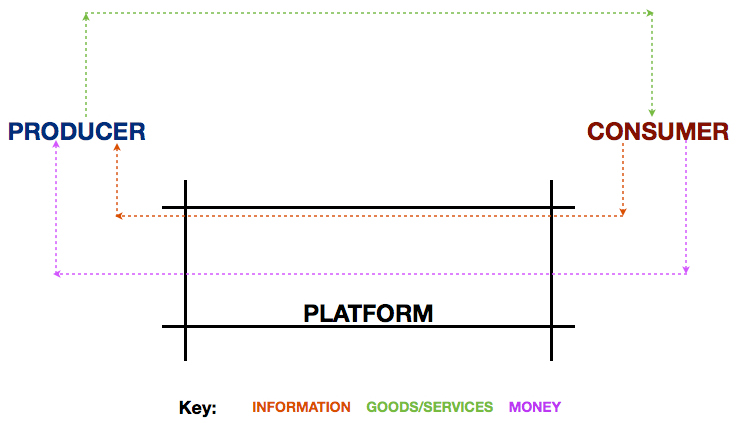
Becoming Ubiquitous – How Uber “apps” are making it a platform – #UaaS

Most startups would believe that have “made it” when they become a platform. That’s usually when other startups depend on their underlying technology as an infrastructure and include it in their product. Given that most startups are now developing API’s so other startups can leverage this, it is not unusual to see many new startups developing on another startups’ technology.

In the last few months that’s the pattern I am seeing with Uber. Emirates already offers its business and first class fliers the pickup and drop off service from their home or office to the airport and now there’s a company that is partnering with other airlines to provide an app that users Uber as the car service for the airline’s top customers.

I read yesterday about an Uber based escort service as well.

There are many other apps that have been in the works to create a service using Uber. Since they have opened their API, many use cases have emerged.

Open Table has been considering integrating its app with Uber so before and after your table reservation you can book an Uber to pick you and drop you back.

Same for Museum apps – they are looking to offer a full service to provide an ability to use Uber to give the patron a seamless experience.

There are many bar apps that also have integrated with Uber. After a drink or two, or if you checkin to a bar at a given time (using Swarm or Four Square for example), you will be automatically prompted to use an Uber to head back.

In a few cases, I have heard of Ticketmaster and other ticketing apps integrating with Uber for event based taxi rides.

There are many other use cases as well, but all this means more data for Uber.

Where are people taking rides to and from, when are they going, and why (which can be inferred in many, but not all cases).

To become a platform though, you first need a reliable service. Then the ability to evangelize the platform to developers, which means someone that can be at hackathons, build initial prototypes, troubleshoot for other developers and also help them find a way to monetize.

That’s the path Uber is going towards.

Uber as a Platform
Uber as a Platform

I had a chance to meet a team of developers who are building a bachelorette party app last week. The 3 cofounders (all women) were building an experience platform for the entire party. From inviting the friends of the bride to selecting the venue and onwards, they can help plan the entire party.

A key part of their platform is to bring all the “friends of the bride” together to the same venue. That’s where they are hoping to use the Uber API to integrate into their app.

The incentives offered by Uber are pretty good. They claimed they had met with the Uber team and they were told they could get 10% to 12% of the fare as a commission. Which I thought was pretty high, but it makes sense to Uber only if it believes the folks coming to the party wont already take an Uber to the party.

Welcome to Uber as a platform.