Category Archives: Entrepreneurship

The single most frequent mistake #entrepreneurs make during the #customer #development process

There are many assumptions we make about the product or the customer problem, which makes us develop solutions that may be really more complicated than required.

A friend and fellow entrepreneur I met on Friday was showing me a prototype (HML mock up with transitions, with some simple functions implemented) of this SaaS application. He had used a developer on hire at UpWork to develop the initial version. After speaking to and confirming the mockup (wireframes) with 10 different users he was off to develop and deliver the MVP. Overall he had spent about $8000 in design and development and had taken about 13 weeks to develop the MVP. Most of the time was spent back and forth with the design team for the HTML / CSS and the development team for confirming features and transitions.
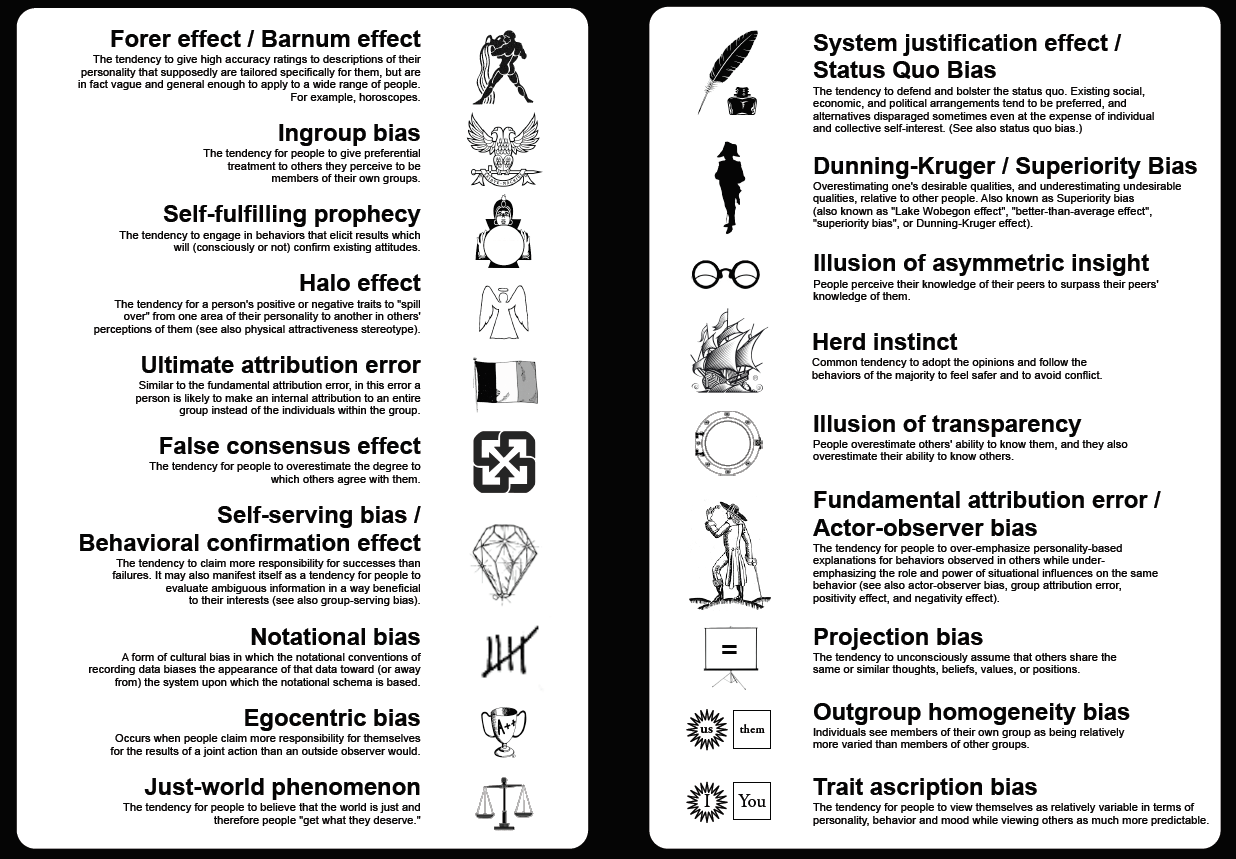
Cognitive Biases Field Guide

Of the 13 weeks, his development team spent 2 weeks just implementing a sign up process, a user cancellation process, a payment process, a refund process, a login process, a password retrieval process, etc. Which he did not realize was the tax of developing a SaaS solution. Instead he took the 5 step approach to building a SaaS application and followed it religiously.

The critical mistake during customer development that most entrepreneurs make is to lead with the solution or product instead of spending time learning about the current solutions.

When he was showing it to potential customers, he found that most of them liked the product and said they’d use it and pay for it, if they could find value in 2-3 weeks. He was pretty happy given that most users were ready to pay for the product, which he did believe would solve a critical problem for them.

After developing the MVP and letting his users know about the product, he followed up by asking them to start to use the application. The first two days were great, with lots of feedback and improvements that they gave him about the product.

Then for the next 3 days there was radio silence. Even after his prodding and cajoling, most users were not using the application.

Instead of talking to users face to face, he instead decided to spend time with them (3 hours each user), shadowing them to understand why they were not using the application.

Turns out most of the users needed his product, but either A) did not remember it existed or B) were used to using their workaround – largely using a combination of email and cut and paste into Slack.

The biggest barrier to his adoption and usage was their existing process (although inefficient) was something they were used to and so were able to “optimize” it to make it quick and “fast” for their own usage. So much that they felt that using his product (which I can assure you would be vastly superior) would slow them down.

He then pivoted his product (not idea) to implement the one feature they all wanted as a Chrome plugin. Which worked like a charm.

He then had to remove the top 3 features and undo all the user login and management, infrastructure code and other remaining features, just to support the user behavior for their existing process.

The big takeaway for him was that when you have a hammer, everything seems like a nail.

The biggest takeaway for his wife (who is his cofounder) was not over engineer the solution.

The big takeaway for me was the failed customer development process. With all our biases (which all of us have) – we always tend to lead with the solution (“let me show you a demo”), instead of understanding the problem better to focus on delivering the one feature that matters, without all the bells and whistles.

Image From:  http://www.ritholtz.com/blog/2010/05/the-visual-guide-to-cognitive-biases/

The first 5 steps to building your own SaaS application

This post is for non developer founders who want to build a SaaS application.

Software as a Service (SaaS) is a relatively small market – at $19 Billion in total revenues, it seems large, but compared to $250 Billion of the overall software market it seems minuscule. It has grown from nothing to this large number in the last 10 years. Similar to the eCommerce market, which seems large but is less than 15% of overall retail, the opportunities will start to be in the niches is my prediction.

The big question is when and how will it grow and where are the opportunities. While there are many specialist firms focusing on SaaS alone, the incumbent software companies (the largest of who are Microsoft, SAP, Oracle, etc.) are also making their own investments to move their businesses from selling licensed software to services.

One of the key opportunities I see is that ability for smaller, niche markets to be targeted using SaaS. Since the deployment model, time to value and cost are so much lower now than 10 years ago,  it is easy to build a niche product that can gain rapid fan following among the target customers and *if that customer base* does grow and end up having more budget it can be a lucrative market.

I do get the question often about the steps to build a SaaS business. Even if you dont intend to build a Venture funded business, the economics of SaaS are determined by cost of customer acquisition (CAC) and cost of servicing the customer (developing, operating and maintaining the software).

What I am increasingly starting to see is that most prototypes are either built by a developer founder, or outsourced (by a non technical founder) to “prove that the market exists“.

1. The first step I’d recommend before you start development, is to sign up 15-20 beta customers. Target people you know well who will stick through your crappy alpha, beta and version 1, so you can convince them that the value does exist when you iterate quickly.

For early beta customers, there are many techniques you can use including: a) setting up a launch page and promoting that launch page on social media b) setting up a launch page and buying Google adwords to drive signups and following up with signups via email c) blogging about the topic to share what you know about that market d) interviewing influential users before you launch or e) setup an email newsletter of great content for that industry and have many potential users subscribe to that newsletter.

2. The next step is to create an activity model and user flows.

User flow Diagram
User flow Diagram

This step is to ensure that you can know exactly what are the top 3 features you need to implement first which will make your product “must have” to solve the problem for your users.

In fact if you can identify the top feature (just one) that people will come back and use everyday, you should be good to go to the next step. Validate the top feature with your beta customer list, so you are building what they will use.

3. The next step is to create a mockup using wireframes. These are typically good to show the screens your user will go through and the experience as well. I would get a lot of feedback on the list of steps and screens before I build the prototype.

Iphone Wireframe
Iphone Wireframe

Typically in your first pass stick to under 7 screens would be my suggestion. That’s enough for a 45 second to 1 min “demo” and should give your users a feel for what the app will do. If they ask you for “one” feature that matters more to them than the ones you have, dont mock it up yet, but put it on your list until you have enough users interested.

4. Design your database schema. A database schema is good to share with your developers entities that exist in your application and what their relationship are. I tend to use DB Schema or just Freemind to show to fields without the datatypes.

DB Schema
DB Schema

5. Understand and select your “stack”. Even if you want to outsource your application development I’d recommend you talk to a few developer friends who can educate you on the stacks they use – what the front end languages and libraries would be, what the back end language would be and the database options. You will be more confident when you talk to your outsourcing company and also be able to help make tradeoffs when you need them.

How many warm Micro VC introductions does it take to get you to series A?

Yesterday at the #PreMoney conference the most frequently mentioned strategy for deal flow among venture capitalists was the “warm introduction” from an entrepreneur or an earlier stage investor. Since the easiest filter was someone’s capability to both judge you and your idea, most investors were looking for a “previously vetted” opportunity. That did not mean an automatic investment, just a guaranteed meeting with the investor.

I had a chance to ask Micro VC investors where they felt they could add the most value above and beyond the money. Most were of the opinion that fund raising, connections to potential hires and introductions to new customers were the areas that most entrepreneurs asked for help. There were other areas that entrepreneurs asked for help, but the top 3 tended to be the same.

A typical Micro VC fund investor has more likely been an entrepreneur before or has been an investor at a larger fund, so most of them had raised money before from VC’s or LP’s. They should have a decent network of other later stage investors and some of them have angel investor connection as well, so if you are earlier stage, then they could refer you to them instead.

According to CBInsights’s Anand, there are 1400 Venture firms in the world and 1/3rd of them in the bay area, so between 400 and 500. Each VC firm has about an average of 5 people in their team, of who, 3 would be partners. So there are between 1200 and 1500 partner-level investors. Most of the Micro VC investors I know have good relationships with at least 20-30 investors, with who they have likely done deals with or referred companies to. If they have only met another VC firm partner at conferences or events, or over coffee, it is very unlikely they will be able to give you a “warm” introduction.

When you get your pre-seed or seed round underway with a Micro VC fund or angel group, one of the key questions that will come up is who will be the investors at the next stage of the company. If that does not come up, then you should bring that up as a question. If the VC or you believe that their check or the seed round will be the last money you will ever need, then you should rethink your opportunity size.

If your investor knows 30+ partner-level series A investors, they are likely to filter the right investors by 2-3 primary criteria, and introduce you to them, given that they already know that most series A investors invest largely the same amount and look for the same range of milestones.

The primary criteria would be “domain expertise“, “value add” and “recent portfolio investments“. If a series A investor has expertise in SaaS HR, or SaaS marketing, and they can add value in the area your startup needs the most help with, for example, hiring people from other SaaS companies, so they would be a better fit.

Typically, most Micro VC funds I spoke with said they ended up making an average of 10 introductions, with the “hot” companies needing not more than 5 and the “still looking for the perfect metrics” requiring about 15 introductions.

An average of 6 out of every 10 companies that a Micro VC invested in (for the 13 people I spoke with) actually got to series A in less than 18 months without the Micro VC requiring another investment in the company was the average numbers I saw quoted as well.

The new valley startup is the early stage seed investment firm

Over the last 3 days I had a chance to meet with 12 Micro VC funds with 1 or 2 general partners and less than $50 Million in capital raised.

Most of these funds were of 2013 or later vintage and many were less than a year old.

Seed funds and Micro VC’s are looking like startups themselves and that’s a good thing.

They are adopting lean methodology (1 or 2 partners alone, not a big staff, no admins, doing all scouting themselves), hustling to get their initial customers (investors and  entrepreneurs), shipping an alpha version ($1 to $5 Million first fund with only friends and family), building traction and community (Blogging, networking, making investments) and then raising their seed round – a larger fund within a year for $5 – $25 Million) and looking for a way to differentiate their offering (focused investment thesis).

The new valley startup is the early stage seed investment firm.

There are over 250 Micro VC funds or super angels according to CB Insights. Most have under $50 million in investment dollars. In fact based on my cursory analysis, most are entrepreneurs who have decided to “spread their risk” among multiple startups than do one startup alone.

What are the steps to be a seed investment fund manager?

  1. Raise capital from high net worth individuals or be rich yourself to start investing. Over 90% of these investors are entrepreneurs themselves. Except for 3 of the 12 I met, most did not have a “big exit” or success under their belt. Your first fund might even be less than $1 Million (alpha prototype version). Then your follow on funds can be $5 and then onwards from there.
  2. Pick a niche or focus area and start to become an expert at it. There are Micro VC funds focused just on helping entrepreneurs who have a H1B visa, another set of folks just targeting startups in kitchen tech within food technology.
  3. Setup a fund manager (legal, finance), banking and website.
  4. Build relationships with other prominent investors or early stage angels who are doing deals to help you get “cut into deals”.
  5. Invest and help the entrepreneurs as much as you can.

Most of these seed investors are entrepreneurs themselves, so they are scrappy, hustle oriented and founders themselves, so they tend to keep their costs low, focus on a few investments and from the entrepreneurs I have spoken to so far, help the entrepreneur at the early stage, a lot more than your traditional VC firm with partners on the board.

In some cases the investor can be a part of your team, as an extended sales, BD or marketing expert, pattern matching from their other investments and helping you learn from other’s mistakes.

A decade ago or more, raising funds was pretty difficult, so if you were a VC fund, raising capital was the biggest challenge you faced. If you raised capital, then deploying that capital and getting good deal flow was relatively easy. Now, though given that there are so many Micro VC funds, even getting good quality deal flow is a challenge.

Most of the Micro VC funds tell me that their network of folks they have worked with before, entrepreneurs, other investors and angels are their best source of deals, and service providers (such as lawyers, accountants, etc.) do offer some deals, but not as high quality. They also are consistent in their thinking that “cold” inquiries are the “most irrelevant” source of companies to invest in.

To attract quality deal flow beyond referrals, many are adopting strategies to “build their brand” by blogging, podcasting, startup videos, running networking events, extensive PR, building a network of customers and partners for “introductions” to startups. Most though, are till trying to figure out how to get more high quality deals that they should be in.

If you are an entrepreneur looking to raise money from a Micro VC fund, the biggest challenge will be that the follow-on funding from these funds for pro-rata will be largely nonexistent to highly unlikely.

Many funds are so small that they have to spread the risk among enough startups, so they keep very little cash for follow on rounds (or dry powder). Many do claim that they will raise another fund within a year or two just to do follow on rounds, but that remains to be seen.


To hire great talent for startups, there not just “one thing” that you need any more

In discussions with 5 startup founders last week in the SF bay area, it is clear to me that the “hiring” challenge has gotten acute.

Here are some horror stories:

1. One founder spent time meeting the potential recruit’s at his kids school and swimming class locations so that he could get more time with the candidate. He mentioned he did not actually see his kids, but since the candidate used to come early to the school to pick up his kids, he could spend time with them.

2. Another CEO had his admin pick up and drop a candidates wife (who broke her leg) to the hospital. She was apparently covered by insurance, but not “top of the line” insurance, so the admin they showed them how much they would save if her husband were employed by their startup.

3. A third company has started a “get your spouse trained at work day“, where the significant other would come into work for a day each week (if they were unemployed) and find a way to get trained on a discipline they liked, which might open doors for them to other opportunities.

Formula for hiring great people
One of many formulae for hiring great people

I often get the question about “What are the best practices to hire great people” more than any other question in the Bay area.

What I know is that a set of “best practices” wont get you the best candidates. It will get you the rest. Why? To attract the best candidates you need to have a unique combination of meaningful work, great package and an irresistible culture.

The operative word on those 3 is unique. You will need to find uniqueness and differentiation on all 3 parameters.

As VC’s are getting picker and going up the food chain in terms of investing in “only proven startups with a lot of traction”, so are candidates.

It would be the case that a few years ago, you could ask a few employees to actively recommend people who they have worked with before and get a bonus for referring them.

Now, it is not unheard of when the hunter becomes hunted.

One of my good friends was looking to hire a colleague from a previous company, but he ended up joining the friend’s startup instead.

Meaningful work drives a lot of technical folks. Meaningful includes challenging, different and new opportunities. Surprisingly, it is also what a lot of non technical people crave.

A great package in itself with unique benefits is becoming table-stakes even for the best people. Now, the intangible benefits that extend to the candidates family are the thing to covet.

Finally, an irresistible culture that not only encourages success and outcomes but also is quirky to attract a specific segment of candidates is gaining more traction. Who knew that most of the people at a startup I knew were all big fans of Mochi ice cream? I did not. Turns out they only attracted rabid fans of that snack, who were also all great developers in a particular technology.

Hiring good people is always hard. I would focus on attracting a segment of people who are good with a uniquely set of tailored benefits, culture and work that makes it a little more easy to have you be self selected.

What do you do with all the advice you get as an #entrepreneur?

I had the opportunity to meet about 20+ entrepreneurs at the Plug and Play Tech Center, an accelerator and coworking space in Sunnyvale. This cohort was 2 sets of companies in the IoT (Internet of Things) space. Companies ranged from those in wearables, healthcare, connected car and home automation spaces. There were none in the industrial or commercial IoT area.

The startups were trying to get a sense for the changed funding landscape for startups and how to manage the new set of investors they had to deal with. Many in the connected car space were also talking to “strategic investors” such as the automakers themselves to get a sense for their interest to fund startups.

There was a question that one of the startups asked, which was they were adviced by a mentor who was a venture capitalist that “If we get funding from a strategic investor, then it will be viewed as toxic (sic) since we have to build to their needs”.

I am not sure of the context of that discussion, neither do I know about that investor’s background or intent, but this seems like poor advice at the outset. With more context and analysis I might learn more, but at the first glance, this is poorly construed.

I have written about conflicting advice for startups before and also a framework for entrepreneurs on how to take advice.

I think the best way to deal with experts who provide advice professionally is to resist the temptation to dismiss it rightaway or the desire to take it at face value and implement it rightaway.

Surprisingly I have found that most entrepreneurs actually “forget” the advice and seek out to experiment and find their own answer. That’s goodness, but it begs the question, how do you remember to seek what you learned?

So the problem as most people realize is that (like with storing and sharing good things at home) the problem is not storing, it is retrieving.

How can you recall the right advice when you need it?

Some decisions we make are fairly quick and provide us with very little time to process. Most decisions we make as entrepreneurs take require a longer lead time than a day.

The best way I have found to recall information an advice is to ask it again in context, instead of trying to remember what was said before and assume no judgement or bias before asking for a framework to think about the decision.

That way it gives you the ability to recall in context.

This surprising tactic means you should ignore all the advice you get and filter most of it as entertainment.

Which, if you are an entrepreneur is a much needed distraction.

If someone gives you absolute answers to entrepreneur questions, understand their framework first

I am always wary of absolute statements such as “We only invest in entrepreneurs” or “The best way to hire is to have a strong culture” or “Raise money from top tier VC’s, else you will not have a Unicorn exit”.

Why? Primarily because there is no one right answer. The answer is always “It depends”, but “it depends” is a hollow and unsatisfying answer.

So I prefer frameworks.

A framework is a mechanism to think about your particular situation and unique constraints and apply the possible approaches to come up with a personalized strategy.

I was reminded of that by Dave McClure, who talks about portfolio size in his latest post on Venture Capitalists.

When VC’s tell me they want to be “stock pickers” not index fund managers, I tend to have a lot more questions.

A “stock picker” assumes they know something everyone else does not. They have a key market insights, some differentiated information that’s not available to anyone else or knowledge that most others are missing.

An “index fund” manager believes that they dont have that insight, but can make money nonetheless by tracking market returns.

Turns out in the VC world, most VC’s think of themselves as “Stock Pickers”. That is one strategy to win in Venture and generate outsized returns.

To call every other strategy not-workable, is incorrect. While many folks call the other approaches “spray and pray” or “finishing with a net”, the strategy might work.

A framework to think is probably a better approach. That framework has to put desired outcomes on one side, the constraints in the middle and the inputs on the other side.

Outcomes and Constraints

This framework visualization is not the only way to think about answering a question. There are many cases, when an “expert” might have learned something unique, analyzed the situation and provided the constraints in a more prioritized fashion. So, instead of looking at all the constraints, you can look at the 2-3 that matter.

Over the last 3-4 weeks, I have been putting together more frameworks to outline problems and questions I have encountered and worksheets or templates that work.

Going back to the VC conundrum, if an investor believes that there’s only one way to approach early stage investing, then they are possibly wrong.

The constraints I have heard from VC’s who follow the stock picker approach is that they dont want to sit on too many boards, dont have time to help more than 5-6 companies at the same time, or that they dont have time to find more than 10 companies are worth investing in.

If those are the constraints, then there are better and more different ways to solve for those constraints.

You can not sit on the board, and still have influence rights, you can hire people to help your portfolio and use technology to find more relevant companies and founders.

Most constraints can be solved, as long as you are clear about the outcomes you desire.

Some constraints you do not want to compromise on, and that is a constraint as well.

As an entrepreneur, though, if you are given only “one answer” or “one approach” or “one strategy” to be successful, you are talking to a fairly inexperienced person who you should probably not take advice from in the first place.

How to be resilient – What I learned from many “Plan B #Entrepreneurs”

On your journey towards creating your startup and growing it, there will be multiple opportunities to quit. Startups are much harder than anything else you will do in your professional career, so you will have display enormous resilience to bounce back from “near death” experiences.

Over the last 3 years as I have watched multiple entrepreneurs from the sidelines, and about 20% of them have been “Plan B entrepreneurs”. These are folks that were thrust into entrepreneurship, not by choice or deep desire, but by circumstance. There is a story of a successful executive at a large SI who was laid off and found himself on the wrong side of the age equation, so he was “over skilled” for another position, and decided to be an entrepreneur instead. Another story, is that of a good friend, who graduated at the middle of her class and found no “jobs” for an entry-level developer, so she started a training school for average developers who can be placed at smaller companies.

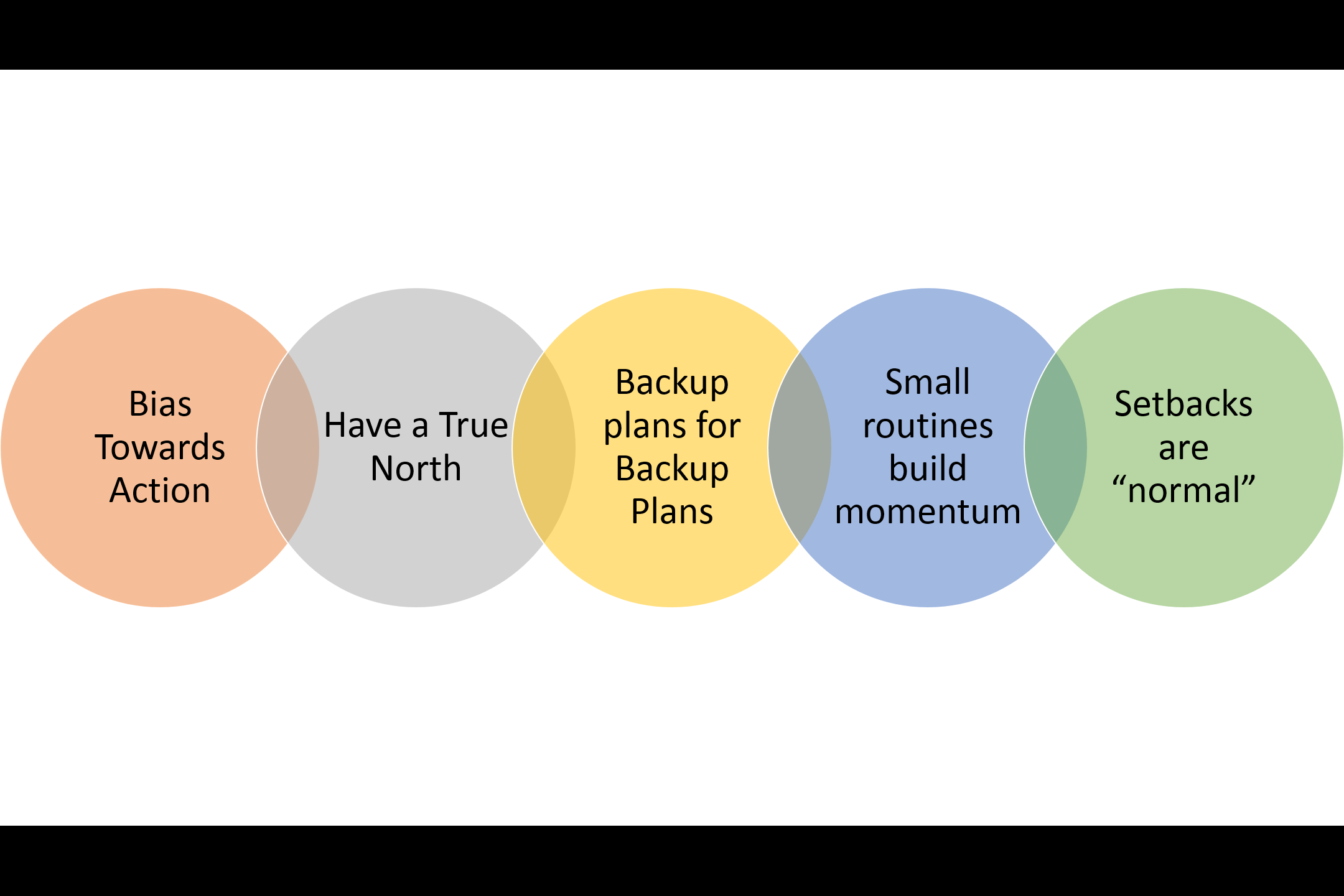
I have noticed that plan B entrepreneurs are more resilient and they tend to display 5 primary characteristics.

How to be Resilient
How to be Resilient

The set of steps they might go through is denial, acknowledgement, acceptance, analysis and finally action, but the time spent on action tends to be the most.

Resilient people have a bias towards action and their action steps are immediate. Surprisingly the ones that I respect the most rarely “Sleep over it”. In fact, a mini-setback really spurs them towards exploration of multiple actions or options. That seemed counterintuitive to me at first, since the advice most people give is to “sleep over challenging situations”, but I guess different people are wired differently.

Second, they display the maturity to understand that setbacks are normal. They realize that the path to success is littered with multiple mini-setbacks. So each of these “mini-setbacks” only convinces them that setbacks are not failures, but successes posing as an obstacle.

Third, they have a “true north” that keeps them going. That true north is usually written down, not in “their head or their mind”. They tend to revisit the “true north” every so often, maybe a month, a week or every time they encounter a mini-celebratory moment or a mini-setback.

Fourth, they are always making a backup plan for the backup plan. It is almost as if they realize their first plan will never work out, so they always have a Plan B, or plan C. Their plan A, many have mentioned to me, almost never has materialized. They spend as much time coming up with plan B as they do plan A, which leads me to believe, that plan B’s are those that take more time, more effort, but are also responsible for progress.

Finally, they tend to be more disciplined and setup small routines to build momentum. Building momentum by identifying smaller steps that display progress tend to help them bounce back, is what I have heard. Some of them celebrate success so small, that they build a great culture in their teams of enjoying themselves a lot more together.

Related to this but on a more personal level, I read and re-read the touching note by Sheryl Sandberg yesterday on Dave Goldberg. It is an amazing read. I’d highly recommend it. Many things are worth highlighting, but the Option B part of the note is most relevant for entrepreneurs.

The ultimate list of sources for competitive analysis on your #startup rivals

After doing a competitive analysis of your market landscape the next level of detail most people want to perform is a key competitor analysis.

When I was a product manager, I tended to focus only on the product features, user experience, design and technology during my competitive analysis of a company.

That’s usually what most CEO’s do – after all product is the #1 thing that most customers see, touch and feel that matters to the most.

Turns out that’s an incomplete view of competition. I had a chance to see a complete view when we did a comprehensive audit of the top 2 competitors before we sold our company.

It is pretty obvious now, but you can get so much information from external sources such as social networks, email newsletters and blogs that to get a comprehensive 360 degree view of the competition, you can clearly understand where they came from, and where they are headed.

Comprehensive Competitor Analysis

I put a partial list of sources that you might want to consider to get competitive information from in the chart above.

Here are the top questions you might want to consider getting answers to understand your competitors strategy overall.

  • What events are they attending? Speaking? Presenting?
  • What are they announcing? Investors? Management? Customers?
  • What are their open job positions? Who have their hired?
  • What is the segment of customers they are going after?
  • Who have their hired? What’s their background likely to tell you about their plan?
  • How do they price? What are the tiers?
  • What have they learned about their customer needs?
  • What are they sharing about their company?
  • Where are they looking to start new offices?
  • Where are they looking for talent / customers?
  • Who reports to who? How many people in the company? Background?
  • Promotional Plans? Who is following them?
  • Who likes their page? Who are their customers?
  • What questions come up? What are customers complaining about?
  • What messages are they pushing?
  • What keywords do they rank for? What are they bidding for?

While these are tactical questions, the key parts of your competitors strategy you are trying to understand are:

1. Who are their customers – what segment of the market are they going after?

2. How are they targeting customers?

3. What is the problem for their customers they are solving?

4. How are they solving the problem? What features in the product support that?

5. How do they plan to scale and grow?

Typically after this detailed analysis you will get a clear idea of what your competitor is doing beyond their product to help differentiate from others.

How to put together a customer validation framework for your ideas?

Like most people, some days I have a hundred ideas and other times I go for 100 days without a single idea that I think is worth spending time on.

The difficult part of these ideas is that many most of them are practically useless. They are not grounded in real problems, and are likely a means for the mind to play some games where it feels good to have some exercise for that moment.

Over the years, I have put together many frameworks for thinking about problems and ideas and categorizing them –

a) throw it away (meaning dont think about it any more),

b) file for later (meaning document it on my notepad, to review in a few years or so),

c) do some research (document the market findings) or

d) pursue it for validation (talk to people).

There are 5 steps that I take to understand whether the idea is worth pursuing.

The elapsed time for these 5 steps, in my experience lasts from a 4 weeks to 3 months on average.

Customer validation framework and process

1. The first step almost always is doing secondary research on the web using available resources. I have found that it is fairly easy to get a ton of “expensive paid research reports” by just typing the name of the market, followed by keywords like market, landscape, overview and then filetype:pdf in Google.

There seems to be someone always who has uploaded a recent report from a key investment bank or a analyst report that’s available for free.

During this step I try to document with the intent to publish my learning as a blog post. That’s key, I have found, to ensure that I do as comprehensive a job as possible. It also helps you in steps 2 and 3, as I will share later.

The best way to document is to be honest and write down a bunch of questions you might have about the market, problem etc. Summarize as much as you can, in your own words, instead of cutting and pasting.

2. The second step is actually having a discussion with at least 10+ “industry insiders” to help understand the questions where the data is inconsistent. It is important to have insider discussion before customers only because they will tend to see and know “trends”, whereas customers tend to give you their current problem or their sense of the workarounds, which they seem to think work “fairly well”.

To get to talk to 10+ insiders, you will need to offer them something in exchange for their time. Most insiders are fairly busy and tend to not want to help teach a new person the in’s and out’s of a new market. Here is where you assessment of the market and the 4-5 reports come useful from step 1.

I am consistently surprised at how many insiders have not read (they have head of it, but wont have read) a recent industry report on the space. The fact that I read them in entirety and can provide a Cliff notes summary is very valuable to them.

3. The third step is to get a good sense of the market size. Since most of the research reports will give you a total market estimate, top down, as opposed to an addressable market, bottoms up, number, I find it valuable to do some empirical evidence gathering for the bottoms up analysis.

The best ways I have tried to do this is getting proxies for the market size – Google search volume is a good indicator for certain types of markets, or in other cases, create a series of blog post on LinkedIn and see the traffic volume, try segmentation numbers with Facebook ads etc.

If you are up to spending some money to recruit potential customers and get some email conversations, I’d recommend Google Ads as well.

4. The fourth step in my process is to clarify and crystallize the problem and solution and get primary feedback online – I have found Launch rock for consumer applications work well for this. Create a simple page and drive traffic – either with ads or social and get a sense for interest.

For B2B, just offering your summary of the research on the market as an eBook (from step 1) will suffice to get emails of potential prospects. This also helps you build a target list of customers.

5. The step five is actual customer interviews. This is the most time consuming step and takes a lot of effort, which is why I end up doing it last. I would recommend doing it earlier, if you want to get a quick sense of the market, and maybe you might end up doing it all along, but this is a very intensive process, so I end up breaking it up into chunks and doing it all along while I am going over the steps 1 through 4.

For customer interviews, I try to address the problem question and the adoption question. 

  • Is this a real problem? Is is a big enough problem for them to look for a solution?
  • What will it take for them to adopt a solution? Adopt my solution?
  • How much will they be willing to pay to adopt?

These questions help me address both the solution and the go to market problems of marketing and pricing.

There are some caveats to my process and methodology:

1. This does not have to be a waterfall approach. The agile version will ask you to keep doing these 5 steps in parallel and keep doing them consistently. Just because you are following an agile process though, does not mean you dont have a list of steps to follow.

2. These steps work very well for software. What I found for IoT hardware is that a Kickstarter campaign works better for a hardware idea to supplement step 4.

3. For consumer facing applications and eCommerce companies, there is no substitute for putting a framework page and putting a buy button (instead of LaunchRock, use Shopify – free version).

4. Document, document, document. The more you write the more your thoughts get clarified and you have new insights. Only listening to customers and insiders is useless. Thoughts come, you process them, and you forget more than 50% of the insights.

5. Be very cautious and deliberate when you go from one step to the next. 90% of ideas and problems are really not worth pursuing, unfortunately. You are better off discarding your half baked, insolvent ideas, instead of wasting 6-12 months pursing it, only to realize you dont quite have a real market need.