Category Archives: Entrepreneurship

The 3 most important questions you will need to answer about customer segmentation

Customer segmentation for entrepreneurs is a tool to reduce distractions, focus your product roadmap towards your Minimum Viable product and create personas that can help your marketing, sales and development efforts.

I am often asked 3 questions associated with customer segments, which I thought I’d address in this post. I am going to use an example of a company building a new age mobile Patient Records Management solution (or EMR – Electronic Medical Records) for the tablet as an example.

1. What are the steps to a good segmentation strategy?

The first thing you need to do to ensure a good segmentation approach is to write down your ideal customer attributes. You dont need any framework to do this, just a list of attributes will suffice. Your attributes need to be specific, numerical and descriptive.

(I) Specific means, you will have to outline their environment. What are they using currently? How specific is their problem? Do they have alternatives? If your target is doctors in our above example,. that’s too large a segment. Instead there are different types of doctors:

a) Those that practice independently vs. those that are attached to a hospital

b) Those that are general physicians vs. those that are specialists.

c) Those that see < 10 patients a day vs. those that see more, etc.

(II) Numerical means there has to be a set number of customers that fall into this segment. It has to be a number much less than your entire target market, and not more than 2.5% of 2.5% of your target market. Why 2.5% of 2.5%? That’s usually the second question.

(III) Descriptive means, you have to outline their current day-in-the-life scenario without your product. Explain how they are currently solving the problem (if it does exist) and how they are solving it without your product. It cannot be that they are not solving it. They may be used pen and paper to keep medical records, but a system does exist.

2. How many customers is enough to build a segment for? Is there a minimum number?

Innovators - theory of diffusion
Innovators – theory of diffusion

According to the theory of diffusion, we have 2.5% of customers who are innovators. These are your earliest of early customers and your initial targets. What I have found with most of the startups I am helping is that 2.5% of those innovators are truly the engaged, early influencers who will be willing to have the discretionary time and budget to try truly innovative products and then be willing to evangelize them to the rest of the innovators.

To be clear, you dont need all of the 312 to be your early customers. These are your early segment of potential customers. Typically 10% of them being early customers tends to show “traction” for an investor.

Lets say the total number of doctors in the US is 500K. Then your Innovators are 12.5K. Of them, 2.5% should be the first segment, which is about  312. That’s the ideal target for you to have as a start.

3. What if most of the target customers dont have the pain point or dont want the product? Does that mean the segment is incorrect or there is no market need for this segment?

If you have targeted 312 doctors who are primary physicians (segment by practice type), in the Texas area (segment by location) who work in a multi-use work location (segment by work area) and are currently using paper based medical records (segment by current product usage) theny you now have a segment of customers who you want to go after.
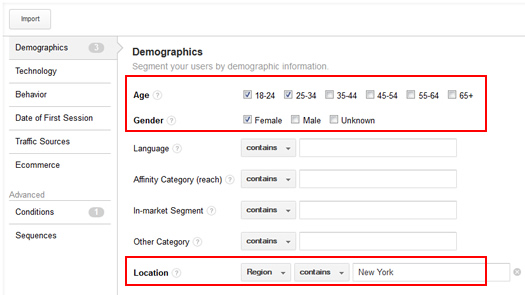
Google Adwords Segments

A trick that I have seen most people use is to segment based on Google Adwords segments (see diagram above) or segment by Facebook targeting options.

Facebook Targeting Options

Once you have your segment at 2.5% of 2.5%, then you are doing a combination of ads, conversions, focus groups and interviews to understand if they have the pain point.

If you end up finding out that customers dont have the pain point or the conversion rates on your ads is low it is indicative of either poor targeting, poor messaging (your message did not resonate), incorrect framing of the problem or lack of the problem in the first place.

What I have found in my experience with over 300 startups is that the number one problem is poor targeting, followed by lack of the problem existing for the prospect in the first place.
Does your idea matter at all to anyone but you as an #entrepreneur?

Short answer – it does a lot, but not as much as you think it does.

There is a never ending debate about how much do ideas matter when you are starting. There are arguments on both sides of this thesis. There are folks that believe ideas are dime a dozen and execution is everything and others who believe that ideas are what differentiate the great entrepreneurs from the mediocre ones.

So this makes me believe the answer is somewhere in the middle. A good idea executed well is obviously better than a good idea executed poorly. Similarly a bad idea executed well is marginally better than a bad idea executed poorly. Either way, execution does matter as does the idea.

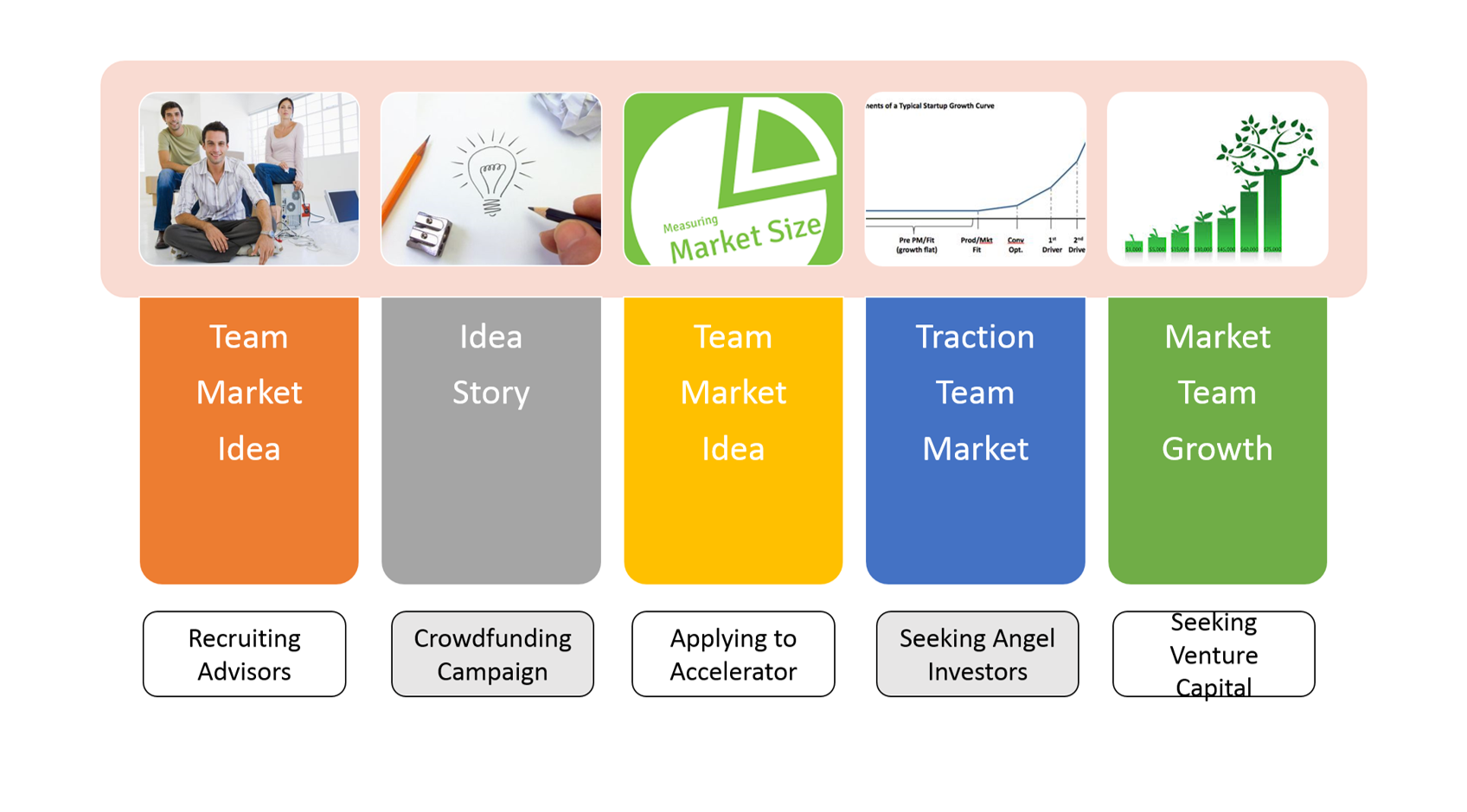
I put a chart together based on my experience of the top 1-3 things that different folks care about the most when you are progressing along stages of your startup.

The first thing to keep in mind is that the idea matters most to your potential customers.

Which is why it matters so much.

Your customers may care about the team, the problem you are trying to solve (it better be important to them) but they certainly dont care as much about your market or your growth.

What Matters When At A Startup

At the napkin stage when you are trying to recruit advisers, and early folks; your team and market matter to them the most, then possibly the idea.

The next stage (if you are going that route) at the crowdfunding stage, the idea and your story matter the most. The market maybe somewhat matters, but the team does not seem to matter as much since they are largely the “people” behind the video.

The stage beyond that (again if it applies), which is the accelerator stage, the team and market matter the most. The assessment of whether the team can pivot plays a lot into this stage.

At angel investor stage the traction seems to matter most, followed by team. Enlightened angel investors care more about the team and the market, but accelerators have trained the startups and angels to write checks based on “traction”.

Finally when you are ready for the venture capital round, lots of things matter, but most VC’s will tell you that the market you operate in and the team matter the most, followed by growth in metrics.

If you look at the chart above, the obvious conclusion you will come to is that idea does not seem to matter to most people.

If, however you expand the “crowdfunding” stage to “recruiting customers“, then at that, stage ideas matters more than everything else.

So the idea does matter, it matters a lot and it matters to a key (if not the most important) constituent of your startup – the customer.

Does it matter as much as you think though?

That answer is also no, because, the other “constituents” including potential employees, care about working on a great problem, getting paid well and being challenged (in that order hopefully).

So, when any of your investors or potential advisors or an accelerator tells you “Ideas dont matter” – you know they are wrong, but not as much wrong as you really think they are.

The 5 most important questions to ask before you price your SaaS product

Over the last few weeks I had a chance to review 89 of the companies to understand their free to paid conversion and also a chance to talk to 13 companies. What I learned was that time spent on the pricing page was a key indicator of conversion and you can A/B test your pricing page for colors, position of your highest and lowest prices, number of plans showed, feature listing and your call to action. The names of your pricing plan also has a significant signalling effect on your customer’s perception of your product. I believe the future of SaaS pricing will move from pay-per-usage to pay-for-outcomes.

The most frequent question I get asked about SaaS companies is how to think about pricing for the product. Here are some constructs to think about and 7 questions to ask before you come up with a pricing model or a price for your product.

1. Understanding your customers current solution and options and their “cost per unit of activity” is the most important thing you should do first. For e.g. if you sell a Sales force automation solution, the customer might be using an Excel spreadsheet to track their sales because they dont have too many opportunities. So in their minds the “cost per unit” is zero, since they have already “paid” for Excel.

2. SaaS pricing is a marketing function not finance or operations. If the team that determines the value of your offering to the customer is another them, then it is their responsibility. The reason for this is that value of your product determines how much you can charge, not what customers are willing to pay. Value cannot be determined as a absolute, only relative. Which is why you have to compare it to their current solution.

3. At the early stages (less than 50-100 customers) optimize for more customers and quicker sales cycles not for profit. To get data and buying patterns you need enough data and a meaningful sample size. When you go beyond the early customers, it is time to optimize for LTV and CAC.

Here are the top 7 questions to ask before you come up with a pricing model for your SaaS product.

1. What are the current options for your customer?

Find out how are they solving the problem your product addresses currently and how much does it cost them to do that.

2. What are the different segments of your customers?

Find out if there are different problems your product can solve and the value associated with those problems. That would be the best indicator of

3. What is your goal from your pricing?

It is not always obvious to say that your goal is to get the “most money” or to be the most expensive product. Some companies want to be the 80% functionality at 20% of the cost option. Determine your pricing goal – profitability (after customer acquisition costs), value creation, marketshare, etc.

4. What is your cost of customer acquisition?

For most parts, your cost of development tends to be fixed (if you hire 3 people, you have to pay their salaries regardless of how many features the ship), but the cost of customer acquisition tends to be a variable. So if your costs dont take CAC into account, you will have a model that wont be profitable.

5. What is your sales model?

Linking Sales and Pricing for SaaS

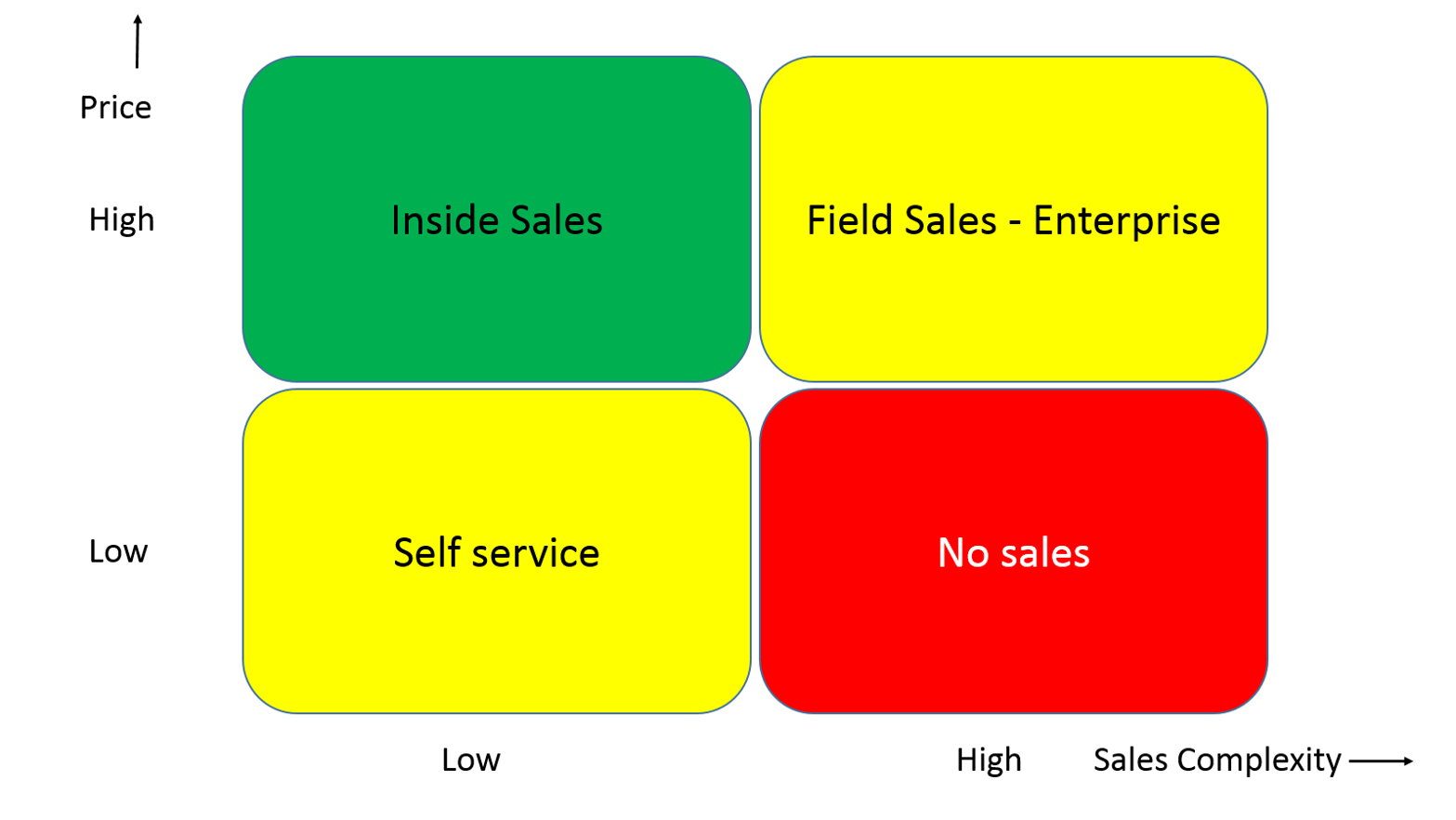
I usually use the price and complexity of sales / marketing on two axes to understand the sales strategy for a SaaS company.

If you are a company with a lower price point and low complexity of sales, you will have to rely on customers to try and buy (freemium) the product on their own and work on obtaining customers at a low cost.

If you are a very complex product or have a complex sales process and your product costs a lot, you will have to hire a field sales team to help you sell.

If however, your product is priced high and your complexity is low then you will build an inside (phone) sales team.

If you have a high complexity product and sales model and low price, your company will die.

Use this model to determine where you want to be and price the product appropriately.

How to name your SaaS pricing plans? A primer from 89 examples

There are over 7500 SaaS companies according to angel List. Over the last few weeks I had a chance to review 89 of the companies to understand their free to paid conversion and also a chance to talk to 13 companies. What I learned was that time spent on the pricing page was a key indicator of conversion and you can A/B test your pricing page for colors, position of your highest and lowest prices, number of plans showed, feature listing and your call to action.

I did notice that of the 89 companies, 82 of them gave their pricing plans “names”. Each plan had a name so their customers could associate the name with the plan. Most (over 80%) used standard and conventional names but it was interesting to see the spread. Here is the data from 89 companies and 251 plans.

Names of SaaS Pricing Plans

The most important points you want to take away are the following:

1. Even though SMB and SOHO (Small Office, Home Office) users are the first few to sign up for a SaaS service, 3 of the top 5 names were named Enterprise and Business and Large. I would imagine this has to do more with the inside out naming (the plan is large or enterprise, not the company buying it).

2. The plans named “Small or equivalent” were largely in the bottom quartile of the distribution. Even though over 70% of companies had 3 plans, only 35% of them named the smallest plan as “Startup”, “Starter” or “Lite”. The most common starting plan was named “Standard”.

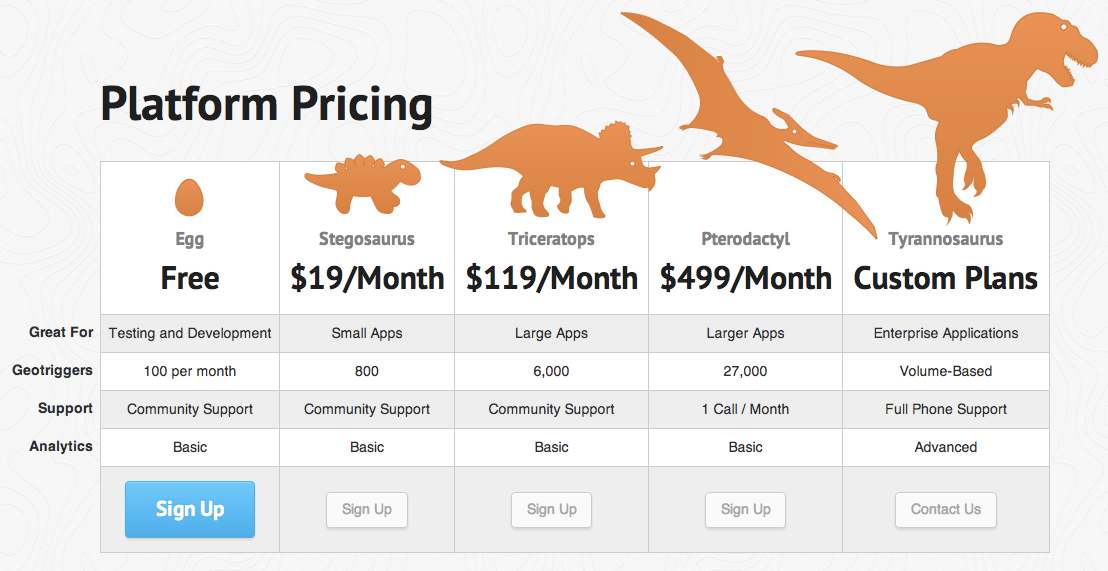
3. Of the 20% of companies that used “custom” names like Boutique, Tyrannosaurs, or Garden named all their plans uniquely. The surprising element of the companies that used custom names was that most of them had images to convey the “size” of the plan.

There were some other surprising things I learned as well in my discussions.

1. In naming plans, understanding the end customer’s billing and invoicing was key. Most customers got an email invoice (a few sent PDF invoices) and they would either file them or expense those invoices (if < $50) or would send the invoices to an accounting team.

Ensuring that the “accounting” team did not ask any questions was the consistent mention among 3 of the startups with custom names for plans.

2. Naming the plans to support your payment gateway is also critical. Getting too cute with names means the payment gateway will support a higher refund request that were marginal.

3. Many of the companies had to setup standard names so their marketing and product management teams could do better analytics and research on the backend, consistent with their reporting. Surprisingly, if the names were “standard” the companies found it easier to have a conversation to understand conversion rates, pricing options and changes with their finance teams, design teams and other outsourced companies as well.

Top 5 things you should A/B test (except for price) on your pricing page

When I looked at 89 SaaS companies to determine their conversion from freemium to paid options for their customers, I also had a chance to talk to 13 folks about their approaches to continually optimizing their pricing pages for good conversion. Time spent on the page was the most important criteria associated with freemium conversions.

Why keep A/B testing if you have the industry leading conversion rates though? Three reasons:

1. Customers change, their preferences changes, or their perception of value changes.

2. You bring out new features or new product offerings.

3. The market or competition changes.

What I did hear clearly from all the 13 folks is that they tested price changes a lot less frequently than other changes they made on their product page. So what are the top 3 things that marketers changed? It all boiled down to a clear understanding of their customer and their (better) understanding of their own product (or features).

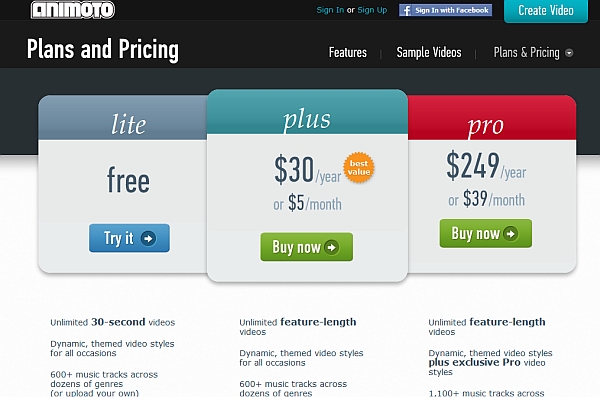
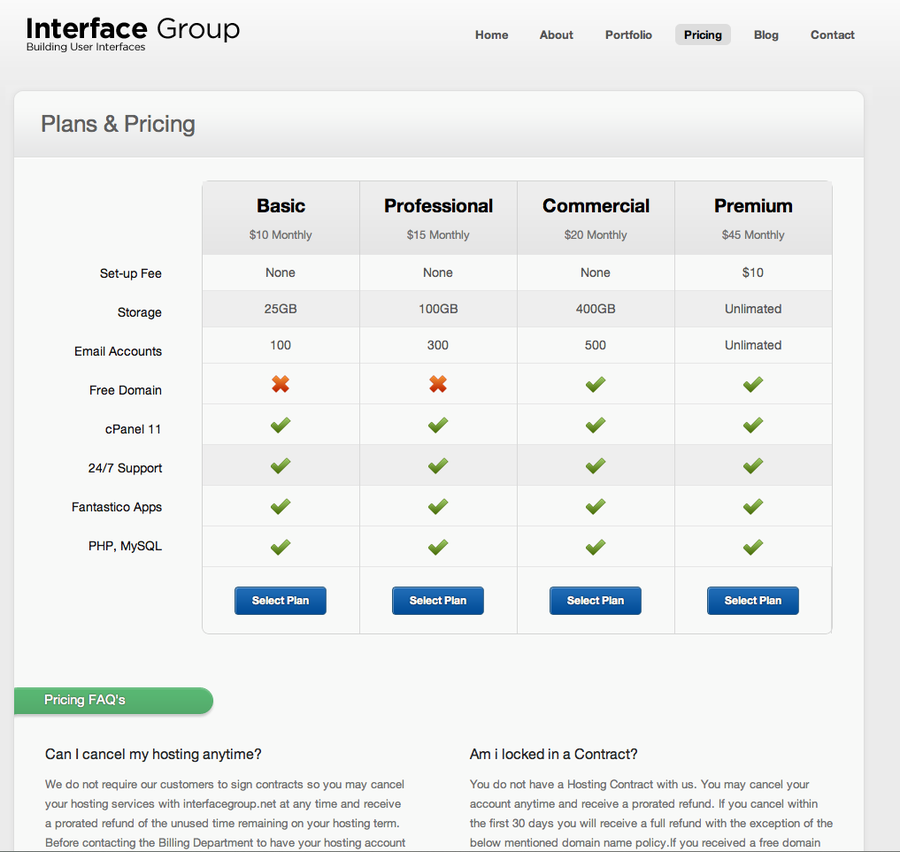
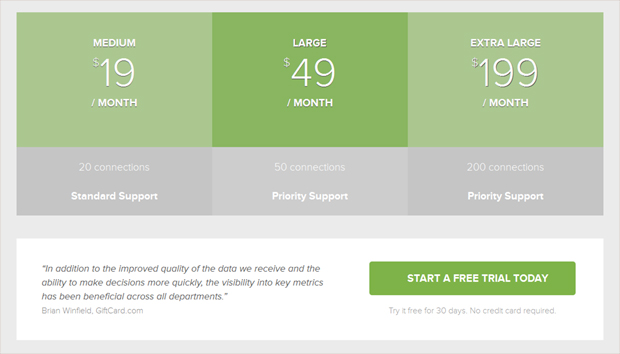
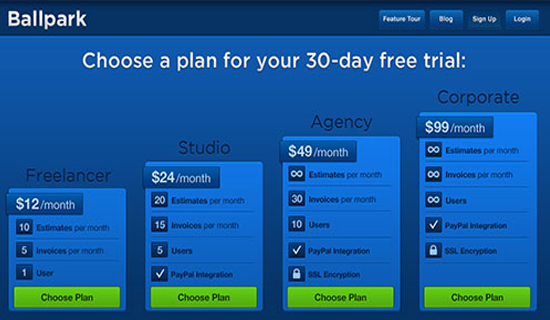
1. Position of the lowest and highest prices: Some folks like the usual left to right increasing price format and others like the opposite.

Right to Left

Left to Right

What is the difference? Not so much on the desktop in terms of conversions, but when viewed on the mobile phone with top to bottom view, most people tend to understand the value a lot better and tend to go for “any plan, even the cheapest”, than not sign up at all.

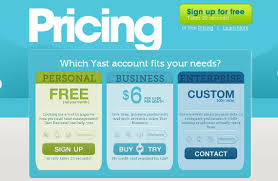
2. Same colors for all plans versus different colors showing the different plans available with the premium plans having “premium colors associated with them”.

Same Colors

Different Colors3. Total number of plans shown – over 70% of the companies have 3 plans, the second most popular is 2 plans followed by 5 plans. One plan or four pricing plans are rare.

3 Plans

5 Plans

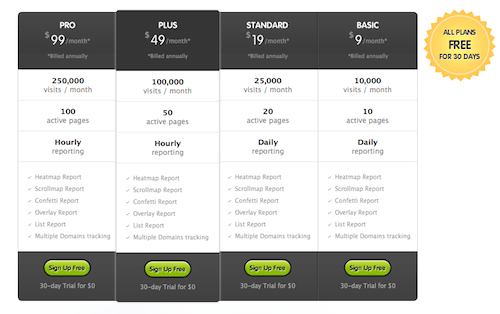
4. Listing all the features on your pricing plan versus a list of features with check boxes to indicate which plans support which features.

Listing features

Check box for feature comparison5. Using one Call to action (CTA) button (what should the customer do) versus providing options for the call to action associated with each plan.

One CTA All Plans


Multiple CTA for Plans


What I learned from looking at 89 SaaS companies on how to convert freemium customers to paid

The most frequent question I get asked about a SaaS busines is pricing and sales growth. With pricing the biggest question is how to covert more free customers to paying customers.

While there is no average, I have seen companies focusing on consumers having as low as 1% conversion to a max of 10%. Companies focused on pro-sumers (professional consumers like freelancers, etc) have a slightly higher rate of conversion at 2% minimum and those that focus on SMB (Small medium business) have some of the highest at close to 5%. Finally 10% converted customers is not unheard of for companies selling to enterprises.

The time taken to convert when a customer is free to paid also varies from days to months or never.

What determines when a customer moves from premium or your paid version?

I look at 89 companies in the Microsoft Ventures accelerator programs from the 370+ alumni to understand the techniques used by companies to convince customers to pay. While not comprehensive, here are the 10 most frequently used levers that companies have used to encourage their customers to a paid version.

1. Advertising: In this version, the paid version has no ads. (e.g. WordPress hosted has am option for non ad based and advertising supported blogs).

2. Time: These companies allow for a free version for a period of time (e.g. HighRise, or Trigger.IO) – a week, 15 days, 30 days, etc. This is the most frequently used model.

3. Features: The most widely used model has basic features for free (e.g. Buffer, LaunchRock) and some premium features locked unless you pay. This is the third most used model to convert.

4.Collaboration: Individual usage is free in this version (e.g. Slack) and you will pay if you wish to collaborate with others in your team. Obviously the team usage gets your more benefit.

5. Control and Security: In this version, if the IT administrator (e.g. Yammer) wants to control the usage and wants security features (e.g. Yammer, GitHub), then you will pay for it.

6. User or seat (Fresh desk): In this type of pricing, (e.g. Freshdesk) the company provides a certain number of users free (3 agents or 2 users) and charges if you have more users.

7. Analytics and Insight: The usage of the app is free, but if you wish to obtain analytics (e.g. Feedly) or insights into your usage and data, you will have to pay.

8. Integration: In this version, if you wish to integrate the SaaS app into other enterprise apps in your company (e.g. CircleCi) or internal apps you will have to pay for that.

9. Data access: In this version, you can use the app for free, but if you wish to get your data (e.g. Capricity) out of the SaaS system you will have to pay for it.

10. Usage: In this version the more you use of the product (e.g. Dropbox, MixPanel) you will pay more. You will get a free version for 2GB, but for more than that you will pay per month. This is the second most popular conversion technique.

There are many more models that you can use, but the most frequent are a) Time bound, b) Usage based and c) Feature based.

When do you know that it is time to fold your #startup?

Honestly you never will know. There is always a “what if”.

There are many times during your startup journey, when you get a sense that things are not worth it. When your cofounder leaves. When your customer bails. When you cannot articulate success.

The simplest situation is when you run out of money.

The biggest challenge is knowing when way before your run out of money if something’s not working out quite right.

You get a nagging feeling that the same time and energy you have can be spent on other things to get a better return – whether it is on the next startup or another job.

The constraints that most entrepreneurs face tend to be masked by their bravado.

I hypothesize that the only time you know when it is time to shutdown and move on is when you no longer have a desire for the end state.

When you lose your passion.

That’s it.

If you still have the desire for the space you are in, and the problem you have chosen to solve, then overcoming all other odds is easier, because you still believe there is a wrong to be righted.

Most founders, though dont realize they have lost the desire for the space or the problem until much later. They are taught that persistence is the key to success, so the slog through the early warning signals.

How do you find out if you have lost passion for the space, earlier?

“Going through the motions” is one way to find out.

“Not getting excited to get up and go at it” is another way.

“Inability to acknowledge the small wins” is a third.

I can list many more.

The next part of the question is how do you know if this is “temporary loss of passion” or “permanent lack of desire” for your startup.

It is a permanent problem when your opportunity cost of doing something else is more than your current situation.

A framework for how to take advice – for #entrepreneurs

There is no shortage of advice or number of advisers and the time you are given advice as an entrepreneur.

It can be overwhelming for an entrepreneur, especially when they hear from conflicting advice from trusted sources.

The 3 most important factors that should go into the decision making process for taking advice is a) Who should you take advice from b) What advice should you take and c) When should you seek that advice.

There are 2 kinds of people you take advice from – those you consider as “experts” in the field and those who have “experience” with the specific problem you set are seeking the advice from. Everyone else is rather a big waste of time. So, if you are an entrepreneur and seek advice from someone at a much larger company on what you should do with your product direction, when they are not an expert in the field, then be prepared to be given useless advice. Well, you asked for it so there.

Expertise is easy to ascertain since, it has a factual basis. If someone is a certified legal professional, then they know the aspect of law they practice. They won’t necessarily be the best at litigation or immigration if they are a corporate attorney, but they would be the best at company legalese.

Experience is best couched with situational awareness. If the person giving the advice is smart, they will tell you the specific conditions, background and environment that the course of action worked. From that, you can at least determine if it might work for you in your specific situation.

The worst people to take advice from are those that pattern match. In my experience, most investors, general practitioners and enthusiasts understand a situation by talking to many people and offering their generic opinion couched as “experience”.

If you seek advice from those whose experiences don’t match your current situation, then you will get suboptimal advice. People who are confident may tell you they don’t know, but it is more likely you will get opinions from 3rd party reading couched as experience.

You need actually both expertise and experiential advice for most situations, which is why understanding the contours of the problem will help you explain it to the person you are seeking advice from.

What you need advice on falls into 2 buckets as well. Easy questions and hard questions. Easy questions have a binary outcome. These are fairly rare. Most difficult questions tend to have a range of answers, with complicated if-then-else statements around the answer.

Easy questions are those that can be answered by experts alone. Can you hire someone from your ex-employer is fairly easy to answer if you look at your exit interview or contract and have a legal person review it.

Hard questions typically will give you multiple choices, not just two. Should I raise money is an easy question to answer if you are running out of cash, but the harder question of who to raise money from and how much to raise are harder questions that can run the gamut based on your situation.

Finally, when you seek advice is also fairly binary. You can either seek advice when you need it, or way before you encounter your specific situation. Seeking it after is just a waste of time – it reaffirms your position and makes your feel nice, or it will make you regret the decision since the advice you get is contrary to the decision you already took.

If you seek advice just when you need it, prepare to be rushed and expect to miss out on key details that tend to be nuances and shades of grey. For example, trying to decide what type of company (C corp or S corp) you should incorporate is best done when you don’t need it done yesterday. It will give you time to think about the options if you learn about the options way before you need them and keep the notes handy.

Seeking advice way before you need it is useful in situations when the impact is longer term. When the decision to be made cannot be reversed very easily (for example who you want as a cofounder), you are better off getting advice on the type of cofounder you need.

The biggest challenge is always the conflicting nature of the advice. What do you do when two people, both of who you trust, offer very different advice or in fact the exact opposite advice.

The relative scale of their expertise and experience does not count, so most people go with what they feel “more comfortable” with. Or they get more opinions and do a “vote count”. Either way it tends to be sub-optimal only in hindsight.

Top 5 tips on how to come up with milestones that are measurable for your startup

Most founders will come up with following variations of milestones when they get started with their company.

1. Ship beta version of the product by Dec

2. Raise $XXXK in funding

3. Get to $YY in revenue.

Unless there is a team that’s large enough to have each person take on ownership for each of the milestones, the founders are the ones that are responsible for them.

This means that there is little else you can do other than focus on these milestones.

Lets assume you have a cofounder and you split the roles into technical and business.

The technical person takes responsibility for the beta version and the business person for the funding and revenues.

Now a few months in, a new set of responsibilities come forward including managing your board, your mentors, talking to potential partners and others.

Your team has not expanded to take on the executive level challenges, so you still have the 2 cofounders taking on more.

Some of these new tasks are enjoyable – having conversations with partners or mentors for example, so you get “distracted” and the top 3 goals no longer get enough time. That’s when you realize you need a to-dont list.

A few weeks go by and you hopefully realize you are behind and try to catch up, this time removing the new tasks on your list and replacing them with items on the top 3 milestones.

The problem is getting to the new items is tough until you have enough folks on the team who can take on the high level, cross functional priorities.

Here are the top 5 tips I have learned to come up with milestones that you can manage. You may have heard about SMART goals, so I am going to skip that portion and assume you already do that.

1.One person per milestone. You cannot have joint owners for a milestone. Even if you and your co founder are “two peas in a pod” and “complete each others sentences”, have only one person assigned to each milestone. You will achieve greater accountability that way.

2. One milestone per person. If you have more than one milestone assigned to a person, reduce the number of milestones. Obviously if you are a solo founder, that means work on one thing at a time until you have a management team to help you take tasks off the plate.

3.  Milestones cannot be overloaded. Milestones need to be specific enough for one area of work. If your milestone reads “raise a seed round and ship version 1 of the product”, that’s 2 different milestones with responsibilities for 2 different people.

4. Milestones need to have a specific date, and be reviewed weekly. To track your progress, I have found that a weekly review works better than daily or monthly. During the weekly review, you need to understand the tasks and projects that make up the milestone and understand where the blockers are with an “plan B” for any blocker.

5. The owner of the milestone needs to have cross-functional authority. You may have silo functional ownership of roles but most milestones, if they are important have cross- functional impact. So if you need to ship a beta version of the product, the owner of the milestone may need to get customer access from another person and market data from a 3rd person. Even if they are peer’s for the success of the milestone, the owner needs to have full authority to help get the resources to get the milestone done on time. This ensures that even if you have to transition from a role of control to a role of influence, you still have the ability to execute on the milestone.

Everything I learned about entrepreneurship, my mother knew already

My mom

Happy mother’s day. I still miss my mom. She passed away a couple of years ago. Most everything I learned about entrepreneurship over the year’s she knew already and tried to tell me but, I had to learn it on my own, making my own mistakes. Here are the 5 things I learned from her.

1. Have a bias for action: My mom was not one who would talk too much when you needed help or if you needed to get something done. She’d lead by action and focus on “doing” not saying. Her actions truly spoke much louder than her words. When you are working on your startup, it is likely you will have advisers, board members, investors and mentors who will provide you will all the advice you need. The best advisers have a bias for action.

2. Be helpful and give generously: Before “Pay it forward” was a big deal, my mom would practice it. I follow a similar but more selfish approach to paying it forward – Dig your well before you are thirsty. My mom would help others, without expecting anything in return. Do that before you start your company and it helps you when you build your startup. Take as many chances to help others as you build your startup – if you have some time to help, dont pass up the opportunity. Whether it is to help a fellow entrepreneur recruit, critique their website or help the trouble shoot a problem with their technology. It will come back twice as fast and return you twice as much.

3. Your attitude matters more than your state of being: My mom’s attitude was “always sunny”. She would carry the weather with her. Not in a way that made you think things were not difficult, but she’d never get you down because she was in a troubled spot. Her attitude was one where she’d focus her energy, when she was down towards making others feel better. She’d remind me that most people will remember how you helped them feel when they were down.

“I've learned that people will forget what you said, people will forget what you did, but people will never forget how you made them feel.” - May Angelou


4. Focus on things under your control: My mom would obsess over the salt in the sambar, the right sized cuts on the okra and the temperature of the rice before she served it. She would focus on things she felt were under her control and many times the little things. As an entrepreneur, I have found that even if you set the vision and mission, the strategy and plan right, if you dont execute the small things well, you will do poorly. If you worry more about the competition than your own product direction, you will do badly.

5. Turn your biggest challenges into opportunities: My mom’s attitude towards adversity was enlightening. Although her first instinct was to run from it, she would tell herself that it was going to be better because of her bias towards action. She could find ways to optimize the way to make the biggest challenges into her opportunity to make a difference. As an entrepreneur, you will find customer development challenges, hiring challenges, fund raising challenges, etc. The best way to overcome these is to find a way to accept the challenge and brainstorm to execute the plans you lay out toward eliminating them.

If you have a mom, you should call her today (as often as you can every day) and tell her how much you love her, and thank her for bringing you to this world. I did not do that enough, hopefully you can learn from my mistake.