Category Archives: Entrepreneurship

New IPO Tomorrow $DLO dLocal LatAm Online Payments provider

dLocal Announces Filing of Registration Statement for Proposed Initial  Public Offering | Business Wire

$DLO, DLocal, an Uruguay-based payments startup, has seen its valuation more than quadruple to $5 billion after raising $150 million in an investment round.

DLocal, processes cross-border payments with APIs for emerging markets.

IPO of DLocal Limited: an Uruguayan Online Payment Service is Floating | R  Blog - RoboForex
D Local $DLO

$DLO DLocal provides platforms in 29 countries that allow companies such as Amazon.com Inc. and Booking.com to charge clients in different currencies by accepting local credit cards, bank transfers and other forms of payment. It also helps companies send money to their agents and contractors, such as Uber Technologies Inc.’s drivers.
Dlocal customers

$DLO primary offerings include:

  • dLocal API
  • Fraud management tools
  • Compliance
  • Merchant dashboard
  • Marketplace service
Uruguay's DLocal Valued at $5 Billion as Alkeon, Tiger Invest - Bloomberg

$DLO will sell 29.4M shares (plus an additional 4.4M green shoe) at $18 per share raising about $600M.  The market could value $DLO at $5.7B. This implies a valuation of 32X to 39X 2021 revenues.

dLocal raises millions in round; Nubank buys Easynvest; and more | iupana

$DLO has a customer base of more than 330 merchants covering over 2B internet users. dLocal offers over 600 local payment methods.
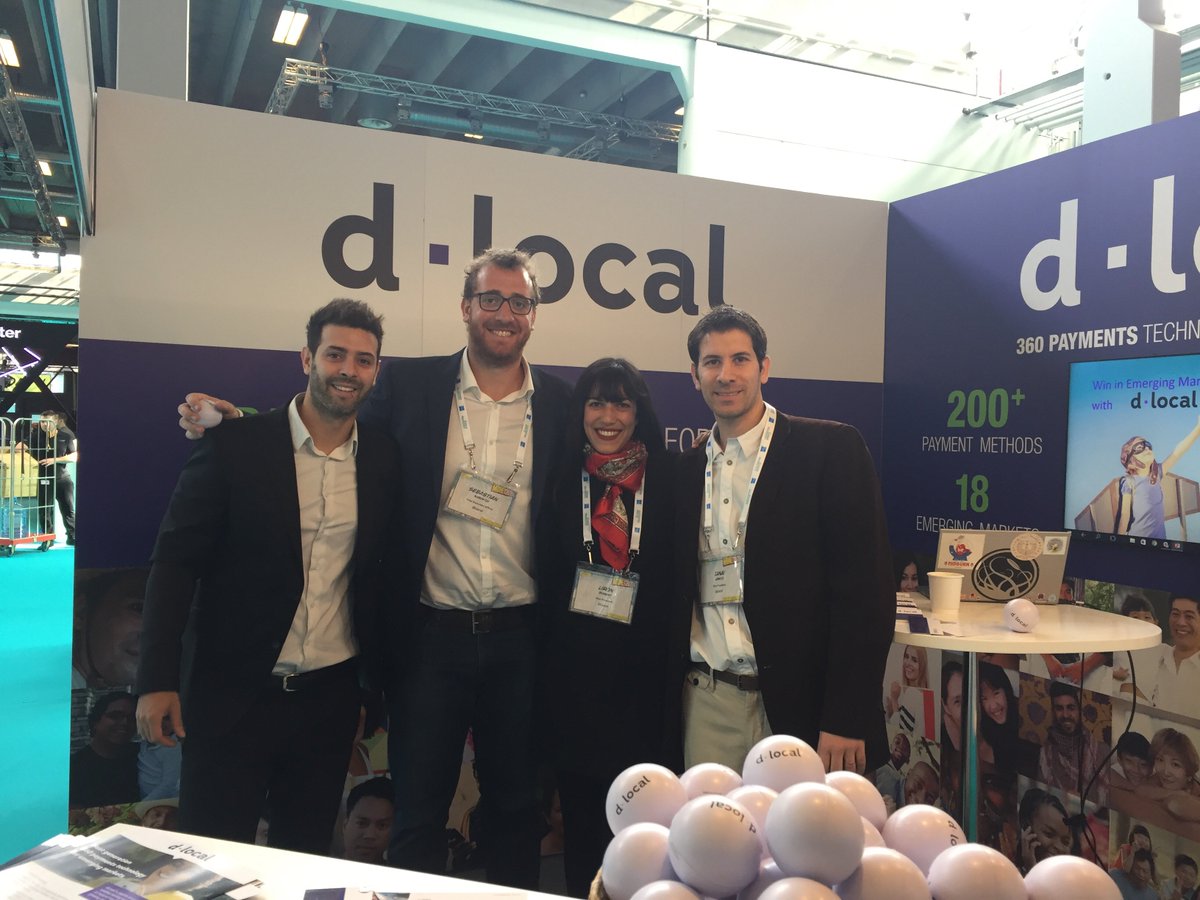
dLocal on Twitter: "#Money2020EU Our handsome-looking team is dying to talk  to you about emerging markets #payments. Booth G11 #crossborder #fintech…  https://t.co/0ZXvOPVAvh"

$DLO dLocal offers its partners one direct API, one technology platform and one contract under its one dLocal model.

$DLO dLocal posted revenue of $104M in fiscal 2020, up 129% YoY. The company reported revenue of $40.3M in the most recent quarter, up 124% YoY. Net income for 2020 was $28M

$DLO had total payment volume of $2.1 billion in 2020 and saw total payment volume grow at a compounded annual growth rate of 97% from 2016 to 2020.

dLocal Collaborates with Microsoft to Reach New Customers in Emerging  Markets | Value Added Services News in Nigeria

$DLO dLocal has partnering with $SHOP Shopify to enable small businesses to offer local payment methods in more than 19 currencies in emerging markets.

The Only Payments Technology Platform That Unlocks The Full Potential Of  Today's Growth Markets: dLocal
CEO and founder Sebastian

Metrics

DBNER: Net revenue retention rate for the year of 2020 was 171%.

Rule of 40: DLO’s most recent RF40 was 170%, which is awesome.

Global market for B2B cross border payments was an estimated $27 trillion in 2020 and is expected to reach $35 trillion by 2022. The addressable market for $DLO is $152B in the near term (2025).

Competitors include AstroPay and Stripe.

Analysis

I like the company a lot and will initiate a small starter position tomorrow assuming it does not go over $25 per share. If it prices over $25, I will wait for a pull back.


New IPO filing $AHS Aihuishou – Chinese used electronics marketplace

Chinese used electronics trading platform Aihuishou is aiming to raise $500 million to $1 billion in a U.S. initial public offering by early June.

Love recycling store
Aihuishou

$AHS Aihuishou was founded in 2011 and has $JD (Jd.com) as an investor. The company is seeking a $4B – $5B valuation.

LOGO

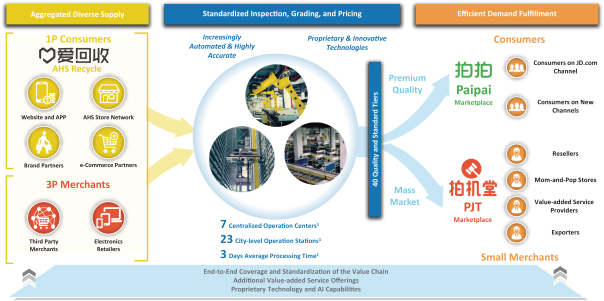
$AHS Aihuishou is the leading marketplace for second-hand electronic products, covering the mainstream second-hand digital markets in China, India, and Brazil.

LOGO

In 2019, JD announced a strategic merger between its second-hand trading platform Paipai and Aihuishou and invested another $20M in cash to Aihuishou.

$AHS Aihuishou had a total of seven rounds of financing, totaling more than $1.2B. 

The used electronics market is over $15B in China alone.

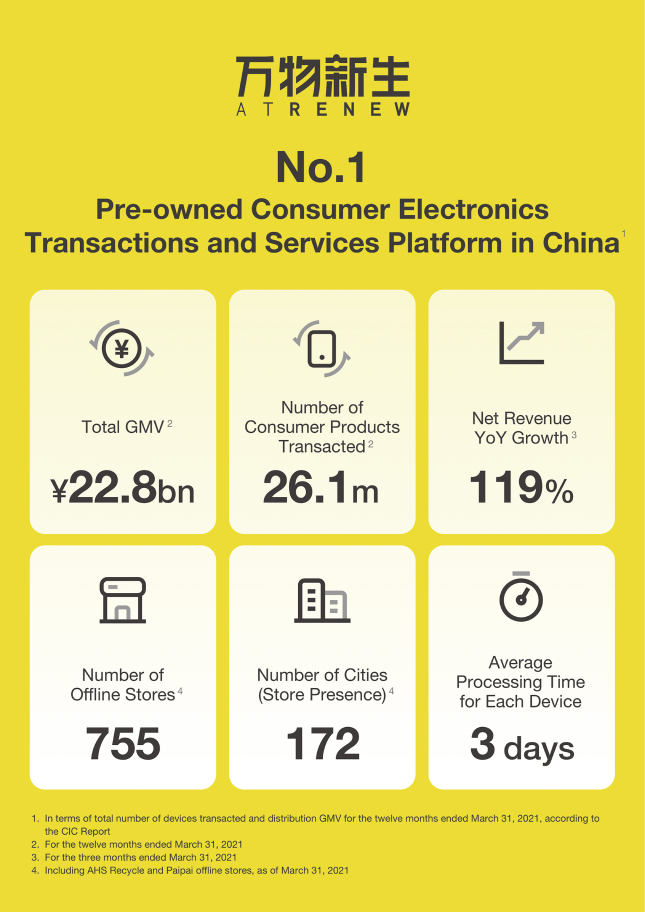
$AHS Aihuishou recycles second-hand mobile phones, computers, laptops, cameras and other electronics products from individuals and corporations and resells them on its website and apps, as well as offline stores in 140 cities.

$AHS Aihuishou means “Love Recycling” in Chinese.

LOGO

Total GMV transacted on the platform was $4.2B for the twelve months ended March 31, 2021, representing a year-over-year growth from the twelve months ended March 31, 2020 of 66.1%.

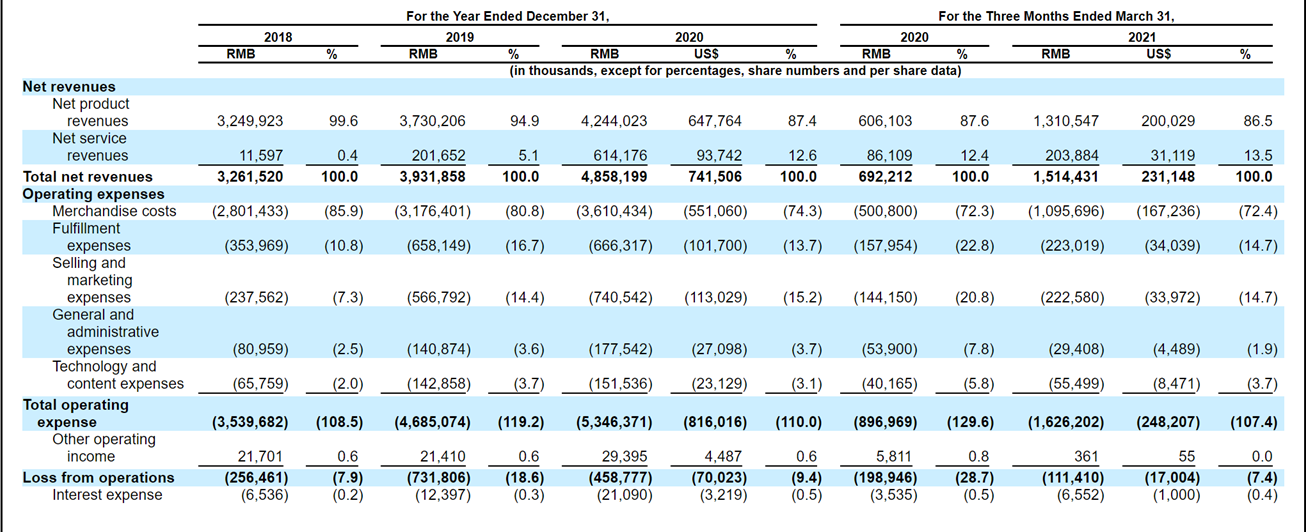
$ASH revenues

$AHS total revenue for 2020 was $741M +25% YoY, while losses were lower by 100% at $71M, from 2019.

Risks

This is very competitive market, with many local players who service and sell used electronics. The integration with JD’s used electronics marketplace is still underway. Over 80% of products traded in the marketplace are cell phones.

Analysis

$AHS growth rates look reasonable as does the valuation. The company will do about $1B in 2021 revenues and is valued at $4B – $5B with 16% gross margins. If value this relative to $EBAY, which is growing at 29% YoY (Blended last 12 months) and $43B Market cap with $11.2B in 2020 revenues,

$AHS has the big advantage of growth in China, which $EBAY does not.

I am not going to participate in the IPO and wont likely track this stock until it shows me growth in similar lines to $ETSY, $SHOP and $SE

New IPO Filing Sprinklr $CXM, Marketing SaaS Customer Experience Software

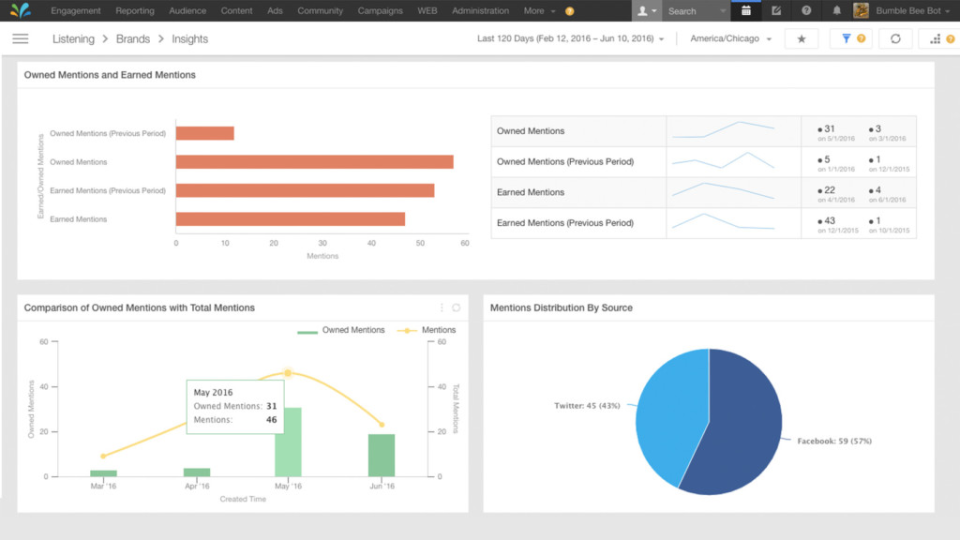
$CXM Sprinklr sells a software as a service (SaaS) customer experience management platform. The company’s product (also called Sprinklr) combines five different products: marketing, advertising, research, care and engagement.

Sprinklr + Trustpilot
Sprinklr

$CXM Sprinklr was founded in 2009 by Ragy Thomas in New York, and has grown 19% YoY in 2020 to $386M in revenue. It was last valued at $2.7B in Sep 2020 when it raised $200M.

$CXM Sprinklr has raised approximately $585M since it was founded.

$CXM sells its platform on a subscription basis annually to over 1000 customers including TikTok, Facebook, Prada, Cisco, Microsoft and Nike.

Sprinklr Pricing, Alternatives & More 2021 - Capterra

Over the last decade, Sprinklr $CXM has acquired 12 companies including UserRules, Scup, Little Bird, Branderati & new brand Analytics.

Technology

LOGO
$CXM platform

$CMX Sprinklr platform is architected to ingest unstructured and structured data from more than 30 channels in real time, including audio, video and images.

LOGO

$CXM Sprinklr has 4 modules.

Modern Research – listen to and learn from the market, customers, and competitors to act inreal-time.
Modern Care – serve customers on the channels they choose, increasing satisfaction, driving loyalty and reducing costs.
Modern Marketing & Advertising – personalize ads with content that is relevant, authentic, timely and effective.
Modern Sales & Engagement – engage with and sell to customers on the channels they use most.

LOGO

Market

The total addressable market for Unified-CXM (Customer Experience Management) platform is approximately $51B as of 2021, growing at 7% YoY.

LOGO
Ragy Thomas, Founder & CEO Sprinklr

Customers

1,179 customers, including more than 50% of the Fortune 100. 69 customers with subscription revenue equal to or greater than $1M for the trailing 12-month period, which represented approximately 47% of subscription revenue. 

Competitors

$ADBE Adobe, $CRM Salesforce, $XM Qualtrics, $MDLA Medallia, $HUBS Hubspot, $SVMK Survey Monkey, $SPT Sprout Social are all competitors, since they are both in the social media software space and the customer experience management space.

Financials

$CXM Revenue of $324.3M (2020) and $386.9M (2021) +19%, YoY and revenue of $93.0M and $111.0M in the three months ended April 30, 2020 and 2021, respectively +19% YoY.

$CXM Net loss was $39.1M (2020) , $41.2M (2021) and $11.2M and $14.7 M during three months ended April 30, 2020 and 2021.

$CXM Operating loss was $34.9M (2020) $28.8M (2021) and $7.9M and $10.7M during three months ended April 30, 2020 and 2021.

Valuation

$CXM revenue puts it in the top quartile of SaaS companies and growth in the bottom quartile. Sprinklr has not provided any of the SaaS metrics of customer retention or DBNER in its filing. Assuming a $4B valuation (likely) and $386M in last year’s revenue the valuation of 10.36 looks interesting but growth of 19% is not very appealing.

Valuation for Sprinklr compared to peers

Risks

The biggest risk with Sprinklr will be the lack of visibility into key operational metrics (which I think will be shared quarterly) and the competitive market for Customer experience management. Qualtrics $XM is the category leader and it is much bigger than Sprinklr, which means an acquisition is likely.

Analysis

$CXM is an easy pass for me until they show faster growth. Given that $XM Qualtrics is the segment leader, I will prefer to watch this from the sidelines.

New IPO Filing DOXIMITY $DOCS Online collaboration for Physicians

$DOCS Doximity offers an online service and app for physicians that allows them to collaborate with colleagues, coordinate patient care, conduct and virtual patients visits. Its service has been used by more than 1.8M (million) physicians — about 80% of all such professionals in the U.S.

One-Click Voice & Video Calling | Easy for Physicians, Easy for Patients |  Doximity Dialer
Doximity IPO $DOCS

San Francisco-based Doximity, was founded in 2010 by co-founders Jeff Tangney, Nate Gross and Shari Buck, and is a professional network for physicians with telehealth and scheduling tools. $DOCS filed on Friday with the SEC to raise up to $100M.

Clinician's Network & Healthcare Directory for Doctors, NPs, PAs & RNs
Doximity IPO

$DOCS 2020 revenue grew by 78% to $206.9M, while its net income jumped about 69% to $50.2M. In 2020, the firm expanded into telemedicine and rolled out the telehealth app Doximity Dialer Video, which enables physicians to conduct video calls with patients using a smartphone.

Doximity raises $54M to bring its network to every US physician |  MobiHealthNews

$DOCS said it’s allocating up to 15% of shares in the IPO offering for physicians through a “reserved share program.” That means eligible doctors can get stock at the same price as institutional investors, who so benefit from the IPO pop because they get early allocation and don’t have to wait for trading to begin to buy shares.

Doximity -- the 'LinkedIn for doctors' -- has signed up more than half of  U.S. physicians | VentureBeat

$DOCS hasn’t raised outside capital since 2014. It raised a total of about $80M in venture funding and spends very little on marketing.

Clinician's Network & Healthcare Directory for Doctors, NPs, PAs & RNs
$DOCS News app for Doctors

$DOCS generates 80% of revenue from medical and pharmaceutical companies who use the app as a way to reach doctors. The top 20 Pharma companies are all customers of Doximity. The remaining 20% comes from hiring fees it generates from hospitals.

$DOCS Doximity said it has more than 600 subscription customers, including 200 that spent $100,000 in 2020.

Of those, 29 spent at least $1M. Subscriptions accounted for 93% of total revenue.

 $DOCS competes with $MSFT LinkedIn (but is more specific and focused), as well as with $TDOC (Teledoc) and $AMWL (American Well).

$DOCS estimates the total addressable market to be approximately $18.5B. This comprises a $7.3B in U.S. pharmaceutical marketing to medical professionals, a $6.9B in U.S. health system marketing and staffing, and a $4.3B in U.S. software telehealth.

Risks

Revenue is relatively concentrated within a small number of key customers, and the loss of one or more of such key customers could slow the growth rate of revenue or cause our revenue to decline.

Valuation

While the valuation of the company and share price is still unknown, it is likely to be in the $2B – $3B range. I will update this post when we have more information on comparables.

New IPO: Paymentus $PAY SaaS Billing and payments Network Solution, $20 price, M Cap $2.4B

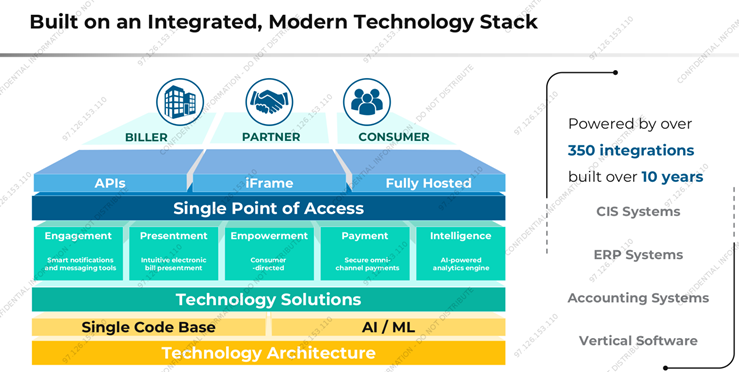
$PAY Paymentus provides SaaS Billing software and solutions to enterprises. The company is seeking ~ $200M at $2.4B in it is IPO this week, pricing shares at $20

Paymentus and Amazon Team up to Provide an Easier Way for Customers to  Manage their Bills with Alexa | Business Wire
Paymentus IPO

$PAY Founded in 2004 by Dushyant Sharma, Paymentus has 1300+ customers, providing payment acceptance solutions to businesses.

Profile photo of Dushyant Sharma
Dushyant Sharma, Founder Paymentus

$PAY has raised over $35M over the years from investors including Accel-KKR, which is investing another $50M at the IPO.

Offering Summary

$PAY solution solves the manual and complicated process of accepting and managing payments from customers for mid-sized and large enterprises.

Instead of creating a bill, getting checks or transfers and then reconciling payments, customers use $PAY to send electronic bills and get paid immediately.

Paymentus currently processes about 1% of US payment volume at $38B, and the global market is over $5T.

$PAY makes money by charging a convenience fee per transaction by the consumer and transaction fees paid by billers.

Metrics

Gross DBNER is 97% and Net DBNER is 117% indicating strong customer retention.

They have 1300+ customers and 212M Bill transactions processed monthly. There is no customer concentration.

Financials

$PAY recorded $324M in revenue for LTM Q1 2021 (March) and is growing at 33% YoY. They have 31% Gross Margins and are adjusted gross margin profitable.

$PAY recorded $28M adjusted EBITDA in 2020, +10% YoY.

$PAY has over 500 employees and is headquartered in Charlotte, North Carolina.

$PAY revenue for 2020 was $92M (+32.5% YoY) and gross margins were 30.6%.

Valuation

$PAY is seeking $2.4B market cap, which translates to a 7.15X Price to Sales, and 115 EV / EBITDA valuation.

Comparable valuations for competitors $FISV (Fiserv) at 5X P/S, but growing at 11% YoY, which indicates this is a reasonable valution.

Recommendation

There is no compelling reason for me to invest on the IPO day, since the growth is not very compelling (30%) and the valuation is not attractive either.

In the #FinTech space, this is a fairly unique company, but not an unique investment opportunity overall.

Potential IPO Noom – weight loss app and startup, valued at $4B, will IPO later in 2021 / 22

Noom an app to aid weight loss by building new habits, received funding from private equity firm Silver Lake ahead of an IPO. The company reached a value of about $4 billion in the funding round.

Noom raises $15M for food logging, activity tracking apps | MobiHealthNews

$NOOM was co-founded in 2008 by Saeju Jeong and Artem Petakov, a former Google engineer. Jeong and Petakov are now Noom’s CEO and president.

Saeju Jeong, CEO and Co-Founder of Noom
Noom Cofounder Saeju Jeong
Better Business Bureau issues warnings over billing for weight loss app Noom  – Vancouver Island Free Daily

$NOOM app asks users to track and log what they eat, weigh in daily, recall their goals frequently, and study nutrition, motivation, and decision-making, all in five-minute-per-day gamified, quiz-heavy lessons. It is similar to Weight Watchers or MyFitnessPal (free, owned by $UA Under Armour).

Weight loss app Noom has entered healthcare and marketers can learn from  its approach - Opinion - MM+M - Medical Marketing and Media

$NOOM is aiming to be valued at around $10 billion when it goes public.

$NOOM, which combines human coaches and artificial intelligence, markets its app to address the psychological roots of eating habits to help people make better decisions about nutrition.

Leading Wellness App Noom Coach Launches Spanish-Language Version to Help  Hispanics Build Healthier Habits for Life - Latinx Newswire - Hispanic  Press Release Distribution Wire Service

$NOOM is backed by investors including Sequoia Capital, Kleiner Perkins, RRE Ventures, Qualcomm Ventures, WhatsApp co-founder Jan Koum and tennis star Serena Williams.

$NOOM has raised about $129M to date.

Noom vs. Weight Watchers- Which app is better? - MomOf6

$NOOM workforce includes 3,000 coaches, 90% of whom are full-time employees.

Market

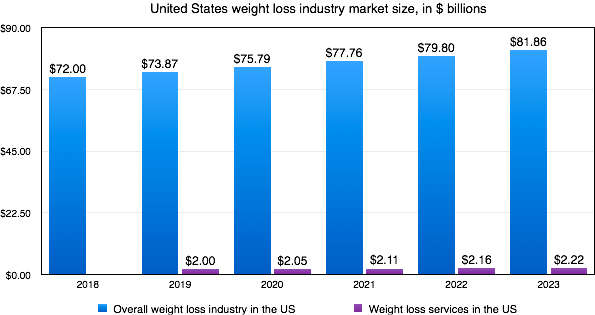
The weight loss market is about $75B growing at 4% YoY in the US alone, so the opportunity is large.

Weight loss products and weight loss services market size in the United  States – Know your industry. Grow your business.

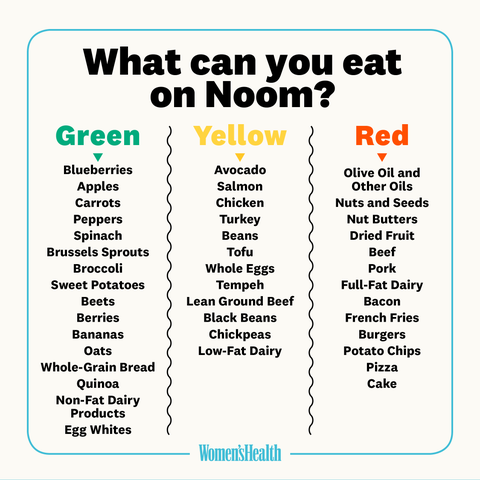
$NOOM uses a color-coded system to guide eating decisions.

Noom Foods List - Green, Yellow, Red Foods To Eat On Noom Diet

Membership averages $59 per month, though you only pay for the months required to reach your optimal weight. The expectation is that you’ll slim down safely, by one to two pounds per week.

Complete Guide to the Noom Diet: A Beginners Guide & 7-Day Meal Plan for  Weight Loss. - Kindle edition by Tyler, Dr. Emma. Health, Fitness & Dieting  Kindle eBooks @ Amazon.com.

If all goes as planned, that weight loss should be sustainable because you’ll be that much more informed and intentional about your diet.

$NOOM has its challenges as well with BBB (Better Business Bureau) complaining about many customers unable to cancel subscriptions, and there has even been a class-action lawsuit filed against the company. 

Noom review: Does this app-based diet plan work?

Financials

While little is known until the S1 filing, the company reported $400M in 2020 revenues and was growing at 100%. Since they employ a lot of consultants, I expect Gross margins to be high (70% – 80%) but operating margins to be lower. I also expect high churn rate among customers.

$NOOM Pros

  1. Fast growth 100% YoY, revenue at scale $400M
  2. High gross margins
  3. In the wellness space there are few good apps that are still

$NOOM Cons

  1. Growth due to Covid will taper off is the biggest risk. Although over 80% of people claim to have increased their weight while being at home during the lockdown.
  2. Churn rate among users is a big concern
  3. There are multiple free apps such as MyFitnessPal, but the human coaches helps keep folks on track.

Analysis

I am very intrigued to dig into the numbers for $NOOM. I think this will be a very interesting play in the health / wellness segment. I will update this blog post when we get more details on the S1 filing.

New IPO Monday $MNDY SaaS Collaboration Software PRovider seeking $3.5B – $4B Valuation

Collaboration software provider Monday, $MNDY is seeking to IPO in June. The company is has not yet priced its offering and is likely to seek a $3.5B to $4B valuation, raising about $500M at IPO.

Israeli software provider monday.com files for an estimated $500 million US  IPO - Renaissance Capital
Monday $MDNY going public

$MNDY Monday was founded in 2012, in Tel Aviv, Israel by Eran Zinman and Roy Man. It is a Software as a Service (SaaS) solution for project management, task management and team collaboration.

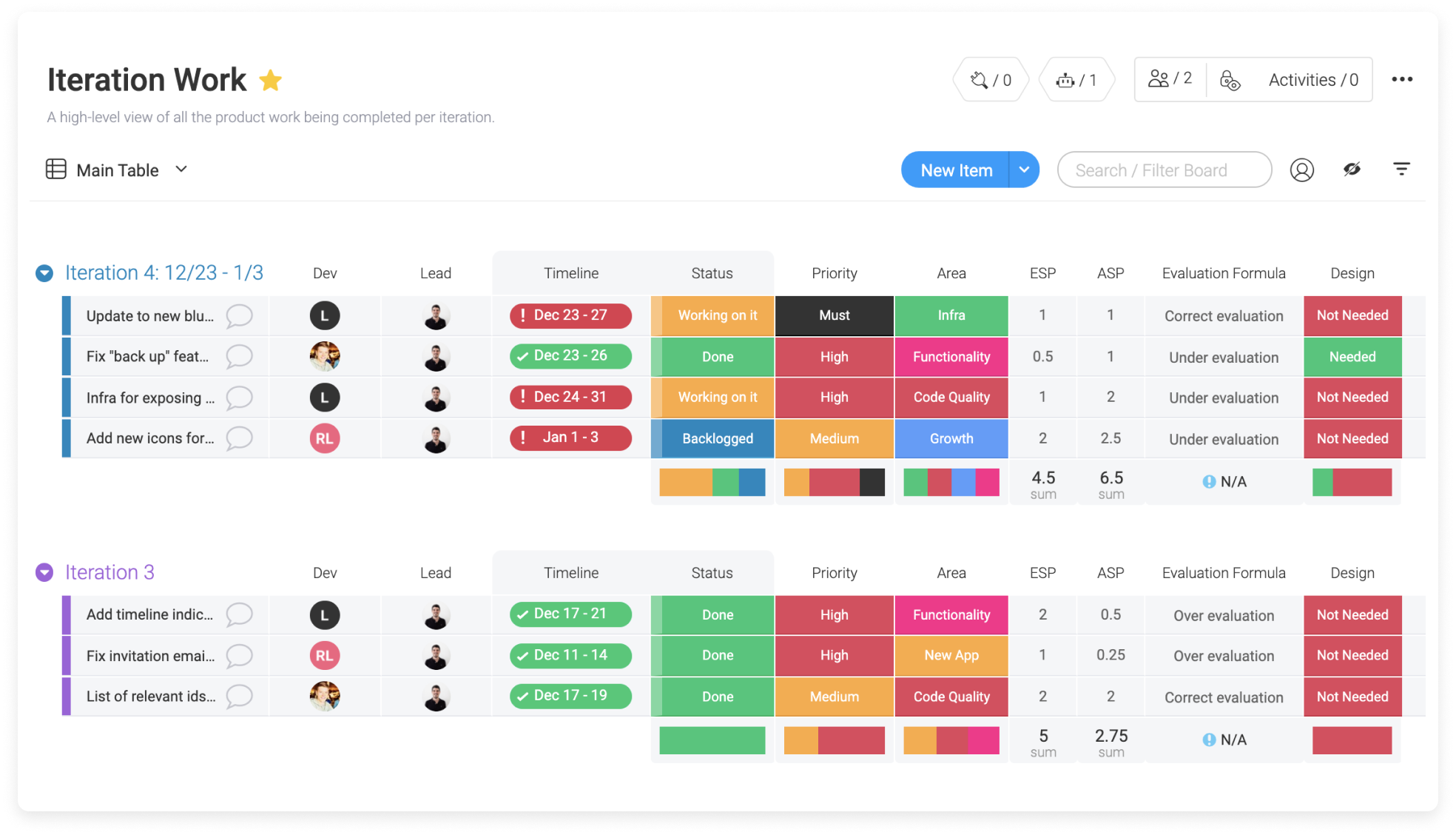
The platform is cloud-based, so employees can update the status of projects in real time, yielding a set of dashboards that provide a bird’s-eye view of everything getting accomplished within an organization.

Israeli startup Monday.com is heading for a $4 billion Nasdaq IPO | Ctech

$MDNY Monday has about 800 employees and 128K customers. Its large customers (Spending over $50K annual) are 264 including Universal Music Group, Bayer AG, Mars, Inc, BBC Studios and Nielsen.

$MDNY competes with $WORK / $CRM (Slack/Salesforce), $SMAR (Smartsheet), $TEAM (Atlassian), $ASAN (Asana), Wirke (private), $MSFT (Microsoft Project, Teams) and many other tools.

Work Management Platform Monday.com To File For IPO On Nasdaq

$MNDY has raised over $235M since 2012 and was last valued in May 2020 at $2.7B.

monday.com: One platform, better teamwork.

$MDNY has seen revenues rapidly grow 106% in 2020 to $161M and has grown 86% in Q1 2021 to $59M. It had net losses of $152M in 2020. Sales and Marketing spend is over 100% of revenue. In Q1 2021, for instance, Monday.com generated $59 million in revenue with $63 million in associated sales and marketing costs.

What is monday.com? – Support

$MDNY investors include Sapphire Ventures, Hamilton Lane, HarbourVest Partners, ION Crossover Partners, Vintage Investment Partners, and Genesis Partners, an Israeli VC.

The Basics of a Board – Support

Valuation

If the IPO were to list Monday.com at $3.5B, then valuation looks reasonable at 21X LTM (2020) and 14X NTM (2021) revenues with 90% growth, since comparable valuations are

$MNDY$SMAR$ASAN
Market Cap$3.5B$6.5B$4.8B
2021 Growth (E)90%31%41%
2021 Rev$242M$502M$312M
EV / 2021 Rev14.413.115.2
Comparing $MNDY $SMAR and $ASAN

$MNDY Pros:

  1. Revenue growth of over 90% – 100% at $185M revenue run rate
  2. Gross Margins of 84%
  3. DBNER and Net revenue retention rate of 107% (all customers) – 121%(large customers)

$MDNY Cons

  1. Sales and Marketing expense is astonishing and looks unsustainable
  2. Very competitive space with $SMAR $ASAN and $TEAM executing well
  3. Reasonable valuation at 21X Last Twelve Months and 14X Next Twelve Months EV to Revenue for a company growing at 90%
Comparison of Monday, Smartsheet and Asana

Analysis

Strong growth combined with good margins make $MNDY interesting but I am going to wait for 6 months before I jump in.

New IPO Filing Confluent, valued at over $4B previously

Confluent, which makes cloud software (open source) Apache Kafka for enterprises filed confidentially for an IPO on April 20th.

Confluent Files to Go Public. Who Could Be Next?
Confluent makes Apache Kafka

Confluent CEO Jay Kreps, co-created Kafka with fellow LinkedIn engineers Neha Narkhede and Jun Rao founded it in 2014, in the Bay area (Silicon Valley).

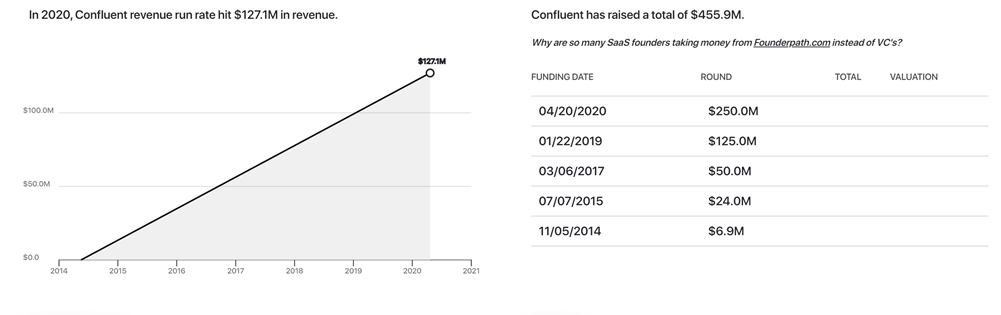
Confluent raised $250M in a Series E round in April 2020, bringing the company’s total funding to $456M. At that time, it was valued at $4.5B.

The company has positioned its Confluent Cloud as a enterprise offering for organizations that want to get value out of a Kafka-based real-time streaming data system, while at the same time continuing to make big engineering investments in the core Kafka software. 

What is Confluent?

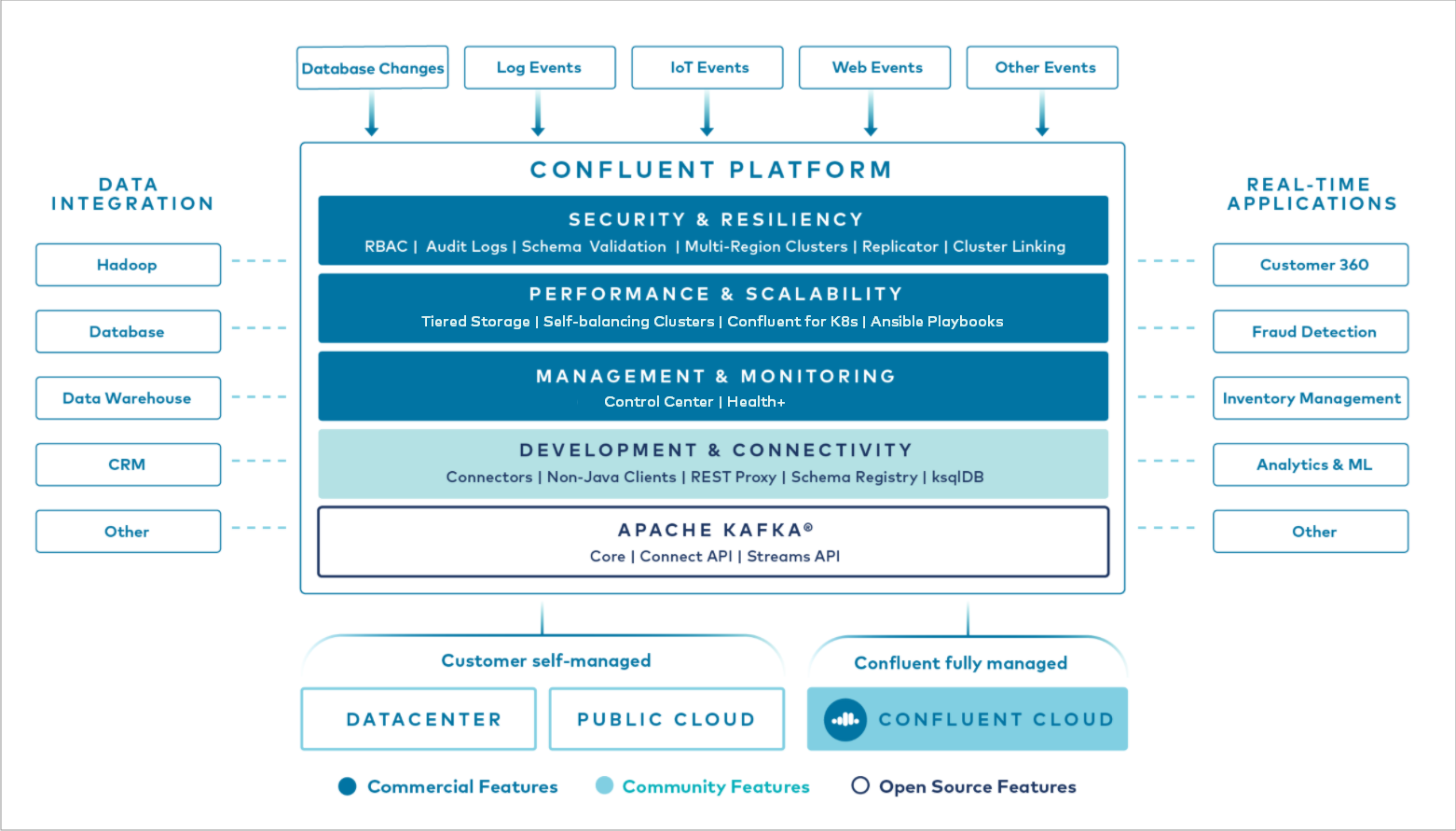
The Confluent Platform is a stream data platform that enables you to organize and manage the massive amounts of data that arrive every second at the doorstep of a wide array of modern organizations in various industries, from retail, logistics, manufacturing, and financial services, to online social networking. 

The video below gives you a good overview.

What is Confluent Platform? | Confluent Documentation
Confluent Platform for real time data

The Confluent Platform is a collection of infrastructure services, tools, and guidelines for making all of your company’s data readily available as Realtime streams.

What is the Confluent Platform? | Confluent Platform 3.1.0
Confluent takes all real time data and brings it together for analysis

Apache Kafka is a real time, fault tolerant, highly scalable messaging system. It is widely adopted for many use cases ranging from collecting user activity data, logs, application metrics, stock ticker data, and device instrumentation.

Comparing Confluent Kafka and Apache Kafka - Dattell
Confluence leverages Apache Kafka (open source)

At its core, the Confluent Platform leverages Apache Kafka, a proven open source technology created by the founders of Confluent while at LinkedIn.

Kafka acts as a real time, fault tolerant, highly scalable messaging system and is already widely deployed for use cases ranging from collecting user activity data, system logs, application metrics, stock ticker data, and device instrumentation signals.

Its key strength is its ability to make high volume data available as a real time stream for consumption in systems with very different requirements – from batch systems like Hadoop, to real time systems that require low-latency access, to stream processing engines that transform data streams immediately, as they arrive.

What is the Confluent Platform? | Confluent Platform 3.1.0

Kafka is deployed at more than 80% of the Fortune 100. Information technology teams use it to stream diagnostics information from data center infrastructure to their monitoring applications.

Marketing departments can harness Kafka to transport website activity metrics to their analytics systems. 

Kafka, however is difficult to manage. Confluent’s commercial versions of the platform simplify the task. LinkedIn open-sourced Kafka in 2011, and it quickly gained a foothold in companies like Netflix, Uber and others.

Confluent employs more than 1,400 people at its Mountain View headquarters as well as at offices in San Francisco and India.

Confluent hit $127M in revenue in 2020

Confluent has raised over $456M in funding from venture capital. It reported a run-rate of $207M in 2020 ($17.6M MRR – Monthly Recurring Revenue).

Confluent grew revenues 100%+ in 2019 and over 80% in 2020. While still unprofitable, the company will be looking to raise about $500M by selling shares at $6B – $8B in the public markets, (depending on the market, it might get a lower valuation as well).

For 2021, the estimated revenue is between $310M – $350M, giving it approximately 16X – 23X Enterprise Value to Next Twelve Months Revenue multiple.

$CFLT Updated revenues

$CFLT Confluent had $208M in 2020 revenues, growing at 51% YoY. Gross Margins were 77% and net losses were $229M.

New IPO: Global-E $GLBE Cross Border Commerce company

Global-E Online Ltd. $GLBE, a white-label e-commerce software platform that enables cross-border retail for retailers went IPO at $25, raising $375M at $3.5B Market Cap

Homepage - Global-e

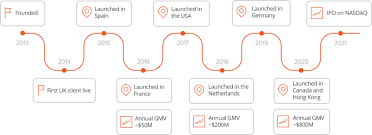
The company was founded in 2013 in Israel, by CEO Amir Schlachet, COO Shahar Tamari and CRO Nir Debbi.

E-commerce company Global-e targeting unicorn status in Nasdaq IPO | Ctech

Global-E has raised $114M in 6 financing rounds, the most recent of which was last June 2020.

Global-E is a software platform that enables retailers to sell internationally in a seamless, localized shopping experience. Global-E operates largely as a “white label” solution. $GLBE automates local language support, payments, shipping, and website traffic acquisition.

$GLBE has 300 employees, mainly in Israel and the UK. 59% of Global-E’s customers in 2020 were in the UK.

Financials

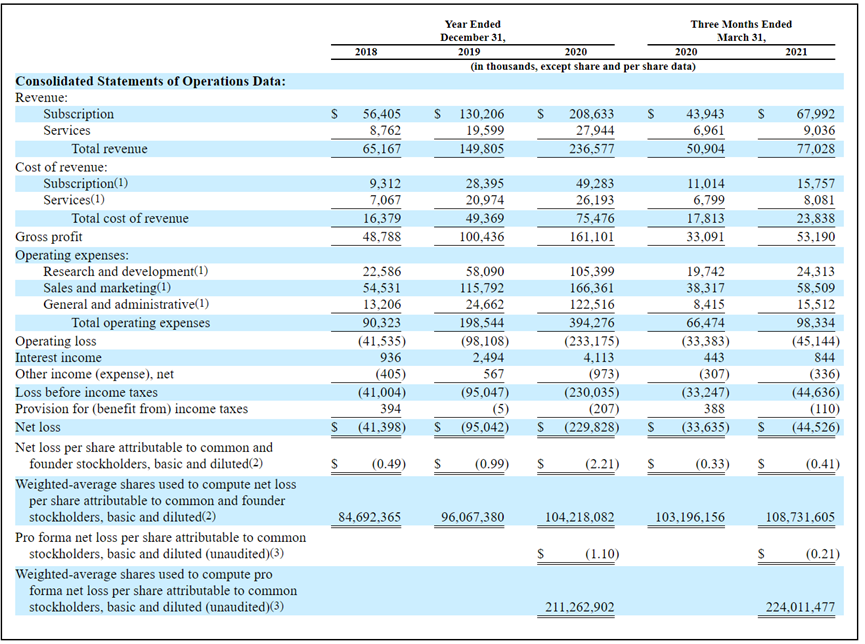
$GLBE GMV (Gross Merchandise Volume) grew by $211M in 2020 to $774M (+61%) with a $3.9M net profit after a net loss of $7.5M in 2019.

$GLBE 1Q21 guidance implies 130% YoY growth in GMV.

$GLBE revenues were ~$39M, ~$66M, and ~$136M during 2018, 2019, and 2020, implying 70% and 107% YoY growth.

$GLBE gross margin was 22.2%, 28.3%, and 31.9%, during 2018, 2019, and 2020.

$GLBE EBITDA margin was -26%, -7%, and +9%, during 2018, 2019, and 2020.

$GLBE valuation: 11.5x on 2022E revenue and approx. to 35.0x 2022E Gross Profit. This is a good valuation for a company growing at 60% and 172 DBNER.

Business Model

$GLBE business model is a volume-based revenue model, driven by shopper order activity on its merchants’ websites.

$GLBE merchant base has increased from 161 in 2018 to 283 in 2019 and 442 in 2020, implying 175% and 56% YoY growth,

$GLBE DBNER Net Dollar Retention Rate — for the years ended December 31, 2018, 2019, and 2020, NDRR was 153%, 134%, and 172%, respectively.

$GLBE Gross Dollar Retention Rate has stayed over 98% since 2018, implying low churn among existing customers,

In April 2021, Global-E announced an agreement with $SHOP (Shopify) making its platform services available to certain Shopify merchants through Shopify’s e-commerce platform.

$SHOP (Shopify) will receive a take rate off of the GMV transacted via Global-E, and Global-E facilitates cross-border transactions for a select subset of Shopify customers. $SHOP owns >5% of $GLBE.

Approx. 59% of Global-E’s revenues came from the U.K., 25% from North America, ~16% from the European Union countries. Of the 442 merchants on its platform, ~53% were located in the United Kingdom, while 33.0% and ~12% were located in North America and Europe, respectively.

Risks

a) Customer concentration $GLBE largest merchant represented ~20% and 15% of total GMV and generated 25% and 18% of total revenues during 2019 and 2020 respectively.

b) Global-E’s competitive landscape is quite diverse and fragmented from $CRM (Salesforce) to $BIGC (Big Commerce) and $SHOP (Shopify).

c) Long sales cycles: Typically 12 to 16 weeks on average

d) $DHL (DHL) is a large & majority shipping partner (and owns >5% of company).

$GLBE could generate CY21 and CY22 revenues ranging from $220mn to $230mn and $305M to $325M, implying approx. “60%+” and “30%” y/y growth respectively, with gross margin and EBITDA margin approaching ~35% and high teens, respectively, in 2022.

Analysis

While the valuation and business model are attractive the 30% guidance growth for 2022 is not exciting.

I am going to wait for a 3-6 months before I consider a new IPO position in $GLBE.

New IPO $PCOR ProCore Tech Construction SaaS

$PCOR Procore is a software company that provides cloud-based construction management software that will IPO on May 20th, looking to raise $600-$650M at $60 – $65 per share at a Market Cap of $8.3B – $9B, selling 9.5M shares.

Procore | Construction Management Software
Procore App

$PCOR provides software to construction companies for project management, construction planning, financial management and resource optimization.

Construction Project Management Software | Procore
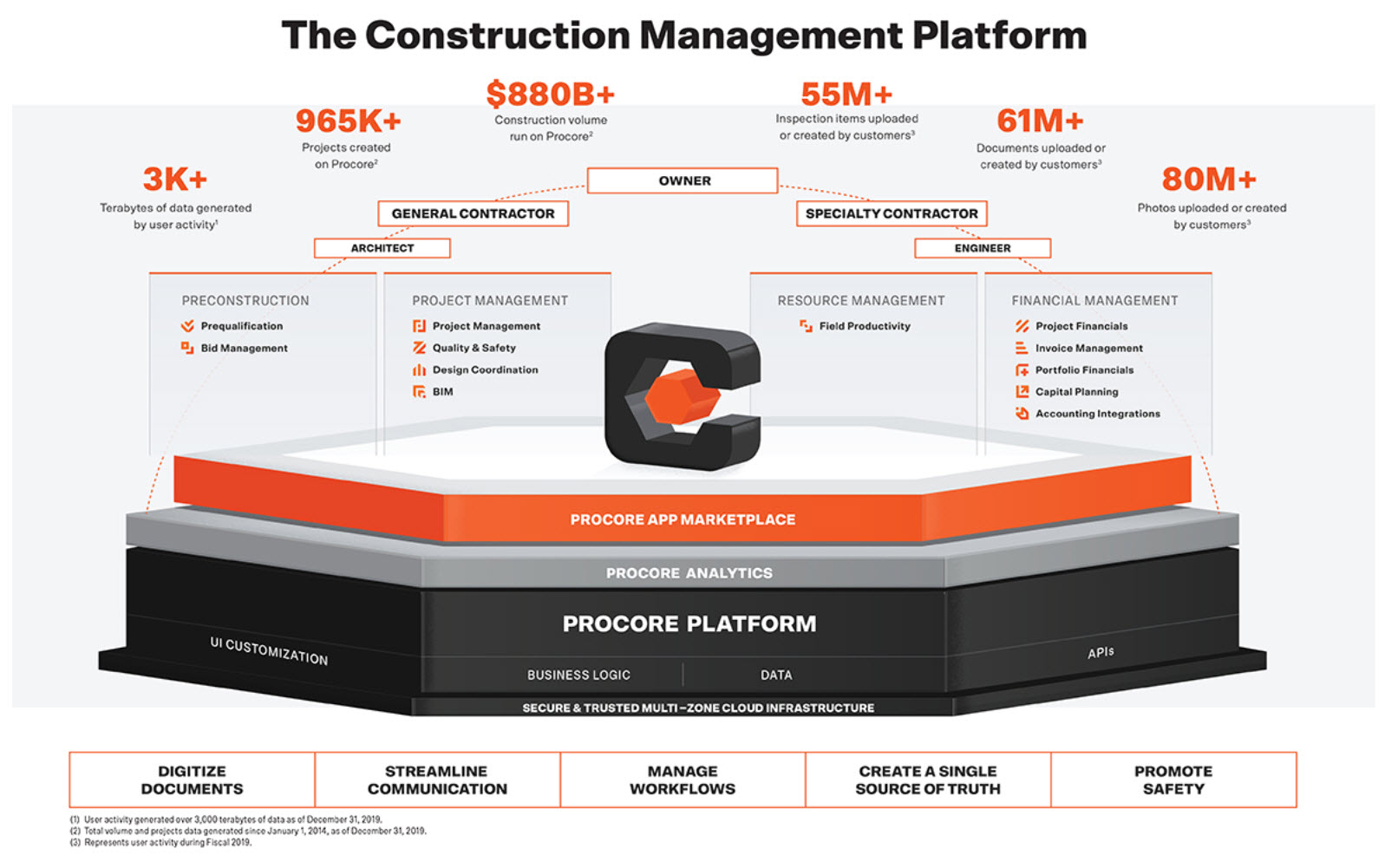
Procore modules

$PCOR was founded in 2003 and is headquartered in California with about 1,900 employees.

Hair: Procore campus, listed at $48M, sells for undisclosed amount |  Pacific Coast Business Times
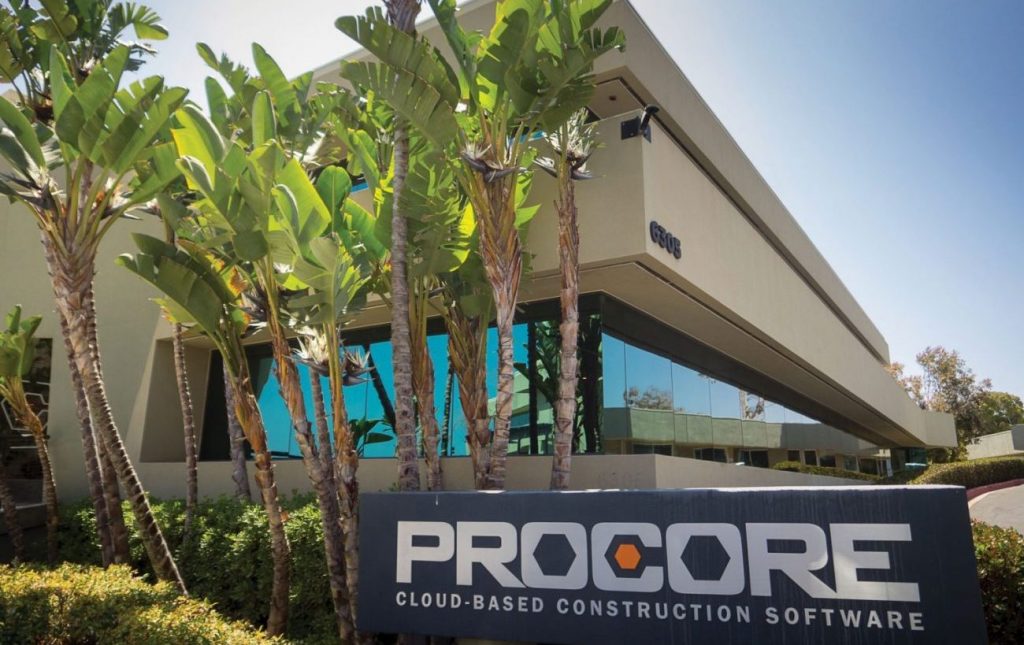
Procore headquarters

$PCOR has raised more than $500M from investors including ICONIQ, Bessemer Venture Partners, Dragoneer, Tiger Global, and D1 Capital. Procore was valued at $5.1B as of April 2020.

Procore, a Construction SaaS Vendor, Files for IPO
Procore key metrics

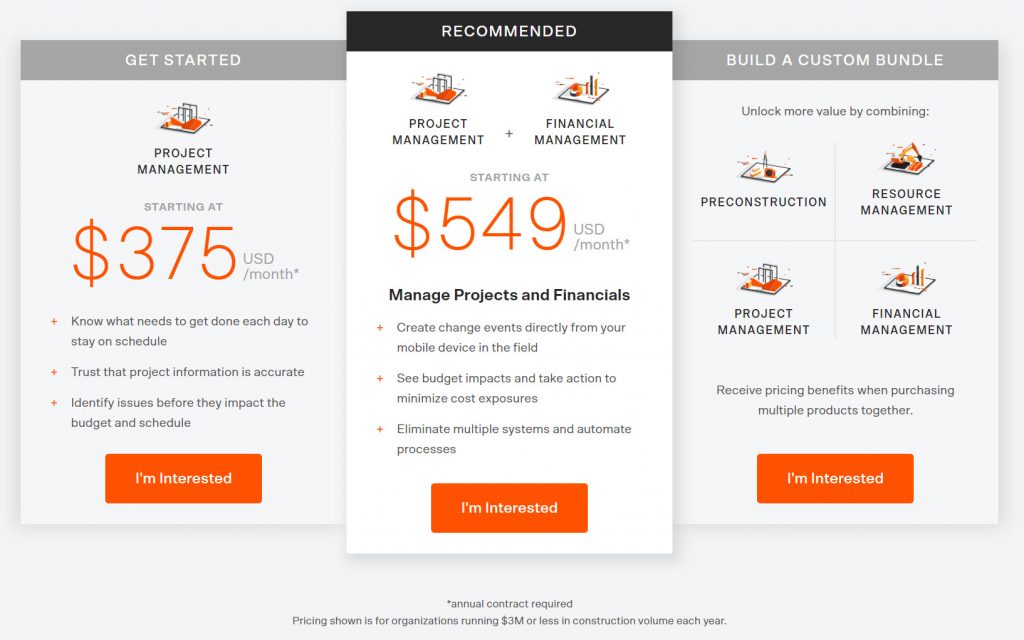
$PCOR prices its products by seat, module and project, which is traditional SaaS (like $CRM).

$PCOR sells to the “Buyer” of the project primarily–the Owner, General Contractor, or sub contractor. Once this project owner pays for the services, all their intra- or inter-enterprise collaborators can use the platform for the duration of the project. 

Procore Pricing

Market

Construction is a large $10T market, but the software market is about $3B annually with a very large set of fragmented products and tools.

7% of the world’s workforce is employed in construction.

Metrics

$PCOR revenues for 2021 will likely be $475M (+20% YoY) and valuation is rich at 17X 2021 revenues with low growth.

$PCOR net retention rate was 121% in 2018 and 117% in 2019, but dropped to 107% in 2020.

Gross retention rate through the pandemic was ~95% in 2020, meaning customers reduced spend but did not leave the platform.

2019, $PCOR RPO (Revenue Performance Obligations) was ~$250M and grew to ~$310M at the end of 2020, +23% YoY.

$PCOR has 82%-84% Gross Margin, with 43% spend on Sales and Marketing. Long term operating margins are expected to be 20% -25%.

Pros

  1. Construction industry is fragmented and not digitized yet, so opportunity is large
  2. $PCOR has built a great ecosystem of partners and apps
  3. Growth by acquisitions has been consistent for $PCOR

Cons

  1. Very competitive landscape for construction software with over 100 small companies besides $ADSK, $ORCL
  2. Not a profitable company and $PCOR is losing a lot of cash
  3. Revenue in 2020 decelerated QoQ significantly so this is still a macro economics dependent software company.
  4. Very rich valuation at 17X 2021 revenues at 20% revenue growth YoY and not close to profitable.

Analysis

While I like SaaS companies in general with decent valuations, this is a very easy pass for now, for me. Revenue growth is slow (given the industry) and while it could grow faster in the future, I would like to wait for proof that revenues can grow over 40% before I am willing to jump in at this valuation.

$PCOR – very likely will trade much lower after the first lockup and I see shares going not much higher for 6 months – they might even get to about <$4B valuation ($40 / share) by Dec 2021.