
Category Archives: Funding

The 3 most important questions you will need to answer about customer segmentation

Customer segmentation for entrepreneurs is a tool to reduce distractions, focus your product roadmap towards your Minimum Viable product and create personas that can help your marketing, sales and development efforts.

I am often asked 3 questions associated with customer segments, which I thought I’d address in this post. I am going to use an example of a company building a new age mobile Patient Records Management solution (or EMR – Electronic Medical Records) for the tablet as an example.

1. What are the steps to a good segmentation strategy?

The first thing you need to do to ensure a good segmentation approach is to write down your ideal customer attributes. You dont need any framework to do this, just a list of attributes will suffice. Your attributes need to be specific, numerical and descriptive.

(I) Specific means, you will have to outline their environment. What are they using currently? How specific is their problem? Do they have alternatives? If your target is doctors in our above example,. that’s too large a segment. Instead there are different types of doctors:

a) Those that practice independently vs. those that are attached to a hospital

b) Those that are general physicians vs. those that are specialists.

c) Those that see < 10 patients a day vs. those that see more, etc.

(II) Numerical means there has to be a set number of customers that fall into this segment. It has to be a number much less than your entire target market, and not more than 2.5% of 2.5% of your target market. Why 2.5% of 2.5%? That’s usually the second question.

(III) Descriptive means, you have to outline their current day-in-the-life scenario without your product. Explain how they are currently solving the problem (if it does exist) and how they are solving it without your product. It cannot be that they are not solving it. They may be used pen and paper to keep medical records, but a system does exist.

2. How many customers is enough to build a segment for? Is there a minimum number?

Innovators - theory of diffusion
Innovators – theory of diffusion

According to the theory of diffusion, we have 2.5% of customers who are innovators. These are your earliest of early customers and your initial targets. What I have found with most of the startups I am helping is that 2.5% of those innovators are truly the engaged, early influencers who will be willing to have the discretionary time and budget to try truly innovative products and then be willing to evangelize them to the rest of the innovators.

To be clear, you dont need all of the 312 to be your early customers. These are your early segment of potential customers. Typically 10% of them being early customers tends to show “traction” for an investor.

Lets say the total number of doctors in the US is 500K. Then your Innovators are 12.5K. Of them, 2.5% should be the first segment, which is about  312. That’s the ideal target for you to have as a start.

3. What if most of the target customers dont have the pain point or dont want the product? Does that mean the segment is incorrect or there is no market need for this segment?

If you have targeted 312 doctors who are primary physicians (segment by practice type), in the Texas area (segment by location) who work in a multi-use work location (segment by work area) and are currently using paper based medical records (segment by current product usage) theny you now have a segment of customers who you want to go after.
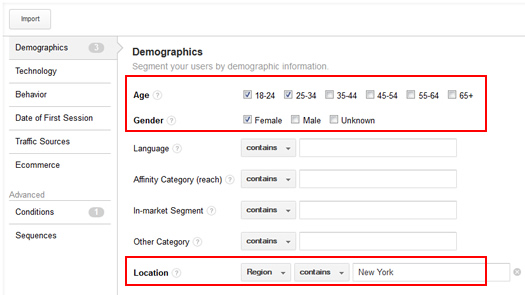
Google Adwords Segments

A trick that I have seen most people use is to segment based on Google Adwords segments (see diagram above) or segment by Facebook targeting options.

Facebook Targeting Options

Once you have your segment at 2.5% of 2.5%, then you are doing a combination of ads, conversions, focus groups and interviews to understand if they have the pain point.

If you end up finding out that customers dont have the pain point or the conversion rates on your ads is low it is indicative of either poor targeting, poor messaging (your message did not resonate), incorrect framing of the problem or lack of the problem in the first place.

What I have found in my experience with over 300 startups is that the number one problem is poor targeting, followed by lack of the problem existing for the prospect in the first place.
Does your idea matter at all to anyone but you as an #entrepreneur?

Short answer – it does a lot, but not as much as you think it does.

There is a never ending debate about how much do ideas matter when you are starting. There are arguments on both sides of this thesis. There are folks that believe ideas are dime a dozen and execution is everything and others who believe that ideas are what differentiate the great entrepreneurs from the mediocre ones.

So this makes me believe the answer is somewhere in the middle. A good idea executed well is obviously better than a good idea executed poorly. Similarly a bad idea executed well is marginally better than a bad idea executed poorly. Either way, execution does matter as does the idea.

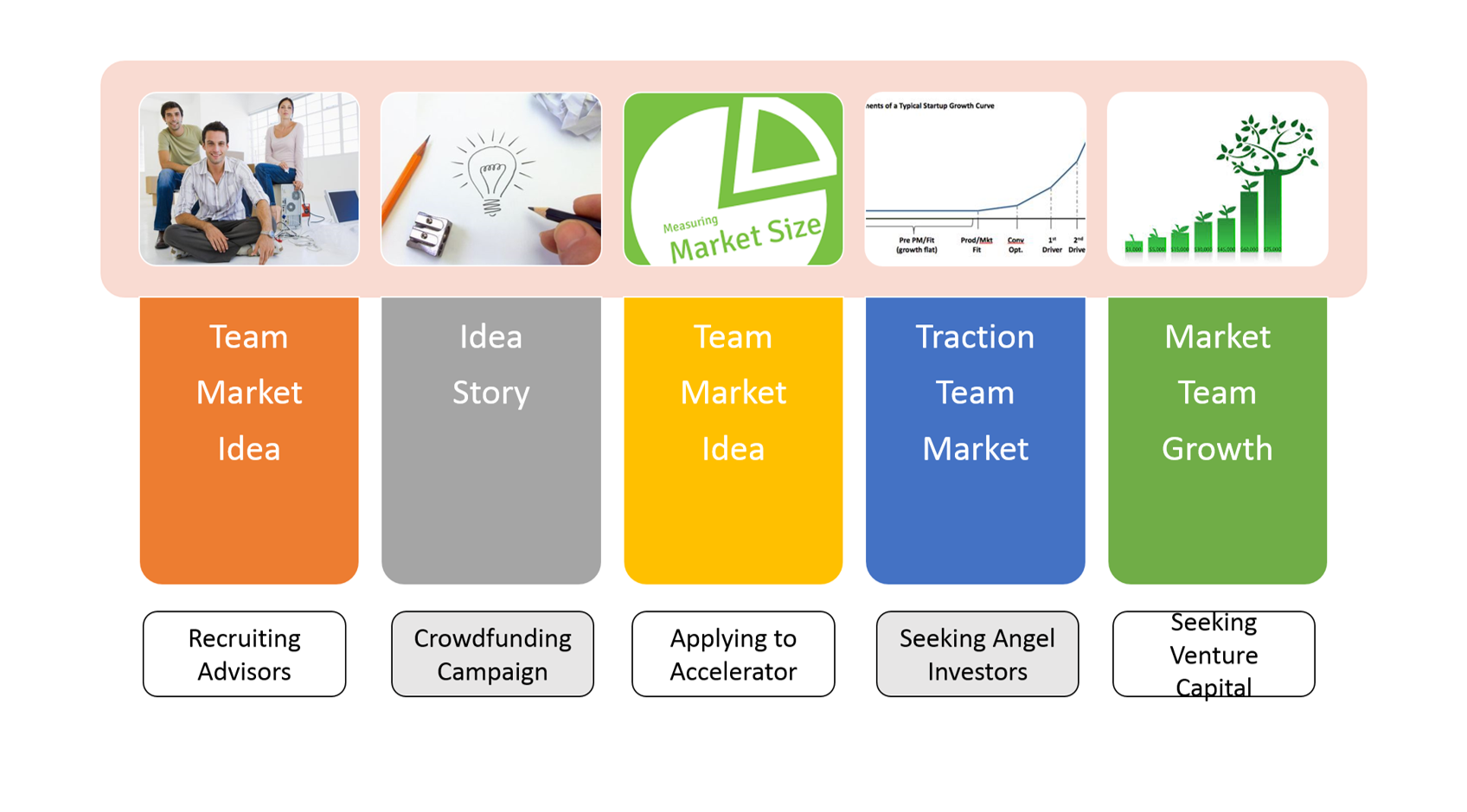
I put a chart together based on my experience of the top 1-3 things that different folks care about the most when you are progressing along stages of your startup.

The first thing to keep in mind is that the idea matters most to your potential customers.

Which is why it matters so much.

Your customers may care about the team, the problem you are trying to solve (it better be important to them) but they certainly dont care as much about your market or your growth.

What Matters When At A Startup

At the napkin stage when you are trying to recruit advisers, and early folks; your team and market matter to them the most, then possibly the idea.

The next stage (if you are going that route) at the crowdfunding stage, the idea and your story matter the most. The market maybe somewhat matters, but the team does not seem to matter as much since they are largely the “people” behind the video.

The stage beyond that (again if it applies), which is the accelerator stage, the team and market matter the most. The assessment of whether the team can pivot plays a lot into this stage.

At angel investor stage the traction seems to matter most, followed by team. Enlightened angel investors care more about the team and the market, but accelerators have trained the startups and angels to write checks based on “traction”.

Finally when you are ready for the venture capital round, lots of things matter, but most VC’s will tell you that the market you operate in and the team matter the most, followed by growth in metrics.

If you look at the chart above, the obvious conclusion you will come to is that idea does not seem to matter to most people.

If, however you expand the “crowdfunding” stage to “recruiting customers“, then at that, stage ideas matters more than everything else.

So the idea does matter, it matters a lot and it matters to a key (if not the most important) constituent of your startup – the customer.

Does it matter as much as you think though?

That answer is also no, because, the other “constituents” including potential employees, care about working on a great problem, getting paid well and being challenged (in that order hopefully).

So, when any of your investors or potential advisors or an accelerator tells you “Ideas dont matter” – you know they are wrong, but not as much wrong as you really think they are.

The ultimate list of questions about “market research” for a #startup asked by 30+ Venture capitalists

I had a chance over the last 3 weeks to talk to many colleagues and associates in the Venture industry. Most were smaller, seed funds, with the largest fund size at $35 Million and the smallest at $8 Million.

They have between them about 210 companies they have invested seed capital in, with the average check size being about $315K. Over 70% were in the Silicon Valley.

The most important insight I gathered from my discussions was that if an entrepreneur was not looking to raise a follow on round after raising a seed round from a Micro VC, they were likely to be a much smaller company and hence not interesting enough for the seed investors.

If you are going after a small market, or slow growth one, your chances of getting funded by a Micro VC were negligible.

Which makes sense, but I think most entrepreneurs I speak to have the incorrect perception that Micro VC’s or seed funds as those that invest in smaller opportunities.

That cannot be further from the truth.

Micro VC’s or seed funds write earlier stage, smaller checks, but they are looking for the large, unicorns, as well, only earlier.

The number one question then that all the seed investors had was about the market.

It was not a simple question about market size alone.

So I set out to ask them about all the questions they had about a “startup’s market” and have documented them below.

As an entrepreneur, you need to review as many of these questions, but dont expect to be asked all these questions. It is likely a subset of these that your investor will likely ask you. It serves you best to review all these questions though.

Some of them may be redundant, but the fact that you can get the same question asked multiple times in different ways indicates that your potential investors will want to triage and understand the market a lot better before they make the bet.

  1. Is the market clearly identifiable (e.g. are there users who are willing to pay)?
  2. What is the size of the market (bottom up and top down)?
  3. How fast is the market growing (current growth trends)?
  4. How quickly will the market grow (potential for growth)?
  5. By what methods will the startup be able to reach it (are there high costs to get capture the market)?
  6. Can the market be segmented (are there lower hanging fruits to be had)?
  7. What types of people (demographic profile of buyers) buy this product/service in this market?
  8. Does the product/service have appeal based on geography (is this a first world solution)?
  9. What do potential or existing customers like about curren products/services?
  10. How quickly are other products (competitive growth) in the market growing?
  11. What makes the product/service unique relative to others in the marketplace (is there a chance the startup can grow quicker)?
  12. Do we have expertise (knowledge, expertise, etc.) in this market to help?
  13. Do we have connections in this market so make a difference?
  14. What are current buyers paying for comparable products/services?
  15. What is required to succeed in this market?
  16. How many competitors will the startup be competing against?
  17. Are there big incumbents in this market?
  18. How quickly are the incumbents growing?
  19. Has there been innovation in this market over the last few years / decades?
  20. Can the market support another player?
  21. How do competitors reach the market?
  22. What does the competitive landscape look like?
  23. Can this company achieve more than their fair share of market?
  24. Is the industry growing in size?
  25. What are other current trends within the industry?
  26. Who are the existing market leaders within the industry, and why are they successful?
  27. What type of marketing strategies are prevalent (Is the cost of acquiring customers high) within the industry?
  28. Is the industry seasonal (e.g. more food is catered during holidays)?
  29. Are there regulations (e.g. Uber and local taxi medallions) that affect the industry?
  30. Is there customer loyalty (e.g. it is hard to unseat ADP from payroll) within the industry?
  31. Is the industry sensitive to economic fluctuations (e.g. Match.com decreases matching during recessions)?
  32. Are there technological changes happening (e.g. Obamacare and patient records) or required in the industry?
  33. What are the financial characteristics (average selling price of products, average inventory turn, etc) of the industry?

A framework for how to take advice – for #entrepreneurs

There is no shortage of advice or number of advisers and the time you are given advice as an entrepreneur.

It can be overwhelming for an entrepreneur, especially when they hear from conflicting advice from trusted sources.

The 3 most important factors that should go into the decision making process for taking advice is a) Who should you take advice from b) What advice should you take and c) When should you seek that advice.

There are 2 kinds of people you take advice from – those you consider as “experts” in the field and those who have “experience” with the specific problem you set are seeking the advice from. Everyone else is rather a big waste of time. So, if you are an entrepreneur and seek advice from someone at a much larger company on what you should do with your product direction, when they are not an expert in the field, then be prepared to be given useless advice. Well, you asked for it so there.

Expertise is easy to ascertain since, it has a factual basis. If someone is a certified legal professional, then they know the aspect of law they practice. They won’t necessarily be the best at litigation or immigration if they are a corporate attorney, but they would be the best at company legalese.

Experience is best couched with situational awareness. If the person giving the advice is smart, they will tell you the specific conditions, background and environment that the course of action worked. From that, you can at least determine if it might work for you in your specific situation.

The worst people to take advice from are those that pattern match. In my experience, most investors, general practitioners and enthusiasts understand a situation by talking to many people and offering their generic opinion couched as “experience”.

If you seek advice from those whose experiences don’t match your current situation, then you will get suboptimal advice. People who are confident may tell you they don’t know, but it is more likely you will get opinions from 3rd party reading couched as experience.

You need actually both expertise and experiential advice for most situations, which is why understanding the contours of the problem will help you explain it to the person you are seeking advice from.

What you need advice on falls into 2 buckets as well. Easy questions and hard questions. Easy questions have a binary outcome. These are fairly rare. Most difficult questions tend to have a range of answers, with complicated if-then-else statements around the answer.

Easy questions are those that can be answered by experts alone. Can you hire someone from your ex-employer is fairly easy to answer if you look at your exit interview or contract and have a legal person review it.

Hard questions typically will give you multiple choices, not just two. Should I raise money is an easy question to answer if you are running out of cash, but the harder question of who to raise money from and how much to raise are harder questions that can run the gamut based on your situation.

Finally, when you seek advice is also fairly binary. You can either seek advice when you need it, or way before you encounter your specific situation. Seeking it after is just a waste of time – it reaffirms your position and makes your feel nice, or it will make you regret the decision since the advice you get is contrary to the decision you already took.

If you seek advice just when you need it, prepare to be rushed and expect to miss out on key details that tend to be nuances and shades of grey. For example, trying to decide what type of company (C corp or S corp) you should incorporate is best done when you don’t need it done yesterday. It will give you time to think about the options if you learn about the options way before you need them and keep the notes handy.

Seeking advice way before you need it is useful in situations when the impact is longer term. When the decision to be made cannot be reversed very easily (for example who you want as a cofounder), you are better off getting advice on the type of cofounder you need.

The biggest challenge is always the conflicting nature of the advice. What do you do when two people, both of who you trust, offer very different advice or in fact the exact opposite advice.

The relative scale of their expertise and experience does not count, so most people go with what they feel “more comfortable” with. Or they get more opinions and do a “vote count”. Either way it tends to be sub-optimal only in hindsight.

Dealflow management is now harder than fundraising for #microVC in India

In 2008 (before Angel List) there were roughly 1000 technology startups in India starting each year. of these about 50+ got funded by VC each year according to Thomson Reuters.

The percentage of services (consulting, IT enabled services, BPO, outsourcing) companies was about 29% – those that started and 33% of those that got funded.

The number of eCommerce companies was about 3% of the total.

Services and eCommerce Companies India

Fast forward to 2014 and those number of companies starting at 22% of the total for services and 5% of the total for eCommerce.

The structural changes of the services companies have changed as well. We have gone from 8% of the companies in IT Services to 5% from 2008 to 2014.

Service Category Startup in India

While Thomson Reuters does not break out the data, anecdotal evidence suggest that there are a lot more digital marketing & design outsourcing companies now than before.

The number of eCommerce companies has been steadily increasing as a % of companies started, but has increased significantly as a % of funded companies and a % of total funding.

The only other category, which has grown (for which I dont have a breakout again) is software as a service (SaaS).

Over the last 7 years, the number of Micro Venture Capital firms has also grown. We have gone from none in 2008 to 5 in 2014, and I think we will end up at about 10 Micro Venture Capital firms (those that have less than $25 Million in capital to invest) in 2015. These include Angel Prime, Oris, India Innovation Fund, Blume Ventures, and others.

I have talked to about 5-10 angel investors and industry veterans who are all looking to start their own Micro VC, seed fund and combination accelerator or incubator in India over the last 3-4 months.

In 2008, the average amount of time it took to raise a fund (regardless of size) was about 9 – 12 months. That number is lower for Micro VC funds, obviously, but we have no way to know how long it would have taken.

In 2011 of the 3 funds that raised, the average was about 7 months.

This year, I am hearing funds that are < $25 Million close their raise in less than 4 months.

That means the time taken to raise their fund has dropped. It is easier for fund managers to raise their capital, they can do it in shorter periods of time and they can raise more than they initially desired.

The challenge for the fund managers seems to be no longer raising capital, but efficiently deploying it.

The gold standard for VC investing has been proprietary deal flow (startups that come to the investor for funding exclusively and go to no other investors). That’s becoming harder for all VC’s now.

If the number of companies starting up has grown significantly (as from the graph above) and the % of non services companies have grown as well, then there is a real democratization of founding startups.

So the problem has now moved to sourcing, building a brand for your Micro VC firm and convincing entrepreneurs that you are the “smartest” capital available.

The best entrepreneurs have multiple sources of funding, and they have many investors of different type chasing them.

The challenge for Micro Venture firms with no brand visibility or “magnet” founders is that their deal flow is largely limited.

From our own data, I can confidently tell you the “best” deals are usually referrals, but 3 in every 5 companies we get into our program are non referralsSpeaking to Accel and Helion last week, I confirmed that 25% of their funded opportunities were cold (unsolicited).

So while the Micro VC fund manager may have a decent network, their biggest challenge is going to be that they will not be able to attract at least a quarter of deals which come because of having a good brand in the startup ecosystem.

The problem for a lot of the Micro VC’s is going to be that they have poor quality deal flow or deal flow that’s not proprietary.

While they will still go to many events, and review Angel List startups, I suspect they will have a tougher time getting good quality companies to apply.

The bottom line is that now it is as hard for the investors to get good companies as it is for the entrepreneurs to get good investors.

Which is why I love this quote

“Every morning in Africa, a gazelle wakes up, it knows it must outrun the fastest lion or it will be killed. Every morning in Africa, a lion wakes up. It knows it must run faster than the slowest gazelle, or it will starve. It doesn’t matter whether you’re the lion or a gazelle-when the sun comes up, you’d better be running.”

― Christopher McDougall, Born to Run: A Hidden Tribe, Superathletes, and the Greatest Race the World Has Never Seen

Why your #startup #fundraising process should be very similar to your college application process?

There are over 4000 universities and colleges offering 4 year degree program for students graduating from high school. Of the 20+ million students that apply, 13 million get into the college undergraduate programs. Of the 13 million students enter 4 year under graduate programs each year and only 2 million graduate from the programs.

So, it is pretty obvious that while the acceptance rate of students into college is fairly high, the graduation rate from undergraduate programs is fairly low.

The graduation rate from the “top and elite” 100 colleges is much higher than the rate from the bottom 3500 colleges. So it make sense to get into a top college if you want to ensure you successfully graduate.

There are 800+ venture investors that fund companies each year in the US. Of the 30K+ companies that are looking for VC funding, about 3900 get funded. Of the 3900 companies that get funded each year, only 1200 actually have exits.

The % of companies that get funded is fairly low, while the “success rate” is reasonably decent,

The similarity of the college application process and get institutional or angel funding process is striking if you consider top entrepreneurs and top investors.

The top investors are most coveted and so are the top entrepreneurs. They are the ones with the most offers and have “competing” term sheets or startups looking to seek their attention.

Most college applications are coached by career counselors to apply to about 8-10 colleges, with a 3 level system – 3 of them are safeties, 4 are good matches and 3 are reaches.

Having been a fund raising advisor to over 102 startups over the last 3 years, I’d highly recommend you follow a similar process with different numbers to raise funds at any stage of your startup.

To raise funds for your startup use a fishing pole not a fishing net.

Here are some assumptions I make. 1) Smart money is better than just money – all things being equal you are better off raising money from an investor who can help advice you and connect you 2) Fund raising is important, but not the goal. The goal is building a great company.

That’s the best advice I can give entrepreneurs. Let us assume you are in the SaaS space and are looking to raise $1 million for your post accelerator round. There are less than 50 angel investors and micro VC fund who might be the best fit for you. There are exceptions, and you *might* get a good VC firm interested, but that’s a crap shoot.

I would recommend you start your fund raising process by building a list of the 50 VC’s.

Then put them into buckets of safeties, good matches and reaches.

Try your pitch first (email connections and warm introductions help) with the safeties, then try the good matches and finally go with the reaches.

That way you can tweak your pitch and model consistently and keep getting feedback as you learn more about what investors like and have problems with your company.

The most important skill #entrepreneurs will need is to manage investors and navigate #funding landscape

There are many skills we ask of entrepreneurs – sales, hiring, marketing, product management etc. Of them fund raising is probably the most detested among technology entrepreneurs and the most desired among investors. If there are 3 things most seasoned entrepreneurs will tell you that you need to focus on as the CEO is to set the vision and product direction, hire great people and make sure there’s enough money in the bank.

The fund raising landscape, though has dramatically changed over the last 7-10 years for technology startups.

Used to be that most startups went from bootstrapped (for 6 months or less) to friends and family round (for the next 6 months) to an angel round (lasting 12 months) and then, if successful to a institutional venture capitalist (lasting 18-24 months).

It is not unusual to hear of 7 or more funding rounds BEFORE the institutional venture funding round these days for the 80% of the startups that dont have “unicorn type” growth. This crushes previous investors and makes the entrepreneurs more vulnerable to the situation when there is an exit at the company and the entrepreneurs make literally no money at all.

What are the sources of capital now available to entrepreneurs and when should you chose them?

That’s largely a “it depends” type of question, but here are your options.

1. Most entrepreneurs start with a bootstrapped model. It used to be that you had to keep 6 months of capital for yourself to sustain before you started, and now that has remained 6 months or become closer to 12-18 months. If you show quick traction, expect external investment soon, else expect to be in for the long haul.

2. Friends and family are typically still a good option, but increasingly I am noticing ex colleagues who have worked at startups or large companies who trust you and have experience in the market or customer problem you are trying to solve are a good option.

3. Crowd funding sites like Kickstarter, Indegogo, Fundable and Funding Circle are a relatively recent option for hardware startups, but are increasingly becoming a good option for “validating” true customer need and initial funding for many startups as well.

4. Angel investors are still a viable option, but increasingly angel groups are becoming a better source of the next stage of capital. They provide not only the ability to get money quicker than venture investors but also provide valuable expertise, advice and connections to help rookie entrepreneurs along the process.

5. Accelerators are relatively new source of funding, advice, network and mentorship as well. From fewer than 10 that existed 7 years ago, there are over 500 of them across the world, with many focused on specific verticals and industries that have domain expertise to help you further than a generic seed fund.

6. Micro Venture Capitalists (Micro VC) or Super Angels or Seed Funds are a relatively new phenomenon as well. From fewer than 10 Micro VC’s 7 years ago, there are over 250 of these small check-size, quicker to move investment options.

7. Angel List Syndicates are the latest option available to entrepreneurs now in the US and India (via Lets Venture). These syndicates allow any investor who has expertise in an area to help syndicate their “deal” with other interested High net worth individuals. They are usually led by an experienced and very well regarded entrepreneur and the value to this individual (besides the carry, a small portion of the investment in ownership or future exit option) is the reputation it builds for that individual.

Most of these new options come with their own pros and cons, but they are relatively recent phenomenon. If you are an entrepreneur I’d highly recommend you spend time reading up on all these options before you embark on your funding path. The best sources are usually blogs written by experienced entrepreneurs who have recently gone through the process and have the knowledge and desire to share.

The rise of technology Mergers and Acquisitions in India, in 2015

Between 2010-2014 there were 150+ acquisitions (about 30 per year) reported in the technology sector in India. Of these, 100+ were acquirers from India, and 40+ were from abroad. Most of the acquisitions were in the Internet space (outside of eCommerce).

Fast forward to 2015 and there have been 21 reported acquisitions already, and it is only April. In fact one of the investors, Blume Ventures has had 3 in 3 months. When I spoke with Sanat Rao of Ispirt M&A advisory connect, they are expecting an acquisition to be announced every week for the next 2 years. That’s a 100% increase over the last 5 years.

What’s driving this is a question that often comes up.

The first is the build up of the investor ecosystem over the last few years. From 2008 to 2010, IVCA reports that close to $5 Billion have been invested in Indian technology companies. Compare that to $1 Billion from 2000 to 2008. That’s a 5 fold rise in 1/4th the time. While investment alone is no indicator of M&A, many of the venture investors have built good relationships with M&A teams to help companies further their cause to “find a home” if needed.

The second, is the growth of new age acquirers – FlipKart, Snapdeal, Komli Media, PayTM InMobi, Naspers and MakeMyTrip, are now the leading acquirers in India with 15 deals in the last 18 months. Flipkart has acquired LetsBuy, Chakpak, NgPay and Myntra, PayTm acquired PlusTxt and Snapdeal has acquired FreeCharge, while Naspers acquired RedBus. Some of them have stated publicly that they will spend close to a $1 Billion to acquire more companies in India.

Third, older more established companies are finally getting into the act as well, with Havells acquiring Promptech most recently. The primary motivation for them is their strong cash positions are now being put to use to move into newer markets quicker.

Fourth, raising follow on capital has become easier for the larger companies, (series D,E) from external investors such as Tiger Global, which gives them a war chest to be more aggressive and take some risky bets.

Fifth, many early stage companies are getting acquired by US companies keen to expand into the Indian market – e.g. Twitter acquired ZipDial to expand in India. Now that there’s a huge critical mass of Indian Internet users (on mobile), this makes a lot more sense for these large US companies.

Sixth, acqui-hires are becoming more attractive to US companies since they are looking for smart talent and it is easier for them to acquire a team in India and move them to the US than hire a team locally. For example Facebook acquired Little Eye Labs and Yahoo acquired BookPad.

Many may argue that we still dont have the “big” acquirers from the US that are significantly buying Indian startups yet, but given the maturity of the ecosystem, comparing India to Israel is going to be hard.

I think this is among the best times to be an Indian entrepreneur, since India is now the #3 in terms of total technology investments,

How to present your differentiation slide on your #startup overview deck to investors?

This is a series of posts with a focus on your overview deck to investors, presenting your market opportunity, the team , problem you are trying to solve and traction your startup has had so far.

The differentiation slide in your overview deck needs to answer the question:

“Why is what you do important enough for customers to choose you over you competitors”?

Most startups can differentiate either by going after a different customer or by building a different product or solving a different problem.

Your differentiation will stem from the insights you gathered about the problem or the customer which you uniquely believe no one else has. The problem you are trying to solve (for e.g. search on the Internet sucked 15 years ago) leads to an insight (for e.g. Larry Page believed that # of links from other pages results in a higher authority page than others), which will help you create that differentiation.

If you have no better insight than others and merely are trying to execute better, it will result in a tremendous amount of capital consumption.

Here are 5 important questions investors are thinking about when it comes to differentiation on hearing your pitch:

1. Can someone other bigger company or competitor adopt the differentiation quickly and eat your lunch?

2. Is the customer segment differentiated enough? Is there a real pain?

3. Is the product differentiated enough to have a 6-12 month lead over others?

4. Is the framing of the problem different enough to make this a large opportunity?

5. What is the one insight they have gathered that’s differentiated enough that no one else knows about?

Which is why many entrepreneurs believe patent pending algorithms are the best differentiation. That’s defensible, but not differentiated for most parts.

Unlike customers, for whom the differentiated features in your product along with customer service, support or community is what helps them make the decision, investors are looking for differentiation to fend off competitors.

How you differentiate (to your customers) may be not the same as how you communicate differentiation to your investors. In reality, offering better customer service, creating a community and positioning your product differently will all be ways to differentiate, but the communication of differentiation to your investors will have to be around the large moat you can create around your company so you can fend competition.

The best ways I have often seen differentiation presented is by creating network effects in your business (eBay, Facebook, Twitter, etc.) or by proprietary algorithms (Google, VMWare) or being a first mover (Uber, AirBnB, etc.)

If you can articulate 2 of these 3 clearly – being a fist mover and having network effects or having proprietary algorithms and having network effects, then your investors will believe you can have a sustainable business.

The rise of the new angel investors in Bangalore, thanks to #successful #startups

At the Lets Ignite event last week in Bangalore, I had an opportunity to meet a few entrepreneurs who have all recently raised between $90K to $250K (50L to 1.5 CR) in India over the last year.

The biggest change from 2+ years ago when I wrote about how to hack your seed round in India, is that the number of angel investors in India, has risen from about 300 to over 1000. Over 30% of these are active in any given year (meaning that they have made at least 1 investment in the calendar year in a startup).

Where did all these investors come from? According to the new investors who I spoke with:

1. Many are the first few employees at large successful startups such as InMobi, Flipkart, Myntra, Manthan etc. At least 3 startups I know of were exclusively funded by current Flipkart employees alone. They formed a syndicate of 10L each to put over 50L in one company alone. I have heard of InMobi employees taking to angel investing (small amounts of < INR 10L) as well.

2. Thanks to the 2 pages of daily startup coverage in the Economic times which has gone from 2 full time employees covering startups to over 13, many businessmen and women from other industries (retail in particular) have started to ask to get in on the action. Many of these folks come from older industries and are keen to diversify, invest and make some money as well. This was something I predicted 3 years ago as well – non technology investors are a key part of the tech angel investment community.

3. Finally a few (much smaller in number than the 2 other categories) of the early employees at Infosys and Wipro, etc. have finally started to get engaged with the technology startup ecosystem in India, creating opportunities for entrepreneurs to raise small early checks.

Of these 3 categories, I am most excited about the first category. This pool is the “smart money” which can offer help (though not necessarily desired advice) and connections to the entrepreneurs in India.

Which makes the advice a lot of investors give students these days, graduating from the top colleges in India more sense – Join an early stage startup, get some wins, then go on to create your own startup.

This advice helps you make a little money (hopefully), and build some relevant connections into the startup – which if successful only helps your raise your seed round.

I think the opportunities this creates for Indian entrepreneurs is awesome. Many of these investors are “off the radar” and tend to only invest in early stage entrepreneurs they know and trust. They also create a forcing function for investors who used to take their time to invest and string entrepreneurs along to move quicker.