Category Archives: Learning

The Cybersecurity Market is $150B, growing to $1.5 Trillion by 2030

McKinsey says the market is under penetrated among mid-market companies and their research talking to 500 IT executives and 50+ cyber security vendors says this market is going to be large.

Some names of companies

Cloud security is the #1 Area of spend which bodes well for ZScaler, Cloudflare, Palo Alto Networks

AgentGPT, BabyGPT and AutoGPT – what is the difference?

These are semi-autonomous “agents”, which can be given high level goals – “make a website for selling books online”. These agents can figure out the high level tasks, such as front-end HTML site development, payment integration, backend database, etc. and execute each of the tasks and subtasks.

They are all the same (at a high level), using recursive mechanisms to help GPT create prompts for GPT (so meta). Which means the tasks GPT outputs, now become prompts for the next task – in an automated way.

AgentGPT

AgentGPT is a platform that allows you to configure and deploy autonomous AI agents. You can name your own custom AI and have it embark on any goal imaginable. It will attempt to reach the goal by thinking of tasks to do, executing them, and learning from the results.

AgentGPT is on GitHub

AgentGPT is currently in beta, but it has the potential to be a powerful tool for a variety of tasks, such as:

  • Customer service: AgentGPT can be used to answer customer questions, provide support, and resolve issues.
  • Sales and marketing: AgentGPT can be used to generate leads, qualify prospects, and close deals.
  • Content creation: AgentGPT can be used to write articles, blog posts, and other content.
  • Research and development: AgentGPT can be used to explore new ideas, generate hypotheses, and conduct experiments.
  • Education: AgentGPT can be used to create personalized learning experiences, provide feedback, and answer student questions.

AgentGPT is still under development, but it has the potential to revolutionize the way we interact with computers. By allowing us to create autonomous AI agents, AgentGPT gives us the power to automate tasks, solve problems, and explore new possibilities.

Here are some of the features of AgentGPT:

  • Customizable: You can create your own custom AI agents with different skills and capabilities.
  • Autonomous: AgentGPT agents can think for themselves and learn from their experiences.
  • Extensible: AgentGPT agents can be extended with new capabilities using plugins and scripts.
  • Scalable: AgentGPT agents can be scaled to handle large volumes of data and requests.

AutoGPT

AutoGPT is an open-source application that uses OpenAI’s GPT-4 language model to perform autonomous tasks. It was created by Toran Bruce Richards, a game developer and AI researcher.

AutoGPT on GitHub

AutoGPT can be used to automate a wide variety of tasks, including:

  • Web scraping
  • Data analysis
  • Natural language processing
  • Image recognition
  • Code generation

AutoGPT is still under development, but it has the potential to be a powerful tool for a variety of applications. For example, it could be used to automate tasks in customer service, sales, marketing, research, and development.

Here are some of the features of AutoGPT:

  • Autonomous: AutoGPT can think for itself and learn from its experiences.
  • Extensible: AutoGPT can be extended with new capabilities using plugins and scripts.
  • Scalable: AutoGPT can be scaled to handle large volumes of data and requests.

BabyAGI

BabyAGI (or BASI) is an autonomous and self-improving agent, built on top of OpenAI’s GPT-3.5 or GPT-4 language model. It is a Python script that takes an objective and a task as input and attempts to complete the task. It can also create new tasks and re-prioritize the task list based on the objective and the results of previous tasks.

Baby AGI

BabyAGI is still in development, but it has the potential to be a powerful tool for automating tasks and solving problems. It is also a good example of how LLMs can be used to create autonomous agents.

Here are some of the things that BabyAGI can do:

  • It can solve simple math problems.
  • It can translate languages.
  • It can write different kinds of creative content.
  • It can answer your questions in an informative way.
  • It can generate different creative text formats of text content, like poems, code, scripts, musical pieces, email, letters, etc.
  • It can follow your instructions and complete your requests thoughtfully.
  • It can use its knowledge to answer your questions in a comprehensive and informative way, even if they are open ended, challenging, or strange.

BabyAGI is still under development, but it has the potential to be a powerful tool for automating tasks and solving problems. It is also a good example of how LLMs can be used to create autonomous agents.

How can you spot trends before they become “mainstream”?

While the best approach to be ahead of the curve is to invent a trend, many people dont have the luxury of time from their day job to invent or keep on top of trends within their industry or overall.

While many people are good at observing and keeping their eyes wide open, most people would like “another pair of eyes”.

I interviewed 5 people who spot trends within B2B, Marketing, eCommerce and consumer internet to understand their process. 4 of them now pay for a trend spotting SaaS product.

My initial thesis was that Venture Capitalists and seed investors are more likely to spot trends because they get so much inbound interest.

Turns out, most VC friends were asking me for trends in Platform Engineering, SaaS Control plane and headless eCommerce engines.

If you have the time, the process for following trends is simple:

a) Follow influencers & analysts in the space you are interested in,

b) track Google Trends, Trendsmap (Twitter Trends), Join many Facebook groups, etc. and

c)Subscribe to newsletters, blogs and YouTube content creators.

Unfortunately that takes time as well.

In the last 3-4 years several Trend spotting SaaS websites have started as well.

I wanted to share the 5 most useful trend websites, since each of them focus on specific niches and have their own pros and cons.

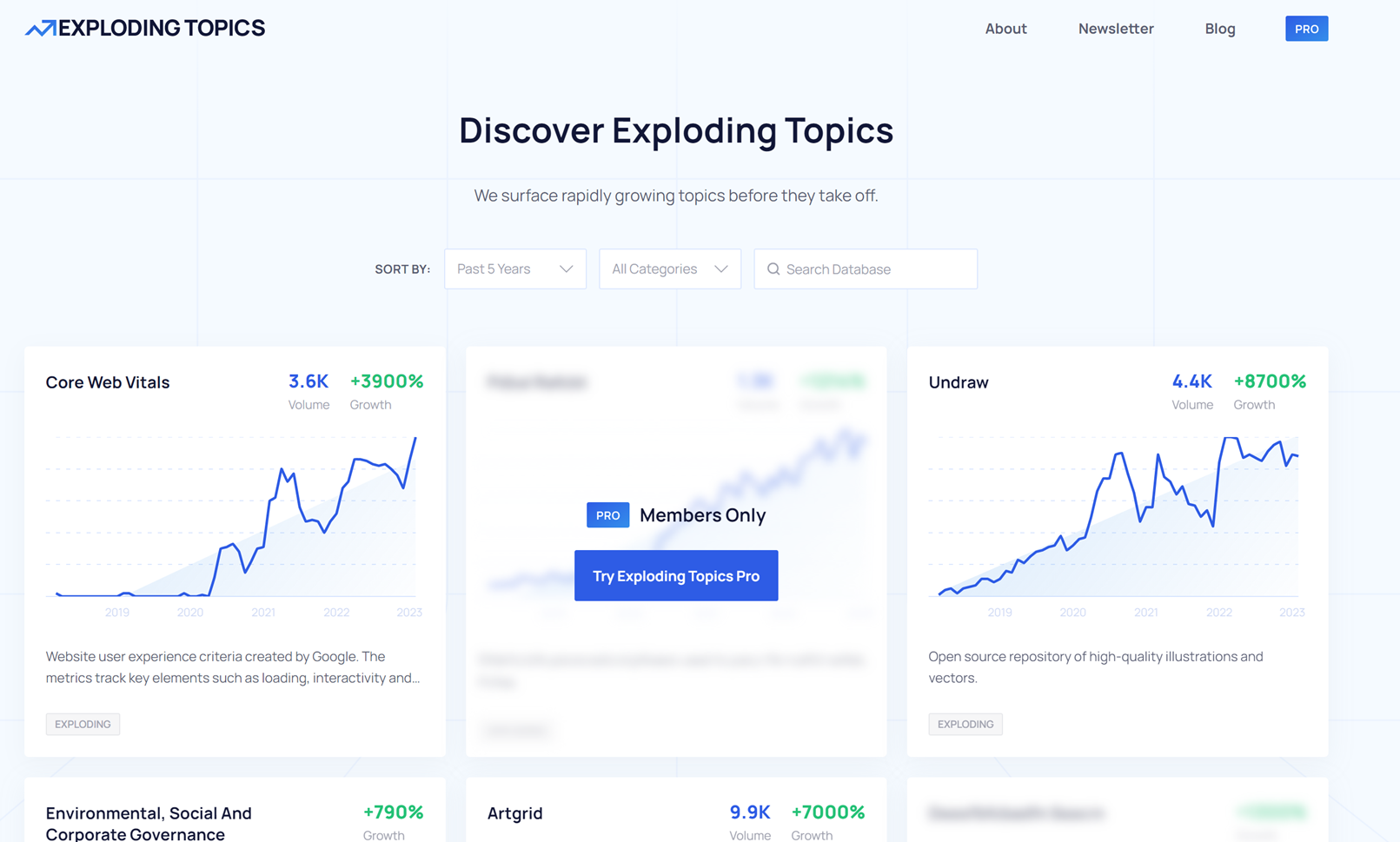
  1. Exploding Topics: The site has over 15K topics and trends. They do have a few newsletter for 1-3 trends and charge $39 to $299 per month for their Pro Version.

2. Trends.vc: Is a curated newsletter with top topics within a specific niche but is also a community of people (1000+) interested in trends. You can join the community ($299 annual or $99/month).

3. Treendly is similar to Exploding topics, and bills itself as Google trends “on steroids. Pricing starts at $99 per year, but the free version is a good place to start.

4. Trend Hunter is focused on ideas, trends and captures early kickstarter campaigns as well. Pricing starts at $24K per year, so this is focused on the enterprise segment.

5. Trend Watching has a self service tool, called Trend platform, that costs $900+ per month, so it is aimed at the corporate market as well.

Of the 5, I personally like Exploding topics the most. For personal use to track specific topics and areas for our business, the tool does a good job and has sufficient coverage in technology and developer trends.

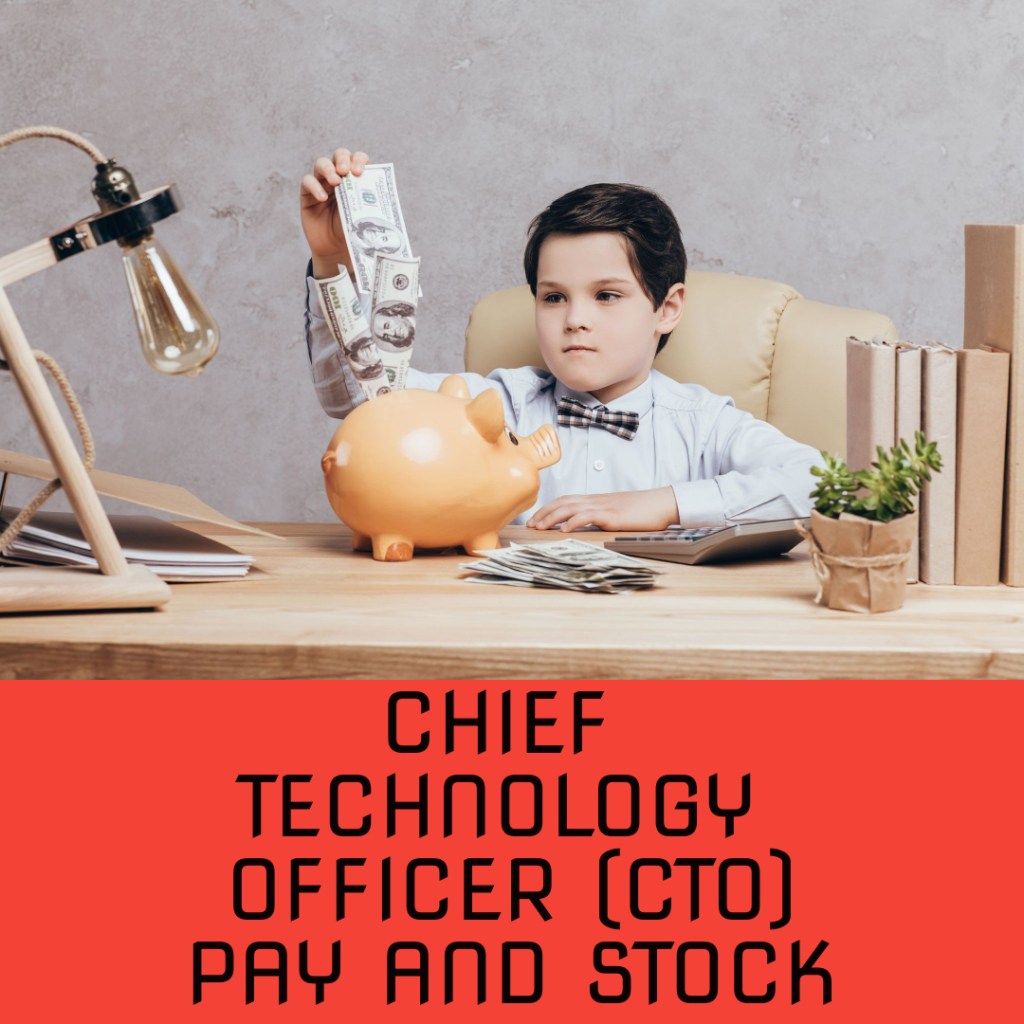
What salary and equity should a startup CTO expect? #Startup #Equity #CTO

If you have decided that your goal is to become a CTO, then I recommend you direct your career towards that goal. Putting together a working backwards plan to become a CTO and executing to that plan helps. You can network your way to a job or find out about CTO jobs that are open as well. Having a goal and plan is good, but you need to direct your experiences and goals to become a CTO if that is your desire.

Chief Technology Officer Compensation

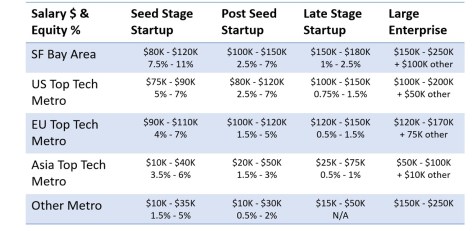
There are 5 variables to consider for the compensation, which might make it complicated, so I will try to simplify for 2 of the variables in this post – size of company and job location. I have collected data from 11 sources – PayScale, Glassdoor, LinkedIn, Salary.COM, Comparably and VC databases such as Pitchbook – sources below.

The variables are:

  1. Size of the company: Impact of the role to the organization is a key determinant. Startups pay less than larger companies, but give more in stock. Seed stage startups will pay less than later stage, but give you more equity (in terms of % ownership).
  2. Location of the role: Roles in the US pay the most, followed by Europe and then in other regions. Indian CTO roles do not pay as much for most startups. Self reported data from 594 CTOs place the salary at INR 2.5 Million to INR 5 Million (25 L to 50 Lakhs)
  3. Industry segment and sector: CTO roles in technology pay a lot more than roles in non technology companies, but that is changing quickly.
  4. Scope of the role: CTOs are expected to be technical leaders, but many organizations also expect them to play the role of VP of Engineering and CIO in certain cases.
  5. Years of experience or CTO background: The rule of thumb is that more experience equals higher pay and equity. Similarly if you have experience building large scale systems at companies such as Amazon, Facebook, Google or Microsoft, you will get paid more than if you are not.

The numbers below assume you are hiring a CTO, as opposed to having a co-founder as a CTO.

CTO Salary and Compensation
CTO Salary Data

Sources: US Salary Data, Bay Area Salary Data, EU Salary Data, India Salary Data and Asia Pacific Salary Data.

The next question is how can I get on the more or show that I deserve more than the guideline range? That question is best answered situationally and if you want to setup time with me for some advice feel free to email me.

The data is above is very subjective and has many nuances. Obviously salaries are very personal and negotiations play a big part in the final salary you get.

15 things that Can change because of the coronavirus in the next 5 years

Here are a list of 15 initial things that will change I believe because of the coronavirus (#covid19) in the next few years.

  1. First meetings go virtual. I get about 3-5 requests on LinkedIn with people wanting to meet for coffee to network. I don’t drink coffee but I like to network. Instead of asking “where / when should we meet”, it will get to be “when can we meet virtually”. This is not going back.
  2. More people get employed by the government globally. Until now, the western countries have largely had the military and certain government functions federally employed and many teachers, firefighters and police employed by local government. To guard against more future outbreaks, more medical professionals (not specialist doctors, but nurses, etc.) will come under government employment.
  3. Just like the “strategic oil reserve” in the US, or the “pork reserve” in China, more countries will start to have strategic “medical reserves”.
  4. Significant number of older (greater than 70 years old) people will start to take supplements, exercise more frequently and take care of their health a lot more.
  5. WFH will become the norm for many more roles, resulting in more office buildings (commercial real estate spaces) being converted to residential apartments in downtown locations.
  6. More tracking, monitoring and surveillance (much more than currently being done)of individuals with automatic sensors for many types of illnesses being automatically detected by sensors in many buildings, groceries, etc.
  7. We will all realize that grocery stores can be open only from 7 am to 11 pm and that works for 90% of the people and have more sane hours in the US for workers.
  8. Support for paid medical leave will increase from hardly there to workers minimum rights, and have up to 21 days of sick leave for all.
  9. Increase in usage of tele-medicine, tele-counselling, and internet everything.
  10. Most kids (K-12) will start to have only 4 day school week and likely move to studying from home 1 day a week.
  11. College students will find that most of them can study from home very well, resulting in at least 10% of students opting for remote education, saving on dorm, meal plans and binge-everything
  12. More “minimum manufacturing, and production facilities in each country will force China to no longer be the “manufacturing powerhouse of the world. More countries will start to require vertical integration manufacturing to have at least X% (10% – 50%) of all their needs locally manufactured / produced.
  13. Voting (elections) will go digital in a big way with a lot of requirements on security and emphasis on making every vote count.
  14. Many more countries will start to accept “universal basic income” for the lowest 10% – 20% of their economically poor.
  15. Cash will go in many countries from being the primary currency of exchange to secondary – mobile payments, credit cards and micro-credit will start to take over.

What do you think changes?

My journey to 100,000 subscribers took 7 years and 1000 posts

Yesterday I crossed over 1000 blog posts. Sometime in the next month I will (hopefully) cross 100K subscribers. It has been a long journey and with many twists and turns. My original intention was to “become an expert” on online communities – hence the URL. Sometime over the next few years, my focus changed to be more about technology in general, building a thought leadership profile, talking about entrepreneurship and finally about investing and startups.

On a good day, my blog gets 24% open rate from my subscribers, and most days less. On average 40% of the subscribers are in India and 34% are from the US. I did some work with full contact API data and found that about 60% of subscribers have “founder” in their title on LinkedIn.

There have been many folks who have been inspiring and helped me along when I was not exactly sure why I was blogging or for whom. There have been a few role models who I consider the best in the business and are people I think have a day job, and still have built a strong brand around their work. They have been doing it consistently for years, so I dont consider them “flash in the pan” type overnight successes.

I wanted to call out 6 of them who I have been reading and trying to emulate, and if you are into blogs or reading online I think you might know them all. I dont tend to follow a lot of publications and media blogs like TechCrunch but individual bloggers.

  1. Horace Dediu of Asymco: If there was one person who writes with more authority and is very data driven, I’d say its Horace. His graphs and charts are worth putting on a picture frame at times. I am a huge fan.
  2. Ben Thompson of Stratechery. I have been following Ben only for the last year and he is very insightful, I wish I had the ability to see things around the corner like he did.
  3. Jean-Louis Gassee of Monday Note. I first met Jean-Louis about 15 years ago, after he left Apple. He is possibly one of the most authoritative voices on Apple, more than any of the others who are “insiders” or into Mac media culture.
  4. Neil Patel of Quick Sprout. Another long time writer and essayist, his posts are very actionable, which I admire. Few people can push you to do something immediately about something the way Neil’s writing can.
  5. Mark Suster of Both Sides of the Table: Mark’s pretty authentic. There are 2-3 of his posts that I ready every month – Lines not dots, is still my most recommended piece to new entrepreneurs.
  6. Tomasz Tunguz of Tom Tunguz. Relatively new on my radar, Tomasz writes very well researched pieces and is quite possibly an expert in the SaaS space by sheer ability to write so much after a lot of hard work researching the topic.

If you look at the highlighted / bold words – data driven, insightful, authoritative, actionable, authentic and well researched are what I aim for. I dont end up doing that with every post, but that’s my goal.

Even without meeting me, these folks have been mentoring me with their writing. This is my thanks to them.

Services and consulting companies become “Software as a Service”

I wrote about how the cloud migration represents a large opportunity for Systems Integrators such as Accenture and Infosys, among others. Many customers are moving their existing applications to the cloud and using SI’s to enable that migration. This is largely being driven by lowering the cost of infrastructure for their existing applications.

The other big opportunity that I am starting to see for systems integration companies is the development and introduction of internal employee facing applications, which so far has been only been developed by pure play SaaS companies.

All applications built by a company fall into two categories – those that are used by employees and those that are used by customers / partners / suppliers etc.

The customer facing applications that are “business critical” and revenue producing are the ones that companies are starting to build themselves. The ones that are internal, employee used are the ones they are buying from SaaS vendors.

Why? Three main reasons:

  1. If they were to build applications in-house they need to hire people, and hiring developers for any company right now is very tough. That might change if a lot of coding schools end up producing more developers, but you can never be too rich, too thin or have too many good developers.
  2. Many of the internal application purchases are increasingly being bought directly by the business team instead of asking IT to procure. Thanks to cloud and SaaS, it no longer takes 3-6-12 months to buy, install, customize and deploy a solution, so business teams with the need (HR, Sales, Marketing, etc.) are directly buying software (usually that’s being done by someone who needs it, not by the head of the business unit) that’s needed by employees to be productive.
  3. Thanks to the lower cost and subscription pricing models it is cheaper to buy than to build. Many companies are also realizing that internal applications are no longer “the competitive edge” that they thought it was in the 80’s, and 90’s.

So, where is the opportunity?

Although many businesses are buying these applications via a SaaS model, SI’s are usually the first to know about the need as they scan the market for potential partnerships and vendors.

They also have a clear idea of business needs for these internal applications. I am surprised more system integrators are not offering products and services they have built for one customer “as a service” to others.

Currently if a customer needs an internal application – they put them into 3 buckets – a) those for individual use, b) those that are departmental and c) those that are to be used by an entire organization or across multiple organizations.

The ones that are for individual use (e.g: SEO optimization software) are usually purchased by the person with peer reviews and feedback.

The apps that are departmental (e.g. Collaboration software) involved one early adopter who gets 2-3 folks in the team to use them together and that spreads virally among others.

Software as a Service

Finally the ones that are enterprise-wide, or multi-department or department-wide in usage (e.g. HR software, Email, etc.) are the only ones that go through the RFP and purchase process. These also have many customization requirements and fall into two categories themselves – 1) those that are standard off the shelf and 2) those that are custom and specific to a company / industry, etc.

The off the shelf products can be purchased from SaaS vendors, but I think the opportunity for the systems integrations to turn their businesses from consulting and services to Software as a Services is in the custom applications – being developed as a subscription style offering instead of consulting and billable hours.

“Peak IT”: Or how most new startups may NEVER have an “IT department” in their future

Yesterday I had the chance to talk to 2 startups. One has been around for 2 years and has raised $2 Million in seed funding and is in the B2B SaaS (Marketing) space. The other is older, has raised a series B and has over 47 people in their company.

Neither of them have a single person in “IT”. They both have over 40+ applications they use and everyone of their employees is using notebooks, phones, etc., but they dont have a central IT team.

I asked the CEO’s at what point do they see themselves getting an IT team and the answer from both of them was “Why do we need an IT team”?

That reminded me of Nichoas Carr’s piece, 12 years ago, in which he claims IT does not matter. He was subjected to a lot of ridicule many year’s ago, but he’s proving to be right.

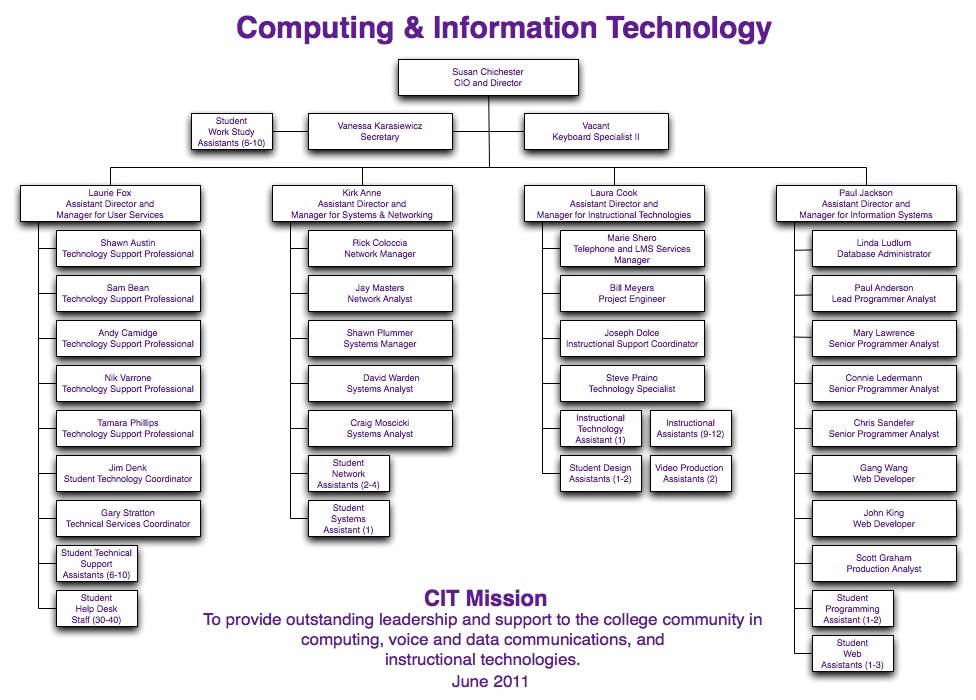
I started to read about what all IT does actually in any company. You can break it down into 5 main priorities.

IT Org Chart
IT Org Chart

  1. Support the business with computing – notebooks, devices, etc. Turns out most new startups, (which will grow into larger ones later), have mostly a BYOD policy or let their employees choose their own machines, which focuses on the support, maintenance and upgrade of the machines to the employee. So, that’s mostly not needed.
  2. Provide the business teams with internal applications (Build, Buy or Outsource)- Email, Collaboration, HR systems, ERP, etc. Most new companies are buying SaaS products and are letting the business teams (HR, Sales, Engineering, etc.) make their own decisions on which applications to buy.
  3. Build, buy or outsource external customer / partner facing applications – These are also being moved from IT to the business teams. They directly engage with partners, agencies or buy off the shelf SaaS applications, bypassing IT to directly buy to their requirements. In fact over the last 10 years, according to Gartner, 50% of IT spend on applications is being managed directly by the business teams, bypassing IT. That’s in the large companies. In the small companies, it is 100%.
  4. Supporting, managing and assisting internal users via a help desk on problems they have with IT systems. Most users are bringing their own devices and building their own applications, so the help desk is largely eliminated.
  5. Operationally support the applications built with DBA’s, system administrators, operations managers, etc. With the rise of DevOps and the cloud, all of these external facing, customer applications, which are developed internally are being deployed, managed and supported by the developers who built the applications in the first place.

The only remaining portions are vendor management (if there are many suppliers to IT) or outsource partner management, which is starting to get managed by the business teams.

While, many of these startups are saying they dont have an IT team, what’s really going on is that many of the functional elements that IT did before are being given back to the business teams.

The two entrepreneurs who I spoke with foresee a day when they might need a person to help them with integrating their different “apps” which the teams bought, but that’s much later, and a highly specialized role.

Maybe in 20 years only 10% of large companies will have an IT org, and that’s when they have multiple locations, need to make sure all the offices have connectivity to their VPN and need an intranet (which can also #SaaS), but that’s going to be rare.

What to consider before you start negotiating your stock options package at a startup

After you decide which startup to join if you are considering switching jobs, one of the key questions becomes how to negotiate a package. I get a lot of questions on % of stock ownership, vesting schedule, preferred vs. common stock etc. I am not a qualified lawyer, so take this as pointers and suggestions not as advice.

Depending on the stage of the startup you are considering, the “complete pay package” may be skewed more towards cash or more towards stock. Most startup founders have realized that to hire great talent, there is not just one thing you need any more. There is a need for meaningful work, great pay and benefits and an awesome culture.

I am going to skim over culture, and meaningful work for this post and assume you have figured out a company that offers both, but now need to negotiate your pay package. Most startups are not going to offer great benefits that bigger companies offer, so you are going to work with a fewer set of variables such as pay and stock options.

First, the pay. There are 3 stages that I am going to consider at startups. First, the pre-seed or seed round, second, post some seed round, before the series A and third, post series A.

In almost all of these cases, I have seen that good startups will end up offering a lower base and salary (80% of the chances are it will be much lower than your current pay) but “try to make it up with stock options”.

In many startups, salaries tend to be a fixed range with little room to negotiate. If you are making a lot of money at a larger company, expect to take a cut in pay. If you are working at another startup, expect to be marginally in the same range.

There are exceptions for extremely well funded companies and the post series A stage, but that’s rare. There are fewer than 20 companies in India and about 100 in the Silicon Valley who can offer salaries that match Google or Facebook, Microsoft or Accenture.

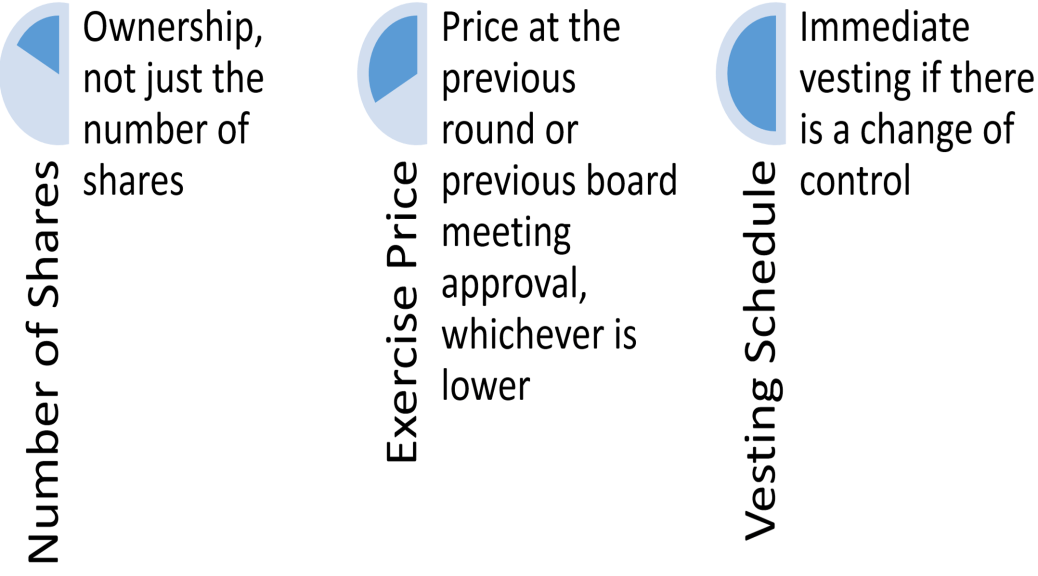
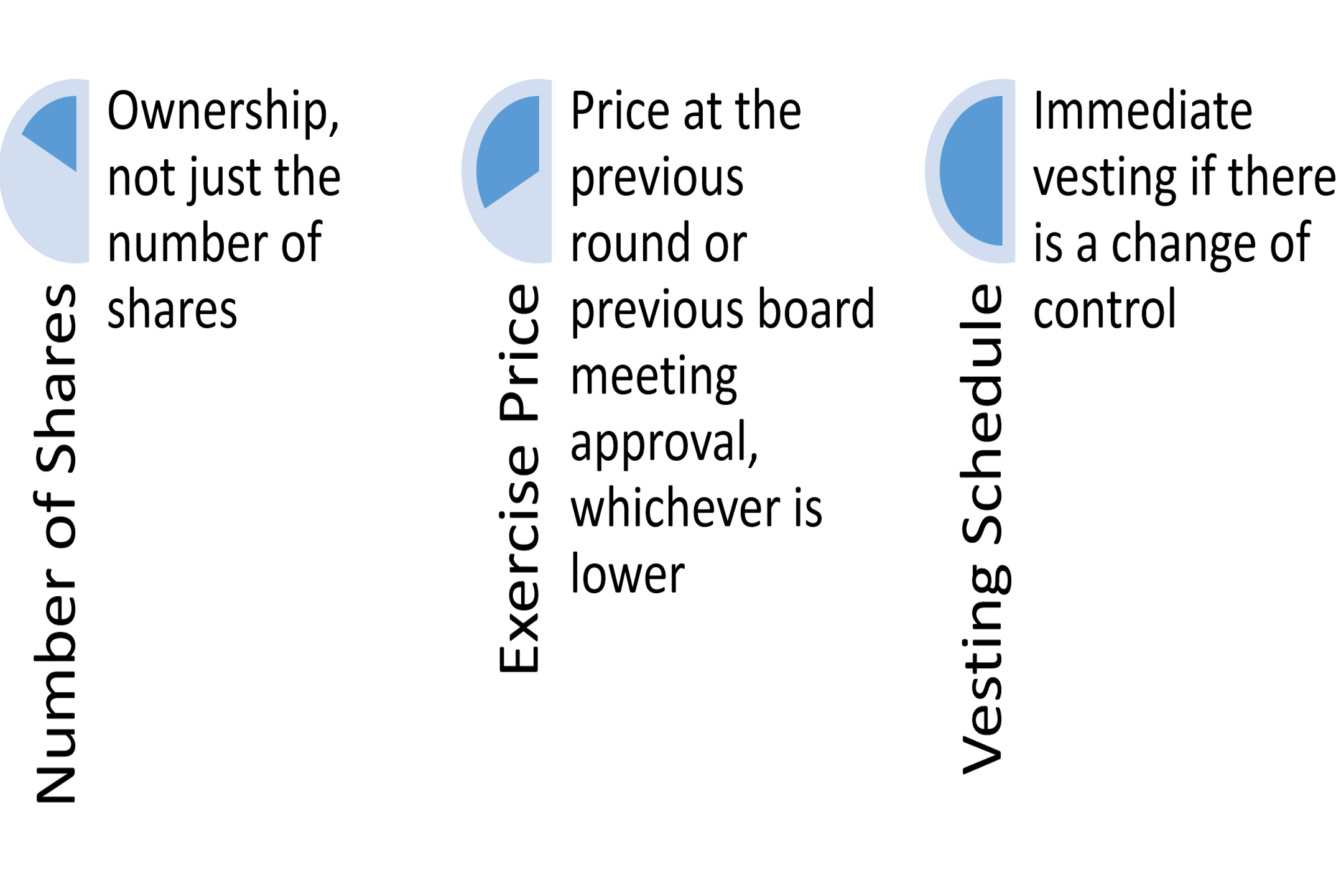
There are 3 important elements to the stock option package – The number of shares, the exercise price and the vesting schedule. The secondary negotiable elements are the type of shares – common vs. preferred, change of control provisions for early vesting and early exercise to save on taxes.

Stock Option Negotiations

If your startup is at the pre-seed / seed stage, and you are fewer than 20 employees, you can ask for the total outstanding shares of the company, so you can determine the % ownership. A senior executive (VP Engineering, VP Marketing) can expect in the 1-7% range and folks more junior can expect 0.1% to 1%. This is likely the only element you can negotiate in most startups. If you are looking for unreasonable percentage ownership relative to contribution, expect to get some push back.

The earlier you are at the startup, expect a larger % relative to later stages.

The price of your stock is determined either at the previous round or in some cases at the board meeting (exceptional cases) when an inside round has been completed. After the backdating stock option scandal of the 2005’s no CEO will help their new employees get stock at a lower price, so there’s not much to negotiate here, other than to know the price.

Finally the vesting schedule tends to follow a pretty standard pattern – usually 4 years, with a 1 year cliff. Meaning, after one year at the company, your shares will vest monthly. What you want to learn about is the option to buy your shares and if there are “claw-back provisions” if you leave before an exit.

Most employees dont stay until the exit of the company (or rarely do) and if there are claw-back provisions, you want to be aware of those.

The secondary considerations are important as well. If your contract can specify that your shares will fully vest in the event of a change of control (meaning your startup gets bought) you should seek that.

If your company offers early exercise I’d ask for that option. You might not want to exercise early (since you cant tell if your company will do well or go bust), but it is a good option to know about and negotiate.

Finally, most employees are usually given common stock. You want to know if the founders have as well, or have they, like other investors for example, been given preferred stock if that exists and what the benefits associated with preferred stock (in terms of what the liquidation preferences are).

Double opt-in email introductions are painful, but more useful than blind intros

A typical week for me is about 15-20 introductions to entrepreneurs and VC’s. I love that part of the job, in fact. If I could do more, with less time, I would any day, but I am getting more judicious lately.

There are 3 primary reasons why I am slowing down my “warm” introductions.

First, even though I know both the parties well enough to make the introduction, turns out many things change in 3-5 months that I am not on top of. One of my friends at a VC firm, decided to focus on B2C later stage instead of B2B. After 2 introductions, which I made to entrepreneurs, I found that out and also found out that he was “forwarding” my emails to his colleague. What I thought was “helping” was actually creating more work (useless and unnecessary) for him.

Similarly, an angel investor wanted an introduction to an entrepreneur who was looking to raise money a few months ago. Turns out by the time I made the intro, the entrepreneur had changed roles to be  the product guy, got a new CEO and also had finished raising money. Again, creating more work for him was not my goal but I ended up doing just that.

Second, in many cases the entrepreneur or the investor is not a good fit at all. Take a case this week. A very smart investor is a hugely sought after lady in my network. Not a week goes by, when I am asked to make an intro to her. I was asked this week by a good friend and entrepreneur to make an introduction to her. I like the team, so I was willing to help. Turns out, the investor had already looked at the company and decided to not engage because she has a competitive deal in the space.

Now, I had obligated her to find a way to “help” my entrepreneur friend in some way. That’s negative brownie points for me, even though I wanted to actually help them both.

Finally, there is a power dynamic in play with most situations. The “requester” of the introduction and the “recipient” are not sure in most cases who will actually benefit. Neither am I am very clear about who needs who more. In most cases, when entrepreneurs ask for an intro to an investor it is clear, but in many cases when I have a “hot” entrepreneur in my network, it is not unusual to have 3-4 investors seek my help for a warm introduction.

While making introductions is a critical part of the role that I play, it is becoming clear that the work that it generates for me is becoming onerous.

The best approach is to email the person who is the recipient of the introduction if they’d like the introduction, then wait for their response and then respond back to the requester of their response.

Double opt in Email Introduction

So one email introduction now becomes at least 3 if not more in some cases. Multiply that by 15 a week and I am spending close to an hour making introductions. There has to be a better way.

What do you suggest? I like the connecting and the introductions, but the work involved in doing this is getting to be too much.