3 strategies you can adopt to lose weight – pick one that works for you (or all)

I wrote about how I lost 50 lbs in 25 weeks earlier this year. I went from 174 lbs to 129 actually. I also wrote that the only one thing you need to do to lose weight was to eat less. Although weight loss is a marathon, you want to treat it like a series of small sprints was also something I learned.

Since then I have been asked by over 30-40 people on how exactly I lost weight, what did I eat, when, how much, etc. I did write about what I eat to manage an intake of less than 1500 calories daily. That’s very difficult for most people to follow (and it became for me as well).

I figured out yesterday what people want really is a DIY (Do It Yourself) framework. So, here are 5 strategies you can adopt based on your preference. This is neither comprehensive nor complete, but a useful guide, would be my recommendation.

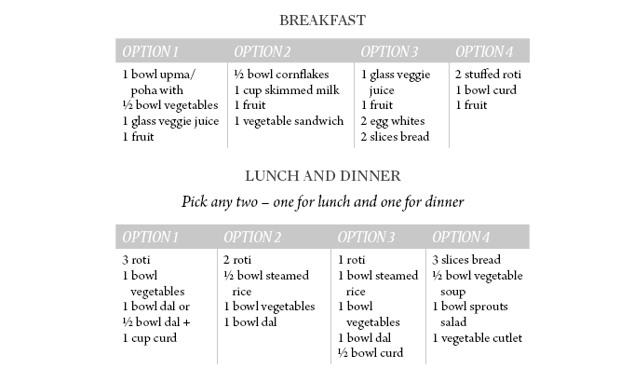
Vegetarian Food Pyramid

The main point I am trying to make is you need to eat less and make that a lifestyle. How you do it largely up to you based on your own body, your fitness regiment, your other health requirements etc.

  • Portion control: This is the technique I use on holidays and most weekends. Eating everything but in small portions works well. When I was more intense and regimented about my food 6 months ago, I used to drive my wife, kids and friends pretty nuts.I would measure all my food intake, in 1/4 cups, weigh nuts with a machine etc.  This strategy works best when you have a wide spread and you really want to “taste” everything. The technique that goes hand-in-glove with this is that you should not have “seconds”, else it messes up the strategy.
  • Food substitutions: I use this a lot in my salads and you can as well for most other foods. I would recommend before you decide on a substitution, track your food, calories and nutrition for a week using MyFitnessPal to ensure you are substituting good sources of certain nutrients for better nutrients at much lower calorific value. There are certain foods that are “nutrient-dense and calorie-light”. For example I have switched thousand island salad dressing (111 calories per 2 tbsp) with balsamic vinegar (28 calories per 2 tbsp) and now can eat salads with no dressing at all, and found that my palette has gotten used to the taste.
  • Smaller, more frequent meals: I like this approach, but can rarely follow this. There are a set of people who swear by this. Similar to portion control, but slightly different, this strategy means you eat very small “meals” every 2-3 hours, instead of 3 large meals during the day. I only do this if I know I have a busy and packed schedule with many meetings all day.
  • Avoid certain foods: This is the most popular type of diet actually. No carb for example, or high protein, or low fat, paleo diet, Atkins diet, Raw food diet, Juice diet, etc. There are over 30 of these (or more) diet plans. I dont subscribe to this strategy, but I know many people who swear by these
  • Fasting: Once a while, it helps to give the stomach some rest, like the rest of your body. Drinking more water, or drinking hot tea as a substitute for a meal helps. I do this pretty regularly now.
  • Smart snacking rule: I use this technique on most weekday afternoons. Most people can eat healthy during lunch and dinner, but snacks are what kills their diet. So, I have a pre-determined “smart” snack planned instead of having to rush to the vending machine or eat some other junk. I have moved to more nuts (preferably unsalted) and fruits, or just plain soy milk.

At the end of the day, you have to pick a strategy (or many) and stick to what works for you. As I mentioned before, instead of telling people do this, I am now saying follow one of these strategies and see which one works.

The most important part before you do this is to benchmark religiously for 1 week (1 month is the best) using a calories counting app. Then you have your nutrition balance figured out as well.

I do have one caveat – I am not a nutritionist neither am I a doctor. I know these worked for me, so speak to a trained professional instead of using my advice alone.

The other type of entrepreneur – not glamorous, no showboating, but very effective

There are 3 friends and colleagues I want to highlight today, who I have known for a while now. They are the “hardly” know entrepreneurs. They appear rarely on social media touting their company. They rarely talk about how “difficult” their journey was. They dont mention the “challenges” of work-life balance while being an entrepreneur. They never complain about how “hard it is to raise money”.

The thing they do effectively is run businesses that are growing like weeds. All three of them are running startups that are strong, cash flow positive and showing phenomenal growth, and all turning a profit as well.

These are the “other type” of entrepreneur. Effective, workman-like and focused. Ravi runs a deal site – Coupon Rani, Archana runs a media property called Archana’s kitchen and Swapnil runs a University alumni community site called Alma Connect.

I have known these three entrepreneurs for over 3 years now.

Ravi Trivedi Archana Doshi Swapnil Khandewal

I met Ravi first at a Coffee shop when he was looking to leave the cushy world of Venture capital and start his own company. He and I dabbled starting a company together, but things did not quite work out. He then started coupon rani and has built a good team, shown strong revenue growth and has a few investors now chasing him.

Archana and I met on the plane. She is the spouse of one of my good friends and a few years ago, when I was traveling from Mumbai back to Bangalore, she sat in a seat behind me. Surprising that she noticed, but Rutvik (himself a VC) had me on his Facebook profile, so she noticed my photo and the likeness. She was getting started then as a chef and had some early traffic and is now featured on Television frequently and is a celebrity in her own right.

Swapnil and I met 4 years ago at IIM Ahmedabad, at the CIIE, center for entrepreneurship. My wife and I flew in to meet with 9 entrepreneurs for a day to look at interesting companies to invest in and we were greeted by Swapnil that evening. Alma connect was a way to get Alumni from Universities to connect with their colleges and find ways to support and encourage new students and their younger graduates

I am so honored to be friends with all 3 of them, mostly because they are entrepreneurs who have stuck through the tough times that most of us go through.

They are all solo entrepreneurs.

All three of them have bootstrapped their businesses.

All three of them are running profitable, high growth businesses without a plethora of mentors, advisors, investors and the paraphernalia that young entrepreneurs surround themselves with.

All of them are in businesses that are not glamorous, (well Archana is an exception) and still growing like crazy.

None of them are from IIT, IIM or any other “top schools” that most investors seek in entrepreneurs in India.

There is hope in this world after all.

Entrepreneurs investing in other entrepreneurs

A side-effect of product entrepreneurs from 2000’s starting and building a cash-flow business is that many have the money to become “angel” investors.

I wrote about the unique Indian trait of survival because it is hard to shutdown a business. I believe that’s resulting in many new angel investors who understand entrepreneurship and starting up. Which is a good thing, overall, with some caveats.

Most of these business people were still “young” and folks I would consider likely to be founders again, but they are now starting to “invest” in other startups as an investor.

That’s really strange. Or not, I guess. I don’t know.

I mean, the biggest investment you can make is in your own talent, business and capabilities.

Then why would you take your hard earned money and invest in others? That makes no sense, especially given how little you made in revenue or profit.

I asked 2 (not all of them were investing in other companies, only 3 were) of them why they were investing in other businesses instead of putting the money to grow their own business, and their answers ranged from “Saw an opportunity” to “Wanted to help a friend” and “This market is fairly small, and I cant leave it, so I am diversifying”.

I don’t know what to think – whether it is admirable that they were investing in others and “giving back” or lack of imagination for their own venture that they were “unable to direct investment in their own business to channel growth”.

That’s not even the kicker.

Two of them asked if I’d be interested in taking a look at their business to fund growth.

Entrepreneurs Turned Investor (credit Venture Giant)

If your business was not growing fast enough, and was generating “cash flow” to pay the bills but not more, and you were unwilling to fund its growth yourself, why would you assume another investor would?

First, the growth clearly does not exist.

Second, you seem to think the opportunities are elsewhere.

Finally, you are divesting actively from the business yourself to find growth elsewhere.

They did give me some reasons – the money they were generating was not enough to grow and they needed a lot more cash to invest but the opportunity was “super-large” and they were constrained by “running” the business which forced them to not hire people to scale, etc.

I am not sure how to read this.  I am positive that this will result in more “entrepreneur turned business people” investing actively in other startups, but it is a trend for sure.

Uniquely Indian startup trait – Forced to survive because closing a company is painful

For most Indian entrepreneurs, survival is their unique value proposition. The fact that it is impossible – from a legal, financial and procedural standpoint to “close” your company, declare failure (bankruptcy) and move on, creates for more resilient entrepreneurs than in the US.

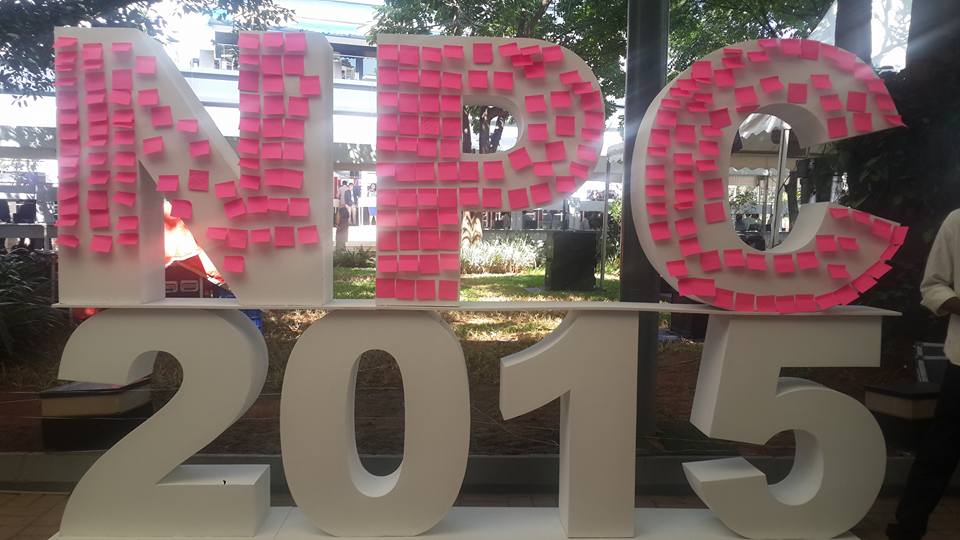
Last week at NPC, I had a chance to meet 5 entrepreneurs who I have known for 3-5 years now. 3 of them had raised some money (accelerator programs, angel investors, etc.) and 2 were bootstrapped. All of them had approached me a few years ago with the intent of having me fund their company. I passed on them all for a variety of reasons, but largely because I did not think what they were doing was going to be a large enough company to generate big returns.

The most amazing part to me was that they were *all* still in business. They all survived. They had all found a way to generate revenue, and *all* – everyone of them, claimed they were breaking even, or making a profit.

That’s amazing. 100% survival rate from the list of people I thought would have closed and moved on, if they were in the US for sure.

How to survive (Credit- SteamPowered)

To be fair, most of these entrepreneurs would have survived and built a cash-flow business in the US as well, so it is not correct for me to label this as a particularly Indian trait.

Every one of these companies was doing between $150K to $500K in revenue and turning a small profit in some cases after paying for employees & founder’s salary plus expenses.

I am not sure if this is to be filed under “tenacious” entrepreneurs, perseverance, “lost the dream mid-way” or “lost the hunger” founders – which is being very condescending, I know.

I asked why they did not fold, shutdown and start over to find quick growth.

None of them mentioned “difficult to close a company in India” as the reason for not shutting down. All of them were fairly wise in their response – “It takes a long time to build anything meaningful in India, and they got started with revenue development and were now well down the path to give up”.

Now that they had some decent revenues and maybe profit, they were trying to build their base and grow further. Slowly, but surely.

I wonder how many of these will be “cash flow” businesses.

One entrepreneur (a fairly young person at that in his late 20’s) had hired a COO to run the business, while he spent time investing in other companies and try to open new opportunities abroad.

I wonder if this is the new “IT services company” from the 1995-2005 era. They had all built a product or a web service – generated some revenues and were now protecting the cash flow and growing the business at a much more moderate pace.

I wonder though – if shutting down a company in India were much easier, would they have done that mid-way, looked for a new opportunity and moved on?

We will never know, will we?


Why I left this year’s #npc2015 NASSCOM product conclave absolutely inspired

The democratization of entrepreneurship and product development in India is happening and reaching the smaller cities with many different types of products. That was my big takeaway from this year’s NASSCOM product conclave.

In 2008, when we moved to Bangalore, I participated in my first NPC, at that time, and we had to provide free tickets to about 150 people was the story I heard. We moved to a bigger location, the following year, at the Lalith Ashok with tickets ranging from INR 500 to 800, but with most folk still in the “paid for by corporate sponsors” category. The number of attendees was at about 500.

The NPC I remember most was 2012, where I had 5 panels at the Vivanta and I was excited to see that we had reached a total of 700-800 people. Tickets were < INR 1000. This conference had fewer than 10 women attending and maybe 2-3 speaking.

The next year Sharad’s efforts were beginning to show and ticket prices and attendance went higher. More women showed up, but still fewer than we’d like.

2014 was a turning point, with tickets going for INR 5000, and over 1200 people attending, 800+ wait listed.

This year the prices for the conference were at INR 10K. Over 1200 people (the maximum possible they could accommodate) and over 1000 were wait listed.

The event over the years has gone from 1 day to nearly 5 days, with a hands-on Maker faire, an entire day of practitioner sessions  and 2 days of “name brand” speakers as well.

This year, 24% of the speakers and nearly 10% of the attendees were women. More than 45% of the attendees were from outside the major metros as well.

The conference has also moved to accommodate a variety of needs, and in the process, maybe alienating a few of the older folks. Which is understandable.

The key thing to realize about NPC is that is one part about entrepreneurship (meaning, people come here to get inspired, learn and network), one part about showcasing products (understand what’s being built) and one part networking (more like speed dating for new folks, and an high school reunion for others).

It is also one big party – where you end up hanging out with “name brand” folks who believe it has become a place to be seen more than to learn about new products.

I liken NPC to the changes the city of Bangalore has undergone over the last 30 years. The tech explosion, population boom and arrival of people from all over has caused many growing pains for the “garden city”, but at the same time it has lifted over a million (at least) people from poverty to middle class as well.

That’s the picture I’d like to color a little more – this year, there were more young and new entrepreneurs from smaller cities, more women, and more fresh, first-time product innovators. They are also building a variety of products – not all of them fall into the “enterprise software”, or “mobile app” contours that we knew from before.

Does that make the NPC ecosystem polluted? – I dont think so at all, but I understand why some others would say that.

The entrepreneur from Davangere who is building a “2nd Opinion” app on your mobile phone is innovating as well. So is the young lady from Pune who was building an ecommerce site to sell homemade knits.

These are the new “apps”, “products” and entrepreneurs we have to accommodate and figure out a way to help.

NPC always has always been flexible, inviting and open – which was the original spirit that Sharad, Avinash, Sangeeta, and Som Mittal from the original days and M.R, Ravi and Arun Seth, more recently, have been supporting.

The reason I was inspired, was the diversity in product ideas, the edges of innovation and people. That’s so awesome to see.


Ability to sell, but need not be a #salesman 21 traits to look for in entrepreneurs

Most entrepreneurs need to be able to sell. To potential employees, to customers, investors, etc. In fact the most challenging part that most entrepreneurs realize is if they cant sell – their vision, the value proposition or the products – they dont get very far with their startup.

One of the things I always seek to understand is if the founder can sell themselves. While I believe, everyone has some ability to sell, not everyone needs to be a sales person. A sales person falls into multiple categories for me : A hustler, a process jock and a relationship master, a consultative leader or a product expert.

Types of Sales People

Most entrepreneurs who I work with are developers and more technical folks who are largely introverts. They dont enjoy “selling”, which they associate with sleazy, tactics to “con” people.

It does not have to be that way at all. The most important skill I am looking for is if the person can get other people excited and interested in what they are doing and get them to commit to their desired outcome.

Both of these aspects are required – which in sales they call “opening” an opportunity and “closing” the deal.

Some entrepreneurs struggle with “opening” opportunities. I can relate to and understand that. Opening requires you to cold call and in many cases talk to people you dont know. So, what most entrepreneurs do is talk to people they know (get referrals) or avoid it altogether.

Other entrepreneurs may be good at “opening” but have a big challenge at “closing” because they believe most of it is outside their control. They can make the initial pitch, but getting the investor to commit the funding and sign on the term sheet is a problem. Or getting the candidate to interview and be willing to join is easy, but getting them to sign and come on board is the hard part.

One of the first things I look for is how the entrepreneur got to me. If they are referred by a trusted source, I try to find out how my network got to know them. If they cold emailed me, I look and judge the pitch they made via email. Is it genuine, well researched and has a specific outcome or purpose.

Most entrepreneurs dont have the experience going from “opening” an opportunity” to “closing” the deal as well, so they end up spending a lot of time in the middle.

As with any target (potential investors, employees, customers, partners) they goals are different and I first look for clarity of thought. Do they know what they want from this person and the steps the need to get there.

Most entrepreneurs can tell you the goal, but dont understand that you can achieve that in one step. Understanding the layout of steps is critical – which we call the sales process.

Moving from one step – awareness to interest, then consideration, going to intent, and then evaluation and finally purchase, is what I am seeking to see if they have understood. It might take 2 meetings or even 10 or more, but if they know where the “target” is in this process, and how to get a target from one step to another, then you have someone who can sell, not just be a talker. 

Confident but not arrogant #napkinStage #EntrepreneurTraits

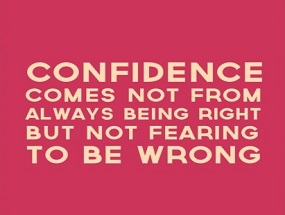
The second skill/trait (not in order) I try to look for in entrepreneurs is if they are confident, but not arrogant. I actually dont think there’s a fine line as many people suggest. To me, most people clearly fall more into one bucket – lacking confidence, confident and over confident / arrogant.

I first observe how they introduce themselves. If I get a historical perspective (from them time they were born with some folks actually), and a list of milestones, that’s one thing I note. If there’s a lot of name dropping – I was at IIT, XYZ was my professor, ABCD is my uncle, etc., that’s something else I keep in mind. A list of specific accomplishments that are relevant to the conversation is another thing I am always looking for. I wont detail which ones are those that leave me with a positive and others that I am already sensing alarm bells go off, since that’s subjective. I have written before about the best way to introduce yourself in a positive manner.

Mostly thought what we are looking for is the way entrepreneurs address questions. So, depending on the situation, we use questions as a tool to gauge the boundaries and contours of their confidence.

Asking questions about what their biggest failures were, or things they learned from their experiences at previous companies they worked for helps.

  1. What do they say about the competitors when we bring them up?
  2. How they answer questions about their “perceived” shortcomings or flaws after we do reference checks?
  3. How they address the “market size is to small”, “you dont have a strong team” and other questions about their business model?

Typically a confident person is accepting and objective and an overconfident person (or a person lacking in confidence) will look for excuses and rationalize their behaviors.

I dont think it is important to be prescriptive about how to answer these questions, since most people will end up answering and also evaluating these differently, but it is one of our 21 criteria.

I know that you have your own way to judge if people are confident and not, what do you use to figure that out? I’d love to know.

How investors test for “listening” skills in entrepreneurs

One of 21 skills I try to look for in entrepreneurs is listening – more specifically active listening. The reason for testing this skill is obvious. More than wanting to be listened to, I look for whether the entrepreneur is listening to respond or listening to understand.

Most entrepreneurs find it hard to listen, in fact most type A people are in roles that requires them to be constantly “pitching” and “selling” their vision, company and product. So, they are always in “objection handling” mode.

While I understand that most of the questions that are going to be asked by the investor or customer are likely ones that the entrepreneur has heard before, nonetheless, I am seeking to understand if the entrepreneur can still parse, ask relevant questions to clarify and be thoughtful about their responses.

There are 3 dead-giveaways when I know someone is not listening.

First, the entrepreneur says “Yes, Yeah or Uh Huh” a lot even before sentences are complete – usually this means they are pretty distracted and looking for an opening to get their word in.

Second, they never probe to ask questions themselves, instead are always providing answers. A key part of listening is to understand, pause, reflect and let silence take over at times – which may be awkward at times, but it works.

Third, they are distracted easily and end up answering the wrong question, keep using filler phrases such as “I understand” or “Sure, but…” often.

What we look for is listening first. That does not mean we are looking for someone to change their mind based on our questions. We are seeking to understand if they have the cognitive ability to keep their “mind” open not just their “ears”.

You can hear well, but not listen at all.

The next question is how can someone listen well?

The first is to listen with more than your ears – listening with your mouth – asking more clarifying open-ended and closed questions. This is the best way to force yourself to actually ask more questions.

The second is to use silence strategically – pause and reflect on the question. Use the ability to tell the other person “Let me think about that” before you start to answer their statement, question or comment.

Finally use non-verbal communication to listen if it is a one-one, face-to-face meeting, including using your eyes – focus on the person or taking notes, and use time to summarize or paraphrase their comments.


Taking the time to write a short post (WWST)

When you start writing you realize that shorter posts take a lot more time than longer ones. As Mark Twain said

“I didn’t have time to write a short letter, so I wrote a long one instead.”

This is largely because putting a stream of conscious thoughts together is easy with some examples, but putting together a thoughtful, concise post requires organization, planning and a level of introspection that’s very hard.

Here are some hacks that work well when you want to write shorter, but more effectively.

  1. More examples work better than descriptive narratives. Examples have a positive effect in reinforcing a statement. although if you don’t choose a good example, the words become superfluous. Instead of explaining the point, giving an example works better.
  2. Remove sentences that give a lot of context with links and references that point to where you can read more.
  3. Think how will someone tweet this if they were listening to you instead of reading it.

Of these the tweet seems to work the best. If someone were reading an entire essay or paragraph and had only 1 to 3 tweets to summarize your content, what would they say.

What would someone tweet? (WWST)?

I commit

  • To respond to (most) messages  from entrepreneurs seeking my help or advice within 2 days
  • To politely but quickly decline my interest in an investment without wasting time
  • To be empathetic to an entrepreneurs needs and listen more than dispense “advice”
  • To help if I can in any way by connecting them to folk if appropriate
  • To not waste an entrepreneurs time or energy by asking them for data they may not have

This is a post for myself, so you wont find much value here.

Once a while, I forget what makes me happy, excited and moderately successful. So, I have to remind myself. Not with a new year’s resolution, or a birthday resolve or a 5 year plan.

To those who I did not respond who took the time to write me a long email, I apologize.

To those others who do not know me and felt my one line reply of “not a good fit for me” was insufficient, I am sorry.

To most others who encourage my writing by liking on Facebook or commenting, and ReTweeting, sharing, etc. – much thanks. It is you that makes me keep writing. I cannot say how much happiness I derive from getting feedback from your comments – good, bad or indifferent.

I like the “Meh”, as well, so I can keep going higher.

The personal blog of Mukund Mohan