
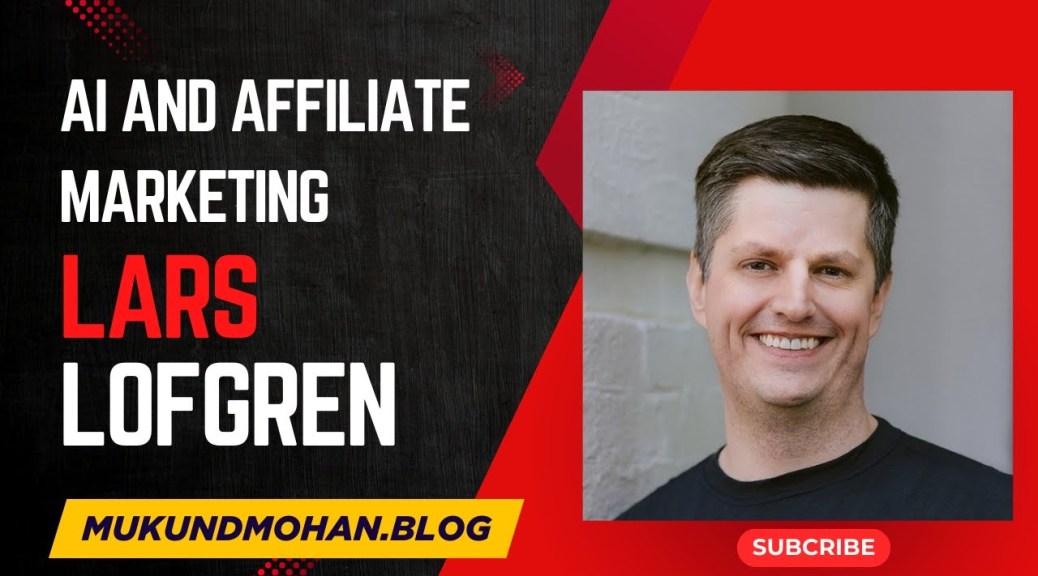
I recently sat down with Mukund Mohan on his Seattle Side and the East Side podcast to walk through how I think about content, SEO, AI, and affiliate marketing in 2025. I wanted to capture that conversation here—what I’ve learned since my first job out of college at Kissmetrics, what I’d do differently if I were starting today, and the concrete playbook I use now to help B2B companies grow traffic, leads, and revenue.
Table of Contents
- Two-minute backstory (so you know where I’m coming from)
- What would I do differently if I were hired into a startup in 2025?
- How I use AI in content operations (without letting it ruin the brand)
- B2B affiliate marketing—what it is, why it matters, and how I think about it
- When should you start an affiliate program?
- Practical steps to launch an affiliate program that scales
- Wrap-up: diversify, humanize, and build durable systems
- Final thought
Two-minute backstory (so you know where I’m coming from)
My career began when Neil Patel hired me into a marketing role at Kissmetrics. I was an entry-level content marketer—writing blog posts and support documentation, shipping content, building a knowledge base. That blog became legendary. People loved the content so much they used to say they loved the Kissmetrics blog more than the product itself.
Since then I’ve led content teams across startups, founded my own company, and co-founded Stone Press—a B2B affiliate SEO company that scaled aggressively. We drove millions in revenue through SEO, inbound, conversion optimization, and building high-performing teams. We grew to a meaningful business, but platform shifts and core changes in Google’s ranking algorithm hit us hard and forced a pivot. Now I help clients stand up or revitalize their B2B content programs, bringing lessons from both the golden SEO era and the messy, AI-driven present.
What would I do differently if I were hired into a startup in 2025?
If I were starting today in a VC-backed analytics or SaaS company, my role would look familiar but with sharper structure and modern tooling. I’d still be focused on content: blog posts, landing pages, and support articles. But the workflows would leverage AI in tactical ways—especially for speed and iteration—while maintaining a human-first editorial lens.
The core, timeless playbook I still believe in is: write content that impacts people, ship consistently, and distribute through multiple channels. That means building personal brands around the work, maintaining an engaged email list, and ensuring content distribution isn’t dependent on a single platform.
Where 2025 is different is in tooling and distribution risk. AI can accelerate content ops—for ideation, outlines, first drafts, and even keyword research. But it’s also saturating channels with low-quality content. That makes authentic, human insight more visible. If you can create genuinely human content—insightful, narrow, opinionated—you stand out more now than ever because AI content has homogenized a lot of the signal.
Editorial vs SEO-first: When to choose which
There’s a temptation to swing between editorial magazine-style content and pure SEO-driven growth. My experience is that both approaches are valuable—and they can complement each other when done intentionally.
- Editorial-first: Great for brand building, thought leadership, and multi-channel distribution (email, social, podcasts). You ship consistently and build a following.
- SEO-first: Great for predictable, compounding traffic. Focused on bottom-of-funnel pages, evergreen informational content, and systematic updates.
In the past I leaned heavily into editorial and then swung too far into SEO because it delivered consistent ROI. My regret was not doubling down on SEO in one of my projects when it would’ve produced far larger returns. Today I typically architect a hybrid: establish a tight SEO foundation for bottom-of-funnel pages, then layer editorial content and multichannel distribution on top to diversify acquisition.
“Content that impacts people, shipping really consistently. Multi-channel distribution. Build personal brands and a tight email list—then tie everything into a flywheel.”
How I use AI in content operations (without letting it ruin the brand)
AI is a tool, not a replacement. I use it to accelerate research, generate outlines, and scale repetitious tasks (like support article first drafts). But I push back on purely AI-generated outputs being published as-is. The role AI plays is to free up human time for judgment, angle, and unique insight.
Some practical ways I use AI:
- Keyword discovery and clustering at scale to inform a content plan.
- Drafting outlines and iterating headlines rapidly so writers can focus on insight and voice.
- Creating summarized research and citation lists for complex topics to speed the subject-matter expert’s drafting.
- Automating repetitive support content generation, then reviewing and humanizing it before publishing.
That said, there’s a lot of low-effort AI content out there. You can spot it: a certain flatness in voice, generic examples, and predictable structure. If humans can create authentic content—even something simple like “hello, here’s our human perspective”—that authenticity stands out. The bar for “human” is lower now, because AI-created content often lacks personality.
B2B affiliate marketing—what it is, why it matters, and how I think about it
Affiliate marketing in B2B is underrated. It absolutely works for SaaS companies serving SMBs and mid-market customers. Enterprise is trickier because volumes are lower and buying cycles are longer, but for many SaaS categories affiliate is a significant channel.
The important shift is that affiliate programs do more than just drive direct commissions. They influence who gets mentioned across the web, which affects SEO signals, social buzz, and even the data LLMs learn from. The web is an ecosystem: publishers, review sites, listicles, and micro-influencers all create the signal that search engines and large language models consume. If your competitors are actively courting those publishers with affiliate incentives and you aren’t, you’re losing share of voice.
“If the number three company in the category is willing to pay and number one and two don’t, publishers will feature number three. That mention ripples into search, social, and LLM training data.”
How affiliate programs change discovery
Think of it this way: publishers and content creators monetize by recommending tools. If they can earn an affiliate commission for recommending Product C, they will—especially if Products A and B don’t have a competitive program. As those articles and listicles propagate, they feed into search signals and the datasets used by LLMs. Over time that visibility compounds, which is why affiliate programs are strategic, not just tactical.
Who to recruit as affiliates and how to reach them
I use a two-pronged approach: inbound + targeted outreach.
- Inbound funnel: Maintain a clean signup flow and manage it actively. You’ll get high-volume, low-quality inbound, but occasionally a “golden goose” will sign up. Treat inbound as a lead channel and screen it.
- Targeted outreach: Cold outreach to niche publishers, micro-influencers, and up-and-coming creators. Start small—don’t try to land the top-tier publications immediately. Work your way up the ladder.
The sweet spot is publishers who are hungry, have category-aligned audiences, and don’t already have lucrative deals with incumbents. Offer fair commissions, provide strong creative assets, and build relationships. Micro-influencers and niche YouTube channels are often easier wins than the big review sites early on.
When should you start an affiliate program?
My older view was: build SEO and product-market fit first, then bolt on affiliates. Now I often recommend launching an affiliate program earlier—especially if you’re entering an established category where mentions matter. If search and LLM outputs already favor incumbents, you need every lever available to flip mentions and shape narrative.
A practical sequencing I like:
- Get your SEO foundation in place: homepage, pricing page, competitor/alternatives pages, key vs/roundup posts.
- Run modest bottom-of-funnel paid ads if it makes sense to buy initial conversions and test messaging.
- Launch an affiliate program early enough to start getting mentions from niche publishers and micro-influencers.
- Layer on editorial and multi-channel distribution to build brand and email lists.
For SEO foundation, a small company only needs 15–30 high-quality pages to start: landing pages, pricing, comparison pages, a handful of evergreen posts. Those pages should be architected for conversion and updated regularly—ideally quarterly. Freshness matters now more than it used to.
Pricing pages and the unforgiving nature of discovery
One concrete example I shared on the podcast: I’ve audited companies where the pricing page had a noindex tag. That tag tells search engines to ignore the page entirely, meaning potential customers can’t easily find pricing via search. If users can’t discover pricing, conversions and organic visibility suffer. That shows how small technical issues can cripple discovery—especially when everything else seems “hot” and working around them.
Practical steps to launch an affiliate program that scales
Here’s a checklist I use when helping clients stand up affiliate programs:
- Decide pricing and commission structure aligned to LTV and margins.
- Choose an affiliate platform that integrates with your tracking and payout needs.
- Create dedicated affiliate landing pages and tracking links (UTMs) so you can attribute properly.
- Build an affiliate resource hub: creatives, copy snippets, demo videos, comparison charts, and onboarding guides.
- Start outreach to niche publishers and micro-influencers with tailored offers and co-marketing ideas.
- Monitor performance, optimize commissions and creative, and slowly trade up to higher-authority publishers.
- Integrate affiliates into broader BD and PR outreach—affiliate relationships often open doors for partnerships.
Wrap-up: diversify, humanize, and build durable systems
If there’s one through-line to everything I’ve learned, it’s this: don’t be hostage to one channel or one platform. Build a content engine that combines a solid SEO foundation, human editorial voice, smart use of AI to accelerate operations, and strategic affiliate programs to earn mentions across the web.
AI is a force multiplier when used correctly—but it’s not a substitute for real insight. Affiliate marketing is no longer just a growth add-on; in many categories it’s a strategic lever that shapes discovery and long-term visibility. And finally, update your core pages often, watch the technical fundamentals (like whether the pricing page is indexable), and keep your distribution channels diversified so one platform’s disruption won’t sink your growth.
If you’re a marketer, founder, or growth leader, focus on the foundation: homepage, pricing, key landing pages, and a compact list of priority posts. Then add affiliates early if you need to shape category conversation. Use AI to speed up the work, but keep humans in the driver’s seat for voice and angle. Do that, and you’ll build content that actually moves the business.
Final thought
I loved talking with Mukund about this—if you want to dive deeper on any of the tactics above (keyword clustering, affiliate compensation math, onboarding affiliates, or how to structure quarterly content refreshes), I’m happy to share templates and examples. Start small, iterate, and always ask: will this content or program still be driving value in six months? If not, rethink it.
Subscribe to my YouTube Channel |
|
|
|
Subscribe |
Discover more from Mukund Mohan
Subscribe to get the latest posts sent to your email.
