
Overview
Recent analysis of client web traffic compared traditional Google organic search sessions with attributable traffic from AI tools (primarily ChatGPT, with smaller volumes from Perplexity and others). The goal was to understand the ratio of SEO-driven traffic to AI-driven traffic and identify implications for marketing strategy.
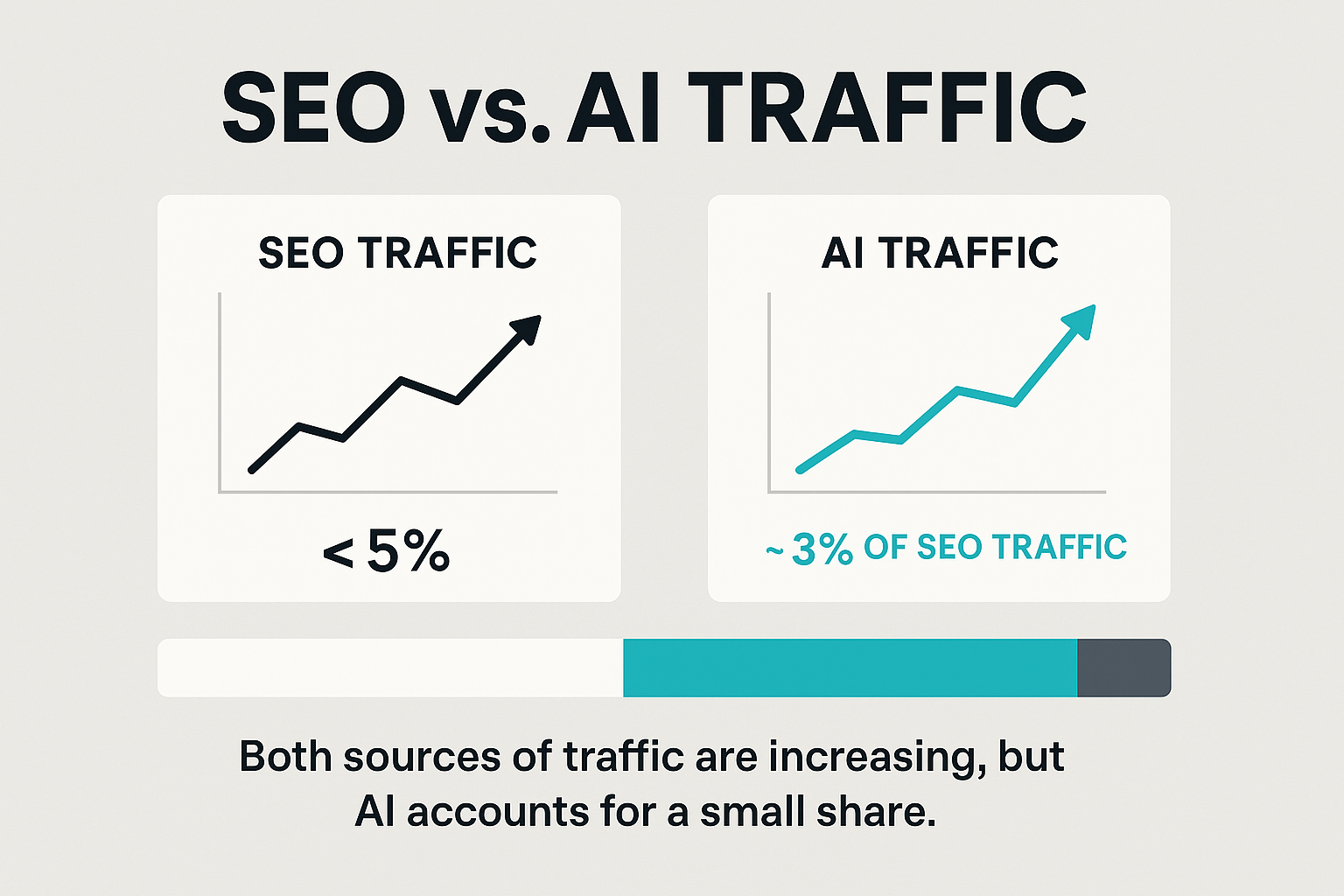
Key Findings
- SEO traffic remains strong and growing. Across clients, organic sessions from Google continue to trend upward. In multiple cases, traffic has scaled from under 100 sessions to several thousand per month. Publishing high-intent, bottom-funnel content continues to drive measurable growth.
- AI traffic is rising but remains small. AI referrals began appearing in mid-2024 and show steady growth. However, the volume remains modest:
- On average, AI traffic is ~3% of SEO traffic.
- Most accounts fall in the 2–5% range, with outliers as low as 0.2% and as high as 7%.
- Nearly all AI traffic originates from ChatGPT, though conversions sometimes come from other platforms like Perplexity.
- Perceived SEO decline is often attributional. Slight declines in organic traffic have been observed in some mature accounts. However, these dips often coincide with increases in branded search traffic. This suggests users may discover companies through AI overviews or AI search results but then navigate via direct or branded searches rather than clicking organic links.
- Conversions do not align directly with traffic. While ChatGPT contributes the majority of measurable AI sessions, conversions are often driven by other tools. This highlights the need to evaluate AI channels on conversion performance, not traffic volume alone.
- Attribution challenges are intensifying. Cookie consent, privacy changes, and shifts in user click paths make it harder to tie conversions directly to SEO or AI sources. Many conversions appear as “direct/none,” despite being influenced by search or AI exposure.
Strategic Implications
- SEO is not dead. Organic growth remains consistent, and claims of its demise are not supported by the data.
- AI traffic is complementary, not a replacement. It is increasing but represents a single-digit share of SEO volume and conversions.
- Brands should view SEO and AI as interconnected. Visibility in search engines feeds AI discovery, and vice versa. Both channels ultimately contribute to brand awareness and lead generation.
- Conversion measurement must evolve. Teams should place greater emphasis on overall lead growth and blended attribution, rather than expecting precise channel-level credit.
Conclusion
Current evidence shows SEO continues to be a primary driver of traffic and conversions, while AI referrals are emerging but still limited in scale. The most effective strategy is not choosing between SEO and AI but understanding how the two reinforce each other in driving brand discovery and measurable outcomes.
Discover more from Mukund Mohan
Subscribe to get the latest posts sent to your email.
