All posts by Mukund Mohan

My discipline will beat your intellect

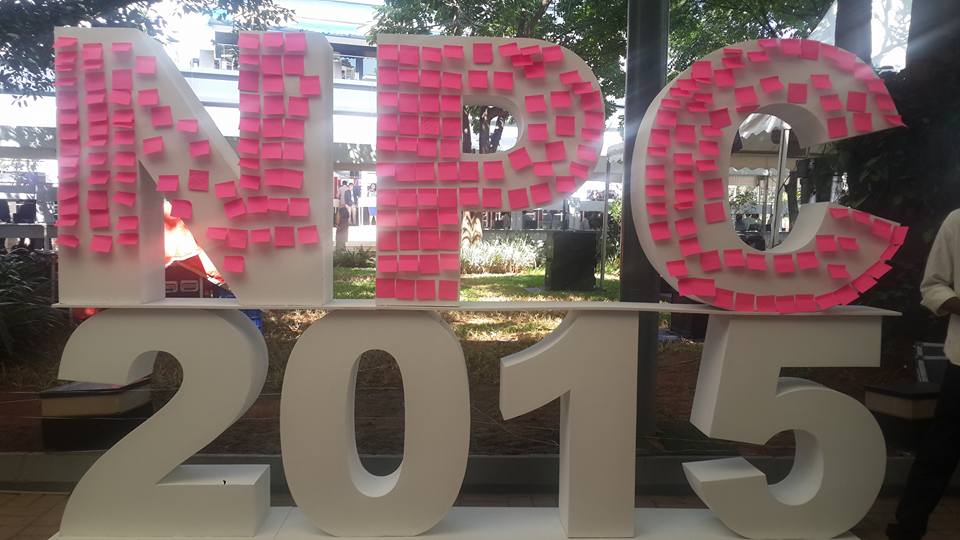
Why I left this year’s #npc2015 NASSCOM product conclave absolutely inspired

The democratization of entrepreneurship and product development in India is happening and reaching the smaller cities with many different types of products. That was my big takeaway from this year’s NASSCOM product conclave.

In 2008, when we moved to Bangalore, I participated in my first NPC, at that time, and we had to provide free tickets to about 150 people was the story I heard. We moved to a bigger location, the following year, at the Lalith Ashok with tickets ranging from INR 500 to 800, but with most folk still in the “paid for by corporate sponsors” category. The number of attendees was at about 500.

The NPC I remember most was 2012, where I had 5 panels at the Vivanta and I was excited to see that we had reached a total of 700-800 people. Tickets were < INR 1000. This conference had fewer than 10 women attending and maybe 2-3 speaking.

The next year Sharad’s efforts were beginning to show and ticket prices and attendance went higher. More women showed up, but still fewer than we’d like.

2014 was a turning point, with tickets going for INR 5000, and over 1200 people attending, 800+ wait listed.

This year the prices for the conference were at INR 10K. Over 1200 people (the maximum possible they could accommodate) and over 1000 were wait listed.

The event over the years has gone from 1 day to nearly 5 days, with a hands-on Maker faire, an entire day of practitioner sessions  and 2 days of “name brand” speakers as well.

This year, 24% of the speakers and nearly 10% of the attendees were women. More than 45% of the attendees were from outside the major metros as well.

The conference has also moved to accommodate a variety of needs, and in the process, maybe alienating a few of the older folks. Which is understandable.

The key thing to realize about NPC is that is one part about entrepreneurship (meaning, people come here to get inspired, learn and network), one part about showcasing products (understand what’s being built) and one part networking (more like speed dating for new folks, and an high school reunion for others).

It is also one big party – where you end up hanging out with “name brand” folks who believe it has become a place to be seen more than to learn about new products.

I liken NPC to the changes the city of Bangalore has undergone over the last 30 years. The tech explosion, population boom and arrival of people from all over has caused many growing pains for the “garden city”, but at the same time it has lifted over a million (at least) people from poverty to middle class as well.

That’s the picture I’d like to color a little more – this year, there were more young and new entrepreneurs from smaller cities, more women, and more fresh, first-time product innovators. They are also building a variety of products – not all of them fall into the “enterprise software”, or “mobile app” contours that we knew from before.

Does that make the NPC ecosystem polluted? – I dont think so at all, but I understand why some others would say that.

The entrepreneur from Davangere who is building a “2nd Opinion” app on your mobile phone is innovating as well. So is the young lady from Pune who was building an ecommerce site to sell homemade knits.

These are the new “apps”, “products” and entrepreneurs we have to accommodate and figure out a way to help.

NPC always has always been flexible, inviting and open – which was the original spirit that Sharad, Avinash, Sangeeta, and Som Mittal from the original days and M.R, Ravi and Arun Seth, more recently, have been supporting.

The reason I was inspired, was the diversity in product ideas, the edges of innovation and people. That’s so awesome to see.


Ability to sell, but need not be a #salesman 21 traits to look for in entrepreneurs

Most entrepreneurs need to be able to sell. To potential employees, to customers, investors, etc. In fact the most challenging part that most entrepreneurs realize is if they cant sell – their vision, the value proposition or the products – they dont get very far with their startup.

One of the things I always seek to understand is if the founder can sell themselves. While I believe, everyone has some ability to sell, not everyone needs to be a sales person. A sales person falls into multiple categories for me : A hustler, a process jock and a relationship master, a consultative leader or a product expert.

Types of Sales People

Most entrepreneurs who I work with are developers and more technical folks who are largely introverts. They dont enjoy “selling”, which they associate with sleazy, tactics to “con” people.

It does not have to be that way at all. The most important skill I am looking for is if the person can get other people excited and interested in what they are doing and get them to commit to their desired outcome.

Both of these aspects are required – which in sales they call “opening” an opportunity and “closing” the deal.

Some entrepreneurs struggle with “opening” opportunities. I can relate to and understand that. Opening requires you to cold call and in many cases talk to people you dont know. So, what most entrepreneurs do is talk to people they know (get referrals) or avoid it altogether.

Other entrepreneurs may be good at “opening” but have a big challenge at “closing” because they believe most of it is outside their control. They can make the initial pitch, but getting the investor to commit the funding and sign on the term sheet is a problem. Or getting the candidate to interview and be willing to join is easy, but getting them to sign and come on board is the hard part.

One of the first things I look for is how the entrepreneur got to me. If they are referred by a trusted source, I try to find out how my network got to know them. If they cold emailed me, I look and judge the pitch they made via email. Is it genuine, well researched and has a specific outcome or purpose.

Most entrepreneurs dont have the experience going from “opening” an opportunity” to “closing” the deal as well, so they end up spending a lot of time in the middle.

As with any target (potential investors, employees, customers, partners) they goals are different and I first look for clarity of thought. Do they know what they want from this person and the steps the need to get there.

Most entrepreneurs can tell you the goal, but dont understand that you can achieve that in one step. Understanding the layout of steps is critical – which we call the sales process.

Moving from one step – awareness to interest, then consideration, going to intent, and then evaluation and finally purchase, is what I am seeking to see if they have understood. It might take 2 meetings or even 10 or more, but if they know where the “target” is in this process, and how to get a target from one step to another, then you have someone who can sell, not just be a talker. 

Confident but not arrogant #napkinStage #EntrepreneurTraits

The second skill/trait (not in order) I try to look for in entrepreneurs is if they are confident, but not arrogant. I actually dont think there’s a fine line as many people suggest. To me, most people clearly fall more into one bucket – lacking confidence, confident and over confident / arrogant.

I first observe how they introduce themselves. If I get a historical perspective (from them time they were born with some folks actually), and a list of milestones, that’s one thing I note. If there’s a lot of name dropping – I was at IIT, XYZ was my professor, ABCD is my uncle, etc., that’s something else I keep in mind. A list of specific accomplishments that are relevant to the conversation is another thing I am always looking for. I wont detail which ones are those that leave me with a positive and others that I am already sensing alarm bells go off, since that’s subjective. I have written before about the best way to introduce yourself in a positive manner.

Mostly thought what we are looking for is the way entrepreneurs address questions. So, depending on the situation, we use questions as a tool to gauge the boundaries and contours of their confidence.

Asking questions about what their biggest failures were, or things they learned from their experiences at previous companies they worked for helps.

  1. What do they say about the competitors when we bring them up?
  2. How they answer questions about their “perceived” shortcomings or flaws after we do reference checks?
  3. How they address the “market size is to small”, “you dont have a strong team” and other questions about their business model?

Typically a confident person is accepting and objective and an overconfident person (or a person lacking in confidence) will look for excuses and rationalize their behaviors.

I dont think it is important to be prescriptive about how to answer these questions, since most people will end up answering and also evaluating these differently, but it is one of our 21 criteria.

I know that you have your own way to judge if people are confident and not, what do you use to figure that out? I’d love to know.

How investors test for “listening” skills in entrepreneurs

One of 21 skills I try to look for in entrepreneurs is listening – more specifically active listening. The reason for testing this skill is obvious. More than wanting to be listened to, I look for whether the entrepreneur is listening to respond or listening to understand.

Most entrepreneurs find it hard to listen, in fact most type A people are in roles that requires them to be constantly “pitching” and “selling” their vision, company and product. So, they are always in “objection handling” mode.

While I understand that most of the questions that are going to be asked by the investor or customer are likely ones that the entrepreneur has heard before, nonetheless, I am seeking to understand if the entrepreneur can still parse, ask relevant questions to clarify and be thoughtful about their responses.

There are 3 dead-giveaways when I know someone is not listening.

First, the entrepreneur says “Yes, Yeah or Uh Huh” a lot even before sentences are complete – usually this means they are pretty distracted and looking for an opening to get their word in.

Second, they never probe to ask questions themselves, instead are always providing answers. A key part of listening is to understand, pause, reflect and let silence take over at times – which may be awkward at times, but it works.

Third, they are distracted easily and end up answering the wrong question, keep using filler phrases such as “I understand” or “Sure, but…” often.

What we look for is listening first. That does not mean we are looking for someone to change their mind based on our questions. We are seeking to understand if they have the cognitive ability to keep their “mind” open not just their “ears”.

You can hear well, but not listen at all.

The next question is how can someone listen well?

The first is to listen with more than your ears – listening with your mouth – asking more clarifying open-ended and closed questions. This is the best way to force yourself to actually ask more questions.

The second is to use silence strategically – pause and reflect on the question. Use the ability to tell the other person “Let me think about that” before you start to answer their statement, question or comment.

Finally use non-verbal communication to listen if it is a one-one, face-to-face meeting, including using your eyes – focus on the person or taking notes, and use time to summarize or paraphrase their comments.


Taking the time to write a short post (WWST)

When you start writing you realize that shorter posts take a lot more time than longer ones. As Mark Twain said

“I didn’t have time to write a short letter, so I wrote a long one instead.”

This is largely because putting a stream of conscious thoughts together is easy with some examples, but putting together a thoughtful, concise post requires organization, planning and a level of introspection that’s very hard.

Here are some hacks that work well when you want to write shorter, but more effectively.

  1. More examples work better than descriptive narratives. Examples have a positive effect in reinforcing a statement. although if you don’t choose a good example, the words become superfluous. Instead of explaining the point, giving an example works better.
  2. Remove sentences that give a lot of context with links and references that point to where you can read more.
  3. Think how will someone tweet this if they were listening to you instead of reading it.

Of these the tweet seems to work the best. If someone were reading an entire essay or paragraph and had only 1 to 3 tweets to summarize your content, what would they say.

What would someone tweet? (WWST)?

I commit

  • To respond to (most) messages  from entrepreneurs seeking my help or advice within 2 days
  • To politely but quickly decline my interest in an investment without wasting time
  • To be empathetic to an entrepreneurs needs and listen more than dispense “advice”
  • To help if I can in any way by connecting them to folk if appropriate
  • To not waste an entrepreneurs time or energy by asking them for data they may not have

This is a post for myself, so you wont find much value here.

Once a while, I forget what makes me happy, excited and moderately successful. So, I have to remind myself. Not with a new year’s resolution, or a birthday resolve or a 5 year plan.

To those who I did not respond who took the time to write me a long email, I apologize.

To those others who do not know me and felt my one line reply of “not a good fit for me” was insufficient, I am sorry.

To most others who encourage my writing by liking on Facebook or commenting, and ReTweeting, sharing, etc. – much thanks. It is you that makes me keep writing. I cannot say how much happiness I derive from getting feedback from your comments – good, bad or indifferent.

I like the “Meh”, as well, so I can keep going higher.

Reverse “brain drain” – the osmosis of startup ideas into the enterprise

Throughout most of the 80’s, 90’s and 2000’s successful big company ideas, concepts and models – such as Rank and Yank (GE, Microsoft), Be number one or two in a market or get out (GE as well), Just in Time Manufacturing (Japan), etc. were pretty popular.

Now, of course, most bigger companies are adopting the theories, practices and models that startups have pioneered – Lean startup methodology, DevOps, Customer development, Business model canvas, Move fast and break things, Open office space, etc.

This “reverse brain osmosis” is critical since startups have captured the imagination of most people.

It is easy to just put these cultural and thematic phenomena as “adopting what’s successful”, but there’s more to it than just larger companies adopting successful startup ideas.

Over the last 3 years as I talk to more larger companies and startup entrepreneurs, I have not been asked by a single entrepreneur “What are large companies doing that we should adopt”?

I have though been asked by almost every large company executive “What are startups doing that we can learn from”?

The biggest reason is changing market demographics and technology. Both of these are critical. Without mobile, these would not have been possible to a large extent. Mobile changes everything.

The first, demographics and attitudes of the younger folks is driving companies and businesses to adapt as well. Millennial’s especially (most dont like that term, BTW) have much different expectation from their work, life and the balance of it.

The most important change is that they want everything now and the flexibility to work when they want to.

Which is why I think “the gig economy” or “the on-demand economy” is a much bigger concept than any other for this generation and likely be the most dramatic change for the next 20 years.

“Work” is really a man-made concept. As a friend put it yesterday, it is exchange / creation of value for goods and services desired. If we can abstract why we need to work from why we want to work, then it becomes a question of bringing value to another human’s life.

That’s the reason why startups, especially in the Silicon Valley measure the “change the world” factor that their company brings about.


Is there even a need for idea stage funding? #napkinStage is a myth

Depending on your point of view, it is not for 10% of entrepreneurs. For others, with a dream and nothing else, it is.

When we started #napkinStage our goal was to work with early stage entrepreneurs. True to our name, we thought it would be entrepreneurs at the concept / idea stage, where we’d put about $25K to $50K and see where they go.

For companies in the US that might last them 3 months (maybe) and in India it should easily last them 6 months was our thinking. We expected the founders to not take anything more than bare sustenance, hire maybe 1 person, but largely have the founders build product and validate the problem.

Turns out we are getting much higher quality companies than what we thought we would. If you are an #ideaStage company, with just a concept or some PowerPoint slides, you are out of luck.

Just like the best entrepreneurs have a choice of the best investors clamoring to get “in on the deal”, the best investors have later stage entrepreneurs also looking to get “them in their startup”.

This is amazingly different from even a mere 7 years ago, when the market was one-sided and the investors held most of the cards and would take their time, request multiple meetings and generally move slowly.

These days it is not unheard of to raise a round of funding in less than a week for the top entrepreneurs (think ex Flipkart founder, ex Google or ex Facebook). If you dont fit into that profile, though, build product and get some traction.

Of the 400+ opportunities we have seen in the last 2 months, a full 60% were #napkinStage. The rest were companies doing anywhere from $100 / month recurring revenue to 4 companies doing more than $5000.

All were looking to raise a round between $250K to $500K.

Most had 2-3 investors “interested” and maybe 1 investor committed as well.

Which makes me think the need for “napkinStage” does not exist.

Well, it does, actually, for those who dont have the skills to develop / build the product themselves and need to “hire” a developer to program, or “bring on board” a sales person to get some customers.

So I reached out to a few of my YC friends and asked them how many founders in their pool were “idea” stage. They have been promoting this YC Fellowship program recently for about $12K, which is much less than what we thought we’d give, but the crucial difference is that the program is a grant, whereas ours is an investment.

While the fellowship is recent, the number of idea stage startups according to 2 of the partners is less than 5%.

Not zero for sure, but definitely low.

I know many entrepreneurs, especially in India, would disagree with me, citing a narrow set of opportunities that might fit the “build it on your own”, type of startup, but there seem to be enough of these right now, so why bother?

How much does office space and your work environment matter to foster innovation?

I was never one to care about a “great office space and environment”. I used to think that if you did great work, and have a great open culture, that’s all it took to build a great startup or foster innovation at a large company.

Turns out office spaces give out vibes.  In a recent survey of office spaces by (yes I know it is biased), by a co-working magazine they found that startups whose employees considered their office space to be “great” raised 30% more funding and grew 25% faster annually.

Great Office Spaces for Startups

Why did I read this report, or was referred to this report?

I was at the Virtusa event speaking to 60 of their top customers, partners and consultants about innovation. I had a side conversation with 2 folks from a large company who were in the mid-west. They are a fairly traditional company and to jump start their innovation efforts, they moved out of their “office” and rented a fairly trendy retail office in the downtown area, and retrofitted it complete with a kegerator, hipster office digs and bright colored furniture.

They got 50% more resumes and more resumes from interested employees from “top tier schools” than they did when they were in their old digs.

Who knew?

Well, Microsoft did apparently, spending millions in moving from older, office environments to cooler, hipper, open offices.

Google already does, this, spending a lot of money on great office space, so their employees have a “inviting and enriching” work environment.

Color me skeptical, but I am obviously wrong on this one. I used to think this was what the “entitled kids” straight out of school wanted. Turns out everyone benefits from a open, colorful and not drab office environment.

What is a hyper-accelerator and 3 other things I learned from accelerator survey by Unitus

I had a chance to participate and read the Global best practices survey by Unitus Seed Fund, where 78 co-working spaces, incubators, startup academies, accelerators and hyper-accelerators were surveyed and interviewed about their programs.

While, we tend to gloss (“at a high level, they are all accelerators”) over the details and differences, this report actually lays out a “maturity” curve for entrepreneurs. Most people might start out at a co-working space and a far fewer set of them end up graduating from a “hyper accelerator”.

For insiders, a hyper-accelerator is a 3-4 month pressure-cooker style program with a big focus on “pitch preparation” and “getting fund ready”.

Segmenting accelerators by type

While I have talked about needing a better way to measure “success” for these programs, in the absence of one, funding is one that we will all use.

Measuring funding within 6 months of graduating from the program is what they looked at more closely. Things look good or not-so-good depending on your point of view.

Hyper-accelerators get over 70% of their companies funded within 6 months (keep in mind all this information is self- reported), and “accelerators” – which I presume is a slower, more open program get only 30% of their startups funded within 6 months of graduating, unless you count getting into another “Accelerator” as success. I don’t think startup academies are really focusing on “funding” but they do miserably if they did.

Success of startup after accelerator Funding

The things I learned:

  1. Hyper-accelerators spend a lot of effort, money and time to “recruit” applicants. From the survey, they accept < 7% of applicants. It seems to me they are modeling their programs like the Ivy League college application programs, which gives credence to the theory that they are the new age MBA programs.
  2. Accelerators and Incubators are hosting startups for 6 to 12 months, which is a long time, even in places such as India and other locations where funding is rare and scarce. This is typical in University accelerators and for student entrepreneurs in particular, but even for-profit accelerators are running programs that are fairly long.
  3. The average number of investors that attended the “demo day” for the best quartile was 175 – which is large. Most ecosystems don’t have that many investors – active or passive, so I am not sure I believe this reported metric. I don’t doubt the survey, but I believe the self-reporting favors a looser definition of an “investor”.
Number of Investors at demo day

Things that I found interesting for entrepreneurs to focus on:

  1. Entrepreneurs cite as peer-to-peer learning as the #1 significant benefit – which means the better the cohort, the better off you will be. The best question then for entrepreneurs to ask an accelerator before the “commit” to joining a program is – “Give me a profile of the other startups that are going to join the program”.
  2. Mentor engagement, which is often touted by the accelerators as their key benefit ranks only 2.5 out of 5 in terms of their satisfaction. Since more connected mentors has resulted in more funding, this is fairly important. Most (over 70%) of the programs allow startups to leverage 1 to 7 mentors during the program, so a key question for entrepreneurs to ask would be “How much time will entrepreneurs commit to help our startup”?
  3. Engaged alumni creates a better probability of success is what the survey also found. Programs that used their alumni in more ways than to just provide “an online chat room” or “a mailing list” scored better in terms of funding and progress. So another key question to ask is “How many of your alumni are still engaged with the program” and “How do the alumni get engaged to help and mentor the current cohort”?

It seems to me that the questions I’d get a lot – “the deal terms – what % of the company for how much in funding” and “how much time do we have to be in the office” – are largely incidental – so both accelerators and startups should just seek to find a happy median – maybe take the top program and the bottom programs and meet in the middle and put that aside.