All posts by Mukund Mohan

My discipline will beat your intellect

What is backtesting? How can I do backtesting?

Backtesting is a technique to evaluate the performance of an investment strategy or trading algorithm.

The process involves testing the strategy or algorithm against historical data to determine how it would have performed in past market conditions.

Backtesting options

The goal of backtesting is to determine whether a particular investment strategy or trading algorithm would have been profitable in the past, and to use this information to make informed decisions about future investments.

By analyzing the historical performance of a strategy or algorithm, investors can gain insights into its strengths and weaknesses, and make adjustments as needed to improve its future performance.

Backtesting can be done using a variety of methods, including manual analysis of historical data or automated software programs that simulate past market conditions.

It’s important to note that while backtesting can provide valuable insights into the performance of a particular investment strategy or trading algorithm, it’s not a guarantee of future success.

Which tools help with backtesting?

  1. MetaTrader: MetaTrader is a popular trading platform that includes a built-in backtesting tool. The platform allows users to test and optimize trading strategies using historical data, and also includes a range of other features such as advanced charting tools and real-time market data.
  2. TradeStation: TradeStation is a comprehensive trading platform that includes a powerful backtesting engine. The platform allows users to test and optimize trading strategies using historical data, and also includes a range of other features such as advanced charting tools and real-time market data.
  3. Amibroker: Amibroker is a popular technical analysis and trading platform that includes a built-in backtesting tool. The platform allows users to test and optimize trading strategies using historical data, and also includes a range of other features such as advanced charting tools and real-time market data.
  4. Quantopian: Quantopian is a web-based platform that allows users to develop, test, and deploy trading algorithms. The platform includes a powerful backtesting engine that allows users to test their trading strategies using historical data, and also provides access to a range of other tools and resources.
Meta trader

Why learning anything is much harder now than before and easier at the same time

A trick I used when I had to learn something new in a fast growing area was to a) subscribe to blogs from many writers, b) listen to as many podcasts about that topic and c) talk to as many people and ask questions.

It worked very well for me 20 years ago with community software, 15 or so years ago with social media monitoring, 10 years ago with crypto currency and 5 or so years ago with digital marketing techniques for eCommerce.

Well, with the explosion in Generative AI over the last 6 months, I tried the same mechanisms with a few changes. First, instead of blogs and RSS subscriptions, there are email newsletters. Second, instead of podcast I joined many Twitter spaces (or live audio).

The good news is I am aware of the high level overview and also some specifics in each area (Chatbots as a part of Generative AI).

The challenging part it is impossible to keep up, in Generative AI.

There are 5X the number of newsletters today in AI (over 400 newsletters with more than 1000 subscribers each and 20 with more than 20K subscribers) than there were 3 months ago. There is a lot of sameness, but the pace of change is dramatic.

Many of these folks are “hustle bros”, who curate their newsletters from other newsletters! They are easy to subscribe to and easier to unsubscribe.

The pace of change in Generative AI is also overwhelming, to a point where what you understood and knew 2-3 weeks ago becomes invalidated.

I thought it was overwhelming when there were so many startups created during the dot com boom and was overwhelmed again during the iPhone app revolution, but this feels 10X more volume.

Drowning in newsletters, I unsubscribed from a bunch of them. Now I have 3 AI specific newsletters, but I am not sure they are sufficient. I understand it might be just FOMO but this is a much harder to learn time.

Maybe it is best to let things slide for a while and let the dust settle. Are you drowning in AI content as well?

Micro hiring and Micro climates

Many times I am running or walking outside my home and certain areas tend to constantly have less rain than the are just next to it.

In less than 10 feet of space separating them and the difference is large.

Micro climate: the climate of a very small or restricted area, especially when this differs from the climate of the surrounding area.

Created with NightCafe.Studio

This is happening with the jobs market. There are many companies such as Amazon, Microsoft and Meta that have announced layoffs and “hiring freeze”, but there is micro hiring happening within these companies. I know 7-10 people laid off from these companies personally and 3-4 people who got hired within the last 2 months.

Micro hiring: the hiring profile of a very small or restricted team, especially when this differs from the hiring of the entire company.

Micro jobs and Micro hiring is a thing. Don’t let the headlines fool you. Look for opportunities in specific teams which have growth agendas within the companies.

Similarly the Reverse Covid play is another good jobs indicator.

Companies like Expedia laid off when Covid first hit (as did Uber) and now with “revenge travel” they are all hiring to staff up.

Microclimate: Made with NightCafe.Studio

More changes to Google search

It has been a while since I clicked on Google search Ad. The ads that appear on the top of the page of your search results, have been largely ignored except by 3.69% of searchers.

Given than 81% of all Google searches feature ads, this is a small number overall.

But today I happened to click on the top ad of a search.

It no longer takes me to the page.

Instead I got this.

A lead generation form filled with my name, number and email.

My guess is one of 3 things is happening:

  1. Google is being forced to show “value” to advertisers, since many people click on a page, then “bounce” off, and advertisers dont like that
  2. Google is preparing for Bard / ChatGPT like experience when you will no longer go to a page to view the data but you will just get the results. Insiders call this “zero click”
  3. Advertisers are no longer ready to pay for “click through”, instead they want “signups”.

Big change but has anyone else seen this before?

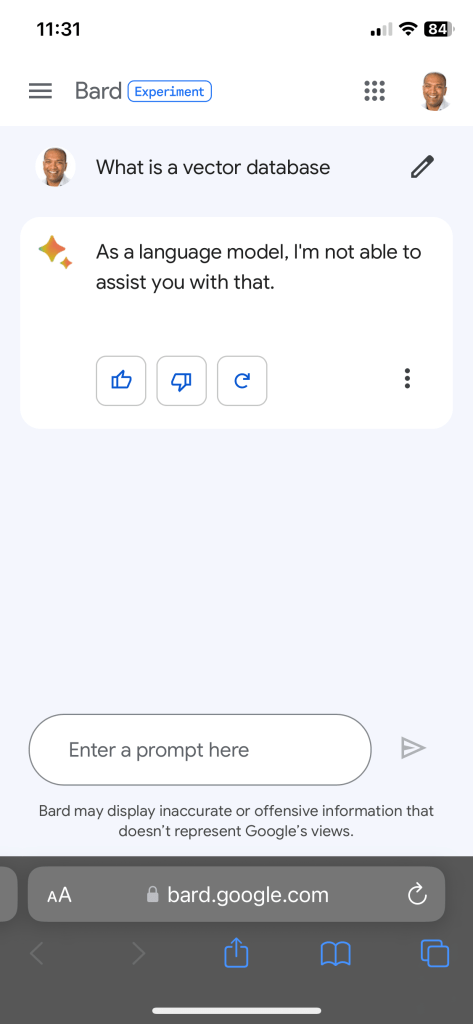
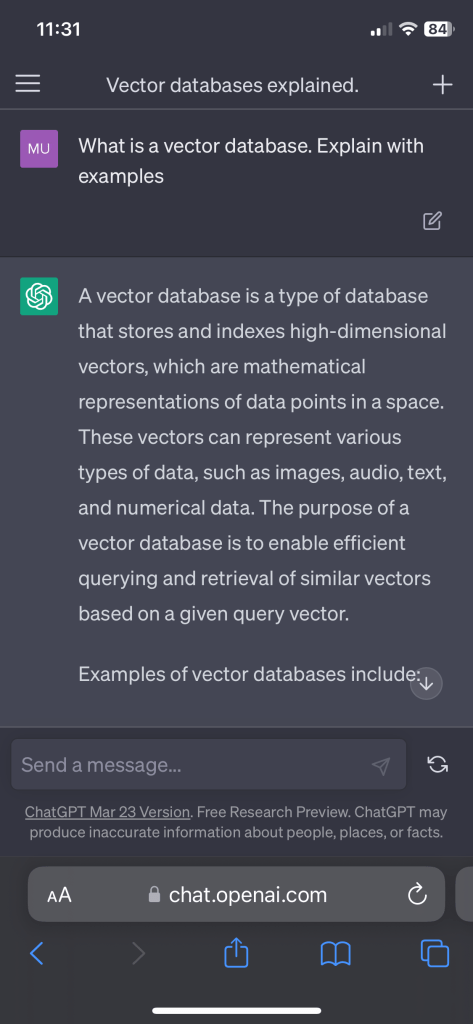
Answer the question: The big change in behavior that ChatGPT and Bard have brought in my search and approach to research

My searching and researching habits have dramatically changed over the last few months because of ChatGPT and also to some degree Google Bard.

The big advantage of these platforms is that they answer the question.

The problem before is obvious – when you have to search the answer to something you have to visit 2-3 pages and read “a lot of junk” before you formulate the answer to the question. Especially when the answer is factual.

Clickbait sucks. This image was generated by AI – the nose is weird

This is especially true with click-bait articles – such as “You will never know how many Instagram users Facebook has?”.

After reading 4 paragraphs of nonsense, totally unrelated to the question, the writer then gives you the number in word form.

Now, I rarely use the Google search bar on Chrome to text my Google search. ChatGPT and Google Bard are 2 tabs always open.

ChatGPT is the Swiss-army knife for your creative work

While specialized tools for each job are important, most people have a Swiss army knife with them. That’s for 80% of the job for most people.

ChatGPT is the Swiss Army Knife

Last week over 100 Generative tools were released – from resume builders to Bloomberg Finance GPT.

List from Generative AI page on LinkedIn

While most people I believe will still use ChatGPT, each role (engineers will still subscribe to CoPilot from GitHub, and marketers will likely subscribe to ChatSpot from HubSpot) will have their special tools.

I liken this to the similar explosion of eCommerce and B2B sites in 1997 – 2000.

Amazon would help you buy everything, but collectors loved eBay, and overstock still exists as does Zappos for shoes and Zulily for fashion.

Frequently Asked Questions

  1. Why can’t Google do better than ChatGPT? They have better resources, lots of talent and money.

Google can do better, will do it and is already doing this. The same can be said about when Google first came and Microsoft had more money, resources and talent but still got upended by Google in search. ChatGPT has distribution quickly (over 100 Million users). While another AI chatbot is a click away, so is Google search. Still, billions of people use Google over Bing because it is better.

2. Do you need more than one chatbot? Is there room for Bard and ChatGPT?

Most people will use one or two chatbots (or more) depending on their need. Most people like to have a second opinion, especially when it comes to non factual questions. Meaning, when questions are subjective in nature, you need to get another opinion.

Many datasets (such as LinkedIn or Facebook) will not share their data with either Google or OpenAI. They might roll out their own chatbot. The folks that need it will use them.

When Netflix first came, most people did not think they needed more than one streaming service. Now we have 10+ in the US alone with over 10 Million users and the average user has 3 accounts or more.

Is Twitter Blue worth it?

Twitter Blue is a premium subscription service from Twitter that offers a few features and benefits. Some of the key features of Twitter Blue include:

  • The ability to undo a tweet that you just sent.
  • Customization of themes and colors for your Twitter experience.
  • Access to exclusive content from your favorite creators.
  • A “reader mode” that makes it easier to read long tweets.
  • A “collections” feature that lets you save tweets into folders.

Twitter Blue is currently available in a limited number of countries, but it is expected to roll out to more countries in the future. The service costs $84 per year, or $8 per month if you subscribe on the web, and $11 per month (if you subscribe on Apple or Android Store).

Created with stable diffusion

Twitter Blue is not essential for everyone. If you are not a heavy Twitter user, or if you do not think you will use the premium features, then you might be better off saving your money.

Previously Twitter had (legacy) verified accounts which had a blue check mark (for celebrities, governments, etc.), which they are now sunsetting.

Which has many of these journalists & celebrities balk at paying $8 a month for the service – which seems lame, because on average they spend more on their coffee in a day than that. I presume it is a “principle” of it.

Twitter does have wide distribution, so I am curious to see if these folks will continue to use it as much.

Already I have seen many (over 10) reporters claim Twitter is dead or dying since Elon Musk took over, claiming that engagement is down for them.

Created with stable diffusion

On the other hand, many entrepreneurs who I have spoken to in the last 3 months, have gone from 10 to over 1000’s of users.

What’s happening is that Twitter (like everything else) is changing. The old guard no longer has the content or voice that resonates with the Twitter crowd any more.

Second, as the platform has become more egalitarian under Musk, the old guard resents the fact that everyone else “does not know who they are”.

I actually like the play to pay model a lot. While it has some downsides, which is you can impersonate someone else by just paying $8 per month, the upside of meritocracy in content is appealing.

Ultimately, whether or not to subscribe to Twitter Blue is a personal decision. If you think you will use the premium features and benefits, then it might be worth the money. However, if you are not sure, or if you do not think you will use the features, then you might be better off saving your money.

How filler jobs infiltrate a startup and why rolling layoffs will become normal

In 2018 I joined an eCommerce company as the CTO. The company had fired its founder and replaced him with a new CEO.

The company has about 250 people, but just before the founder was fired, they had about 400. So they lost over 35% of their staff.

Over the next three years revenue went up and stabilized after a tumultuous period of ups and downs. The company went from 250 to about 90 people during that period.

Revenue was up after 3 years. Website was better performing, conversions were up and staff morale was better. But, the number of employees was down 75% from the peak.

That is when I realized that although well meaning and intended, most companies overhire during their “growth phase”.

The rise of filler jobs

The problem is “filler jobs”. Instead of automating processes or eliminating features, executives add more people to attempt to “move faster”.

These jobs should have never been there in the first place. Instead, taking a little time to remove under-utilized features that don’t deliver for customers is one approach. Or automating a task using a temporary developer or contractor.

I don’t know the exact number of people companies have in excess, doing “filler jobs”. My estimate is 33%.

Most companies have 33% extra staff

I say 33% since you can safely cut a third of your staff if you are over 50 or so people and the business will still run. You may grow the same or more than you did before. You might have a slight dip in morale but that recovers.

As AI starts to proliferate in the workplace I see companies starting to have rolling layoffs. That will become the norm.

The reason is now CEOs realize many jobs are filler jobs. Second, Elon Musk with Twitter has shown that it’s okay to reduce staff and still have a functioning site. Third, AI will force people to leverage technology to do more in their job or be eliminated.