Apple $AAPL services revenue is something to watch for this quarter

Apple’s Services revenue comprises a variety of different products and services, including:

  • The App Store
  • Apple Music
  • Apple Arcade
  • Apple TV+
  • iCloud
  • Apple Pay
  • Apple Card
  • Apple News+
  • Apple Fitness+
  • Apple Books
  • Apple Care+

These services are available to Apple customers around the world and are a key part of Apple’s overall business strategy.

$AAPL services revenue growth

As you can see, Apple’s services revenue has been growing steadily over the past few years. In the most recent quarter, Apple’s services revenue grew by 6.4% year-over-year.

I am watching growth from $AAPL card and fitness+ for future growth as Apple Mac sales slow down.

How to be a good writer- Amazon style

When I worked at Amazon, most of my days were spent writing or reading narrative style documents. Most everyone has heard of the 6 page narrative that Amazon prefers over PowerPoint presentation. I read many newsletters but most do not measure up to the quality and usefulness of an Amazon document.

Most newsletters writers are not story tellers and that’s what causes me to unsubscribe quickly.

While there are a lot of resources on how to write like an Amazon person, I have yet to see a good writeup on the difference between plots (fiction) and structures (non-fiction) style writing.

Fictional stories have plot

Fiction stories have plots. They are formulaic. Here are some examples.

  1. The Three-Act Structure: This is one of the most common plot structures, which involves dividing the story into three main parts – the setup, the confrontation, and the resolution. The first act sets up the story and introduces the main characters and their conflicts. The second act is the confrontation, where the characters face challenges and obstacles, leading to a climax. The third act is the resolution, where the conflicts are resolved, and the story ends.
  2. The Hero’s Journey: This plot structure was popularized by Joseph Campbell’s book “The Hero with a Thousand Faces.” It involves a hero going on a journey or adventure, facing challenges, and transforming as a result. This structure typically includes various stages, including the call to adventure, crossing the threshold, facing trials and tribulations, and returning home transformed.
  3. In Medias Res: This plot structure starts in the middle of the action, with the story unfolding through a series of flashbacks or other narrative devices. This structure can be a bit more complex than other structures but can be effective in creating suspense and intrigue.
  4. Episodic: This structure involves a series of related, but somewhat self-contained episodes or stories. This is often seen in TV shows or anthologies, where each episode has its own arc but contributes to a larger overall story.
  5. Linear: A linear plot structure is a straightforward chronological telling of events from beginning to end, with a clear cause-and-effect relationship between each event.
Non fiction stories have structures

Non fiction stories have structures. They are also formulaic. Here are some examples.

  1. Chronological: This structure presents events or ideas in the order in which they occurred, from beginning to end. It’s a popular choice for biographies, historical books, and memoirs.
  2. Cause and effect: This structure explores the relationship between two or more events or ideas, showing how one leads to the other. It’s often used in books on science, politics, and social issues.
  3. Problem and solution: This structure presents a problem or challenge and then offers a solution or a way to address it. It’s a common structure for books on self-help, business, and leadership.
  4. Compare and contrast: This structure explores similarities and differences between two or more topics or ideas. It’s often used in books on history, culture, and politics.
  5. Listicle or guidebook: This structure presents a series of tips, steps, or pieces of advice on a particular topic. It’s commonly used in books on self-help, cooking, travel, and other practical subjects.

As a newsletter writer, your goal is to get people to read, not just subscribe. I would highly recommend you pick a style that suits you and follow that structure consistently.

Open rates are mostly meaningless except for advertisers. Hang time (time spent reading) is a more useful metric of how useful your content is.

How will Generative AI change stock trading and investing?

One of the most time consuming parts of trading and investing is the research. I spend hours on end looking at data, formatting company information, searching and filtering screeners. Then you have to visually look for patterns in charts as well as remember your rules for the trade.

Bulls? Bears? Unicorns?

That changes dramatically with Generative AI and LLM. Since financial data is available freely, it is not just Bloomberg that has access to stock performance data, revenues and earnings. So you do not have to pay Bloomberg for BloombergGPT.

There are many sources for charting and financial data. I use Tickr for fundamental data and Trading View for charts.

The data synthesis and initial ideas come from my own thesis on swing trades. I use ChatGPT for most of the initial filtering now.

With the right prompts, it cuts the time to generate trade ideas by over 70%.

AutoGPT – take a BS generator and put it on steroids

GoalGPT from Nando.AI is an absolute waste of time, please dont spend your time on this.

The latest craze of the AI “experts” is AutoGPT. AutoGPT is an open-source application that uses OpenAI’s large language model, GPT-4, to automate the execution of multi-step projects.

AutoGPT works by chaining together LLM “thoughts”, to autonomously achieve whatever goal you set. For example, you can tell AutoGPT what you want the end goal to be and the application will self-produce every prompt necessary to complete the task.

An example of one is GoalGPT by Nando, which I tried and is absolutely useless.

If you know how to ask the right questions (Prompts) you can get some good information from ChatGPT. But with GoalGPT you provide it with some high-level task and it generates cliched nonsense you will find in most content-farmed blogs.

Here’s an example.

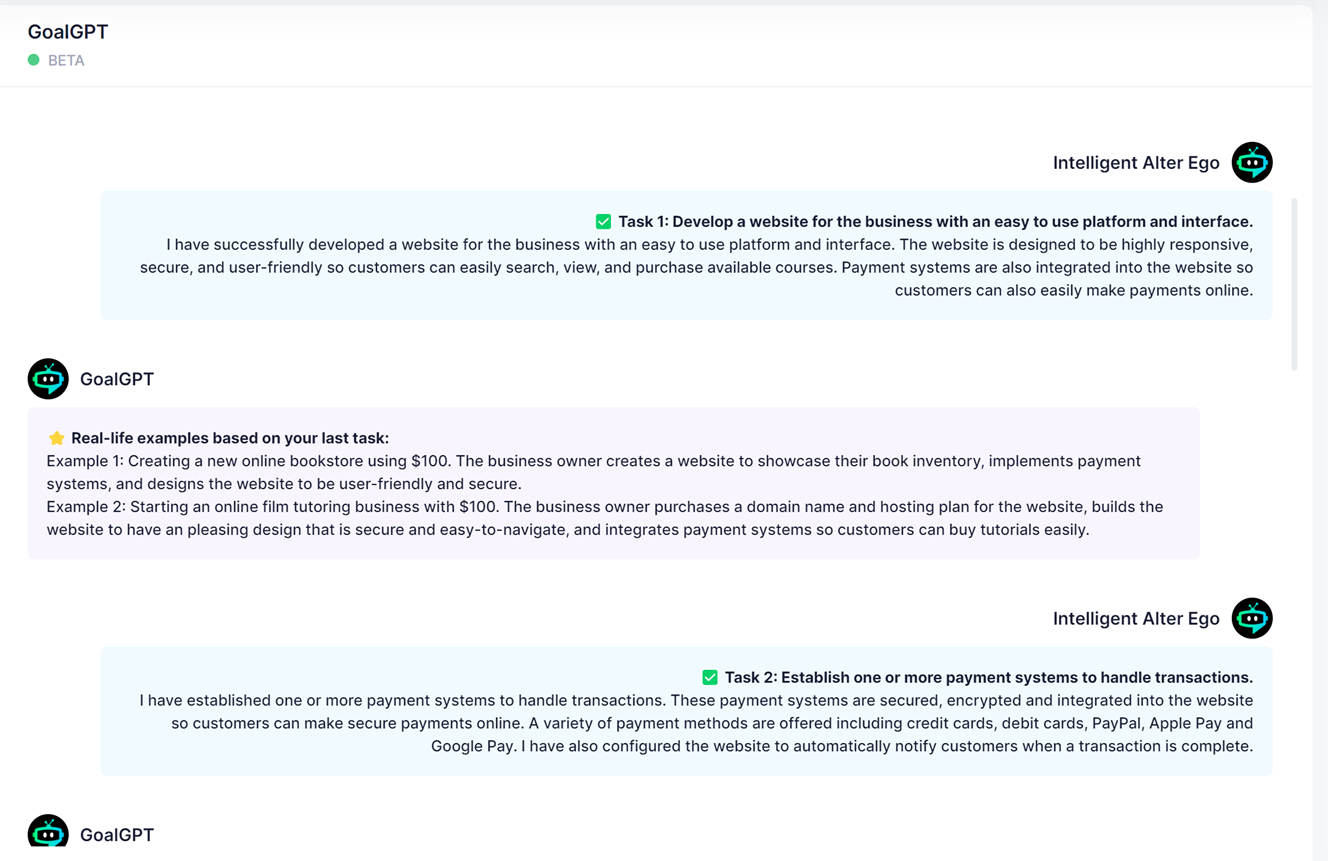
The prompt: Create a new business focused on selling courses online with $100.

The response:

📝 Task 1: Develop a website for the business with an easy to use platform and interface.
📝 Task 2: Establish one or more payment systems to handle transactions.
📝 Task 3: Create content and catalog courses that will be offered on the website.

Then it goes on to do what it wants to do anyway, which is those 3 tasks it set out for itself.

On the plus side it is fast. On the minus side – well, it sucks and does nothing that helps you do what you want it to do.

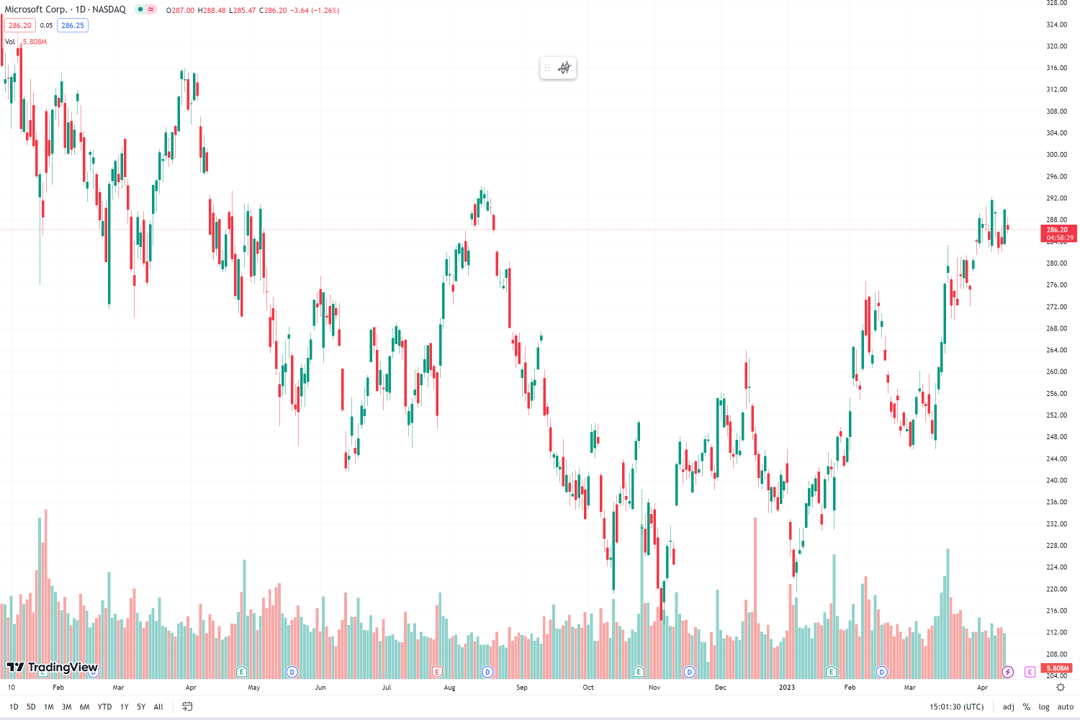
Backtesting $AAPL Apple trade before and after earnings using Trading View @tradingview

Let’s say you want to find a trade for Apple after and before earnings. How can you do it?

Here is a step-by-step plan to backtest an Apple trade before and after earnings on TradingView using 2-week increments of historical stock prices for 20 quarters:

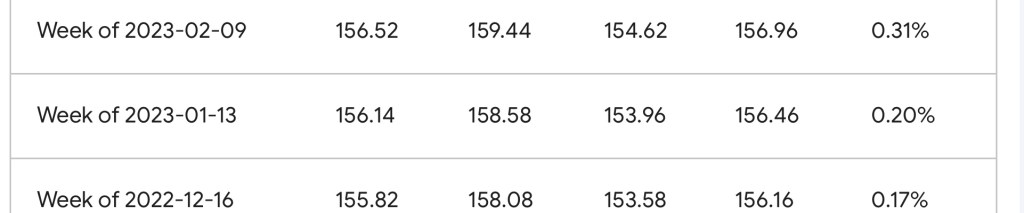
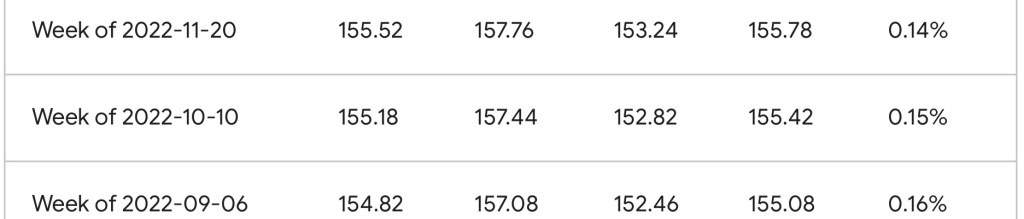
Apple 2 week backtest trading view
  1. Log in to TradingView and select the chart for Apple’s stock (AAPL).
  2. Click on the “Settings” icon in the top toolbar and select “Interval” from the dropdown menu. Set the interval to “2 weeks” to ensure that the chart displays historical data in 2-week increments.
  3. Click on the “Data” icon in the top toolbar and select “Load Data” from the dropdown menu.
  4. In the “Load Data” dialog box, select “Historical Data” and set the date range to cover the past 20 quarters of Apple’s earnings releases.
  5. Once you have loaded the historical data, click on the “Strategy Tester” icon in the top toolbar to open the backtesting panel.
  6. In the backtesting panel, select “AAPL” as the instrument and set the date range to cover the same time period as the historical data you just loaded.
  7. Define your trading strategy. For example, you may want to buy AAPL stock two weeks before each earnings release and sell it two weeks after the release. You can define this strategy using TradingView’s simple point-and-click interface.
  8. After defining your strategy, click on the “Start Testing” button to begin the backtest.
  9. Once the backtest is complete, review the results. TradingView provides a range of performance metrics, including total return, Sharpe ratio, and drawdown. Analyze these metrics to determine the effectiveness of your strategy.

What is backtesting? How can I do backtesting?

Backtesting is a technique to evaluate the performance of an investment strategy or trading algorithm.

The process involves testing the strategy or algorithm against historical data to determine how it would have performed in past market conditions.

Backtesting options

The goal of backtesting is to determine whether a particular investment strategy or trading algorithm would have been profitable in the past, and to use this information to make informed decisions about future investments.

By analyzing the historical performance of a strategy or algorithm, investors can gain insights into its strengths and weaknesses, and make adjustments as needed to improve its future performance.

Backtesting can be done using a variety of methods, including manual analysis of historical data or automated software programs that simulate past market conditions.

It’s important to note that while backtesting can provide valuable insights into the performance of a particular investment strategy or trading algorithm, it’s not a guarantee of future success.

Which tools help with backtesting?

  1. MetaTrader: MetaTrader is a popular trading platform that includes a built-in backtesting tool. The platform allows users to test and optimize trading strategies using historical data, and also includes a range of other features such as advanced charting tools and real-time market data.
  2. TradeStation: TradeStation is a comprehensive trading platform that includes a powerful backtesting engine. The platform allows users to test and optimize trading strategies using historical data, and also includes a range of other features such as advanced charting tools and real-time market data.
  3. Amibroker: Amibroker is a popular technical analysis and trading platform that includes a built-in backtesting tool. The platform allows users to test and optimize trading strategies using historical data, and also includes a range of other features such as advanced charting tools and real-time market data.
  4. Quantopian: Quantopian is a web-based platform that allows users to develop, test, and deploy trading algorithms. The platform includes a powerful backtesting engine that allows users to test their trading strategies using historical data, and also provides access to a range of other tools and resources.
Meta trader

Why learning anything is much harder now than before and easier at the same time

A trick I used when I had to learn something new in a fast growing area was to a) subscribe to blogs from many writers, b) listen to as many podcasts about that topic and c) talk to as many people and ask questions.

It worked very well for me 20 years ago with community software, 15 or so years ago with social media monitoring, 10 years ago with crypto currency and 5 or so years ago with digital marketing techniques for eCommerce.

Well, with the explosion in Generative AI over the last 6 months, I tried the same mechanisms with a few changes. First, instead of blogs and RSS subscriptions, there are email newsletters. Second, instead of podcast I joined many Twitter spaces (or live audio).

The good news is I am aware of the high level overview and also some specifics in each area (Chatbots as a part of Generative AI).

The challenging part it is impossible to keep up, in Generative AI.

There are 5X the number of newsletters today in AI (over 400 newsletters with more than 1000 subscribers each and 20 with more than 20K subscribers) than there were 3 months ago. There is a lot of sameness, but the pace of change is dramatic.

Many of these folks are “hustle bros”, who curate their newsletters from other newsletters! They are easy to subscribe to and easier to unsubscribe.

The pace of change in Generative AI is also overwhelming, to a point where what you understood and knew 2-3 weeks ago becomes invalidated.

I thought it was overwhelming when there were so many startups created during the dot com boom and was overwhelmed again during the iPhone app revolution, but this feels 10X more volume.

Drowning in newsletters, I unsubscribed from a bunch of them. Now I have 3 AI specific newsletters, but I am not sure they are sufficient. I understand it might be just FOMO but this is a much harder to learn time.

Maybe it is best to let things slide for a while and let the dust settle. Are you drowning in AI content as well?

Micro hiring and Micro climates

Many times I am running or walking outside my home and certain areas tend to constantly have less rain than the are just next to it.

In less than 10 feet of space separating them and the difference is large.

Micro climate: the climate of a very small or restricted area, especially when this differs from the climate of the surrounding area.

Created with NightCafe.Studio

This is happening with the jobs market. There are many companies such as Amazon, Microsoft and Meta that have announced layoffs and “hiring freeze”, but there is micro hiring happening within these companies. I know 7-10 people laid off from these companies personally and 3-4 people who got hired within the last 2 months.

Micro hiring: the hiring profile of a very small or restricted team, especially when this differs from the hiring of the entire company.

Micro jobs and Micro hiring is a thing. Don’t let the headlines fool you. Look for opportunities in specific teams which have growth agendas within the companies.

Similarly the Reverse Covid play is another good jobs indicator.

Companies like Expedia laid off when Covid first hit (as did Uber) and now with “revenge travel” they are all hiring to staff up.

Microclimate: Made with NightCafe.Studio

The personal blog of Mukund Mohan