Tag Archives: startups

The future of Pricing and Packaging with Adam Hauff of Sentinel One

The conversation centers around Adam, a marketing professional deeply experienced in pricing, packaging, and monetization strategies, particularly in the cybersecurity and SaaS sectors. Adam shares insights into his career trajectory, the significance of pricing and packaging in go-to-market strategies, and how companies evolve to adopt specialized pricing roles, especially as they prepare for IPOs or scaling phases. He highlights the complexities of pricing new products, exemplified by OpenAI’s pricing missteps, and explains evolving pricing methodologies, including cost-plus, value-based, and the emerging outcome-based pricing.

The discussion further explores how SentinelOne, a well-known cybersecurity company, approaches revenue growth beyond sales scaling, emphasizing reducing friction, improving customer experience, and expanding into new markets or products through self-service and low-barrier strategies.

Adam articulates how AI, specifically large language models like ChatGPT, are changing individual productivity and organizational workflows. He illustrates practical AI uses from summarizing notes, generating project ideas, conducting research, to iterative content creation. However, he also notes AI’s limitations such as hallucinations and the challenge of integrating AI tools company-wide due to approval processes.

The conversation ends on an engaging note with Adam’s humorous anecdote about using AI to explore the improbable question of how long it would take to “eat” a cast iron skillet by cooking with it, which reinforces how AI can be a powerful “second teammate” for brainstorming and problem-solving when paired with human logic and oversight.

Highlights

  • 🔥 Adam’s career uniquely blends pricing, marketing, and go-to-market strategy expertise in cybersecurity SaaS.
  • 💰 Pricing and packaging become critical roles for scaling tech startups, especially around IPO readiness.
  • 🤖 AI tools like ChatGPT amplify productivity by assisting with research, communication, and iterative content creation.
  • ⚖️ Emergence of outcome-based pricing as an evolution beyond traditional value and cost-plus pricing models.
  • 🌍 SentinelOne’s growth strategy prioritizes reducing friction and enabling self-service to expand revenue channels sustainably.
  • 🚀 Companies are still adapting to AI integration at scale; individual use far outpaces organizational deployment.
  • 😂 Fun anecdote showcases AI’s ability to engage in complex, absurd queries and collaborate interactively with humans.

Key Insights

  • 📊 The importance of specialized pricing roles during scale-up phases: Adam stressed that hiring dedicated pricing professionals often happens during late-stage startup phases or IPO preparation. This is when pricing can no longer be “winged” by founders but requires systematic strategy to optimize revenue and market fit. Many companies could benefit from introducing pricing roles earlier to avoid “skeletons in the closet” and structural inefficiencies that stifle growth. This insight emphasizes maturity in pricing as a key factor in business scaling.
  • 💡 Pricing complexity in AI products reflects the unpredictability of user behavior: Adam’s commentary on OpenAI’s $200/month pricing mistake illustrates a larger problem—when launching novel AI-driven offerings, predicting user consumption and cloud costs is challenging. This unpredictability makes pricing pilots, iterative learning, and flexible price adjustments crucial. It also highlights that cost-plus pricing, while less favored, remains an important reference point to ensure product sustainability amid scaling user demand.
  • ⚙️ Outcome-based pricing represents the next evolutionary step beyond value-based pricing: Outcome-based pricing monetizes actual results achieved rather than anticipated value or simply usage. This model aligns incentives more closely with customer success but requires clearer metrics and sophisticated tracking. Adam’s view that this approach is an evolution rather than a replacement suggests organizations will adopt hybrid pricing models before fully transitioning, signifying a gradual shift in monetization philosophies.
  • 🔄 Expanding revenue beyond traditional sales requires reducing friction and enabling self-service models: Adam highlighted ways to grow revenue beyond just increasing sales headcount, such as enabling easier product access, trials, and bundled offerings that empower customers to explore solutions independently. This strategy allows companies like SentinelOne to scale revenue while controlling costs, entering new markets or verticals with lower barriers, and creating diversified monetization “engines.” This insight is essential for organizations aiming for hypergrowth without proportional increases in sales investment.
  • 🤝 Cross-functional collaboration is key to successful pricing and monetization initiatives: Adam’s role involves coordinating pilots and rolling out pricing changes with sales, marketing, operations, and internal teams to ensure organizational alignment. Pricing is not just a finance or marketing function but requires enterprise-wide buy-in, reinforcing that monetization strategy is foundational to broader go-to-market execution.
  • 🤖 AI significantly enhances individual productivity while presenting challenges for organizational adoption: Adam uses AI tools daily for note summarization, idea development, and project research, improving efficiency and creativity. However, organizational adoption lags due to concerns over AI hallucinations, content quality, and governance. This gap highlights the need for better frameworks, training, and AI governance in enterprises to fully leverage AI’s capabilities.
  • 🎭 Success with AI tools depends on curiosity and persistence rather than immediate perfection:Adam emphasized that users who gain the most from AI experimentation usually display curiosity and iterative usage, including trial and error. This mindset applies universally; AI’s limitations mean early abandonment forfeits its potential benefits. His approach of personal experimentation, including creative projects like writing children’s stories, demonstrates how familiarity with AI’s quirks fosters meaningful adoption.
  • 💬 The analogy of AI as a “second teammate” underscores its complementary role in decision-making: Adam described AI as both highly knowledgeable yet occasionally “stupid,” echoing the idea that AI needs human collaboration to check and guide its outputs. This interplay is crucial for realizing AI’s benefits while managing risks related to accuracy and context. It suggests the future workplace will emphasize symbiotic human-AI partnerships rather than replacement.
  • 😂 Humor and creative use cases reveal AI’s potential beyond standard business applications: The cast iron skillet experiment humorously highlights how AI can engage with intricate logical puzzles and help humans think through unconventional problems. Such playful interactions foster better understanding of AI’s capabilities and limitations, encouraging innovative use while serving as a reminder that AI requires human judgment to avoid absurd conclusions.
  • 📈 AI’s role at SentinelOne spans both product innovation and internal productivity: The company integrates AI and machine learning directly into cybersecurity offerings, enhancing customer SOC analyst efficiency. Internally, employees experiment with AI tools to improve research, data synthesis, and business operations. This dual application signals AI as a strategic asset not only in product development but also as a productivity multiplier, essential for tech companies competing on innovation.
  • 🧩 The evolving role of marketing now includes monetization strategies and revenue enablement:Adam’s broader remit beyond pricing packages involves creating new revenue channels that do not rely solely on increasing sales personnel, reflecting the shifting marketing landscape. Marketing intersects deeply with product packaging, pricing, partner enablement, and customer experience, positioning marketers as pivotal in holistic revenue growth strategies.
Overall, this conversation paints a comprehensive picture of how modern pricing and packaging intersect with marketing, AI adoption, and strategic revenue expansion in a high-growth, tech-driven environment. Adam’s practical and candid insights offer a roadmap for organizations navigating pricing complexities, AI integration, and sustainable growth initiatives in today’s dynamic market.

Book review: Zero to One – Peter Thiel

“Zero to One” is a book that challenges entrepreneurs to think beyond incremental progress and instead aim to create something new and valuable, to go from “zero to one.”

Written by Peter Thiel, a Silicon Valley entrepreneur and venture capitalist who co-founded PayPal and was an early investor in Facebook, the book presents a contrarian view of business and innovation.

Zero to One Book

Thiel argues that competition is overrated and that startups should aim to create monopolies, as they provide the most value to both the company and society.

He also stresses the importance of having a clear vision for the future and the ability to execute on that vision, as well as the need for a strong team.

Created with Nighcafe AI

He argues that startups should focus on creating something new and unique, rather than simply competing in existing markets.

The Hollywood script summary!

If I were younger, created by Dall-E

FADE IN:

We open on PETER THIEL, a brilliant and eccentric entrepreneur, sitting in his office in Silicon Valley. He’s deep in thought, staring at a whiteboard covered in equations and diagrams.

PETER THIEL (V.O.) The world is changing faster than ever, but progress seems to have slowed down. We need to find a new path to innovation.

We see a montage of Silicon Valley tech companies, all working on incremental improvements to existing products. PETER THIEL shakes his head in disappointment.

PETER THIEL (V.O.) We’re stuck in a world of competition, where everyone is fighting over a slice of the same pie. What we need is a new philosophy of innovation. We need to go from zero to one.

PETER THIEL starts writing furiously on a notepad, scribbling down his ideas. We see glimpses of his past – co-founding PayPal, investing in Facebook – as he talks about the importance of building something new and revolutionary.

PETER THIEL (V.O.) We can’t just copy what’s already been done. We need to create something that’s never existed before.

We see PETER THIEL giving a lecture to a group of young entrepreneurs, urging them to take risks and think big. He talks about the power of monopoly, and how creating a unique product or service is the key to success.

PETER THIEL Competition is for losers. If you want to create something truly great, you need to find a way to be the only one doing it.

We see PETER THIEL mentoring a young startup founder, pushing her to think beyond the bounds of what’s possible. We see the company grow and succeed, thanks to PETER THIEL’s guidance.

PETER THIEL (V.O.) The world needs more innovation, more creativity, more boldness. It’s time to go from zero to one.

FADE OUT.

How filler jobs infiltrate a startup and why rolling layoffs will become normal

In 2018 I joined an eCommerce company as the CTO. The company had fired its founder and replaced him with a new CEO.

The company has about 250 people, but just before the founder was fired, they had about 400. So they lost over 35% of their staff.

Over the next three years revenue went up and stabilized after a tumultuous period of ups and downs. The company went from 250 to about 90 people during that period.

Revenue was up after 3 years. Website was better performing, conversions were up and staff morale was better. But, the number of employees was down 75% from the peak.

That is when I realized that although well meaning and intended, most companies overhire during their “growth phase”.

The rise of filler jobs

The problem is “filler jobs”. Instead of automating processes or eliminating features, executives add more people to attempt to “move faster”.

These jobs should have never been there in the first place. Instead, taking a little time to remove under-utilized features that don’t deliver for customers is one approach. Or automating a task using a temporary developer or contractor.

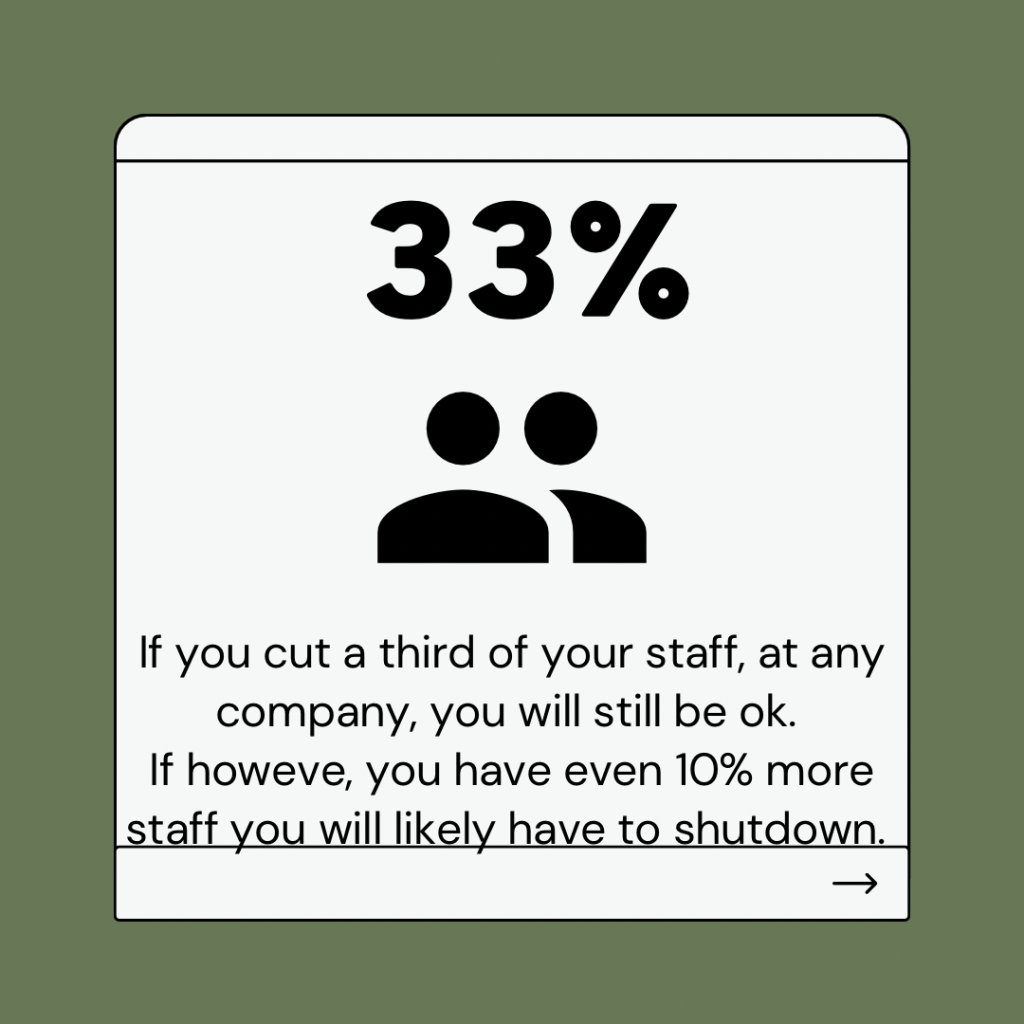
I don’t know the exact number of people companies have in excess, doing “filler jobs”. My estimate is 33%.

Most companies have 33% extra staff

I say 33% since you can safely cut a third of your staff if you are over 50 or so people and the business will still run. You may grow the same or more than you did before. You might have a slight dip in morale but that recovers.

As AI starts to proliferate in the workplace I see companies starting to have rolling layoffs. That will become the norm.

The reason is now CEOs realize many jobs are filler jobs. Second, Elon Musk with Twitter has shown that it’s okay to reduce staff and still have a functioning site. Third, AI will force people to leverage technology to do more in their job or be eliminated.

How do you segment startups? Here are 3 models, but we need more

I love the approach, analytics and data associated with segmentation. The act of taking large numbers and breaking them down into manageable smaller parts fascinates me.

Yesterday, I had a chance to talk to a friend about segmenting startups. There were 5 ways we tried to segment them and finally figured out that 3 made sense and the rest were not useful or actionable.

Here are the 3 categories of segmentation we came up with.

  1. Segment by stage of company. (Idea stage, Prototype, stage, Traction, Growing, Scaling)
  2. Segment by growth rate (slow growth, medium growth, fast growth and rapid growth)
  3. Segment by category (eCommerce vs. SaaS vs. Media, etc.)
  4. Segment by location (where they are based)
  5. Segment by type of funding (Bootstrapped, Angel, VC, etc.)
  6. Segmenting by market opportunity (large existing market, vs, disruptive new company)

Segmenting by stage of company: This is the easiest to understand. Most companies call themselves in various stages based on their funding stage as well, so we figured #5 and #1 were fairly close. There were enough differences when a larger company was bootstrapped, so they were “Growing” and “Bootstrapped” but those are fair and few between.

Segmenting by growth rate: We wondered if this was similar to stage of funding as well, but there are enough differences. A slower growth “Startup” would be going through multiple rounds of seed and early stage funding, so we felt this was useful segmentation.

Segmenting by category: This is the one that most startups use as well besides stage. Companies call themselves as an eCommerce company, Consumer Internet, B2B startup, etc. Most startups use this as a way to segment themselves besides stage.

Segmenting by location:Companies tend to email me and segment themselves from “silicon valley” vs. “New York”, vs “Bangalore” for example. Not sure where we could use this, but this is one other way we could segment them. I suspect after you do a first level filter, this might be a follow on segmentation.

Segmenting by type of funding: Compared to 7 years ago, startups are taking longer to get to VC series A for some companies, but others are still taking less time. Some end up bootstrapping for longer, and still others go from accelerator to accelerator, trying to raise seed round, post seed rounds, bridge rounds and still trying to get ready for a series A raise. I dont think this is going to help us action them in a particular way, so this, albeit interesting is not very useful.

Segmenting by market opportunity:

There are other ways to segment startups, including the type of founder (hacker, vs. sales person, etc.) and founders background (serial entrepreneur, first time founder, etc.)

I wonder if there’s anything we missed. I’d love your input.

Standing on the shoulder of giants – how startups get distribution done faster

The whale shark is an unusual fish. It travels an incredible 5000 miles off the cost of Caribbean each year. It does though help a lot more fish when it makes this journey. Many small fish and other sea animals live on its back and travel with it.

Intellectual pursuits have been similar. Issac Newton is quoted saying:

If I have seen further than others, it is by standing upon the shoulders of giants.

That’s one of the key items I have learned about distribution and growth hacking over the years. If there is a large “installed based” of practically any product, it is possible to jumpstart your new startup idea on its back.

Startups cannot help other startups. Except for giving advice, which is practical and practitioner-led, there’s not much a small startup can do to help other smaller startups.

The new “large” installed based in technology lead themselves to help new startups more than previous ones. While SDKs (Software Development Kit) and API’s have existed for a long time, the new age companies are helping bring their installed based to new innovations lot quicker by exposing their customers to new technologies via 3rd party solutions built on their solution. Some of them are doing so with the intent of being a “platform”, but many dont have a choice but to grow and build relationships via API’s.

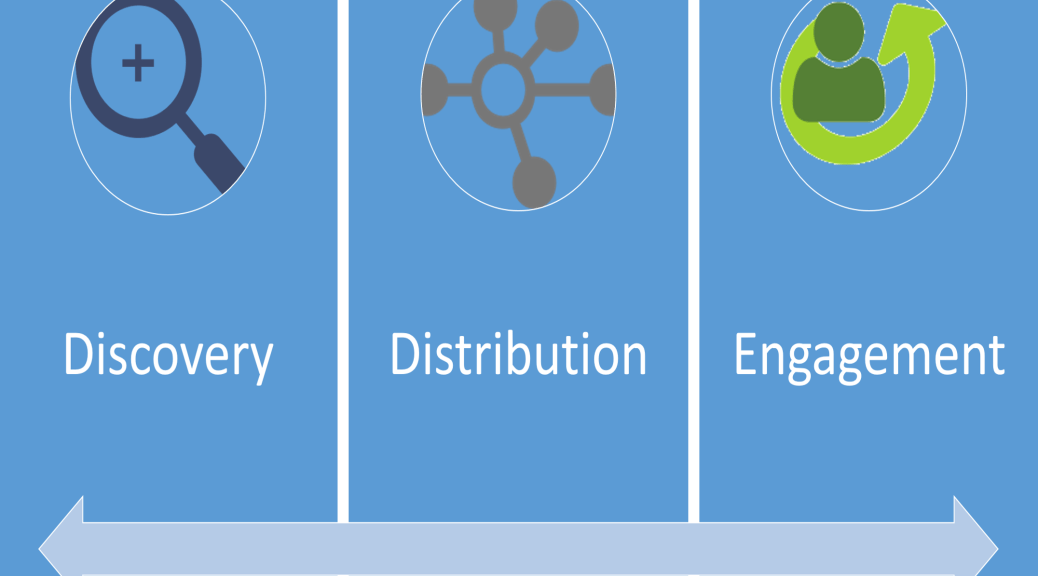
I was talking to an entrepreneur yesterday about how they can improve discovery and distribution for their SaaS application.

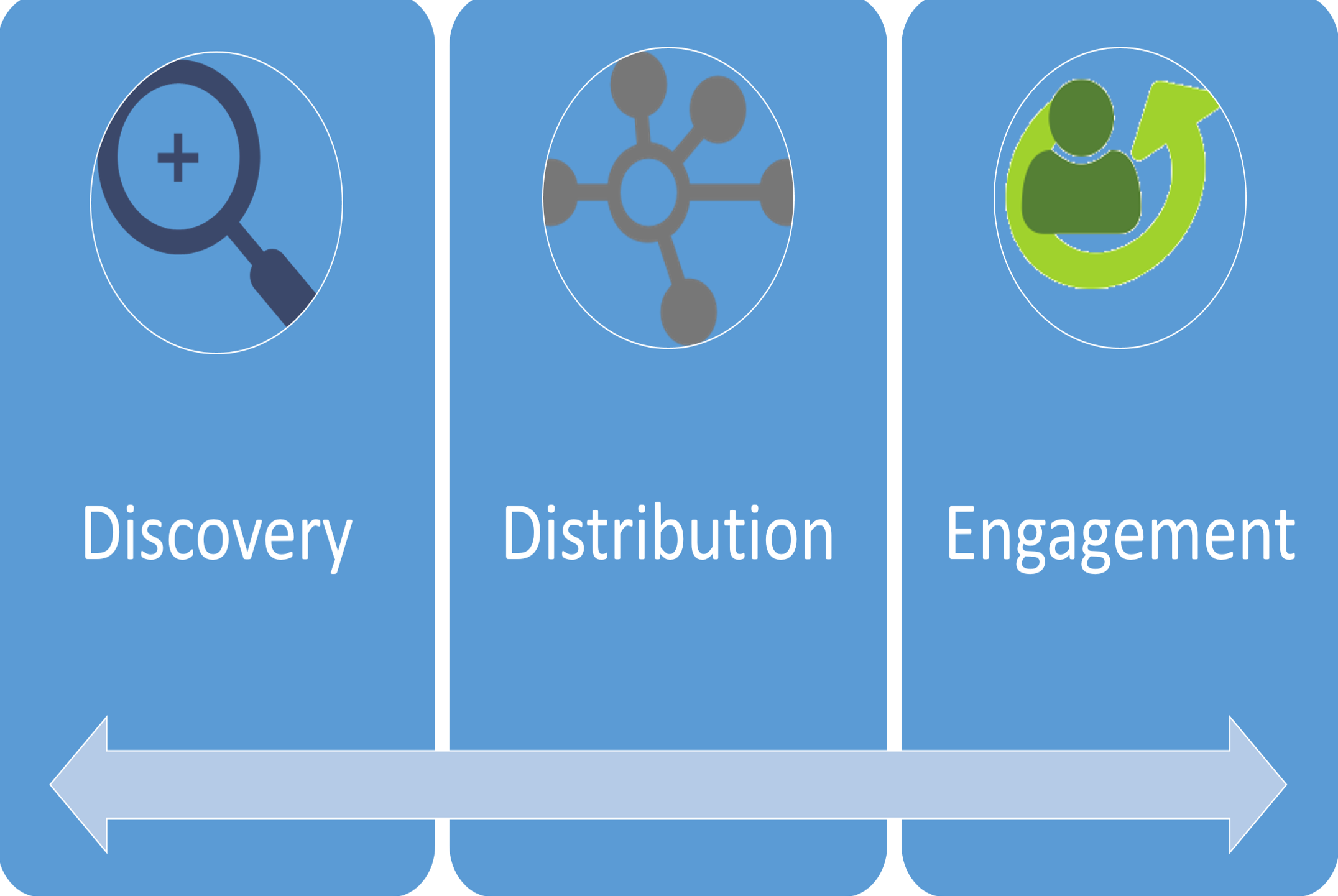
The first part of the problem is just discovery – people getting to know about their product.

The second part of the problem is distribution – people trying their product.

The last and most challenging part of the problem is engagement – people using their product frequently.

Discovery Distribution and Engagement

The 3 problems are distinct enough to have different people responsible for them at your startup. Typically, the discovery is a “marketing” effort, distribution is a “sales” effort and engagement is a “product” effort.

New startups, especially consumer (eCommerce) are finding that being on the app store alone is only solving the distribution effort, not the discovery or the engagement problems.

SaaS companies are finding that discovery can be solved by SEO and SEM, and distribution with “freemium” pricing, but engagement is their toughest challenge.

Finally games have always found that engagement is their biggest challenge.

Depending on your company, and the market, there are some criteria to keep in mind when you are trying to decided where to “spend” your time and energy. Then using a large company in the space to solve that problem is the best way to grow fast.

So, if discovery is a problem, then I’d suggest listing on multiple marketplaces and directories and getting the word out via customers. If there is a large company in the space and they have an API or marketplace, list your product on both. The rising tide of customers will lift your boat as well.

If distribution, however is the problem, then ensuring easy “provisioning” on the larger company’s platform will help the most.

Finally, to solve the engagement issues, making API tie-ins to a larger company’s product – e.g. using Line’s API for new stickers or in app purchases will help.

If you have examples of how you have leveraged a larger company to make it easier to discover, distribute or get user engagement, I’d love to hear from you.

How to conduct and document a “day in the life” audit of your customers? #startup

Once you understand how to segment your startups customers and the 3 most important steps to segmenting your customers, most people start to put a framework for validating customer segments. I tend to use the the Kanban method for Continuous Visible Customer development, which allows me to keep iterating on customer’s problems, pain points, and validating key assumptions we made.

One of the most important challenges that startups face is one of getting their users time or attention. For B2B startups besides the time,they also have to help save money or increase revenues, etc.

Time, for most people is rather hard to convince people to find. Even if you believe they do have it, users are unlikely to commit unless it entertains them (games, media) or it saves them more time (apps, eCommerce, etc).

The best way to understand how a product will add value to your users is to do a time and activity audit of your customers.

The output of your time and activity audit is to come up with your a) product value proposition, roadmap and be the north star for new features b) be the guide to help target your marketing efforts and c) help your sales persona mapping.

Day in the Life of a PR Associate

Here is the final output of the day in the life audit for BuzzGain, and the visualization I used to talk about the day in the life.

Day in the Life Audit Drives Product Direction

While the final output of the day in the life looks pretty, the process to gather the data and come up with the analysis is anything but.

There are 3 possible ways for you to collect and organize the day in the life data:

1. The increment method: In this approach, you have to “shadow” your users for a day and document every 15 / 30 minute increments. I used this for 3 users on 3 different days and did it in 30 minute increments. This was done so I could understand where they ate, who they worked with, when they had meetings, what “activity” they performed, etc. I would color code the activities into 3 (meetings, work and other – red, black and blue worked for me on a simple print out that I got from Outlook.

Daily Calendar
Daily Calendar

2. The mini-milestone method: In this approach, you are unable to shadow the customer, but you meet them 3 times – early before they start their day, afternoon at lunch and late afternoon before they leave for home. You are trying to get a highlight of the key time “blocks” and activities they spent time on. Do this with at least 5-7 users, instead of 3 if you are adopting the previous method, since users either forget or lie to make themselves sound more busy and important than they actually are.

3. The prioritized activity method: In this technique, you ask your users for their top goals, priorities or objectives for the period they are measure – monthly, quarterly or annually and the amount of time they have to spend to achieve those priorities. Then you can check in for 3-4 weeks, every week to see if the major “buckets of their time” are being spent towards achieving those priorities and what activities are contributing towards achieving those. This is typically done when your users are senior-level executives.

3 bonus tips for you during this process:

1. Your audit helps recruit your users as well (they can be beta customers later), so think of this process and the exercise as a value-added pursuit that you can offer for busy people to help them get control of their time.

2. Most “business” users spend a lot of time in meetings. In fact I wont be surprised if over 30% of folks tell you they go from meeting to meeting and only get work done late at night or early morning when “they have time for themselves”. Document the person(s) they meet with. It will help you with possibly “adjacent” markets later.

3. Documenting this helps your targeting and marketing efforts as well, so to ensure you can action it, document the “outside” the lines time-spent such as where they eat, when they take a break (to check FB, Twitter, etc.)

Who should you raise money for your #startup from if you had a choice?

I got a question from a friend Abhinav Sahai, as a follow up to my post “Does who you raise money from limit or grow the size of your ambition?”

What are the parameters that one should look at when choosing ‘who’ to raise money from? 

I am going to give you the easy answer first to the question. This is based on my observation that most entrepreneurs find it extremely hard to raise money for any number of reasons – positioning, not being in the network, not having sufficient traction, etc.

The answer is “Whoever is willing to give it to you”.

For over 80% of entrepreneurs that answer should be sufficient, unfortunately.

Lets assume though that you are in a position to receive interest from multiple investors and you have to make a choice. Or you are going about your fund raise in a strategic fashion and are looking to target specific investors who you’d like to bring on board at your startup.

The overarching theme to address this question is to bring folks who provide “Smart Capital“.

Most investors will give you money. That’s why they are an investor.

What you need in addition to the capital is what you should be looking to get from investors if you have the choice.

1. In some cases that might be connections and networks – to other investors, to potential customers, partners or future employees.

2. In other cases it might be expertise and insights – how to address questions that you will face while you scale and grow your startup.

3. In still other cases it  might be credibility and advice – being associated with top folks in your industry gives you a leg up over others.

4. In still other cases you might just want someone you can trust and sound ideas off. Knowing that your startup journey is going to be long and lonely means you need folks to help keep your morale up or to help you gain perspective.

They may be more things you might need in addition to capital, but most will fall into these 3-4 buckets.

Typically most folks will tell you that they can bring their expertise and connections. 

If you can be strategic about your fund raising (meaning you have good runway, or have great traction), then I’d highly recommend you look at your fundraising as a project that the CEO undertakes herself.

It will take about 3-6 months (elapsed time) from start to finish, so you should be willing to be patient, and consistently follow up as with any strategic project.

So the question then becomes how do you gauge if someone has expertise or connections?

The simple test is to ask them questions you face daily and look for depth of the answers, the breadth of their knowledge and the ability for them to customize their learning to your needs. That will give you a sense for their expertise.

The depth and breadth of their network is also easy to test – ask them to introduce you to 2-3 people you have been trying to meet to help validate your plan.

Above all I’d highly recommend you reference check. Talk to others in their network who they have invested with or other entrepreneurs they have invested in to get a sense for the investor.

The most critical question you can ask is how they respond to tough situations. 

100% of all startups go to hell and back before they are a success or a failure. When you have supportive investors to help you along the hard journey, it will be a lot less stressful.

The analogies and words people use in your startup meetings define your culture

As a founder, it is important to define and constantly manage / prune your company culture. Why? It defines your growth, who you hire and how you respond to situations.

Most founders don’t understand, though, what the company’s culture really is. When you have more than a few dozen people, things change dramatically if you are not constantly pruning and hiring the right folks. Even the best leaders have a little more than 50% batting average when it comes to hiring stars, so it is no surprise that culture changes at a startup quickly if it is not nurtured.

What is then the best way to understand what your company’s culture is and how it manifests itself in your interactions?

The best way I have found you can understand your company’s culture is attend a critical kickoff meeting for a key project for every team, every so often.

Not as a contributor or a participant, but as an observer.

Sometimes folks in the room will be cautious about having the founder attend their meetings and be likely guarded in that meeting, so I’d recommend you ask to be on the conference call, not in person. Most people tend to forget folks on the conference call, and tend to be their natural self.

Then look for key words that people use to describe actions, situations, responses and milestones.

For example, at Microsoft teams use the words rhythm, cadence, muscle memory and “landing things” a lot on the sales side of the house. On the engineering side it tends to be “shipping bits”, agile, “landing things” and cadence a lot.

It is very useful to understand where those words come from and what people believe in when they are confronted with situations. They also though, define the culture of the organization.

As instrumental as these words are in understanding what people value, it is also indicative of what gets ignored.

The best way to have an understanding of the culture is to ask questions about quality, deadlines and budget.

These items will give you the best response into the psyche of the organization.

Another thing to look for is the analogies that people use to describe situations.

Most sales teams will use sports analogies (for example you will hear at Microsoft about “hail Mary” effort to secure a difficult customer effort by end of the quarter). Engineering teams tend to (at Microsoft at least) use science analogies – (for example you will hear frequency and amplitude of releases, and the signal to noise ratio of feature requests).

Some of these analogies are truly regional and defined by background, but once in a while, when you have a new leader who wants to redefine the culture they start to use different and new analogies, which stay for much longer than their tenure.

As a founder the best way to have these “grapevine” stories stick is to use analogies that folks will adopt because it creates a sense of “insider knowledge” or “tribal power”. It is also the best way to ensure that your culture has a cult following.

Accelerators, more than seed funds have created the glut in early stage companies

There are 3 major trends that have driven startup formation over the last 7 years.

First the cost of infrastructure, thanks to AWS has dropped from hundreds of thousands of dollars to hundreds of dollars – 3 orders of magnitude.

Second, the number of seed investors has gone up 5 fold, from 35 to over 250 now.

Third the number of accelerator programs has gone from < 10 to over 635 in the US alone.

The number of startups in technology has remained though constant, at about 20K to 30K per year from the US alone. There has been a slight increase, but not by much. So what gives?

Some questions – has the failure rate increased? The anecdotal evidence is yes, but the real data is inconclusive.

Are startups talking more time to mature? I call maturity as time to get to series A from the time they were formed. If you look at 2007 data, the time to get to VC series A funding (crunchbase data) was 2.2 years.

If you look at 2014 data, the time to get to series A has dropped to 1.6 years.

The size of the rounds have gotten higher, as startups are taking in more money.

The number of side projects (indicated by participation in hackathon’s, which is a proxy but not an easy to measure metric, has increased dramatically by 400%.

So, AWS has allowed you to really reduce the cost of experimenting, more than building a startup alone.

If you look at 2007 data and see the number of seed funded companies that got VC funding as a percentage, the % has reduced by 2014 – largely because there are a lot more companies getting seed funding.

The real difference is the accelerators in the US – they have gone from bringing out 250 companies in 2007 to over 2000 in 2014.

That’s the big (4 times the number of early stage companies) change from 2007.

Accelerators are causing the glut in startups getting in front of institutional investors more than angel funds.