
“Will AI replace Adobe?”
This has been the dominant narrative for two years. Generative image tools, text-to-video, AI design assistants — the assumption being that someone with a better model wins the creative market and Adobe becomes irrelevant.
Adobe’s move this week is a direct answer to that narrative. And the answer is: we’re not playing that game.
What actually happened
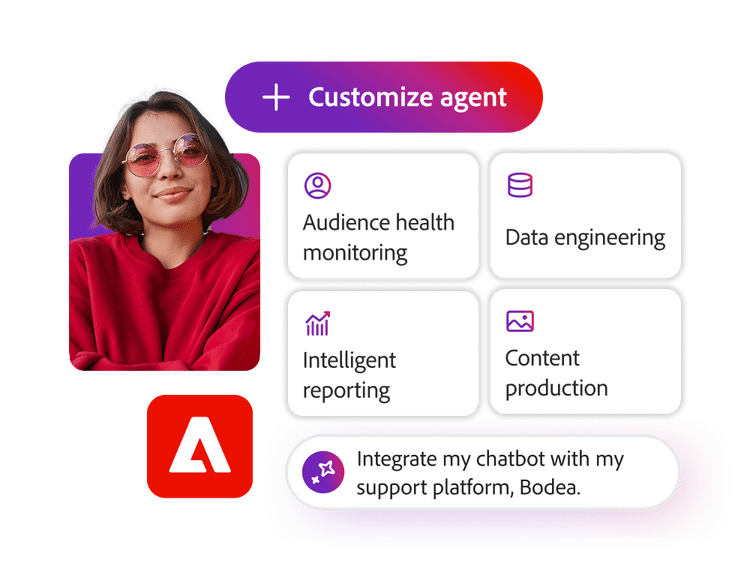
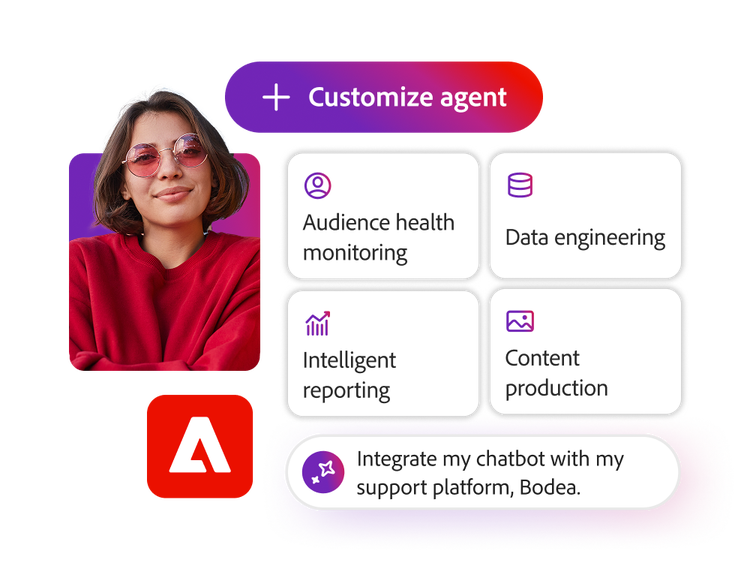
At Adobe Summit 2026, Adobe unveiled CX Enterprise Coworker — an agentic AI platform for customer experience orchestration. Not a better image generator. Not a smarter Firefly. An orchestration layer.
CX Enterprise Coworker doesn’t just generate content. It plans campaigns. Coordinates other AI agents. Executes workflows across systems. Monitors signals and recommends next-best actions in real time — all within defined business goals, with humans kept in the loop.
Simultaneously, Adobe announced a strategic partnership with NVIDIA — specifically to build CX Enterprise Coworker on NVIDIA’s Agent Toolkit and OpenShell secure runtime. OpenShell creates isolated sandboxes with strict policies around data access, network reach, and privacy boundaries. It can run on-premises or in the cloud.
And the major agency networks — dentsu, Havas, Omnicom, Publicis, Stagwell, WPP — are standardizing on CX Enterprise.
Read those three sentences together. That’s not a product announcement. That’s a platform strategy.
This is orchestration, and not AI forAI’s sake
There’s a meaningful difference between a company that uses AI to generate things and a company that controls how AI is used inside an enterprise.
OpenAI can generate a campaign. Adobe decides if it actually goes live.
That’s a fundamentally different position in the stack. And it’s the position enterprises actually need filled.
Because enterprises don’t just need intelligence. They need:
- Governance — who approved this campaign before it went out?
- Approval workflows — what are the sign-off gates?
- Brand control — does this match our identity standards?
- Auditability — what AI touched this, and when?
These are not features. These are the reasons AI doesn’t get deployed at scale inside large organizations. The model quality is not the bottleneck. The governance infrastructure is.
Adobe has 20+ years of enterprise relationships, deeply embedded in marketing and creative workflows, with procurement relationships that span the Fortune 500. It understands, better than almost anyone, what it takes for a creative or marketing tool to survive a corporate IT review.
That institutional knowledge is not something a foundation model provider can replicate quickly.
The NVIDIA partnership is the tell
On the surface, the NVIDIA partnership looks like a compute deal. Better GPUs for better Firefly models. Faster inference. That kind of thing.
It’s not. Or at least, that’s not the interesting part.
NVIDIA OpenShell — the runtime Adobe is building on — is an enterprise agent governance layer. It creates isolated execution environments with strict data access policies. It can run on-premises. It integrates with Cisco, CrowdStrike, and Microsoft Security as a validation layer.
Adobe is not partnering with NVIDIA to get faster models. Adobe is partnering with NVIDIA to get deployable infrastructure — the kind that regulated industries, global enterprises, and government customers can actually use.
At GTC 2026, NVIDIA’s thesis was explicit: the era of AI agents will be larger than the era of AI models, and NVIDIA intends to own the platform layer of that transition the way it already owns the hardware layer of the current one. Adobe is making the same bet in the enterprise marketing and creative stack.
This is the move from “tools” to “infrastructure.”
Why this is a defensible position
The companies that get disrupted by AI are the ones whose value was in producing outputs — content, images, analysis, code. The outputs are now cheap. If your moat was “we produce this faster or better,” a sufficiently capable model eliminates that moat.
The companies that don’t get disrupted are the ones whose value is in controlling how outputs flow through organizational processes. Approval gates. Brand governance. Workflow orchestration. Audit trails. These are not things a model replaces. They are the layer above the model that determines what actually happens.
Adobe is positioning itself as that layer.
If you control how AI is used inside the enterprise — what gets generated, what gets approved, what gets published, what gets measured — you don’t get disrupted by AI. You become the layer everything runs through.
Salesforce is trying to do this with Agentforce. ServiceNow is doing it for IT workflows. SAP is doing it for enterprise transactions. Adobe is doing it for creative and marketing.
The pattern is consistent: established enterprise software companies are racing to insert themselves as the orchestration layer before the foundation model providers figure out that they want to be there too.
What Adobe hasn’t solved yet
None of this means Adobe has won. A few honest observations:
The adoption bottleneck for agentic AI at enterprise scale is not technology — it’s operating model. Analysts watching Adobe Summit 2026 noted that the companies struggling with CX Enterprise aren’t struggling with the AI capabilities. They’re struggling with the internal workflows, approval processes, and organizational structures that haven’t been redesigned for continuous AI-driven execution. Adobe is selling a product that requires its customers to also change how they work. That’s a harder sell than it looks from the outside.
Data maturity is the real dividing line. The orchestration layer is only as good as the data flowing through it. Adobe’s tools connect to Real-Time CDP, Customer Journey Analytics, Journey Optimizer — but the enterprises that will get the most value are the ones with clean, connected data infrastructure. Many large enterprises don’t have that yet. Adobe can’t fix that for them.
And the foundation model providers are not standing still. Anthropic, OpenAI, and Google are all building enterprise deployment features, governance tools, and workflow integrations. The window for Adobe to establish the orchestration layer before the model providers claim it is real but not infinite.
The bigger pattern
What Adobe is doing is the same thing every enterprise software company worth watching is doing right now: reframing from “we help you do X” to “we control how AI helps you do X.”
The intelligence layer is becoming a commodity. The control layer — governance, orchestration, auditability, brand compliance — is where enterprise value is accumulating.
The companies that understand this early enough to build the infrastructure before the model providers build it themselves will own the next decade of enterprise software.
Adobe’s CX Enterprise Coworker is the first move in that game that actually makes sense for where they sit in the stack.
Not sure they’ve won yet. But this is the right move to make.
Discover more from Mukund Mohan
Subscribe to get the latest posts sent to your email.
