
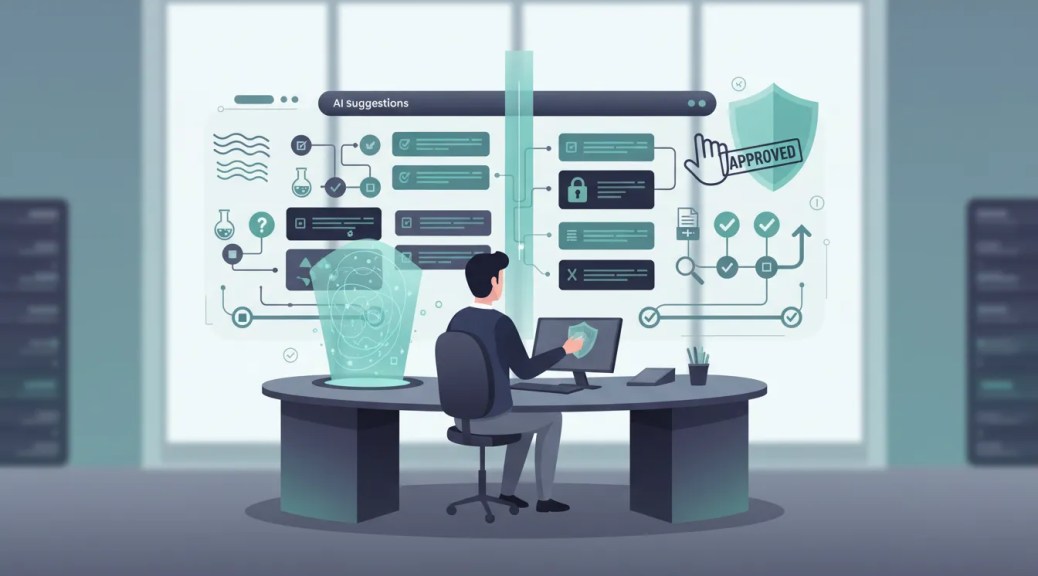
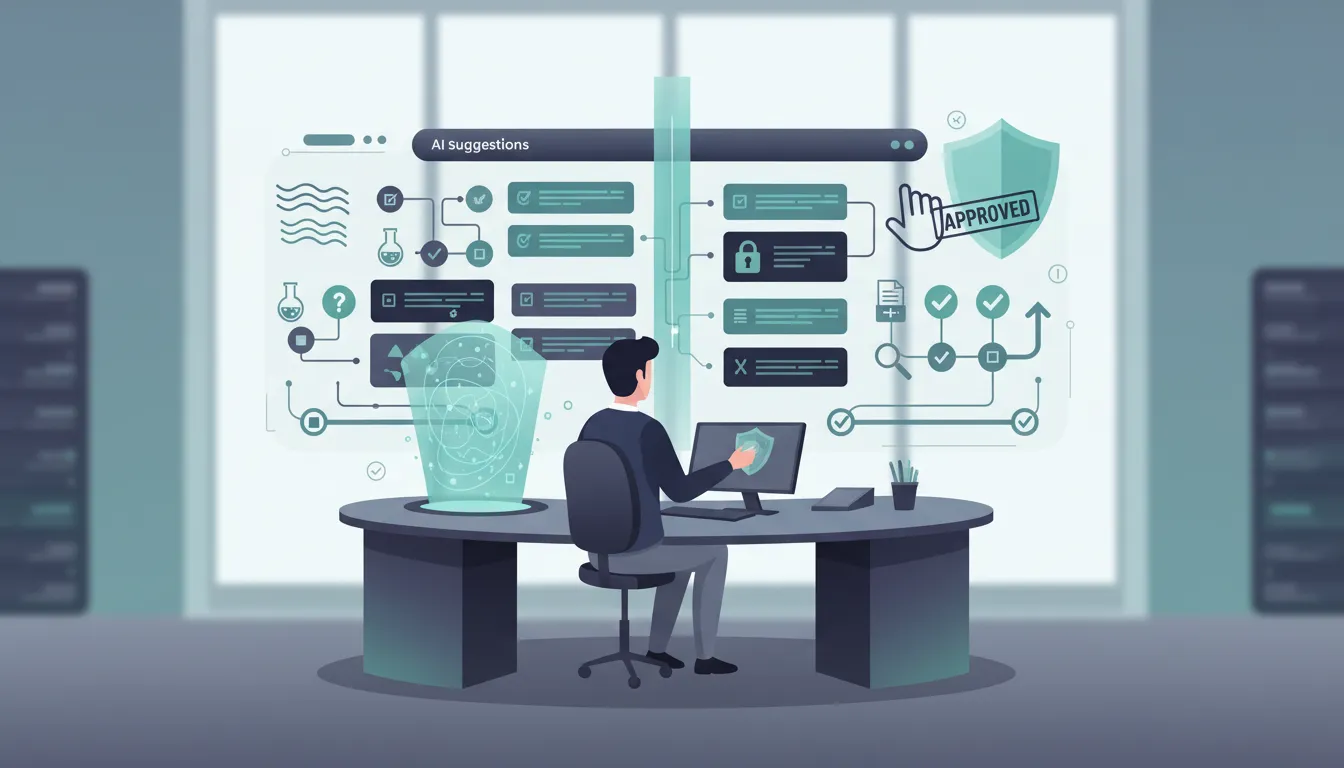
Claude, AI Vibe Coding, Enterprise Coding is no longer a niche topic. It is becoming a practical question for teams that want to ship faster without losing control of quality, stability, or security. I think the core challenge is simple: if AI can produce larger and larger chunks of software work, I cannot stay productive by insisting on reading and hand-authoring every line forever.
That does not mean I should trust generated code blindly. It means I need a better operating model. In practice, responsible AI vibe coding in enterprise coding is less about ignoring engineering discipline and more about shifting that discipline upward. I spend less time typing implementation details and more time defining requirements, boundaries, tests, and verification.
This is the approach I use to make Claude, AI Vibe Coding, Enterprise Coding useful in real systems.
Table of Contents
- What AI vibe coding actually means
- Why this matters now
- The mindset shift: act like the AI’s product manager
- Where AI vibe coding belongs in enterprise systems
- The biggest hidden problem: technical debt is hard to verify from the outside
- A practical workflow for Claude, AI Vibe Coding, Enterprise Coding
- How I verify production safety without reading every line
- Common mistakes in AI vibe coding for enterprise teams
- Security considerations
- Can AI vibe coding help engineers learn, or does it weaken skills?
- Best practices checklist
- Final takeaway
- What is AI vibe coding in enterprise software?
- Is Claude safe to use for production coding?
- What parts of a codebase are best for AI vibe coding?
- How do I review AI-generated code without reading everything?
- Does AI vibe coding replace software engineers?
What AI vibe coding actually means
Many people use AI for autocomplete, snippets, refactors, or bug fixes. That is helpful, but I do not consider all of that true vibe coding.
For me, AI vibe coding starts when I stop staying in a tight line-by-line feedback loop and allow the model to own larger blocks of implementation. The important distinction is that I may not fully inspect every generated detail before moving forward. I focus on whether the product behavior is correct, whether the change is verifiable, and whether the risk is contained.
That distinction matters in enterprise coding because the question is not whether AI can write code. It already can. The real question is whether I can safely depend on it for meaningful production work.
Why this matters now
The useful unit of work AI can handle keeps growing. Today, it may be a feature, a refactor, or a bounded implementation. Over time, it will become harder for me to justify a workflow where human review scales linearly with machine output.
That is why Claude, AI Vibe Coding, Enterprise Coding should be treated as an operating shift, not just a tooling upgrade. If I remain the bottleneck for every line, I eventually lose the speed advantage these systems create.
At the same time, enterprise environments have real constraints:
- Security requirements
- Reliability expectations
- Architecture consistency
- Long-term maintainability
- Auditability and accountability
So the goal is not “trust the AI.” The goal is “design work so it can be trusted appropriately.”
The mindset shift: act like the AI’s product manager
The most useful mental model I have found is this: when I use Claude for larger tasks, I am effectively acting as its product manager.
If I gave a junior engineer a vague sentence like “build this feature,” I would not expect great results. I would provide context, constraints, examples, acceptance criteria, and references to similar patterns in the codebase. I need to do the same here.
That means my job in Claude, AI Vibe Coding, Enterprise Coding is to provide:
- Clear requirements for what success looks like
- Relevant codebase context such as files, classes, or patterns to follow
- Constraints like performance, security, or style boundaries
- Verification targets including tests, expected inputs, and expected outputs
I often get better results by spending meaningful time assembling the right context before asking for implementation. That preparation is not overhead. It is the work that makes the output reliable.
Where AI vibe coding belongs in enterprise systems
The safest place to start is not the center of the architecture. It is the edge.
I think in terms of leaf nodes in the codebase. These are parts of the system that sit near the edge of product functionality and do not serve as foundations for many future changes. If technical debt appears there, it is more contained.
Good candidates include:
- Isolated UI features
- One-off internal tooling
- End-user enhancements that do not define core platform behavior
- Self-contained workflows with stable interfaces
Poor candidates include:
- Core architecture
- Shared frameworks and abstractions
- Security-sensitive flows
- Payment logic
- Authentication or authorization layers
- Foundational data model changes
This is one of the most important filters in Claude, AI Vibe Coding, Enterprise Coding. I can move fast where risk is local. I should move carefully where future extensibility matters most.
The biggest hidden problem: technical debt is hard to verify from the outside
Many production concerns can be validated externally. I can test inputs and outputs. I can run stress tests. I can check whether a feature behaves correctly. I can confirm whether a system remains stable under load.
Technical debt is harder.
I usually cannot fully measure maintainability, extensibility, or architectural cleanliness without understanding the implementation itself. That is why I avoid overusing AI vibe coding in the deepest shared layers of a system. Those are exactly the places where invisible debt hurts later.
So I use a simple rule:
The less verifiable the quality attribute is from the outside, the more human architectural judgment it needs.
A practical workflow for Claude, AI Vibe Coding, Enterprise Coding
1. Explore before generating
If I am unfamiliar with a part of the codebase, I first use AI to help me map it. I ask where a certain behavior lives, what similar features exist, and which files or classes are relevant. This helps me build a mental model before implementation begins.
2. Build a planning prompt
I collect the requirements, constraints, examples, and target files into one working plan. That plan can come from a back-and-forth exploration process. The quality of this artifact often determines the quality of the final code.
3. Avoid over-constraining the implementation
If I care deeply about specific design choices, I say so. If I only care about the outcome, I leave flexibility. Models tend to perform better when I do not micromanage every implementation detail unnecessarily.
4. Ask for verifiable tests
I prefer a small number of understandable end-to-end tests over a large set of implementation-specific tests. A happy path plus one or two meaningful error cases is often a strong starting point.
5. Review the most important surface first
When I do inspect generated output, I often start with the tests. If the tests reflect the intended behavior and they pass, my confidence rises quickly. If the tests are too narrow or too tied to internals, I adjust them.
6. Compact or restart when context gets messy
Long sessions can drift. Names change. patterns become inconsistent. I get better results when I pause at natural milestones, summarize the plan, and continue in a cleaner context.
7. Reserve deep review for high-value areas
I do not need the same review intensity everywhere. I focus human review where extensibility, reuse, or risk is highest.
How I verify production safety without reading every line
Responsible Claude, AI Vibe Coding, Enterprise Coding depends on verifiability. If I cannot inspect every implementation detail, I need checkpoints that still let me trust the result.
The most useful verification methods are:
- Acceptance tests that describe desired behavior clearly
- End-to-end tests with understandable expected outcomes
- Stress tests to evaluate stability over time
- Human-verifiable inputs and outputs so correctness is observable without deep internals review
- Targeted human review of the parts most likely to shape future architecture
This is the bridge between speed and safety. I do not need omniscience. I need enough evidence to justify confidence.
Common mistakes in AI vibe coding for enterprise teams
Treating AI like autocomplete with no planning
Larger tasks need more setup, not less. If I skip context gathering, I usually get lower-quality output and more rework.
Using it on core architecture too early
The fastest way to create future pain is to let generated code shape foundational abstractions without careful human judgment.
Assuming non-technical users can safely build important systems alone
For low-stakes projects, experimentation is fine. For enterprise coding, someone still needs enough technical judgment to ask the right questions and identify dangerous gaps.
Confusing working demos with production readiness
A feature that appears to work can still have stability, maintainability, or security problems. Enterprise coding requires more than a successful happy path.
Writing overly specific tests
If tests simply mirror the generated implementation, they stop being useful as independent checks.
Security considerations
Security is one reason I do not believe all AI-generated software should go straight into production. In enterprise coding, secure use depends heavily on scope and oversight.
I am more comfortable when the task is:
- Offline or isolated
- Limited in blast radius
- Easy to validate from the outside
- Guided by someone who understands the system risks
I am less comfortable when the task touches secrets, access control, payments, or public attack surfaces unless the human operator knows exactly what must be constrained and checked.
That is another reason the “AI as employee” analogy matters. Enterprise coding still needs technical leadership. The model can accelerate execution, but it does not remove the need for judgment.
Can AI vibe coding help engineers learn, or does it weaken skills?
I think it can do both, depending on how I use it.
If I passively accept everything, I may learn very little. If I use the tool actively, I can learn faster by asking why a library was chosen, what alternatives exist, and how a pattern works. I can also explore more architecture and product decisions in less calendar time because iteration is cheaper.
That means Claude, AI Vibe Coding, Enterprise Coding does not automatically weaken engineering ability. It changes where effort goes. The risk is not AI itself. The risk is intellectual passivity.
Best practices checklist
- Use AI vibe coding first on leaf-node features
- Provide rich context before implementation
- Define acceptance criteria in plain language
- Prefer end-to-end tests over deeply implementation-specific tests
- Design outputs so humans can verify them easily
- Run stress tests where stability matters
- Apply heavier human review to shared or extensible components
- Restart or summarize context when sessions drift
- Do not treat a successful demo as proof of production readiness
Final takeaway
I do not think the future of enterprise software is humans inspecting every generated line forever. I think the winning model is to forget less about the product than about the code. In other words, I stay accountable for requirements, risk, correctness, and architecture even when AI handles more implementation.
That is what makes Claude, AI Vibe Coding, Enterprise Coding viable. The value is not reckless speed. The value is disciplined delegation.
What is AI vibe coding in enterprise software?
It is a workflow where I let an AI system implement larger chunks of software work instead of staying in a line-by-line coding loop. In enterprise software, the key is to pair that speed with clear requirements, bounded scope, and strong verification.
Is Claude safe to use for production coding?
It can be used responsibly, but not everywhere equally. I am most comfortable using it on isolated features, edge components, and systems with clear tests and observable outputs. I apply more caution to core architecture, security-sensitive logic, and shared abstractions.
What parts of a codebase are best for AI vibe coding?
Leaf-node areas are the best starting point. These are features or components that sit near the edge of the system and are unlikely to become core building blocks for future work.
How do I review AI-generated code without reading everything?
I rely on acceptance criteria, end-to-end tests, stress tests, and human-verifiable inputs and outputs. I still do targeted review on the highest-risk areas, but I do not assume every line needs identical scrutiny.
Does AI vibe coding replace software engineers?
No. It changes the job. Engineers still provide architecture, product judgment, security awareness, and verification. The implementation burden shifts, but accountability does not.
Follow on Linkedin |
|
I post short takes daily on Linkedin |
| Follow on Linkedin |
Discover more from Mukund Mohan
Subscribe to get the latest posts sent to your email.
