Category Archives: investing

5 Ascending Levels of Intellect

According to Einstein

Einstein

Always write your thesis down. If it takes more than a short paragraph, there is a fundamental problem. If it requires me to fire up Excel, it is a big red flag that strongly suggests that I ought to take a pass.

Mohnish Pabrai

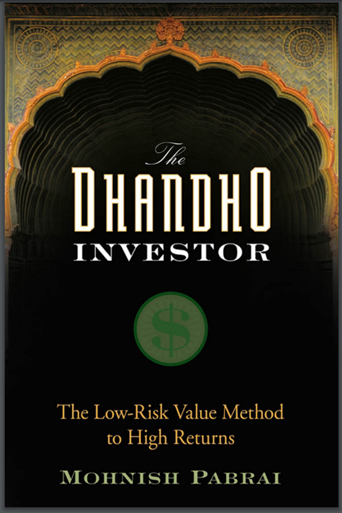
The Dhandho investor: Mohnish Pabrai – Notes and Quotes

Notes and Quotes from The Dhando Investor – Mohnish Pabrai, published 2007, 209 pages.

There were virtually no Patels in the United States just 35 years ago. Less than one in five hundred Americans is a Patel. Over half of all the motels in the entire country are owned and operated by Patels.

Patels, as a group, today own over $40 billion in motel assets in the United States, pay over $725 million a year in taxes, and employ nearly a million people.

Dhan comes from the Sanskrit root word Dhana meaning wealth. Dhan-dho, literally translated, means “endeavors that create wealth.

Dhandho is all about the minimization of risk while maximizing the reward.

If an investor can make virtually risk-free bets with outsized rewards, and keep making the bets over and over, the results are stunning.

The first few Patels arrived from Africa in the early 1970s. The reason we end up with concentrations of ethnic groups in certain professions is that role models play a huge role in how humans pick their vocations.

“Few Bets, Big Bets, Infrequent Bets.”

“Heads, I win; tails, I don’t lose much!”

The Dhando approach

  1. Focus on buying an existing business.
  2. Buy simple businesses in industries with an ultra-slow rate of change.
  3. Buy distressed businesses in distressed industries.
  4. Buy businesses with a durable competitive advantage—the moat
  5. Bet heavily when the odds are overwhelmingly in your favor.
  6. Focus on arbitrage.
  7. Buy businesses at big discounts to their underlying intrinsic value.
  8. Look for low-risk, high-uncertainty businesses.
  9. It is better to be a copycat than an innovator.

We see change as the enemy of investments . . . so we look for the absence of change. We don’t like to lose money. Capitalism is brutal. We look for mundane products that everyone needs.1 —Warren Buffett

Never count on making a good sale. Have the purchase price be so attractive that even a mediocre sale gives reliable results. —Warren Buffett

The entrance strategy is more important than the exit strategy. —Eddie Lampert

Arbitrage is as an attempt to profit by exploiting price differences in identical or similar financial instruments.

Minimize downside risk before ever looking at upside potential.

The psychology of money – notes and quotes

This is not so much a book review as a summary of key quotes and my notes of the book “The psychology of money” by Morgan Housel

Financial outcomes are driven by luck, independent of intelligence and effort. Financial success is not a hard science. It’s a soft skill, where how you behave is more important than what you know. I call this soft skill the psychology of money. The aim of this book is to use short stories to convince you that soft skills are more important than the technical side of money.

To grasp why people bury themselves in debt you don’t need to study interest rates; you need to study the history of greed, insecurity, and optimism. To get why investors sell out at the bottom of a bear market you don’t need to study the math of expected future returns; you need to think about the agony of looking at your family and wondering if your investments are imperiling their future.

Be careful who you praise and admire. Be careful whom you look down upon and wish to avoid becoming.

Therefore, focus less on specific individuals and case studies and more on broad patterns.

You’ll get closer to actionable takeaways by looking for broad patterns of success and failure. The more common the pattern, the more applicable it might be to your life.

Nothing is as good or as bad as it seems.

The hardest financial skill is getting the goalpost to stop moving.

“Enough” is realizing that the opposite—an insatiable appetite for more— will push you to the point of regret.

There are a million ways to get wealthy, and plenty of books on how to do so. But there’s only one way to stay wealthy: some combination of frugality and paranoia.

Getting money requires taking risks, being optimistic, and putting yourself out there. But keeping money requires the opposite of taking risk. It requires humility, and fear that what you’ve made can be taken away from you just as fast. It requires frugality and an acceptance that at least some of what you’ve made is attributable to luck, so past success can’t be relied upon to repeat indefinitely.

More than I want big returns, I want to be financially unbreakable. And if I’m unbreakable I think I’ll get the biggest returns, because I’ll be able to stick around long enough for compounding to work wonders.

Planning is important, but the most important part of every plan is to plan on the plan not going according to plan.

A barbelled personality—optimistic about the future, but paranoid about what will prevent you from getting to the future—is vital.

“I’ve been banging away at this thing for 30 years. I think the simple math is, some projects work and some don’t. There’s no reason to belabor either one. Just get on to the next.” —Brad Pitt accepting a Screen Actors Guild Award

Anything that is huge, profitable, famous, or influential is the result of a tail event—an outlying one-in-thousands or millions event. And most of our attention goes to things that are huge, profitable, famous, or influential. When most of what we pay attention to is the result of a tail, it’s easy to underestimate how rare and powerful they are.

Money’s greatest intrinsic value—and this can’t be overstated—is its ability to give you control over your time. To obtain, bit by bit, a level of independence and autonomy that comes from unspent assets that give you greater control over what you can do and when you can do it.

Controlling your time is the highest dividend money pays.

Wealth is what you don’t see.

The first idea—simple, but easy to overlook—is that building wealth has little to do with your income or investment returns, and lots to do with your savings rate.

Past a certain level of income, what you need is just what sits below your ego.

Sunk costs—anchoring decisions to past efforts that can’t be refunded—are a devil in a world where people change over time.

“Every job looks easy when you’re not the one doing it” Jeff Immelt

Optimism is a belief that the odds of a good outcome are in your favor over time, even when there will be setbacks along the way.

The more you want something to be true, the more likely you are to believe a story that overestimates the odds of it being true.

Everyone has an incomplete view of the world. But we form a complete narrative to fill in the gaps.

The Electric Vehicle Revolution – a primer

Notes from my discussions with multiple industry analysts and reading many reports.

There are multiple changes happening with autombiles:

  1. Move to software-defined cars for “features” to be bought as subscriptions
  2. Move to electric vehicles from internal combustion engines
  3. Autonomous car technology
  4. Electrification of the charging network
  5. The growth of China as the leading EV and automobile producer (vs. Japan and Germany in the last 4-5 decades

The challenges:

  1. Availability of raw materials – Nickle, rare earths, etc.
  2. Supply chain security
  3. Affordability

In 2022, electric vehicles (EVs) took 11% global market
share (up from 6.5% in 2021), expecting 20% penetration by 2025
and the most aggressive for 100% by 2030.

Globally, we now expect battery electric vehicles (BEVs) to reach 40% penetration by 2030, and xEVs to reach 80% by 2035.

EV forecast calls for battery capacity to rise from ~600GWh in 2022 to 2,700GWh by end of 2030.

China has seen new energy vehicle (NEV) adoption become increasingly consumer-driven, with the country blowing past NEV penetration targets — the government sought to achieve ~20% penetration by 2025; it saw 23.5% in the first eight months of 2022. Chinese buyers seem to
favor domestic EVs over foreign (German and Japanese) brands though, leaving foreign OEMs potentially playing catch-up with domestic brands.

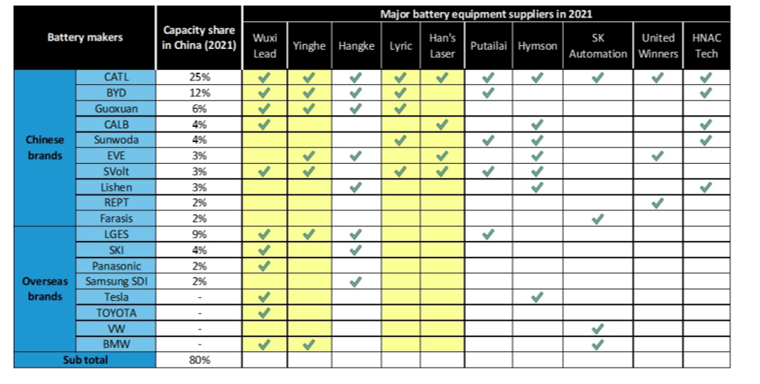
China represented close to 40% of the global battery
equipment market in 2021, up from 10%+ during 2016-19. Explosive growth over the past three years has been driven by sharply increasing investment in new energy industries.

Range anxiety over the switch from ICE to EVs has long been cited as a common impediment to greater EV adoption.

An introduction to Vector databases

In this post I will try to answer the questions:

  • What is a vector database?
  • Why use a vector database?
  • What are the benefits of using a vector database?
  • Types of Vector databases
  • How to choose a vector database
  • Use cases for vector databases

What is a vector database?

Vectors are mathematical representations of features or attributes. Each vector has a certain number of dimensions, which can range from tens to thousands, depending on the complexity and granularity of the data.

A vector database is a type of database that stores data as high-dimensional vectors.

Why use a vector database?

There are several reasons why you might want to use a vector database, including:

  • To store and manage large amounts of unstructured data.
  • To perform similarity searches on large amounts of data.
  • To build machine learning models.
  • To improve the performance of your applications.

What are the benefits of using a vector database?

There are many benefits to using a vector database, including:

  • High performance: Vector databases are designed to perform similarity searches on large amounts of data quickly and efficiently.
  • Scalability: Vector databases can be scaled horizontally to handle large amounts of data.
  • Flexibility: Vector databases can store and manage a variety of data types, including text, images, and audio.
  • Ease of use: Vector databases are easy to use and manage, even for users with limited database experience.

Types of vector databases

There are many different types of vector databases available, each with its own strengths and weaknesses. Some of the most popular vector databases include:

  • Milvus: Milvus is a vector database developed by Tencent AI Lab. It is designed for high-performance similarity search on large-scale vector data.
  • Pinecone: Pinecone is a vector database developed by PineconeDB. It is designed for storing and managing large amounts of unstructured data.
  • Vespa: Vespa is a vector database developed by Yahoo!. It is designed for high-performance search and analytics on large-scale text data.
  • Weaviate: Weaviate is a vector database developed by Weaviate. It is designed for storing and managing large amounts of vector data.
  • Vald: Vald is a vector database developed by MemSQL. It is designed for high-performance search and analytics on large-scale data.
  • Gsi: Gsi is a vector database developed by Google AI. It is designed for storing and managing large amounts of vector data.

How to choose a vector database

When choosing a vector database, there are a number of factors to consider, such as:

  • The size and type of data you need to store: Some vector databases are better suited for storing large amounts of data, while others are better suited for storing smaller amounts of data. Some vector databases are better suited for storing text data, while others are better suited for storing images or audio data.
  • The features and functionality you need: Some vector databases offer more features and functionality than others. For example, some vector databases allow you to build machine learning models, while others do not.
  • Your budget: Vector databases can range in price from free to thousands of dollars per month. It is important to choose a vector database that fits your budget.

Use cases for vector databases

Vector databases can be used for a wide variety of applications, including:

  • Image search: Vector databases can be used to build image search engines that can find similar images based on their visual content.
  • Product recommendations: Vector databases can be used to build product recommendation engines that can recommend products to users based on their past purchases and interests.
  • Text classification: Vector databases can be used to classify text documents into different categories, such as news, sports, or finance.
  • Natural language processing: Vector databases can be used to perform natural language processing tasks, such as sentiment analysis and machine translation.
  • Fraud detection: Vector databases can be used to detect fraud by identifying patterns of suspicious activity.
  • Drug discovery: Vector databases can be used to discover new drugs by identifying patterns in biological data.

Conclusion

Vector databases are a powerful new technology that can be used to store, manage, and search large amounts of unstructured data. If you are looking for a database that can handle the challenges of modern data, then a vector database is a great option.

What is a vector database? As explained by ChatGPT and Google bard $GOOGL

Presented without commentary first is my screenshot.

Bard does not want to help
ChatGPT knows the answer

I am now really curious why Google Bard won’t answer the question. It obviously knows the answer. Or Google search does know something.

What I think happened is that over a series of questions, which Google got consistently wrong I responded with a series of thumbs down responses.

That resulted in “high accuracy” mode of operation. So, now I mostly get “no response”.