Category Archives: investing

The future of Pricing and Packaging with Adam Hauff of Sentinel One

The conversation centers around Adam, a marketing professional deeply experienced in pricing, packaging, and monetization strategies, particularly in the cybersecurity and SaaS sectors. Adam shares insights into his career trajectory, the significance of pricing and packaging in go-to-market strategies, and how companies evolve to adopt specialized pricing roles, especially as they prepare for IPOs or scaling phases. He highlights the complexities of pricing new products, exemplified by OpenAI’s pricing missteps, and explains evolving pricing methodologies, including cost-plus, value-based, and the emerging outcome-based pricing.

The discussion further explores how SentinelOne, a well-known cybersecurity company, approaches revenue growth beyond sales scaling, emphasizing reducing friction, improving customer experience, and expanding into new markets or products through self-service and low-barrier strategies.

Adam articulates how AI, specifically large language models like ChatGPT, are changing individual productivity and organizational workflows. He illustrates practical AI uses from summarizing notes, generating project ideas, conducting research, to iterative content creation. However, he also notes AI’s limitations such as hallucinations and the challenge of integrating AI tools company-wide due to approval processes.

The conversation ends on an engaging note with Adam’s humorous anecdote about using AI to explore the improbable question of how long it would take to “eat” a cast iron skillet by cooking with it, which reinforces how AI can be a powerful “second teammate” for brainstorming and problem-solving when paired with human logic and oversight.

Highlights

  • 🔥 Adam’s career uniquely blends pricing, marketing, and go-to-market strategy expertise in cybersecurity SaaS.
  • 💰 Pricing and packaging become critical roles for scaling tech startups, especially around IPO readiness.
  • 🤖 AI tools like ChatGPT amplify productivity by assisting with research, communication, and iterative content creation.
  • ⚖️ Emergence of outcome-based pricing as an evolution beyond traditional value and cost-plus pricing models.
  • 🌍 SentinelOne’s growth strategy prioritizes reducing friction and enabling self-service to expand revenue channels sustainably.
  • 🚀 Companies are still adapting to AI integration at scale; individual use far outpaces organizational deployment.
  • 😂 Fun anecdote showcases AI’s ability to engage in complex, absurd queries and collaborate interactively with humans.

Key Insights

  • 📊 The importance of specialized pricing roles during scale-up phases: Adam stressed that hiring dedicated pricing professionals often happens during late-stage startup phases or IPO preparation. This is when pricing can no longer be “winged” by founders but requires systematic strategy to optimize revenue and market fit. Many companies could benefit from introducing pricing roles earlier to avoid “skeletons in the closet” and structural inefficiencies that stifle growth. This insight emphasizes maturity in pricing as a key factor in business scaling.
  • 💡 Pricing complexity in AI products reflects the unpredictability of user behavior: Adam’s commentary on OpenAI’s $200/month pricing mistake illustrates a larger problem—when launching novel AI-driven offerings, predicting user consumption and cloud costs is challenging. This unpredictability makes pricing pilots, iterative learning, and flexible price adjustments crucial. It also highlights that cost-plus pricing, while less favored, remains an important reference point to ensure product sustainability amid scaling user demand.
  • ⚙️ Outcome-based pricing represents the next evolutionary step beyond value-based pricing: Outcome-based pricing monetizes actual results achieved rather than anticipated value or simply usage. This model aligns incentives more closely with customer success but requires clearer metrics and sophisticated tracking. Adam’s view that this approach is an evolution rather than a replacement suggests organizations will adopt hybrid pricing models before fully transitioning, signifying a gradual shift in monetization philosophies.
  • 🔄 Expanding revenue beyond traditional sales requires reducing friction and enabling self-service models: Adam highlighted ways to grow revenue beyond just increasing sales headcount, such as enabling easier product access, trials, and bundled offerings that empower customers to explore solutions independently. This strategy allows companies like SentinelOne to scale revenue while controlling costs, entering new markets or verticals with lower barriers, and creating diversified monetization “engines.” This insight is essential for organizations aiming for hypergrowth without proportional increases in sales investment.
  • 🤝 Cross-functional collaboration is key to successful pricing and monetization initiatives: Adam’s role involves coordinating pilots and rolling out pricing changes with sales, marketing, operations, and internal teams to ensure organizational alignment. Pricing is not just a finance or marketing function but requires enterprise-wide buy-in, reinforcing that monetization strategy is foundational to broader go-to-market execution.
  • 🤖 AI significantly enhances individual productivity while presenting challenges for organizational adoption: Adam uses AI tools daily for note summarization, idea development, and project research, improving efficiency and creativity. However, organizational adoption lags due to concerns over AI hallucinations, content quality, and governance. This gap highlights the need for better frameworks, training, and AI governance in enterprises to fully leverage AI’s capabilities.
  • 🎭 Success with AI tools depends on curiosity and persistence rather than immediate perfection:Adam emphasized that users who gain the most from AI experimentation usually display curiosity and iterative usage, including trial and error. This mindset applies universally; AI’s limitations mean early abandonment forfeits its potential benefits. His approach of personal experimentation, including creative projects like writing children’s stories, demonstrates how familiarity with AI’s quirks fosters meaningful adoption.
  • 💬 The analogy of AI as a “second teammate” underscores its complementary role in decision-making: Adam described AI as both highly knowledgeable yet occasionally “stupid,” echoing the idea that AI needs human collaboration to check and guide its outputs. This interplay is crucial for realizing AI’s benefits while managing risks related to accuracy and context. It suggests the future workplace will emphasize symbiotic human-AI partnerships rather than replacement.
  • 😂 Humor and creative use cases reveal AI’s potential beyond standard business applications: The cast iron skillet experiment humorously highlights how AI can engage with intricate logical puzzles and help humans think through unconventional problems. Such playful interactions foster better understanding of AI’s capabilities and limitations, encouraging innovative use while serving as a reminder that AI requires human judgment to avoid absurd conclusions.
  • 📈 AI’s role at SentinelOne spans both product innovation and internal productivity: The company integrates AI and machine learning directly into cybersecurity offerings, enhancing customer SOC analyst efficiency. Internally, employees experiment with AI tools to improve research, data synthesis, and business operations. This dual application signals AI as a strategic asset not only in product development but also as a productivity multiplier, essential for tech companies competing on innovation.
  • 🧩 The evolving role of marketing now includes monetization strategies and revenue enablement:Adam’s broader remit beyond pricing packages involves creating new revenue channels that do not rely solely on increasing sales personnel, reflecting the shifting marketing landscape. Marketing intersects deeply with product packaging, pricing, partner enablement, and customer experience, positioning marketers as pivotal in holistic revenue growth strategies.
Overall, this conversation paints a comprehensive picture of how modern pricing and packaging intersect with marketing, AI adoption, and strategic revenue expansion in a high-growth, tech-driven environment. Adam’s practical and candid insights offer a roadmap for organizations navigating pricing complexities, AI integration, and sustainable growth initiatives in today’s dynamic market.

Why Bordy Might Be the Most Charming AI in Your Network (and What It Means for the Future of Marketing)

So I just got off this incredible conversation with Clark, who’s one of the driving forces behind Bordy – yes, that Bordy, the AI voice connector that everyone in the tech scene seems to be whispering about on LinkedIn and beyond. And let me tell you… this isn’t just another chatbot or networking gimmick. This is something else entirely.

Picture this: you DM an AI on LinkedIn.

It calls you. Not a form, not an email, not a survey—a literal voice call from an Australian-accented AI who somehow makes small talk feel less awkward than your last Bumble date. And after a short, easy chat, it says, “Hey, should I introduce you to someone?” Then boom—real intros to real people with actual context and mutual value. It’s like a super-connector friend who knows everyone, never forgets, and is always available.

Clark gave us the lowdown on how he landed at Bordie. His path wasn’t the traditional ladder-climbing story either—he went from building his own business, dipping into sales, doing a stint in VC, learning startup growth at a company called Reveal in Paris, and even doing B2B work at an e-commerce agency. Eventually, a cold DM to Bordie’s Head of Ops led him into the heart of this fast-moving AI startup. Total serendipity.

Now, here’s the juicy part: what actually makes Bordy stand out?

Clark calls Bordy an “AI superconnector”—but don’t think of it like LinkedIn with voice. There’s no interface. No app to download. No endless forms to fill out. It’s just a DM, a phone number, and a surprisingly human-feeling voice call.

Then comes the magic. Bordy doesn’t just listen. He remembers. He suggests. He connects. And it’s opt-in, both ways. That means the intros are intentional, curated, and not some spammy blast. He sends follow-ups, intros both parties with a thoughtful message, and makes it feel like a friend-of-a-friend intro.

From a marketing perspective, though, Clark admits the positioning is tricky. It’s not a classic B2B tool. It’s not quite B2C either. It lives in this weird (and fascinating) B2P world—Business to Professional. And because there’s no interface, the challenge becomes even bigger: how do you scale something that’s entirely experience-based?

That’s where the genius of Bordie’s go-to-market strategy comes in. Clark and team aren’t just building a product. They’re building a character.

Yep, they actually have a screenwriter on the team helping develop Bordy’s “personality.” Think about that for a second. This is next-level AI marketing. Instead of sterile automation, they’re creating a digital persona—someone you’d actually want to talk to. The Australian accent? Intentional. The humor and empathy? Crafted. And when Bordie “raised” his own $8 million seed round, the headlines weren’t just about funding—they were about an AI raising money on its own. It hit differently. It felt different.

Clark emphasized something important: in an age of AI-driven everything, the winners won’t be the ones with the most APIs or data—they’ll be the ones with personality. AI with charisma. Agents you remember, want to use, and trust. And that’s what they’re leaning into with Bordie.

But how do they keep the content human in this overwhelming ocean of AI junk? According to Clark, it’s all about iterations and intentionality. It’s about having the right principles, good training data, and most of all—context. AI can sound magical if it understands who it’s talking to. That’s why they do deep research on the people Bordie engages with, which helps him tailor conversations and introductions with nuance. Clark believes the future of AI will feel like having your own personal, customized agent—one that really “gets” you.

Clark himself uses tools like ClayNanonets, and Lovelable in his own marketing stack. One of the coolest things he shared? He uses Clay to auto-reply to tweets as Bordie. It captures the tweet, does deep research on the person, runs the info through custom prompts, and then replies in Bordie’s voice. Talk about scalable authenticity.

That blend of no-code automation and creative spark is what defines the new marketer, according to Clark. It’s no longer just about writing copy or designing pretty visuals. It’s about being able to build automations, ship MVPs, and tell stories fast—without needing a dev, designer, or an entire agency. AI is reducing the friction between idea and execution to almost nothing.

And if you’re a young marketer reading this? Clark has a message for you: Get curious. Learn tools like Clay, Nanonets, and GPTs. Screenshot your problems, drop them into GPT, and ask better questions. That’s the real superpower now. Knowing how to solve with speed, not just strategy.

Before we wrapped, he told me about one of his favorite campaigns—sending out 200 physical Bordie box-heads with handwritten notes from each AI call. People literally built little cardboard Bordie heads, put them on their desks, and felt a tangible connection to the brand. Old-school meets new-school, and it totally worked.

So yeah, Bordie’s not just another AI product. He’s a whole vibe. A voice. A friend with a few megabytes of empathy. And thanks to folks like Clark, he’s slowly turning AI from something cold and robotic into something personal and unforgettable.

If that’s the future of marketing, sign me up.

10 Quick Commerce Trends Reshaping Indian Retail in 2025

  • Market Growth: Quick commerce grew from $300M in 2022 to $7.1B in 2025 and is projected to hit $40B by 2030.
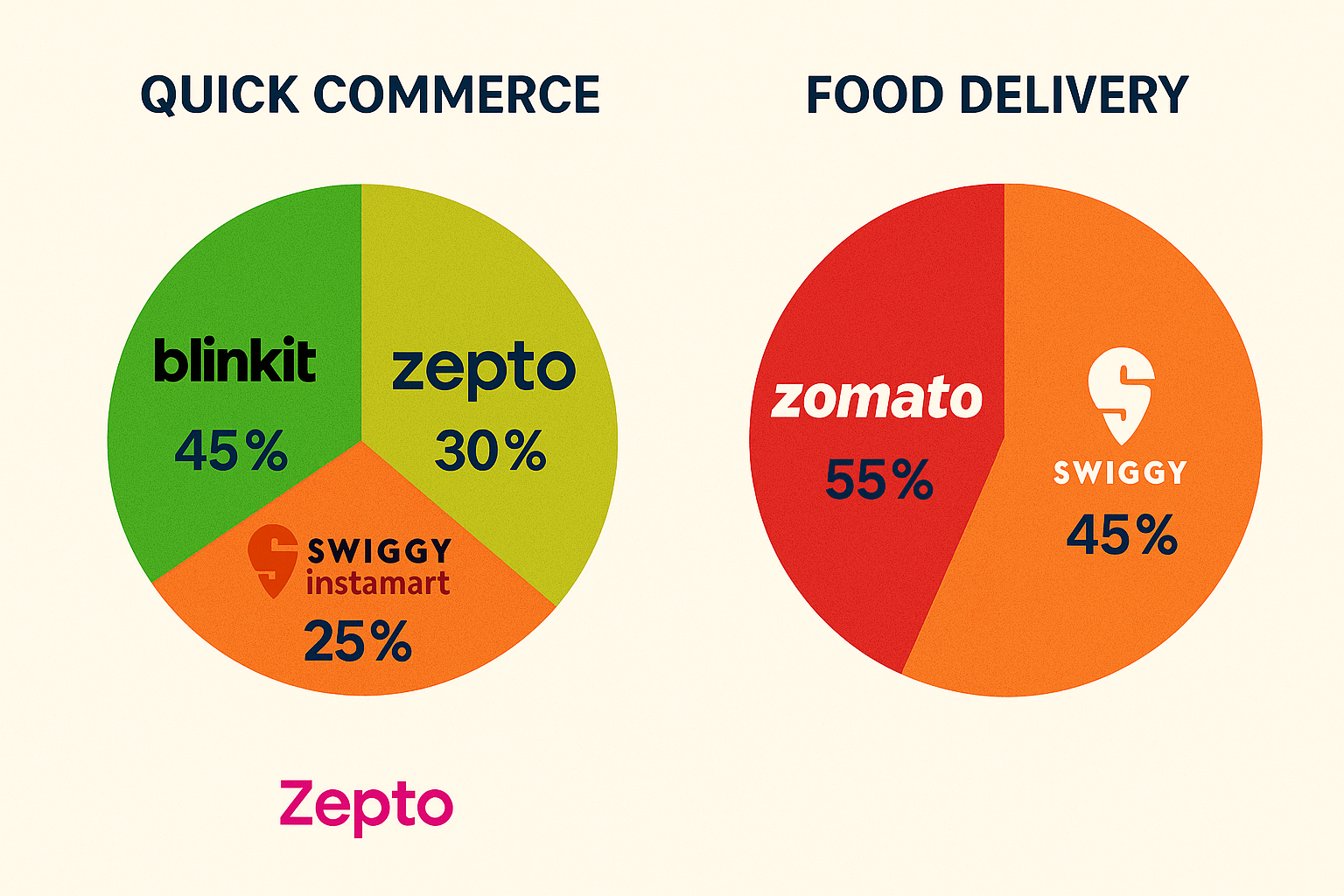
  • Top Players: Blinkit leads with 45–46% market share, followed by Swiggy Instamart (25–27%) and Zepto (21–30%).
  • Expanding Reach: Tier 2 and 3 cities are driving growth, contributing 60% of new e-retail customers since 2020.
  • New Categories: Beyond groceries, quick commerce now includes electronics, personal care, and apparel.
  • Dark Stores: Specialized hubs cut costs by 40% and enable 15–30 minute deliveries, with 1,000+ stores planned by 2027.
  • AI & Automation: AI-driven inventory systems improve efficiency by 30–50%, while drones and robots are reducing delivery times.
  • Sustainability: Companies are adopting green delivery methods, like electric bikes and eco-friendly packaging.
  • Payment Innovations: UPI dominates, with 90% of Gen Z preferring it, alongside advanced tools like voice commands and BNPL.
  • D2C Partnerships: Direct-to-consumer brands now account for 30% of sales, with 24× growth in order value since FY22.
  • Market Consolidation: Mergers and new regulations are reshaping the competitive landscape, with fewer players expected by 2030.

Key takeaway: Quick commerce is not just about speed – it’s about innovation, efficiency, and meeting changing consumer demands.

Quick Commerce in 2025: Boom or Bust? |Air India + Vistara: The Business Class Battle |EV Revolution

1. Growth in Tier 2 and 3 Cities

Quick commerce is making waves beyond India’s big cities, with smaller towns and rural areas becoming key players in this transformation. Since 2020, nearly 60% of new e-retail customers have come from Tier 3 and smaller cities, showcasing spending habits that rival those in metro areas.

By 2026, these regions are expected to account for up to 50% of India’s e-commerce activity, signaling a major shift in the retail landscape.

Market Indicator Current State 2026 Projection
E-commerce Contribution 35% 50%
Facility Cost Savings 25–40% lower than metro areas
New Seller Origin >60% from Tier 2+

This growth is fueled by cost advantages and changing consumer behaviors. The government is also stepping in with initiatives like the Urban Infrastructure Development Fund (UIDF), which invests INR 100 billion (about $1.3 billion) annually to support quick commerce in smaller cities.

"2025 will see rapid expansion of quick commerce as new categories (beyond Grocery) & new cities (Tier2+) drive stronger growth. We estimate 75% YoY growth in QC driving share gains." – Bernstein report

While affordability is still a priority, there’s a growing appetite for premium brands and high-quality products. The success of hyper-value platforms in these areas highlights the need for retailers to strike a balance between cost and quality.

Interestingly, over 60% of new e-retail sellers since 2021 have come from Tier 2 and smaller cities. This rise in local entrepreneurs is adding diversity to marketplaces, with logistics improvements expected to handle 45% of India’s total e-commerce volume by 2025.

Other factors driving this growth include:

  • Increased trust in peer reviews and influencer recommendations
  • Wider adoption of online payment systems
  • Localized services catering to neighborhoods within a 3-mile radius

These developments paint a promising picture of how smaller cities are reshaping India’s e-commerce story.

2. High-End and Time-Based Products

As quick commerce spreads to new regions, it’s also diving into premium product categories – marking a shift that aligns with changing consumer preferences. By 2025, premium and non-essential orders are expected to make up 20–30% of this market’s share. This evolution, from basic necessities to high-end goods, reflects the broader transformation of retail through advanced technology, with the sector projected to grow by 73–76% in FY 2024.

Premium Category Growth Drivers Market Impact
Electronics Smartphones, accessories Higher AOV, tech-savvy consumers
Fashion & Beauty Trend-driven styles, personal care $8–10B market by 2028
Jewelry High-quality ornaments Boost during festive seasons
Home Appliances Smart devices, premium gadgets Expanded customer base

A standout example of this premium shift is Blinkit’s collaboration with Apple Premium Reseller Unicorn Infosolutions. Together, they launched the iPhone 16 series for quick delivery, offering credit card EMI options. This move boosted Blinkit’s average order value to INR 625 (around $7.60) in Q2 2024.

Platforms are also tapping into seasonal and curated collections. Paul Hylla, founder and CEO of Besser im Glas Tee, emphasizes the importance of starting small and scaling thoughtfully:

"The key lessons would be the importance of starting small and testing the market. It’s crucial to understand your production capabilities and customer demand before scaling up".

To maintain premium quality, platforms rely on:

  • Temperature-controlled logistics to handle perishables
  • Real-time tracking systems to monitor premium shipments
  • Specialized packaging designed for high-value items

Deepak Batra, Founder of Webdaksha, highlights the importance of precision when handling perishable goods:

"When shipping perishable goods internationally in e-commerce, ensuring timely delivery is all about precision and planning."

This trend is especially prominent in mature markets, where average selling prices are 10–25% higher than in emerging markets. Platforms are capitalizing on festive demand, with items like gold jewelry seeing a surge during major Indian celebrations.

The focus on premium products is driving rapid growth, with projections of 75–85% by 2025. To meet these demands, platforms are heavily investing in storage and delivery infrastructure to ensure both quality and timely service. This expansion continues to redefine the retail landscape.

3. Local Delivery Network Updates

Local delivery networks are transforming at a fast pace, driven by changing consumer expectations and the push for premium services. The hyperlocal delivery market is on track to grow at an impressive 14.4% CAGR, potentially hitting a massive $5.18 trillion valuation by 2030.

Leading platforms like Zepto, with its 250 hyperlocal dark stores, and Blinkit, operating 1,007 ghost stores, are adopting micro-fulfillment strategies to streamline inventory management in densely populated areas. Meanwhile, Delhivery’s 2021 partnership with FedEx Express has significantly improved cross-border logistics and delivery efficiency.

Interestingly, rural markets are becoming a key focus, as 60–65% of new internet users are emerging from these regions. To cater to this demographic, companies are rolling out localized solutions like regional warehousing, mobile tracking, interfaces in local languages, and specially trained delivery teams. ElasticRun, for example, has bridged the gap between local Kirana stores and suppliers, solving last-mile delivery challenges in areas that are hard to reach. These initiatives, powered by advanced technology, are setting new benchmarks in delivery efficiency.

Artificial intelligence is also playing a pivotal role in reshaping delivery operations. AI tools have reduced delivery times by 31% and fuel consumption by 14%. Real-time tracking has increased customer satisfaction by 28%, while predictive analytics now help forecast demand and identify potential supply chain issues.

This growing infrastructure aligns perfectly with the rise of omnichannel retailing, where 73% of shoppers use multiple platforms before making a purchase. The focus on smarter and more sustainable delivery methods not only cuts shipping costs but also supports the industry’s commitment to eco-friendly practices. This is particularly crucial, as last-mile delivery alone accounts for 53% of total shipping costs.

4. Smart Inventory Systems

AI-driven inventory management is transforming quick commerce, improving demand forecasting accuracy by an impressive 30–50%. This leap in efficiency has led to real-world success stories that highlight its potential.

For instance, White House in Hyderabad managed to cut slow-moving stock surplus by 15% and boost the availability of fast-moving products by 28% within just six months. Similarly, Being Human saw a 10% increase in full-price sell-through while reducing store inventory by 23% after adopting AI-powered inventory systems.

The impact of AI on key performance metrics is undeniable:

Metric Improvement
Supply Chain Errors Reduced by 20–50%
Operational Efficiency Increased by 65%
Workforce Management Tasks 50% automation
Cost Reduction 10–15% decrease

Since 2020, the adoption of AI in retail has grown by 25% annually, with 90% of retailers now actively pursuing AI projects. The results speak for themselves: 87% of retailers report a positive impact on revenue, while 94% have seen operating costs drop.

"Retailers need AI tools that gather demand signals, identify products based on demand behavior, and cluster them together. AI must help determine which stores can sell a product and which cannot, with high certainty. More importantly, AI must optimize decisions."

  • Chinmay Nayak, Head of Sales India at Onebeat

Smart inventory systems take the guesswork out of stock management by analyzing historical sales data, market trends, and customer behavior. These systems automatically reorder products when stock levels dip below set thresholds, significantly reducing manual effort. This seamless stock control also opens the door to adaptive pricing strategies.

But these systems go beyond just inventory management. They enable dynamic pricing, adjusting prices in real time based on demand and market conditions. This level of sophistication is becoming increasingly vital as the Indian quick commerce market edges closer to its projected $5.5 billion valuation by 2025.

One standout example is Incu, a Shopify merchant that saw a staggering 300% year-over-year sales growth after automating its inventory management with AI.

5. Rise of Dark Stores

Dark stores are specialized fulfillment hubs designed exclusively for processing online orders. Unlike traditional retail spaces, they aren’t open to walk-in customers. Positioned strategically in urban areas, these facilities aim to deliver orders within a tight 2-3 km radius, often within minutes. This setup is fueling a massive shift in the retail landscape, with the market poised for substantial growth.

Projections indicate that the total dark retail space will expand from 24 million to 37.6 million square feet between 2023 and 2027, tapping into a $150 billion opportunity across grocery and non-grocery categories .

Aspect Current State (2025) Future Target (2027-28)
Market Valuation $5.5 billion $35-40 billion
Active Dark Stores (Blinkit) 526 stores 1,000 stores
Active Dark Stores (Swiggy) 523 stores 1,061 stores
Rental Rates (Delhi) $1.80-2.40/sq ft/month
Rental Rates (Bangalore) $0.60-9.40/sq ft/month

Blinkit, which holds a 40% share of this market, reported an impressive 122% year-over-year growth, adding 149 new dark stores in FY24. Swiggy Instamart has also been scaling aggressively, expanding its operations from 27 cities in March 2024 to 43 cities. This rapid expansion reflects the sector’s focus on reducing costs and improving operational efficiency.

"Consumer habits are shaped in a way that they expect quicker delivery and are more used to online shopping. Dark stores are located in a way that the q-commerce platforms can deliver in 15 to 30 minutes." – Vimal Nadar, Senior Director and Head of Research, Colliers India

The cost savings are striking – fulfilling orders through dark stores cuts costs by 40% compared to traditional methods. These savings, combined with their urban locations, allow companies to offer ultra-fast deliveries while staying profitable.

Amazon is also testing the waters with its "Amazon Tez" pilot program in Bangalore. This initiative promises 10-15 minute deliveries for groceries and daily essentials, with plans to branch into beauty, home, and kitchen products.

However, the sector isn’t without challenges. Hygiene standards and property accessibility remain significant hurdles. As Ajay Rao, CEO of Emiza, explains:

"There is also a challenge in terms of the hygiene levels and the accessibility of properties. Many properties do not meet regulatory norms".

Despite these obstacles, dark stores are creating a wave of employment opportunities, with an estimated 400,000 new jobs expected by the end of 2025. In Tier 1 and Tier 2 cities, they are quickly becoming the backbone of the quick commerce ecosystem.

6. Direct-to-Consumer Brand Teams

By 2025, the fusion of quick commerce with direct-to-consumer (D2C) brands has expanded far beyond groceries, making waves in categories like electronics, fashion, and personal care. This shift is projected to fuel a sector growth of 75–85%, pushing the market’s value to approximately $5.5 billion.

The numbers speak volumes. Since FY22, partnerships between quick commerce platforms and D2C brands have resulted in a staggering 24× increase in order value. D2C brands now contribute to over 30% of total sales, with smaller cities outperforming metros by achieving 2–3 times higher sales.

Performance Metric Current State (2025)
Market Size $5.5 billion
Order Value Growth 24× since FY22
D2C Brand Share >30% of total sales
New Dark Stores (FY24) ~2,000 stores
Average Sales Growth 45% year-over-year

These figures highlight the success stories of emerging D2C brands. Take Earth Rhythm, for instance – a beauty brand that skyrocketed its monthly sales from $6,000 to $180,000 within just 18 months on Blinkit. Another standout, 4700BC, a gourmet popcorn brand, now generates a whopping 87% of its total sales through quick commerce platforms, maintaining a 45% year-over-year growth rate.

"Among online sales from traditional e-commerce platforms like Amazon and Flipkart, and direct website sales, it’s in quick commerce that we see the highest consumer engagement. It’s now integral to our overall digital strategy", says Chirag Gupta, Founder & CEO of 4700BC.

Fashion brands are also riding this wave of innovation. For example, NEWME introduced a 90-minute delivery service in Gurugram, which received over 100 orders in just 30 minutes. Today, they cater to 18 areas across Delhi-NCR. Similarly, Decathlon and Zepto have rolled out 10-minute delivery services in 16 cities, setting a new benchmark for speed and convenience.

To thrive in this fast-paced environment, D2C brands are adopting specific strategies:

  • SKU Optimization: Focus on identifying and maintaining a steady supply of high-demand products.
  • Supply Chain Adaptation: Build systems capable of managing frequent, smaller dispatches efficiently.
  • Margin Management: Fine-tune pricing to balance platform commissions while ensuring profitability.
  • Data Analytics: Use platform data to sharpen marketing efforts and streamline inventory management.

An extensive network of dark stores plays a pivotal role in enabling these achievements. By ensuring rapid local inventory management and near-instant deliveries, these stores help meet consumers’ growing appetite for on-demand fulfillment. The result? Faster service and happier customers.

sbb-itb-6f7682a

7. New Payment Methods

Quick commerce is evolving rapidly, thanks to advancements in digital payment systems. By 2025, payment technologies are expected to play a crucial role in driving growth, with the market projected to surge from $5 billion in 2024 to $40 billion by 2030.

Among these methods, UPI (Unified Payments Interface) stands out, especially with Gen Z, as over 90% of them prefer it for transactions. In October 2024 alone, UPI handled an impressive 16.6 billion transactions, with monthly person-to-merchant transaction volumes reaching $80 billion.

Payment Method Transaction Fee Range
UPI 0% – 0.25%
Debit Cards 0.4% – 0.9%
Net Banking 1.0% – 1.5%
Credit Cards 1.5% – 2.2%
Digital Wallets 1.5% – 2.5%
BNPL (Buy Now Pay Later) 3.5% – 5.0%
International Cards 3.0% – 4.5%

These figures highlight the growing importance of digital payment options and pave the way for innovations aimed at improving accessibility and security.

The National Payments Corporation of India (NPCI) has taken significant steps to make digital payments more inclusive. Their UPI123Pay and Hello!UPI services enable instant transactions on feature phones using voice commands in regional languages.

"Consumers demand speed, convenience, and integration across shopping channels. To meet these demands, businesses must invest in flexible, advanced payment solutions – from digital wallets and contactless payments to embedded finance systems – that facilitate frictionless commerce."

  • Rahul Kothari, Chief Operating Officer at Razorpay

The embedded finance sector is also experiencing remarkable growth, with expected revenues climbing from $4.8 billion in 2022 to $21.1 billion by 2029. For instance, Razorpay’s DigiPOS has increased customer conversion rates by 17% at Apple Premium Resellers. Similarly, their AI-powered assistant, RAY, offers businesses real-time payment insights and has cut infrastructure costs by 30%.

Recent policy changes by the Reserve Bank of India (RBI) are further enhancing the payment landscape. Interoperability across prepaid payment instruments (PPIs) via UPI now allows fully KYC-compliant PPIs to process payments through third-party apps. Upcoming features in UPI 3.0 promise to streamline transactions even more with:

  • Offline payment capabilities
  • International payment options
  • Voice-assisted transactions
  • Auto-split payment functionality
  • Enhanced recurring payment features

These advancements not only improve the efficiency and security of transactions but also reinforce UPI’s position as one of the most cost-effective payment solutions available. With such developments, the payment ecosystem is perfectly aligned to support the fast-paced demands of quick commerce.

8. Automated Delivery Tests

India’s fast-growing quick commerce sector is leaning heavily on automated delivery systems. Take Skye Air in Gurugram, for example – they managed 1.2 million deliveries in 2024, averaging an impressive 150,000 packages per month.

In February 2025, Apollo Hospitals and TechEagle launched India’s first 10-Minute Diagnostic Drone Delivery (D3) service. These AI-powered drones transport liquid biopsy samples from collection centers to labs in just 10 minutes.

At Aero India 2025, ideaForge unveiled four new UAVs, including the SWITCH V2, which boasts a 25% boost in performance.

"Every minute counts in healthcare. While food and e-commerce deliveries happen in minutes, critical medical samples still take hours. That delay can be the difference between life and death. With TechEagle’s AI-powered drones, Apollo Hospitals ensures that liquid biopsy samples – essential for early cancer detection – reach labs in just 10 minutes. The healthcare industry deserves the same speed and efficiency as consumer logistics, and we’re making that a reality."
– Vikram Singh Meena, Founder & CEO, TechEagle

This shift toward automation highlights a broader trend: automated systems are poised to transform urban delivery. Experts predict that by 2030, 70% of urban deliveries will rely on automated systems. These advancements bring several benefits to the table:

  • Cost Savings: Automated robots can reduce delivery costs by 25% through better route planning and traffic monitoring.
  • Round-the-Clock Operations: AI systems don’t tire, ensuring consistent service at all hours.
  • Faster Deliveries: Drones and robots can bypass congestion, dramatically cutting delivery times.

"At ideaForge, we innovate with purpose, creating UAVs that address the unique challenges faced by defense forces and industries. Our latest lineup – NETRA 5, SWITCH V2, Tactical UAV, and Logistics UAV – embodies our commitment to enhancing national security, operational efficiency, and industrial capability."
– Ankit Mehta, CEO, ideaForge

That said, India’s automated delivery systems still face hurdles. For instance, human delivery services remain relatively inexpensive, costing around ₹40–50 per parcel, compared to $5–6 in the U.S.. However, as technology becomes more affordable and efficiency gains grow, the scales are expected to tip increasingly in favor of automation.

9. Green Delivery Methods

Quick commerce companies in India are embracing greener delivery methods, aiming to combine fast service with a focus on sustainability. This change is driven by the fact that nearly 80% of Indian consumers are deeply concerned about sustainability and climate change.

Leading the charge in this movement are companies like Blinkit and Zepto. Blinkit has committed to cutting its carbon emissions by 30% by 2025, introducing electric delivery bikes and eco-friendly packaging in select cities. Meanwhile, Zepto has rolled out a pilot program using electric vehicles, targeting lower fuel costs and reduced emissions. These efforts are paving the way for more environmentally conscious innovations in the industry.

"Decarbonization results in cost savings, new revenue streams, and brand loyalty, in addition to ecological and social benefits." – Chandrajit Banerjee, Director General, Confederation of Indian Industry

Companies like Zypp Electric and eBikeGo are also reshaping last-mile logistics with their electric fleets and battery-swapping models. This approach minimizes charging downtime, making electric vehicles a more practical option for quick commerce operations.

Sustainability efforts extend beyond just vehicles. Swiggy Instamart, for instance, is leveraging AI-driven stock prediction and energy-efficient hubs to cut waste, aligning with the preferences of 90% of customers who favor eco-friendly packaging.

Here are some of the key green initiatives shaping the quick commerce sector in India:

Initiative Impact
Electric Vehicle Fleet Cuts fuel costs and lowers emissions
AI-Powered Stock Management Reduces food waste and excess inventory
Eco-Friendly Packaging Replaces millions of plastic containers
Micro-Fulfillment Centers Lowers energy use and shortens delivery distances

"Consumers in India care about the environment – but it’s not the only thing on their minds. Brands can encourage more sustainable purchasing and living in India by addressing shoppers’ desires for health, quality, and cost." – Ravi Swarup, Partner, Bain & Company

Packaging innovation has been particularly impactful. Pepcom India’s shift to eco-friendly packaging has eliminated more than 6 million plastic containers. Additionally, 83% of Indian consumers rate the environmental impact of packaging as ‘important’ or ‘very important,’ significantly higher than the global average of 61%.

As India’s quick commerce market heads toward a projected value of $5 billion by 2025, environmentally responsible delivery methods are becoming essential. With over 70% of consumers considering sustainability in their buying decisions, these green initiatives are not just a trend – they’re shaping the future of the industry.

10. Market Rules and Mergers

India’s quick commerce sector is undergoing a transformation, shaped by regulatory changes and market consolidation. In 2025, new rules and mergers are redefining how companies compete. The Competition Commission of India (CCI) has rolled out regulations aimed at tackling predatory pricing and deep discounting. One key update, the 2025 Cost Regulations, introduces a pricing framework that applies across industries, including the digital economy.

"The Cost Regulations 2025 establish a sector-agnostic, cost-based framework that is flexible and adaptable to various industries, including the digital economy."
– Competition Commission of India

The market is consolidating rapidly. With 61 quick commerce startups currently operating, many are feeling the pressure to merge or exit. Meanwhile, the top three players – Zepto, Blinkit, and Instamart – have each surpassed $1 billion in revenue for FY24. By 2030, the sector is expected to claim 15% of India’s $250 billion grocery market.

Market Aspect Current Status 2025 Projection
Major Players 6–7 companies Reduced number due to consolidation
Market Share Top 3 players > $1B revenue 15% of a $250B grocery market by 2030
Regulatory Focus Predatory pricing Cost-based pricing assessment
Startup Count 61 active companies Fewer startups due to exits and mergers

Companies are now required to review their contractual terms, adhere to stricter storage and handling rules, and ensure transparency in seller and product information.

"There are six to seven players today. That number won’t hold. Some will exit, while others will merge."
– Sumat Chopra, Partner & India Head, Kearney

Recent moves highlight this trend. Walmart has expanded its quick commerce operations to 20 cities, and Reliance Retail has successfully acquired Metro AG. As the industry shifts, businesses are adapting to updated rules around storage, labeling, and transportation while focusing on profitability rather than rapid expansion.

These developments underscore a clear shift in the market: a move toward sustainable and efficient operations. This evolution is setting the tone for the future of India’s quick commerce industry.

Market Leaders Performance Data

Data from early 2025 highlights advancements in delivery speed, fulfillment efficiency, and inventory management. These improvements showcase the strides market leaders are making in shaping the quick commerce landscape.

Companies at the forefront have significantly enhanced delivery speeds by strategically positioning dark stores and using AI-driven routing systems. For instance, Amazon’s ultra-fast delivery pilot, Amazon Tez, operating in Bangalore, consistently achieves grocery and essentials deliveries within 10–15 minutes. Alongside speed, expanding into new geographic regions has been a key growth driver.

Growth in Tier 2 and Tier 3 markets has also played a pivotal role, supported by advanced inventory systems designed to maintain optimal stock levels across varied regions. Investments in technology have further strengthened the market position of major players. Walmart, for example, has integrated AI-powered inventory systems to create a seamless network connecting its stores and fulfillment centers.

Additionally, the adoption of cloud-based inventory systems has accelerated the quick commerce sector’s evolution. This shift has fueled growth in the retail cloud market, which is projected to rise from $28.3 billion in 2024 to $81.3 billion by 2030.

These advancements reflect a market that is maturing rapidly, where sustained success hinges on balancing ultra-fast delivery, efficient inventory systems, and strategic expansion efforts.

Conclusion

Quick commerce, trend-first commerce, and hyper-value commerce are reshaping the retail landscape in India. With the market projected to grow to $5.5 billion by 2025, this shift highlights how technology and changing consumer habits are driving adoption across the country’s varied regions.

In the digital retail space, quick commerce has taken center stage, redefining how people shop and what they expect from delivery services.

"Quick commerce is uniquely positioned across Proximity, Pricing & Selection & will continue to grow at 75-100 per cent YoY vs retail at low teens" – Bernstein Report

Looking ahead, the sector is expected to maintain strong momentum, with a projected CAGR of 16.07% from 2025 to 2029, potentially reaching $9.77 billion. To keep pace with this growth, retailers need to enhance supply chains, adopt advanced inventory management technologies, and broaden their service offerings to cater to diverse customer demands.

Quick commerce is not just changing how people shop – it’s reshaping the entire retail ecosystem. With speed, efficiency, and technology at its core, this evolution marks the beginning of a new chapter in Indian retail.

FAQs

What role are Tier 2 and 3 cities playing in the growth of quick commerce in India?

Tier 2 and 3 cities in India are emerging as major players in the growth of quick commerce. With rising disposable incomes, rapid urban development, and improved internet connectivity, these regions are driving a noticeable shift in consumer behavior. People in these areas are increasingly seeking faster delivery options for a wide range of products. While groceries remain popular, the demand now extends to essentials, electronics, and more.

Improved logistics networks in these cities are helping businesses expand their reach and keep up with the growing expectations of consumers. By tailoring their strategies to meet the specific demands of these markets, companies are not only boosting their presence but also shaping the future of retail and quick commerce in India.

How do AI and automation improve the speed and efficiency of quick commerce deliveries?

AI and automation have become game-changers for speeding up quick commerce deliveries and making them more efficient. By leveraging predictive analytics, these technologies can forecast demand with impressive accuracy. This helps businesses manage inventory better, ensuring products are stocked and ready where and when customers need them. On top of that, AI enhances route planning for delivery drivers, cutting down delays and shaving valuable time off delivery schedules.

Automation takes things a step further by accelerating order processing and enabling real-time tracking of shipments. For instance, automated systems are particularly effective in handling last-mile deliveries, ensuring packages arrive on time while keeping operational costs in check. Together, AI and automation empower retailers to meet the growing demand for speed and reliability in the fast-paced world of quick commerce.

What steps are quick commerce companies in India taking to make their delivery operations more sustainable?

Eco-Friendly Practices in Quick Commerce Delivery Operations

In India, quick commerce companies are making strides toward greener delivery operations by embracing eco-friendly practices. A major shift is happening as many of these businesses are switching to electric vehicles (EVs) for their fleets. This transition significantly cuts down on carbon emissions, offering a cleaner alternative to traditional fuel-powered vehicles.

Another area of focus is reducing packaging waste. Companies are increasingly using recyclable and biodegradable materials to package their products, which helps curb the environmental impact of single-use plastics. On top of that, they’re leveraging advanced technologies to optimize delivery routes. By streamlining routes, they not only improve delivery efficiency but also reduce fuel consumption.

These changes reflect a broader movement toward sustainability, driven by the growing awareness of environmental issues among both businesses and consumers.

Related posts

https://app.seobotai.com/banner/banner.js?id=6827e57c5642a17d106c6f53

How to Build a Sustainable SaaS Revenue Model in India

Want to grow your SaaS business in India? Here’s how:

India’s SaaS market is booming, with projections to hit $50 billion in annual recurring revenue (ARR) by 2030. To succeed, you need a strategy that balances growth with efficiency. Here’s a quick breakdown of what works:

  • India-Specific Pricing: Offer freemium or usage-based plans for SMBs, tiered pricing for mid-sized firms, and custom packages for enterprises. Integrating local payment methods like UPI can boost conversions by 30%.
  • Key Metrics to Track: Focus on Monthly Recurring Revenue (MRR), Customer Acquisition Cost (CAC), churn rate, and Customer Lifetime Value (CLV) to ensure profitability and growth.
  • Localized Marketing: Use regional languages, mobile-friendly features, and UPI payments to connect with India’s diverse customer base.
  • Reduce Churn: Build proactive customer success programs, offer localized support, and focus on upselling and cross-selling to retain users.
  • Automate Financial Systems: Use tools for automated billing, tax compliance, and multi-currency support to streamline operations.

Quick Overview of Strategies:

Area Key Tactics Impact
Pricing Freemium, tiered, custom pricing Lower barriers, higher adoption
Metrics to Track MRR, CAC, CLV, churn rate Ensure sustainable growth
Marketing Regional focus, UPI integration Boost conversions, engagement
Customer Retention Proactive support, upselling Reduce churn, increase loyalty
Financial Systems Automated billing, tax compliance Scale efficiently

Takeaway: Build a revenue model tailored to India’s unique market conditions. Focus on affordability, localization, and operational efficiency to thrive in this fast-growing sector.

Building Blocks of SaaS Revenue

India-Specific Pricing Models

When it comes to pricing SaaS products in India, striking the right balance between delivering value and aligning with local market conditions is key. Incorporating popular local payment methods like UPI can make a significant difference. For example, one HR management SaaS provider saw a 30% increase in conversion rates simply by integrating UPI as a payment option.

Here’s how different pricing models can cater to various customer segments:

Customer Segment Recommended Pricing Model Key Benefits
SMBs Usage-based + Freemium Low entry barriers and predictable costs
Mid-market Tiered pricing Flexibility with feature-based scaling
Enterprise Custom pricing ROI-driven value and volume discounts

Revenue Planning and Analysis

Planning revenue effectively starts with tracking the right metrics. With the SaaS industry expected to grow at a CAGR of 11.7% through 2030, keeping a close eye on key performance indicators (KPIs) is essential for staying competitive.

"With accurate SaaS sales forecasting, you can manage growth expectations and make long-term plans for your business." – Nico Prins, Founder, Crunch Marketing

Some must-watch metrics include:

  • Monthly Recurring Revenue (MRR): A measure of growth trends and revenue stability.
  • Customer Acquisition Cost (CAC): Ensures your customer acquisition strategy remains cost-effective.
  • Churn Rate: Aim for a churn rate under 1% monthly or 5-7% annually.
  • Customer Lifetime Value (CLV): Tracks the long-term value of customer relationships.

By focusing on these metrics, SaaS companies can lay the groundwork for sustainable growth while ensuring their revenue strategies remain on track.

Sales Pipeline Development

Once revenue planning is in place, the next step is turning those insights into tangible results with an optimized sales pipeline. Research shows that businesses with structured sales pipelines see 16% higher win rates. Additionally, maintaining a pipeline-to-bookings ratio of 3-4X is a hallmark of high-growth SaaS companies.

Here’s how to refine your sales pipeline:

  • Lead Generation and Qualification
    Focus on quality over quantity. High-growth companies typically allocate around 45% of their revenue to sales and marketing, compared to 30% for lower-growth businesses.
  • Pipeline Management
    Regularly review and update your pipeline. As Galem Girmay, Revenue Enablement Manager at UserTesting, puts it:

    "You want to make sure your goals as a sales team are reflected in your CRM, so that means having accurate data and updating your pipeline consistently as a prospect moves to the next stage".

  • Follow-up Strategy
    A strong follow-up process is crucial. Studies show that 80% of new leads fail due to poor follow-up, and 60% of prospects need multiple contacts before converting.

Getting and Keeping Customers

India-Focused Marketing Tactics

The Indian SaaS market is full of potential, but success here hinges on strategies that resonate with local customers. One of the most important factors is language accessibility, as 57% of Indian internet users consume content in regional languages. This highlights the need for a thoughtful approach to localization across all customer touchpoints. Here’s how businesses can adapt:

Customer Touchpoint Localization Strategy Impact
Product Interface Multi-language support Reaches 70–80% of users not proficient in English
Payment Methods UPI and other local options Boosts conversion rates
Mobile Experience Lightweight app versions Caters to 99% smartphone-first users
Customer Support Regional language availability Improves user satisfaction

Creating tailored experiences for the Indian market is just the first step. The real challenge lies in maintaining customer loyalty and reducing churn.

"Generative AI democratizes the landscape, offering start-ups a vital edge. At Fitbots OKR, we employ it to amplify customer intimacy through personalization, while reaping a 30% boost in marketing efficacy. Our strategic investments focus on automating customer engagement workflows through Generative AI. Personalized messaging addressing challenges and solutions is our cornerstone. We anticipated gains such as a 30–45% upsurge in product adoption, a 15% drop in queries, yielding heightened revenues and elevated NPS."

Reducing Customer Loss

For nearly half of startup founders, revenue generation is the top priority, making churn reduction a critical focus for long-term success. Late-stage startups are particularly invested in upselling and cross-selling, with over 70% prioritizing existing customer relationships.

Here are some effective strategies to minimize churn:

  • Proactive Customer Success Programs
    Monitoring usage patterns and engagement metrics can help identify customers at risk of leaving. Automated alerts triggered by declining usage allow teams to step in before cancellations happen.
  • Localized Support Infrastructure
    Providing customer support in regional languages across multiple channels helps build stronger relationships and improves retention.
  • Value-Based Engagement
    Continuously demonstrate value through:

    • Regular product updates that address local needs
    • Educational content in regional languages
    • Personalized notifications for milestones
    • Clear communication of service improvements

"Indian SaaS companies perfect the product before spending a lot on Sales & Marketing, which is great. However, a common tendency of many first-time founders here is that they get so smitten by their product that Sales & Marketing take a back seat. A killer product rocks, and while it will bring in sales up until a certain point, it falls short of scaling. That’s why you’ll spot many Indian founders doubling down on sales right now."

To build and maintain strong customer relationships, Indian SaaS companies are increasingly focusing on smaller, highly targeted engagement efforts. This includes organizing exclusive events that foster meaningful conversations and creating personalized outreach campaigns that respect local business practices and cultural nuances.

Financial Systems for Growth

Revenue Management Systems

As India’s SaaS market is projected to hit $50 billion in annual recurring revenue by 2030, automated financial systems have become a cornerstone for scaling operations effectively. A modern revenue management system typically includes these key components:

Component Purpose Impact
Automated Billing Manages recurring payments and invoicing Significantly reduces overdue payments
Revenue Recognition Ensures compliance with accounting standards Simplifies financial reporting
Payment Gateway Integration Supports multiple payment methods Boosts collection rates
Tax Management Handles GST and international tax compliance Lowers compliance risks

Unlike customer acquisition strategies, these systems focus on simplifying billing and tax operations. Here’s how they make a difference:

  • Automated Subscription Management: Managing complex billing is no longer a headache. For instance, a client using Chargebee saw unpaid invoices drop by 80% while achieving 600% growth. Even with this scale, they only needed 1–2 hours each week to handle accounts receivables.
  • Multi-Currency Support: Expanding into global markets requires seamless handling of international transactions, which is essential for SaaS companies aiming to grow beyond their home turf.

Once automation is in place, the next step is to track performance effectively using a dedicated metrics dashboard.

Performance Metrics Dashboard

Streamlined financial operations pave the way for real-time performance tracking, which is vital for sustained growth. Here are the metrics every SaaS business should monitor:

Metric Category Key Indicators Update Frequency
Revenue MRR, ARR, Revenue Churn Daily
Customer CAC, LTV, NPS Weekly
Usage Active Users, Feature Adoption Real-time
Financial Cash Flow, Burn Rate Monthly

For maximum effectiveness, dashboards should be:

  • Team-Specific: Each department should see metrics tailored to their responsibilities.
  • Real-Time: Quick access to data allows for faster decision-making.
  • Visual: Simplify complex data with clear graphs and charts.
  • Mobile-Responsive: Ensure accessibility across devices for convenience.

The impact of robust financial systems is evident. Take Finarkein, for example: they secured $4.75 million in funding and supported over 50 enterprises within just 18 months. However, as you implement these systems, remember to comply with the DPDP Act, 2023, safeguarding data privacy while keeping operations efficient.

sbb-itb-6f7682a

Decoding Indian SaaS: How to Sell, Price, and Thrive in a Unique Market

Indian SaaS Success Examples

These examples showcase how Indian SaaS companies have applied smart revenue strategies to achieve long-term growth, tying back to the financial principles and frameworks discussed earlier.

Freshworks: Targeting Small Businesses

Freshworks found its niche by catering to small and medium-sized businesses (SMBs) with cost-effective, enterprise-quality solutions:

Revenue Component Implementation Results
Pricing Tiers Free plan for up to 3 users; Growth plan at $9/user/month Over 73,000 businesses worldwide
Product Suite Integrated tools for customer engagement A complete customer engagement platform
AI Integration Automated customer service features AI chatbots handle up to 30% of customer queries

"It used to take a year for a helpdesk implementation. With Freshservice, it took us three hours." – Rineke Renema, Senior Project Manager

One standout example is Evans Manufacturing, which saw a 23% revenue increase, tripled email open rates, and a 225% surge in sales activities after adopting Freshworks’ solutions.

Chargebee: Scaling Global Payment Solutions

Chargebee

Chargebee started as a billing platform and evolved into a comprehensive revenue operations solution by addressing specific customer pain points:

Growth Milestone Achievement Year
Valuation Exceeded $3.5 billion 2022
Customer Base 4,500+ customers across 60+ countries 2022
Transaction Volume $100 million annually 2020

"We identified a real problem and built an elegant solution." – Krish Subramanian, Co-founder & CEO

Chargebee’s success is rooted in three guiding principles:

  • Solving specific challenges with precision
  • Adopting a global perspective from the start
  • Continuously improving based on customer feedback

BrowserStack: Dominating with Pay-Per-Use

BrowserStack

BrowserStack’s rise from a self-funded startup to a $4 billion valuation highlights the power of the pay-per-use model:

Success Factor Implementation Impact
Pricing Model Starting at $29/month for individuals 50,000+ paying customers
Market Reach Global data center network Serving 135+ countries
Revenue Growth Bootstrapped for 7 years Estimated $250M revenue in 2022

"Performance was a priority from the start." – Nakul Aggarwal

These examples highlight the variety of strategies driving growth in India’s SaaS sector, from tailored pricing models to global scalability and customer-driven innovation.

Conclusion: Next Steps for SaaS Growth

Building sustainable SaaS revenue in India depends on understanding the market, prioritizing customers, and running operations effectively.

Growth Pillar Implementation Strategy Expected Impact
Product-Market Fit Mobile-first approach, SMB focus Higher adoption rates, lower customer acquisition costs (CAC)
Revenue Optimization Value-based pricing, usage metrics Profit boost of 25-95% with just a 5% improvement in retention
Customer Success Proactive support, success teams Reduced churn and increased customer lifetime value (LTV)

These pillars are critical for thriving in India’s expanding SaaS market. With projections pointing to $50 billion in annual recurring revenue (ARR) by 2030, companies must prioritize key areas to stay competitive:

Smart Pricing: Adopt transparent, value-based pricing strategies. A hybrid approach – mixing subscription and consumption-based models – can be particularly effective. Notably, 60% of SaaS companies now offer usage-based pricing, making it a trend worth considering.

Customer-Centric Operations: Personalization is key to building customer loyalty. As Rohit Goyal from Windrose Capital explains:

"SaaS startups are no longer receiving the same valuations they did five years ago, despite having similar annual revenues. This marks a notable shift in investor behavior and market expectations".

Technology Integration: Leverage AI and smart automation to streamline operations and maintain quality. Currently, 85% of Indian SaaS companies are integrating AI into their processes, which helps cut costs while ensuring a high standard of service.

"SaaS is the best money model because the assumption is that most users underutilize the service. They use less of the service than they pay for." – Startup Spells 🪄

FAQs

What are the best strategies for creating an effective SaaS pricing model tailored to the Indian market?

To design a SaaS pricing model that works in the Indian market, it’s crucial to strike a balance between affordability and perceived value. One effective strategy is value-based pricing, where the cost reflects the benefits customers see in your product. This approach is especially relevant in India, where price sensitivity is a key factor.

Tiered pricing is another strategy worth considering. By offering multiple pricing levels, you can cater to different customer segments, accommodating a range of budgets and requirements. For businesses looking to enter the market quickly, penetration pricing might be the way to go. Starting with lower prices can help you build market share and customer loyalty, giving you room to adjust pricing as your product gains traction.

For a diverse market like India, usage-based pricing can be particularly appealing. This model allows customers to pay based on how much they use the service, making it an attractive option for businesses and individuals with varying needs. Lastly, tailoring your product features and pricing to align with local preferences can help your SaaS offering stand out in a competitive market. By addressing regional needs, you create a stronger connection with your audience.

What are the best ways for SaaS companies in India to reduce customer churn and boost retention?

Reducing churn and keeping customers loyal is a challenge for SaaS companies in India, but a few smart strategies can make a big difference. Start with a personalized and seamless onboarding process. When new users can quickly grasp your product’s value, they’re more likely to stick around. Providing clear instructions and tailored support early on helps lay the groundwork for a positive long-term experience.

Another key approach is using customer health scores to track engagement. These scores can highlight users who may be at risk of leaving, giving you a chance to step in with timely, targeted actions. Whether it’s a quick check-in or addressing a specific issue, proactive communication can go a long way in strengthening relationships and boosting retention.

By implementing these strategies, SaaS companies can build stronger connections with their customers and lower churn rates effectively.

How do automated financial systems help scale SaaS businesses in India?

Automated financial systems play a crucial role in helping SaaS businesses in India scale effectively. They take care of repetitive tasks like billing, invoicing, and financial reporting, making operations more efficient while cutting down on manual errors. Plus, they help businesses stay compliant with local regulations, which is especially important when managing India’s complex tax structures and reporting requirements.

Another big advantage is the real-time insights these systems provide. With instant access to cash flow data and performance metrics, businesses can make smarter decisions and adapt quickly to market changes. By leveraging integrated data and analytics, companies can gain a deeper understanding of customer behavior, fine-tune pricing strategies, and concentrate on growth opportunities. This mix of cost savings, better accuracy, and scalability is essential for standing out in India’s competitive SaaS landscape.

Related posts

https://app.seobotai.com/banner/banner.js?id=68275f6b5642a17d106ba415

State of Indian Quick Commerce Market 2025 – Blinkit, Zepto, Big Basket, Swiggy and Zomato

India’s delivery ecosystem has transformed dramatically over the past decade. What began as restaurant delivery and scheduled grocery e-commerce has evolved into a competitive, fast-growing landscape encompassing instant commerce, bulk grocery delivery, and B2B supply chain platforms. In 2025, quick commerce and online food delivery have become habitual for urban consumers, while the B2B backend is still stabilizing.

📈 Historical Evolution

Food delivery took off around 2015, with Swiggy and Zomato emerging as the dominant players. Earlier competitors like Foodpanda and Uber Eats exited or were acquired. Grocery delivery experienced early failures in 2016–17 but recovered through companies like BigBasket and Grofers (now Blinkit). The COVID-19 pandemic catalyzed mass adoption across both segments.

Quick commerce (10–30 minute delivery) emerged around 2021–22, led by Blinkit’s rebranding and the arrival of Zepto, sparking a new wave of VC funding and dark store expansion. Meanwhile, the B2B space saw growth through players like Udaan, Jumbotail, and Ninjacart, but has since seen consolidation due to tight margins.


🏢 Major Players

Quick Commerce (B2C):

  • Blinkit (acquired by Zomato): Market leader with ~46% share.
  • Zepto: Startup sensation with ~29% share, focused on metros.
  • Swiggy Instamart: 25% share, integrated with Swiggy app.
  • BigBasket Now, Dunzo: Niche players, limited geography or scale.

Scheduled Grocery (B2C):

  • BigBasket (Tata): Full-stack inventory-led model; strong in staples.
  • JioMart (Reliance): Deep reach, value-driven.
  • Amazon Fresh, Flipkart Supermart: Scheduled slots, limited presence.
  • Milkbasket/BB Daily: Micro-delivery subscription models.

Food Delivery (B2C):

  • Zomato: ~58% market share; dominant in food and quick commerce.
  • Swiggy: ~42% share; broader service portfolio (including Genie, Instamart).
  • Domino’s: Largest single-brand QSR player with own delivery fleet.
  • Others like Uber Eats and Amazon Food have exited the space.

B2B Grocery Supply:

  • Udaan: Wholesale marketplace connecting brands with retailers.
  • Jumbotail: Focus on kirana digitization and supply.
  • Ninjacart: Farm-to-retail fresh produce delivery.
  • Zomato Hyperpure: Restaurant ingredient supplies.

🔁 Business Models

India’s delivery economy spans several models:

  • 10-min Q-commerce (Blinkit, Zepto): Small baskets, dark stores, ultra-speed.
  • Scheduled grocery (BigBasket): Full assortment, planned orders.
  • Hyperlocal marketplace (Dunzo): Store-pick and delivery.
  • Food delivery aggregators (Swiggy, Zomato): Restaurant marketplace + logistics.
  • B2B wholesale (Udaan, Jumbotail): Bulk sales to kiranas, often credit-based.
  • Cloud kitchens & private labels: Vertical integration for better margins.
  • Subscription micro-delivery (BB Daily): Fixed daily essentials delivery.

These are converging – most major players now operate across 2–3 of these models.


🌆 Key Cities and Regional Focus

  • The top 8 metros — Delhi NCR, Mumbai, Bangalore, Hyderabad, Chennai, Pune, Kolkata, Ahmedabad — drive over 60% of order volume.
  • Tier 2 cities are growing fast but have lower frequency and thinner margins.
  • Rural markets remain largely untouched.
  • Companies focus on densifying operations in top metros for profitability (e.g. adding more dark stores in Bengaluru vs. launching in new towns).

👥 Customer Segments

  1. Urban Millennials/Gen Z: Core base. Frequent users of both food and grocery apps. Comfort with impulse buying.
  2. Middle-Class Families: Use scheduled grocery delivery + quick commerce for top-ups. Cost-sensitive but loyal if reliable.
  3. B2B (Kirana stores, Restaurants): Purchase from Udaan, Jumbotail, or Hyperpure. Focus on pricing, reliability, and credit.
  4. Behavioral Trends:
    • High frequency (e.g., Blinkit and Zepto see 3–5 orders/week per user).
    • Gen Z is the fastest-growing segment.
    • Shift toward premium/instant gratification purchases.

⚔️ Competitive Dynamics

  • Zomato–Swiggy duopoly in food delivery; stable but competitive.
  • Blinkit–Zepto–Instamart dominate quick commerce (~95% market).
  • Consolidation: Zomato acquired Blinkit, Reliance invested in Dunzo, Tata owns BigBasket.
  • ONDC, the government-backed open network, is emerging as a wildcard in food/grocery with lower commissions.
  • Companies are shifting from growth-at-any-cost to unit economics and profitability:
    • Blinkit became contribution margin positive in 2024.
    • Swiggy targets profitability for Instamart by 2025.
    • Food delivery profits fund grocery expansion.

The Indian quick commerce (q-commerce) market, characterized by ultra-fast delivery (typically within 10–30 minutes), is experiencing explosive growth, fundamentally reshaping the country’s retail landscape.


Market Size and Growth
• The sector is currently valued at approximately $3.34 billion (2024) and is projected to reach between $5 billion and $5.38 billion by 2025, with forecasts extending to nearly $10 billion by 2029.
• Annual growth rates are among the highest in retail, with estimates ranging from 40% to 100% year-on-year, far outpacing traditional retail and standard e-commerce channels.
• Quick commerce already accounts for about half of all e-commerce grocery sales and nearly 7% of the total addressable market, indicating significant room for further expansion.

Key Trends
• Urban Focus, Expanding Reach: Initially concentrated in major metros, q-commerce is now rapidly expanding into tier-2 and smaller cities, driven by rising urbanization, smartphone penetration, and a young, tech-savvy consumer base.
• Beyond Groceries: While groceries and daily essentials remain core, platforms are diversifying into electronics, personal care, and premium categories to increase average order values and market share.
• Technology-Driven Efficiency: The sector leverages AI, data analytics, and micro-fulfillment centers (dark stores) to optimize inventory and delivery, enabling the promise of 10–30 minute fulfillment.
• Direct Sourcing and D2C Growth: Platforms increasingly partner directly with manufacturers and feature a growing mix of direct-to-consumer (D2C) and new-age brands, with over 30% of offerings on some platforms now D2C.

Major Players
• The market is dominated by Swiggy Instamart, Blinkit (Zomato), Zepto, BigBasket, and Dunzo, who collectively hold more than 80% market share.
• Traditional e-commerce giants like Amazon and Flipkart are entering the space, intensifying competition.
• User engagement is high: for example, Blinkit reported 8.8 million visits in Q1 2024.
Consumer Behavior
• The core user base consists of urban millennials and Gen Z, who prioritize convenience, speed, and digital payment options.
• The average order value is rising, with platforms pushing into higher-value categories to drive profitability.
• Consumer loyalty is driven by delivery speed, product quality, ease of use, and competitive pricing

Challenges
• Logistics and Infrastructure: India’s diverse geography and urban congestion present delivery challenges, though innovations like dark stores and AI-powered routing are mitigating these issues.
• Profitability and Consolidation: As competition intensifies, differentiation and operational efficiency are critical. The market may see consolidation, with a few dominant players emerging, similar to other Indian digital sectors.
• Consumer Trust: Ensuring product quality, data privacy, and consistent service is essential to maintain and grow the customer base.

Future Outlook
• Quick commerce is expected to continue its rapid expansion, fueled by further penetration into smaller cities, new product categories, and ongoing investment in technology and logistics.
• The sector’s unique strengths-speed, proximity, and convenience-position it to capture a substantial share of India’s $250 billion urban grocery market and beyond.
• By 2029, the user base is expected to nearly triple, reaching over 60 million, with average revenue per user also rising sharply.

Conclusion


Quick commerce is not just a fast-growing retail channel in India-it is redefining how Indian consumers shop, setting new standards for convenience and speed. The next phase will see deeper market penetration, broader product offerings, and likely consolidation as the sector matures and competition intensifies

Maximize Sales with AI Tools: The Future of B2B Intelligence Platforms

Discover how AI tools are transforming B2B intelligence platforms to help businesses maximize sales, improve lead generation, and stay ahead in the competitive market with innovative AI-driven solutions.

In today’s fast-paced business environment, leveraging artificial intelligence has become essential for companies aiming to boost sales and stay competitive. B2B intelligence platforms powered by AI are revolutionizing how businesses gather insights, identify opportunities, and engage with prospects. This article explores the future of B2B sales through AI tools, highlighting their capabilities, benefits, and how they can help your business thrive in a digital-first world.

Understanding AI in B2B Sales and Intelligence Platforms

What are B2B intelligence platforms?

Imagine a super-smart assistant that helps businesses find the right clients, understand market trends, and make smarter decisions—this is essentially what B2B intelligence platforms do. These platforms are sophisticated tools designed to gather, analyze, and present data about other businesses, industries, and market dynamics. They serve as a central hub for B2B sales teams, marketing strategists, and decision-makers to access actionable insights quickly and efficiently.

At their core, B2B intelligence platforms leverage a mix of data sources—public records, social media activity, financial reports, and industry news—to build comprehensive profiles of potential clients and competitors. They help teams identify high-potential leads, understand client needs, and tailor their outreach strategies accordingly. Think of these platforms as a combination of a detective, a market analyst, and a CRM system rolled into one, but with a modern twist powered by AI intelligence platforms.

In recent years, these platforms have evolved from simple data aggregators to intelligent systems capable of predictive analytics, sentiment analysis, and even automating certain outreach activities. This evolution is driven largely by the integration of AI, which makes B2B intelligence platforms more accurate, faster, and capable of handling vast amounts of data that would be impossible for humans to process manually.

Role of AI in transforming B2B sales strategies

AI has become a game-changer in how B2B sales teams operate, shifting the focus from reactive to proactive strategies. Instead of waiting for leads to come in or relying solely on gut feeling, sales teams now harness AI to maximize sales with AI-powered tools that predict customer behavior, identify the best prospects, and personalize outreach efforts.

One of the most significant impacts of AI in B2B sales is its ability to analyze massive datasets quickly and accurately. AI analytics tools can sift through mountains of data—like social media activity, website interactions, and purchasing patterns—to identify buying signals and forecast future needs. This means sales teams can prioritize leads that are most likely to convert, saving time and resources.

Moreover, AI-driven social media AI and social media marketing AI enable businesses to engage prospects more effectively. For example, AI social media content creation tools can generate tailored posts that resonate with target audiences, increasing engagement and brand visibility. AI for social media posts and AI social media analytics help track campaign performance, refine messaging, and optimize timing—all in real time.

Another critical role of AI is in enhancing customer relationship management. AI chat apps, like the best AI chat app, facilitate instant communication, answer queries, and nurture leads around the clock. These tools can also analyze customer interactions to suggest next steps or personalized offers, making the sales process smoother and more personalized.

In the recruitment space, AI tools for recruitment and the best AI recruiting tools are transforming how companies find and hire talent, ensuring they attract the right candidates efficiently. Similarly, AWS intelligent document processing automates the handling of contracts, proposals, and other documents, reducing manual effort and errors.

Overall, AI in B2B sales strategies is about making smarter decisions faster, automating routine tasks, and delivering personalized experiences that build stronger client relationships. This shift not only boosts efficiency but also helps businesses stay ahead of the competition in a rapidly changing marketplace.

Key features of AI-powered B2B platforms

  • Predictive Analytics: AI analytics tools analyze historical data to forecast future trends, customer behavior, and sales opportunities. This helps sales teams prioritize efforts and allocate resources more effectively.
  • Data Enrichment: AI intelligence platforms enhance existing customer profiles with additional data points, providing a more comprehensive view of prospects and clients. This is crucial for targeted marketing and personalized outreach.
  • Lead Scoring and Qualification: Using AI, platforms can score leads based on their likelihood to convert, enabling sales teams to focus on high-value opportunities. This process often involves analyzing social media AI, website activity, and engagement metrics.
  • Automated Content Creation: AI social media content creation tools generate relevant posts, emails, and outreach messages tailored to specific segments, saving time and ensuring consistency across campaigns.
  • Social Media AI and Analytics: These features monitor social media channels for brand mentions, sentiment, and engagement levels. AI social media analytics help refine marketing strategies and measure campaign success.
  • Natural Language Processing (NLP): AI platforms utilize NLP to understand and respond to customer inquiries, extract insights from unstructured data, and improve chatbots or AI chat apps for better customer engagement.
  • Intelligent Document Processing: AWS intelligent document processing automates the extraction and management of data from contracts, invoices, and other documents, streamlining administrative workflows.
  • Integration with CRM and Marketing Tools: AI platforms seamlessly connect with existing CRM systems and marketing automation tools, creating a unified ecosystem for sales and marketing activities.
  • Real-Time Insights and Alerts: AI-powered platforms provide instant notifications about market shifts, competitor activities, or changes in customer behavior, enabling quick strategic adjustments.
  • AI for Social Media Marketing: These tools optimize social media campaigns by analyzing audience behavior, suggesting the best times to post, and identifying trending topics to boost engagement.

By leveraging these features, B2B companies can not only streamline their sales processes but also gain a competitive edge through smarter, data-driven decision-making. Whether it’s through the use of the latest Gartner AI Magic Quadrant insights or deploying the best AI tools for recruiting, the integration of AI into B2B sales and intelligence platforms is reshaping the landscape in profound ways.

Top AI Tools Revolutionizing B2B Sales

Predictive analytics for sales forecasting

When it comes to maximizing sales with AI, predictive analytics stands out as a game-changer. B2B AI sales tools leverage sophisticated AI intelligence platforms to analyze vast amounts of historical data, market trends, and customer behaviors to forecast future sales with remarkable accuracy. Imagine having a crystal ball that helps you anticipate client needs, identify emerging opportunities, and allocate resources more effectively. This isn’t science fiction; it’s the power of AI data analytics tools integrated into your sales strategy.

Using AI for social media posts and social media AI, companies can also gauge market sentiment and consumer engagement levels, which feed into predictive models. These models can then suggest the best times to reach out, the types of content that resonate, and the potential success of campaigns. For example, AI analytics tools can analyze social media media marketing trends, helping sales teams craft targeted outreach strategies that align with current market dynamics.

Furthermore, AI-driven sales forecasting tools often incorporate external data sources, such as economic indicators or industry reports, enhancing their predictive power. This comprehensive approach ensures that sales teams are not just reacting to past data but proactively planning for future opportunities, ultimately leading to increased revenue and a competitive edge.

AI-driven lead scoring and qualification

One of the most impactful B2B AI sales tools is AI-driven lead scoring and qualification. Instead of relying on gut feelings or basic demographic data, these tools analyze multiple data points—such as website interactions, social media activity, email engagement, and firmographic details—to assign a score to each lead. This score indicates how likely a lead is to convert, allowing sales teams to focus their efforts on the most promising prospects.

Leading AI intelligence platforms integrate seamlessly with CRM systems, providing real-time insights and automating the qualification process. For instance, the best AI tools for recruiting and sales can identify high-value targets by analyzing patterns that humans might overlook. This not only speeds up the sales cycle but also improves conversion rates by ensuring that efforts are concentrated on leads with the highest potential.

Moreover, AI for social media marketing and social media AI can monitor social channels for signals indicating buying intent or pain points. By combining these insights with traditional data, sales teams can personalize their outreach, making interactions more relevant and increasing the likelihood of closing deals. As a result, companies can maximize sales with AI by turning raw data into actionable intelligence that accelerates growth.

Chatbots and virtual assistants for customer engagement

The best ai chat app and virtual assistants have transformed how B2B companies engage with prospects and clients. These AI-powered tools provide instant, 24/7 support, answering questions, scheduling meetings, and guiding potential customers through the sales funnel. They serve as the first touchpoint, creating a seamless experience that keeps prospects engaged and informed.

Chatbots, especially those integrated into social media platforms and websites, can handle multiple conversations simultaneously, freeing up sales reps to focus on complex negotiations. They can also qualify leads by asking targeted questions and collecting relevant information, which can be fed directly into CRM systems for further analysis.

In addition, AI social media content creation tools help craft personalized posts and responses that resonate with target audiences, boosting engagement and visibility. Social media marketing AI tools can analyze interactions to refine messaging strategies continually. This combination of chatbots and AI social media analytics ensures that customer engagement is not only efficient but also highly tailored, fostering trust and loyalty.

Overall, these AI tools for recruitment and customer engagement are redefining the sales landscape, making interactions more intelligent, responsive, and effective. As companies adopt these technologies, they unlock new levels of efficiency and customer satisfaction, ultimately driving growth and competitive advantage in the B2B space.

How AI Enhances Lead Generation and Qualification

Identifying high-potential prospects with AI algorithms

Imagine having a super-smart assistant that can sift through mountains of data to spot the most promising leads—sounds like a dream, right? Well, with AI intelligence platforms and AI data analytics tools, this is now a reality. These AI tools for recruitment and sales are transforming how businesses identify high-potential prospects, especially in the B2B space. By leveraging the power of AI algorithms, companies can analyze vast amounts of data—from social media activity to website interactions—to pinpoint prospects who are most likely to convert.

For example, social media AI and AI social media analytics can track engagement patterns, content preferences, and even sentiment analysis to gauge a prospect’s interest level. AI analytics tools can also analyze historical data to recognize patterns that indicate buying intent. This means that instead of casting a wide net and hoping for the best, sales teams can focus their efforts on leads that show genuine signs of interest, thereby maximizing sales with AI.

Additionally, the Gartner AI Magic Quadrant and Gartner AI Magic Quadrant 2022 reports highlight the rise of AI-powered lead scoring systems that automatically assign scores to prospects based on their likelihood to convert. These systems continuously learn and adapt, ensuring your lead qualification process stays sharp and relevant.

Automating outreach and follow-ups

Once high-potential prospects are identified, the next step is engaging with them effectively. This is where AI truly shines by automating outreach and follow-ups. Best AI chat apps and AI social media marketing tools can craft personalized messages that resonate with each prospect, saving your team countless hours of manual work.

Imagine an AI-powered chatbot that can handle initial inquiries on your website or social media platforms, providing instant responses around the clock. These chatbots, often integrated with AI social media content creation and social media AI, can qualify leads by asking relevant questions and gathering essential information before passing the hot leads to your sales team.

Moreover, AI tools for social media posts and AI social media marketing can schedule and optimize outreach campaigns across multiple channels, ensuring your message reaches the right audience at the right time. Follow-up sequences can be automated based on prospect behavior—if someone clicks a link or spends time on a particular page, the AI system can trigger personalized follow-up messages, increasing the chances of conversion.

Personalizing outreach for better conversion rates

Personalization is the secret sauce for converting prospects into customers. AI enables hyper-personalized outreach by analyzing individual behaviors, preferences, and interactions. AI social media analytics can reveal what type of content resonates most with each prospect, allowing your team to tailor messages that truly speak to their needs.

For instance, AI for social media marketing can generate customized content suggestions or even create tailored social media posts that align with a prospect’s interests. This level of personalization helps build trust and rapport, making prospects more receptive to your offers.

Furthermore, AI-powered email marketing platforms and AI mobile app development tools can craft personalized email sequences that adapt based on user engagement. This dynamic approach ensures your outreach feels genuine rather than generic, significantly improving your chances of closing deals.

In the end, integrating AI into your lead generation and qualification process isn’t just about automation; it’s about smarter, more targeted, and more personalized engagement that drives real results. Whether you’re leveraging AWS intelligent document processing for data extraction or using the best AI recruiting tools to find top talent, AI’s capabilities are reshaping how businesses connect with their prospects—making every interaction count.

Data-Driven Decision Making with AI

Analyzing market trends and customer behavior

In today’s fast-paced business environment, understanding market trends and customer behavior is more critical than ever. AI intelligence platforms have revolutionized how companies approach this task, enabling them to sift through vast amounts of data quickly and accurately. Using ai data analytics tools, businesses can identify emerging patterns, shifts in customer preferences, and competitive dynamics that might otherwise go unnoticed. For example, social media ai and ai social media analytics allow marketers to monitor conversations, sentiment, and engagement levels across multiple platforms, providing real-time insights into what customers are truly thinking and feeling.

Moreover, AI tools for social media posts and social media ai help craft content that resonates with target audiences. By analyzing which types of posts generate the most engagement, companies can optimize their social media marketing ai strategies to maximize reach and impact. This data-driven approach ensures that marketing efforts are not just guesswork but are backed by concrete evidence, leading to more effective campaigns and increased ROI.

Another key aspect is leveraging AI for social media marketing to predict future trends based on historical data. This proactive stance allows businesses to stay ahead of the curve, adapting their offerings and messaging before market shifts become apparent to competitors. When combined with insights from the Gartner AI Magic Quadrant 2022, organizations can choose the best AI tools for recruiting, sales, and marketing that align with their strategic goals, ensuring they are investing in solutions that deliver measurable results.

Real-time insights for strategic adjustments

One of the most powerful benefits of AI in decision making is the ability to access real-time insights. Whether it’s monitoring social media ai or utilizing ai analytics tools, businesses can see what’s happening right now, rather than relying on outdated reports. This immediacy enables rapid strategic adjustments, whether it’s shifting marketing messaging, reallocating resources, or tweaking product features.

For instance, AI social media content creation tools can help generate fresh, engaging posts tailored to current trends, boosting engagement and brand visibility. Similarly, AI social media analytics can identify which campaigns are underperforming or excelling, allowing marketers to pivot quickly and optimize their efforts. This agility is especially vital in competitive markets where timing can make all the difference.

Furthermore, AI-powered dashboards and visualization tools provide executives with a clear picture of ongoing operations, customer sentiment, and sales performance. This transparency helps leadership make informed decisions on the fly, reducing guesswork and enhancing overall agility. By integrating these insights with other data sources, such as AWS intelligent document processing or AI mobile app development metrics, companies can develop a comprehensive view of their business landscape, ensuring they remain adaptable and responsive.

Reducing risks through predictive modeling

Risk management is a crucial component of any successful business strategy, and AI excels at reducing uncertainties through predictive modeling. By analyzing historical data and identifying patterns, AI analytics tools can forecast future outcomes with impressive accuracy. This capability is particularly valuable in areas like sales forecasting, supply chain management, and recruitment.

For example, AI for social media marketing can predict which campaigns are likely to succeed or fail, allowing marketers to allocate budgets more effectively. AI tools for recruitment, including best ai recruiting tools and ai for social media posts, can identify the most promising candidates or talent pools, reducing the risk of bad hires and streamlining the hiring process. Additionally, AI intelligence platforms can assess market risks and flag potential disruptions before they occur, giving companies a competitive edge.

In the realm of AI for social media marketing, predictive analytics can help anticipate customer churn, identify upselling opportunities, and tailor offers to individual preferences. This proactive approach minimizes potential losses and maximizes revenue. Moreover, leveraging the Gartner AI Magic Quadrant 2022 and other industry benchmarks ensures that organizations adopt the most reliable and innovative AI solutions, further mitigating risks associated with technology investments.

Ultimately, integrating AI-driven predictive modeling into decision-making processes transforms risk management from a reactive to a proactive discipline. It empowers businesses to anticipate challenges, seize opportunities, and navigate uncertainties with confidence—making data-driven decision making with AI not just a competitive advantage, but a necessity in today’s digital age.

Integrating AI Tools into Existing Sales Processes

Steps for seamless AI adoption

Bringing AI into your sales workflow isn’t just about flipping a switch; it’s a strategic journey that requires careful planning and execution. To maximize sales with AI, you need to start with a clear understanding of your current processes and identify where AI can add the most value. Think of this as laying a solid foundation before building a skyscraper. Here are the key steps to ensure a smooth integration:

  1. Assess Your Current Sales Processes: Begin by mapping out your existing sales pipeline. Identify bottlenecks, repetitive tasks, and areas where data insights could make a difference. For example, AI analytics tools can help you understand customer behavior patterns or predict sales trends, giving you a competitive edge.
  2. Define Clear Objectives: What do you want to achieve with AI? Whether it’s improving lead qualification with AI for social media posts, enhancing customer engagement through social media AI, or automating outreach with the best AI chat app, setting specific goals will guide your implementation.
  3. Research and Select the Right AI Tools: With a plethora of options like B2B AI sales tools, AI intelligence platforms, and AI social media content creation tools, choosing the right fit is crucial. Consider tools that integrate seamlessly with your existing CRM, marketing automation, or communication platforms.
  4. Develop an Integration Roadmap: Plan how AI tools will connect with your current tech stack. For instance, integrating aws intelligent document processing can streamline your document workflows, while AI data analytics tools can provide real-time insights.
  5. Start Small and Scale: Pilot your AI initiatives on a small scale—perhaps with a specific team or process. Gather feedback, measure outcomes, and refine before a full-scale rollout. This approach minimizes disruption and allows you to learn along the way.

Training sales teams to leverage AI effectively

Even the most sophisticated AI tools are only as good as the people using them. Proper training ensures your sales teams can harness AI to maximize sales with AI and stay ahead of the curve. Here’s how to do it:

  1. Educate on AI Capabilities and Limitations: Start with workshops or seminars explaining what AI can do—like AI social media marketing, AI social media analytics, or AI for recruitment—and what it cannot. Understanding these boundaries helps set realistic expectations.
  2. Hands-On Training: Provide practical sessions where sales reps can experiment with AI tools for social media posts, AI chat apps, or AI analytics tools. For example, showing how to craft engaging social media content using AI social media content creation tools can boost confidence and creativity.
  3. Integrate AI into Daily Routines: Encourage reps to incorporate AI tools into their daily workflows. For instance, using AI social media marketing to schedule posts or AI for social media posts to analyze engagement metrics can become second nature.
  4. Foster a Data-Driven Mindset: Teach your team how to interpret AI-generated insights. Understanding AI analytics tools and AI data analytics tools allows reps to make smarter decisions, from targeting prospects to customizing pitches.
  5. Provide Continuous Support and Updates: AI technology evolves rapidly. Keep your team updated with new features, best practices, and industry trends—like insights from the Gartner AI Magic Quadrant or Gartner AI Magic Quadrant 2022—to ensure ongoing proficiency.

Overcoming common implementation challenges

Integrating AI into sales processes isn’t without hurdles. From technical issues to cultural resistance, challenges can slow down your progress. Here’s how to tackle some of the most common obstacles:

  1. Data Quality and Integration: AI relies heavily on quality data. Investing in aws intelligent document processing or AI data analytics tools can help clean, organize, and unify your data sources. Ensure your data is accurate, complete, and accessible.
  2. Resistance to Change: Sales teams may be hesitant to adopt new technology. Address this by highlighting the benefits—like saving time with AI tools for recruitment or improving social media AI engagement—and involving them early in the process.
  3. Technical Complexity: Implementing AI solutions can be complex. Partnering with vendors who offer user-friendly AI social media marketing platforms or best AI tools for recruiting can ease integration. Consider hiring or consulting with AI specialists if needed.
  4. Cost and ROI Concerns: Justify investment by setting clear KPIs and demonstrating potential ROI. For example, using AI analytics tools to track improvements in lead conversion rates or customer engagement metrics can validate your efforts.
  5. Keeping Up with Rapid AI Evolution: The AI landscape changes quickly, with new tools and updates emerging regularly. Stay informed through industry reports, like the Gartner AI Magic Quadrant, and participate in AI-focused webinars or conferences to keep your strategies current.

Benefits of Using AI in B2B Sales Platforms

Increased sales efficiency and productivity

Imagine having a sales team that’s always a step ahead, working smarter, not harder—that’s exactly what AI tools for sales can do for your B2B business. By integrating AI intelligence platforms into your sales processes, you can automate routine tasks, streamline workflows, and free up your sales reps to focus on what truly matters: building relationships and closing deals. For instance, AI-powered CRM systems can automatically update contact information, schedule follow-ups, and even suggest next best actions based on real-time data. This means less time spent on administrative chores and more on strategic selling.

Moreover, AI for social media marketing and social media AI tools help you identify the most promising leads by analyzing engagement patterns and content interactions. This targeted approach ensures your outreach efforts are laser-focused, boosting your chances of converting prospects into clients. When you maximize sales with AI, you’re leveraging predictive analytics and AI data analytics tools to forecast sales trends, identify potential bottlenecks, and optimize your sales pipeline. The result? Faster deal closures, higher conversion rates, and a more agile sales process that adapts quickly to market changes.

Enhanced customer insights and personalization

One of the biggest game-changers in B2B sales is understanding your customers better than ever before. AI analytics tools and AI social media analytics give you deep insights into your clients’ behaviors, preferences, and pain points. For example, AI social media content creation and social media marketing AI can analyze vast amounts of social media data to uncover what your prospects care about most. This allows you to craft highly personalized messaging that resonates with their specific needs.

Using AI intelligence platforms, you can segment your audience more precisely, tailoring your outreach to different industries, company sizes, or decision-maker roles. This level of personalization not only increases engagement but also builds trust and credibility. Plus, with AI for social media posts, you can automate the creation of relevant content that positions your brand as a thought leader in your niche. When your messaging aligns perfectly with your prospects’ interests, they’re more likely to respond positively, accelerating the sales cycle.

Faster decision-making and shorter sales cycles

In the fast-paced world of B2B sales, speed is often the key to winning deals. AI tools such as AI analytics tools and AWS intelligent document processing enable your team to make data-driven decisions swiftly. For instance, AI-powered dashboards can synthesize complex data sets into clear, actionable insights, helping your sales reps identify the most promising leads and prioritize their efforts accordingly.

Additionally, AI chat apps and the best AI chat app options facilitate real-time communication with prospects, answering questions instantly and providing personalized support throughout the buying journey. This immediacy reduces the waiting time that often stalls negotiations and decision-making. AI for social media marketing and social media AI can also monitor conversations and sentiment analysis, alerting you to emerging opportunities or potential issues before they escalate. All these capabilities combine to shorten the sales cycle, close deals faster, and improve your overall sales velocity.

Future Trends in AI and B2B Sales

Emerging AI technologies to watch

As we look ahead, the landscape of B2B sales is set to be revolutionized by a host of emerging AI technologies. These innovations are not just incremental improvements; they’re game-changers that will redefine how businesses connect, sell, and grow. One of the most exciting developments is the rise of AI intelligence platforms that integrate seamlessly with existing sales workflows, offering real-time insights and predictive analytics. These platforms leverage ai data analytics tools to identify patterns, forecast customer needs, and recommend personalized outreach strategies.

Another key trend is the proliferation of AI tools for recruitment. These tools, including the best ai recruiting tools and best ai tools for recruiting, are transforming how companies find and engage top talent, ensuring that sales teams are staffed with the most capable professionals. Additionally, aws intelligent document processing is gaining traction, automating the extraction and analysis of complex sales documents, contracts, and customer data, thus streamlining workflows and reducing errors.

In the realm of social media AI, tools are becoming more sophisticated at generating ai social media content creation and analyzing ai social media analytics. These enable businesses to craft targeted, engaging ai for social media posts and optimize their social media marketing ai strategies. The gartner ai magic quadrant continues to highlight innovative players in this space, emphasizing the importance of adopting these cutting-edge solutions to stay competitive.

How AI will shape B2B marketing strategies

Looking into the future, AI will be the backbone of highly personalized and efficient B2B marketing strategies. AI social media marketing and social media marketing ai will enable companies to deliver hyper-targeted content, engaging decision-makers at the right moment with the right message. AI for social media posts will become more autonomous, allowing marketers to automate content creation, scheduling, and engagement analysis, freeing up resources for strategic planning.

Furthermore, ai analytics tools will provide deeper insights into customer behavior, enabling businesses to segment their audiences more precisely and tailor their messaging accordingly. This data-driven approach will maximize sales with AI by predicting customer needs before they even articulate them, leading to more proactive and consultative selling methods.

In addition, ai mobile app development will facilitate the creation of more intuitive, personalized mobile experiences for clients and prospects. These apps will incorporate intelligent chatbots, such as the best ai chat app, to handle inquiries, schedule meetings, and provide instant support, all while gathering valuable data to refine marketing strategies.

Another significant shift will be the integration of AI into gartner ai magic quadrant 2022 and other industry benchmarks, guiding companies toward the most effective tools and platforms. This ensures that marketing efforts are aligned with the latest innovations, ultimately leading to better ROI and stronger customer relationships.

Potential challenges and ethical considerations

While the future of AI in B2B sales is promising, it’s not without its challenges. One of the primary concerns is the ethical use of AI, especially regarding data privacy and transparency. As AI tools become more pervasive, companies must navigate complex regulations and ensure that their use of ai data analytics tools and ai social media analytics respects customer privacy and consent.

Another challenge is the risk of over-reliance on automation, which could lead to a loss of the human touch that is often critical in B2B relationships. While best ai chat app and other AI-driven communication tools are improving rapidly, they still may not fully replicate the empathy and nuanced understanding that human sales reps provide.

Additionally, there’s the issue of bias in AI algorithms. If not carefully managed, AI systems can perpetuate existing biases, leading to unfair targeting or exclusion of certain customer segments. This highlights the importance of ongoing monitoring and ethical oversight when deploying AI solutions.

Finally, the rapid pace of AI innovation can pose integration challenges. Companies need to invest in training, infrastructure, and change management to ensure that their teams can effectively leverage new AI tools like ai tools for recruitment and ai social media content creation. Without proper planning, organizations risk falling behind or misusing these powerful technologies.

Case Studies: Success Stories with AI-Driven B2B Platforms

Industry examples of AI boosting sales

When it comes to leveraging AI for B2B sales, different industries have found innovative ways to harness AI intelligence platforms and AI analytics tools to maximize sales with AI. Let’s explore some real-world examples that showcase how AI has transformed traditional sales processes into highly efficient, data-driven engines.

  • Manufacturing Sector: A leading manufacturing firm integrated AWS intelligent document processing and AI data analytics tools to streamline their procurement and supply chain operations. By deploying AI for social media posts and social media AI, they identified new market segments and tailored their outreach, resulting in a 30% increase in qualified leads and a 20% boost in sales conversions within six months.
  • Financial Services: A major bank adopted AI social media marketing and AI social media analytics to better understand customer sentiment and engagement. Using the best AI tools for recruiting and AI for social media marketing, they personalized their outreach, improved client retention, and increased cross-selling opportunities, leading to a 15% rise in revenue from existing clients.
  • Technology and SaaS: A SaaS provider focused on AI mobile app development employed AI tools for recruitment to build a high-performing sales team. They also used AI social media content creation and the best AI chat app to engage prospects more effectively. This approach resulted in a 40% growth in new customer acquisition and a significant reduction in sales cycle time.

Lessons learned from early adopters

Early adopters of AI-driven B2B platforms have uncovered valuable lessons that can guide other organizations looking to maximize sales with AI. Here are some key takeaways:

  1. Start Small, Scale Fast: Many successful companies began with pilot projects focusing on specific pain points, such as AI social media marketing or AI analytics tools, before expanding their AI initiatives. This phased approach minimizes risk and allows teams to learn and adapt.
  2. Data Quality is King: Implementing AI for social media posts or AI social media analytics requires clean, relevant data. Investing in data quality upfront ensures more accurate insights and better decision-making.
  3. Choose the Right AI Tools: Not all AI tools are created equal. Organizations that evaluated the Gartner AI Magic Quadrant 2022 and Gartner AI Magic Quadrant have gained insights into the most reliable and innovative solutions, helping them select best AI tools for recruiting, AI social media content creation, and AI analytics tools that align with their goals.
  4. Integrate AI Seamlessly: Successful companies embed AI into existing workflows rather than treating it as a standalone solution. This integration fosters user adoption and ensures AI insights translate into actionable sales strategies.
  5. Focus on Customer Experience: AI for social media marketing and AI social media analytics can help personalize interactions, but the ultimate success depends on understanding customer needs and delivering value. Companies that prioritize customer-centric AI strategies see higher engagement and loyalty.

Measuring ROI from AI investments

One of the most critical aspects of adopting AI in B2B sales is measuring return on investment (ROI). Here’s how successful organizations evaluate their AI initiatives:

  • Define Clear KPIs: Before deploying AI tools for recruitment, social media marketing, or sales forecasting, companies establish specific KPIs such as lead conversion rates, sales cycle reduction, customer engagement levels, or revenue growth.
  • Track Engagement Metrics: Using AI social media analytics, firms monitor engagement metrics like click-through rates, shares, comments, and sentiment analysis to gauge the effectiveness of AI-driven social media campaigns.
  • Calculate Cost Savings: AI tools like AWS intelligent document processing automate manual tasks, reducing operational costs. Comparing pre- and post-AI implementation expenses helps quantify savings.
  • Assess Revenue Impact: The ultimate measure is revenue growth attributable to AI initiatives. By correlating sales data with AI-driven campaigns or tools, organizations can attribute increases directly to AI investments.
  • Continuous Optimization: ROI measurement isn’t a one-time activity. Successful companies continuously analyze AI analytics tools and adjust strategies to improve outcomes, ensuring sustained growth and maximizing sales with AI.

In summary, these success stories and lessons learned underscore that AI is not just a buzzword but a powerful catalyst for B2B sales transformation. Whether through AI social media marketing, AI for recruitment, or AI analytics tools, organizations that approach AI thoughtfully and strategically are reaping impressive results and setting new standards for industry excellence.

Choosing the Right AI Tools for Your Business

Factors to consider when selecting AI platforms

When it comes to integrating AI into your business, there’s a lot to think about. The landscape is flooded with options—from AI intelligence platforms to specialized tools for social media AI and recruitment. To make the right choice, you need to evaluate several key factors that align with your business goals and operational needs.

First, consider the core problem you want AI to solve. Are you aiming to maximize sales with AI? Or perhaps you’re looking to streamline recruitment using the best AI recruiting tools? Knowing your primary objective helps narrow down the options. For instance, if your focus is on social media marketing AI, you’ll want platforms that excel in AI social media content creation and social media AI analytics.

Next, evaluate the features offered by different AI platforms. Do they provide AI data analytics tools that can give you actionable insights? Are they capable of handling AI mobile app development if you’re planning to expand into mobile? The Gartner AI Magic Quadrant is a helpful resource here, offering a comprehensive overview of leading AI providers and their strengths.

Additionally, consider the level of customization and flexibility. Some AI tools are more plug-and-play, suitable for small businesses or those new to AI, while others offer extensive customization for complex enterprise needs. For example, AWS intelligent document processing is a robust option for companies needing advanced document analysis capabilities.

Finally, think about the vendor’s reputation and support. Platforms recognized in the Gartner AI Magic Quadrant 2022, for example, have demonstrated consistent innovation and reliability. Reading reviews and case studies can provide insights into how well an AI platform performs in real-world scenarios, especially in B2B AI sales tools or AI for social media marketing.

Compatibility with existing systems

Integrating new AI tools seamlessly with your existing systems is crucial. No matter how powerful an AI platform is, if it doesn’t play well with your current infrastructure, it can cause more headaches than benefits. Compatibility issues can lead to data silos, inefficiencies, and increased costs.

Start by assessing your current tech stack. Do you already use CRM systems, marketing automation tools, or social media management platforms? If so, look for AI solutions that support integration with these tools. For example, AI social media analytics tools should easily connect with your social media platforms to provide real-time insights and content optimization.

APIs and open standards are vital here. Many of the best AI tools for recruiting, like those that leverage AI for social media posts or AI for social media marketing, offer APIs that facilitate smooth integration. This allows you to automate workflows, synchronize data, and ensure consistency across platforms.

Another consideration is data security and compliance. Ensure that the AI tools you select adhere to industry standards and regulations relevant to your business, such as GDPR or HIPAA. This is especially important if you’re handling sensitive customer or employee data.

Lastly, consider the technical expertise required for integration. Some AI platforms are designed with user-friendly interfaces and minimal setup, making them accessible even for non-technical teams. Others might require specialized knowledge, so plan accordingly—perhaps by involving your IT department or hiring external consultants.

Cost and scalability considerations

Budgeting is a major factor when choosing AI tools. The costs can vary widely—from subscription-based models for AI social media content creation tools to enterprise licenses for comprehensive AI intelligence platforms. It’s essential to understand the total cost of ownership, including licensing, implementation, training, and ongoing maintenance.

Start by defining your budget constraints and then explore options that fit within those limits. For smaller companies or startups, cloud-based AI solutions with pay-as-you-go pricing can be a smart choice. These options allow you to scale up or down based on your needs, avoiding unnecessary expenses.

Scalability is equally important. As your business grows, your AI needs will evolve. You want a platform that can handle increased data volumes, more complex analytics, or additional integrations without requiring a complete overhaul. For example, AI data analytics tools should be capable of scaling to accommodate expanding datasets and user bases.

Consider future use cases as well. If you plan to expand into AI mobile app development or implement AI for social media marketing at a larger scale, ensure the platform can support these initiatives. The Gartner AI Magic Quadrant 2022 highlights vendors that excel in scalability and innovation, making them good candidates for long-term investments.

Finally, evaluate the vendor’s support and upgrade policies. Reliable support ensures that any issues are promptly addressed, minimizing downtime. Regular updates and feature enhancements indicate a vendor’s commitment to staying ahead in the AI space, which is vital for maintaining a competitive edge.

Ethical and Data Privacy Aspects of AI in B2B Sales

Ensuring data security and compliance

When it comes to leveraging B2B AI sales tools and AI intelligence platforms, data security isn’t just a nice-to-have—it’s a must. Companies deploying AI for social media posts, social media AI, or AI tools for recruitment need to ensure that sensitive client and candidate data stay protected. With regulations like GDPR, CCPA, and other regional privacy laws, compliance becomes a critical aspect of ethical AI use.

First off, organizations should implement robust security measures such as encryption, access controls, and regular security audits. These help safeguard data from breaches or unauthorized access. For example, AWS intelligent document processing offers secure cloud infrastructure that complies with many industry standards, making it easier to handle sensitive documents safely.

Next, transparency about data collection and usage is vital. Businesses should clearly communicate what data they collect, how it’s used, and who has access to it. This builds trust and aligns with best practices in AI social media marketing and AI social media content creation, where data is often used to tailor content and campaigns.

Additionally, maintaining detailed audit logs and ensuring data minimization—collecting only what’s necessary—helps meet compliance standards. Regular training for staff on data privacy policies and AI ethics also plays a crucial role in fostering a culture of responsibility.

Addressing biases in AI algorithms

One of the trickiest parts of deploying AI in B2B sales is dealing with biases that can creep into algorithms. Whether it’s in AI analytics tools, AI for social media marketing, or best AI recruiting tools, biases can lead to unfair treatment of certain groups or skewed insights that hurt decision-making.

Biases often originate from the training data—if the data reflects historical prejudices or lacks diversity, the AI will mirror those issues. For instance, an AI social media analytics tool trained on biased data might favor certain demographics, leading to skewed marketing strategies or recruitment decisions.

To combat this, companies should regularly audit their AI algorithms for bias. Techniques like fairness testing, diverse training datasets, and human-in-the-loop approaches help identify and mitigate biases. Incorporating feedback from diverse teams ensures that AI tools for recruitment and social media marketing are fair and inclusive.

Gartner’s AI Magic Quadrant 2022 emphasizes the importance of ethical AI development, urging organizations to prioritize fairness and accountability. This approach not only improves the quality of insights but also aligns with ethical standards and enhances brand reputation.

Building customer trust with transparent AI practices

Trust is the currency of successful B2B relationships, and transparency in AI practices is key to earning and maintaining that trust. When clients and partners understand how AI is used—whether it’s for social media content creation, AI data analytics tools, or AI mobile app development—they’re more likely to feel confident in the process.

Transparency involves clearly explaining AI capabilities and limitations. For example, if an AI social media marketing tool suggests content or targets specific audiences, clients should know how these recommendations are generated. Providing insights into the AI’s decision-making process demystifies the technology and reduces skepticism.

Additionally, openly communicating about data privacy measures, such as how AWS intelligent document processing ensures data security, reassures clients that their information is handled responsibly. Sharing success stories and case studies about ethical AI deployments can also reinforce trust.

Implementing a transparent approach means establishing ethical guidelines for AI use, regularly updating clients on new features or policies, and offering avenues for feedback. When clients see that a business values responsible AI practices—like addressing biases and safeguarding data—they’re more likely to develop long-term loyalty and advocacy.

Conclusion

Embracing AI tools in B2B intelligence platforms is no longer just an option but a necessity for businesses aiming to maximize sales and gain a competitive edge. From predictive analytics and lead qualification to personalized customer engagement, AI offers a multitude of opportunities to streamline sales processes and make smarter decisions. As technology continues to evolve, staying ahead with innovative AI solutions will be crucial for future growth. Businesses that invest in the right AI tools, understand their capabilities, and implement them thoughtfully will be well-positioned to thrive in the dynamic landscape of B2B sales. Now is the time to explore these cutting-edge technologies and harness their potential to transform your sales strategy.

Contact Me!

How to reduce the number of spam / cold emails you get from AI SDRs and sales people by 50% in 1 hour?


There are over 20 “sales intelligence” tools that farm and collect your email (personal and business) and sell them to AI SDRs and companies.


The top 10 are

ZoomInfo Apollo.io Lusha Cognism Clearbit Seamless AI UpLead LeadIQ Hunter.io Clay and 6sense

The only way you can reduce emails is to “Opt out” of their lists. While they make it hard, I have put together a list of their opt-out pages.

Now, before you tell me “Why can’t you make it so I get a single form?” and I can “make an agent that automates this”.

No. You cannot do it, because the companies have no incentive to help you get it done. So they make it hard. There is one company DeleteMe that helps with this, but many users I have spoken with told me it is a cumbersome process.

Especially because every person has 2-3 emails – personal, work and “private”. They have to delete all 3 emails from those systems.

It would take you about 1-2 hours to do this with each email.

They give you a form with double opt-out.
You have to give them your phone number to confirm.
You have to then click on an email they send to your email address to confirm.


But let’s say you do all that. And you go through the process.

The number of emails I have received in the last 3 months (after going through this process) vs 6 months prior has dropped by over 60%.

https://lnkd.in/gzqRd_8M

https://hunter.io/claim

https://lnkd.in/gCYa2s6H

https://lnkd.in/gja3tXjd

https://lnkd.in/ge26Z4Eq

https://lnkd.in/gvvGvsqr

https://lnkd.in/gT3Y_NEu

https://lnkd.in/gfV7akFn

https://lnkd.in/gUKGX87x

https://lnkd.in/g9XnQzjn

https://lnkd.in/gUuP_Fbw

US service exports vs goods and the trade imbalance

The United States tariffs imposed on the rest of the world and China in particular stem from the “trade deficit” that the US runs with the world.

That is part of the story of trade imbalances however.

With the rest of the world and Europe in particular, the United States runs a trade surplus.

The main sectors are financial services, technology and travel (tourism).

Which is not reflected in the administration’s trade deficit.

The services surplus is about $250+ Billion. If you include that in the overall trade imbalance, then the trade deficit drops to about $700 Billion. Still a lot, but less than $1 Trillion.

Book review: The China Business Conundrum: A Comprehensive Analysis of Western Business Challenges in China

The book talks about the disconnect between Western and Chinese ways of doing business

Ken Wilcox’s The China Business Conundrum: Ensure That “Win-Win” Doesn’t Mean Western Companies Lose Twice offers a firsthand account of the complexities and systemic challenges faced by foreign enterprises operating in China. Drawing from his four-year tenure establishing Silicon Valley Bank’s (SVB) joint venture in Shanghai, Wilcox provides a cautionary narrative that blends personal anecdotes, cultural analysis, and strategic insights. This report synthesizes the book’s core themes, including the Chinese Communist Party’s (CCP) influence, cultural mismatches, regulatory labyrinths, and the paradox of “win-win” partnerships.

Strategic Deception and the CCP’s Playbook

The Illusion of Mutual Benefit

At the heart of Wilcox’s account is the concept of One Bed, Two Dreams—a metaphor for the inherent misalignment between Western companies seeking market access and Chinese partners aiming to acquire intellectual property or replicate business models. SVB’s joint venture with Shanghai Pudong Development Bank (SPDB) exemplified this dynamic. Chinese officials initially lauded SVB as more strategically valuable than Goldman Sachs or Morgan Stanley, framing the partnership as critical to China’s innovation ecosystem. However, Wilcox later realized the CCP’s true objective was to dissect SVB’s tech-lending model and transfer its methodologies to state-backed banks.

The CCP’s involvement permeates all business operations. For example, joint ventures must establish Party committees that often function as shadow boards, overriding formal governance structures. Wilcox recounts how SPDB’s chairman—a CCP member—viewed his roles in government, the Party, and the bank as indistinguishable, creating opacity in decision-making. This intertwining of Party and business interests ensures that foreign ventures ultimately serve China’s national objectives, even at the expense of their own profitability.

Cultural and Operational Pitfalls

Misaligned Governance Structures

Cultural misunderstandings frequently derailed SVB’s efforts. A critical misstep arose from SVB’s assumption that corporate titles mirrored Western norms. Wilcox, as president, believed he held operational control, while his Chinese counterpart, the chairman, viewed the role as ceremonial. In reality, the chairman wielded executive authority, leading to clashes over strategic decisions. This disconnect underscores the risks of transplanting Western mental models into China’s distinct hierarchy-driven culture.

Guanxi and Ethical Quandaries

Building guanxi (relationship capital) is essential but fraught with ethical dilemmas. SVB faced pressure to offer “special favors”—such as bribes disguised as commissions—to secure deposits from state-owned enterprises18. While Wilcox resisted, he acknowledges that such practices are normalized in China’s relationship-based economy. Similarly, SVB employees often held side jobs at insurance firms, cross-selling products to banking clients—a conflict of interest unacceptable in Western contexts but tacitly accepted in China.

Regulatory Obstacles and Systemic Delays

The License Quagmire

China’s regulatory environment proved Kafkaesque. SVB’s joint venture required over 20 licenses to replicate its U.S. operations, including separate approvals for deposit accounts, loans, and currency exchanges. Despite years of negotiations, critical licenses—such as renminbi (RMB) clearance—remained elusive, crippling the bank’s ability to operate. Wilcox highlights a paradoxical workaround: renting licenses from other banks, a common but legally dubious practice in China.

Bureaucratic Foot-Dragging

Regulatory delays often served strategic purposes. For three years, Chinese authorities withheld approval for SVB to use RMB, citing nebulous “policy concerns.” Wilcox argues this stalling tactic allowed domestic banks to study SVB’s methods while limiting its competitive reach. Even after securing licenses, daily reporting requirements and sudden regulatory shifts—such as bans on subletting licenses—hamstrung operations.

The Xi Jinping Era: Tightening Party Control

Centralization of Power

Xi Jinping’s ascent in 2012 marked a turning point. His anti-corruption campaign, while popular, intensified Party scrutiny over businesses. SVB’s joint venture faced heightened pressure to align with Xi’s “Chinese Dream” of technological self-reliance. The CCP’s grip extended to staffing: SVB was compelled to hire “sons and daughters of the Party”—relatives of officials—who prioritized political loyalty over merit.

Erosion of Autonomy

Under Xi, foreign firms encountered escalating demands to share proprietary data. SVB’s risk-assessment algorithms, a trade secret, were repeatedly requisitioned under the guise of regulatory compliance. Wilcox warns that such practices are systematic: foreign companies are tolerated until their intellectual property is absorbed, after which domestic competitors receive state support to supplant them.

Lessons for Western Businesses

Realistic Expectations

Wilcox dispels the myth of China as a “market economy.” Success requires accepting that the CCP will always prioritize national interests over partnership equity. Contracts, while necessary, hold limited enforceability; MOUs and guanxi often prove more pivotal.

Mitigation Strategies

  1. Localize Decision-Making: Empower Chinese executives to navigate regulatory and cultural nuances, but maintain oversight to prevent IP leakage.
  2. Diversify Geographically: Avoid over reliance on China. Wilcox notes SVB’s Southeast Asian ventures faced fewer hurdles.
  3. Exit Planning: Establish clear termination clauses. SVB’s joint venture dissolved after U.S.-China tensions escalated, with SPDB absorbing its assets.

Conclusion: Navigating the Conundrum

Wilcox’s narrative is a sobering antidote to the “China dream” rhetoric. The CCP’s playbook—luring foreign firms with market access, extracting knowledge, and sidelining them—remains pervasive under Xi. Yet, China’s market size necessitates engagement. The key lies in tempered pragmatism: leveraging China’s ecosystem while safeguarding core IP and diversifying risk.

For Western executives, The China Business Conundrum is indispensable. It transcends SVB’s story, offering a blueprint for resilience in an era of techno-nationalism and strategic rivalry. As Wilcox concludes, “In China, ‘win-win’ demands recognizing that the Party always wins first—your task is to ensure you don’t lose twice”.